To make apps bigger on an iPhone, open Settings, tap Display & Brightness (Appearance in iOS 27), tap Display Zoom, choose Larger Text, and confirm with Use Zoomed. Icons, text, and buttons all get bigger. If you only want bigger Home Screen icons, touch and hold the Home Screen background, tap Edit, tap Customize, and pick the large icon size instead.
“Bigger apps” can mean bigger icons, bigger everything, bigger text, or a quick zoom, and iPhone has a setting for each. The steps cover iOS 27, 26 and 18, with notes for older versions and how to undo each one.
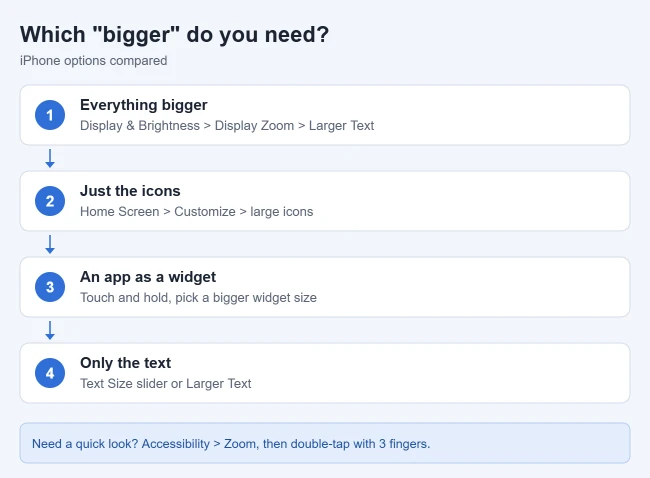
Which method should you use?
Pick the row that matches what you want to change. Each method has its own section below.
| What you want | Use this | What changes |
|---|---|---|
| Everything bigger, in every app | Display Zoom | Icons, text, buttons, and the keyboard |
| Bigger Home Screen icons only | Large icon size (iOS 18 or later) | App icons; app names are hidden |
| One app to stand out | A widget made from the app icon | That one app takes more space and shows more |
| Bigger words inside apps | Text Size or Larger Text | Text in apps that support it |
| Bigger text in one app only | Per-App Settings | Only the app you add |
| A closer look for a moment | Zoom | Nothing permanent; you magnify on demand |
Check Your iOS Version
- Your iOS version. Open Settings > General > About to see it. Menu names moved between versions, so this tells you which steps to follow.
- iOS 18 or later for large icons. Apple added the large Home Screen icon size in iOS 18. Display Zoom, Text Size, and Zoom are available on older versions too.
- A supported model for Display Zoom. Apple says Display Zoom works “on supported models” and does not publish a single list in the user guide. If you do not see the option, your iPhone may not offer it.
- A minute to rearrange. Bigger items take more room. Expect a few icons to shift after you change the size.
Not sure where the Settings app went? Here is how to find the Settings app.
Method 1: Turn on Display Zoom to make everything bigger
Display Zoom is the closest thing to a “make all my apps bigger” switch. It magnifies the whole screen, so icons, text, buttons, and menus all grow together. These steps follow Apple’s guide, Adjust iPhone display and text settings.
Before you confirm: fewer items fit on each screen, so some Home Screen icons move to another page. Nothing is deleted. Afterward you can drag icons back, group them into folders, or delete apps you no longer use.
iOS 27
- Open Settings.
- Tap Appearance.
- Tap Display Zoom.
- Tap Larger Text. A preview shows how the screen will look.
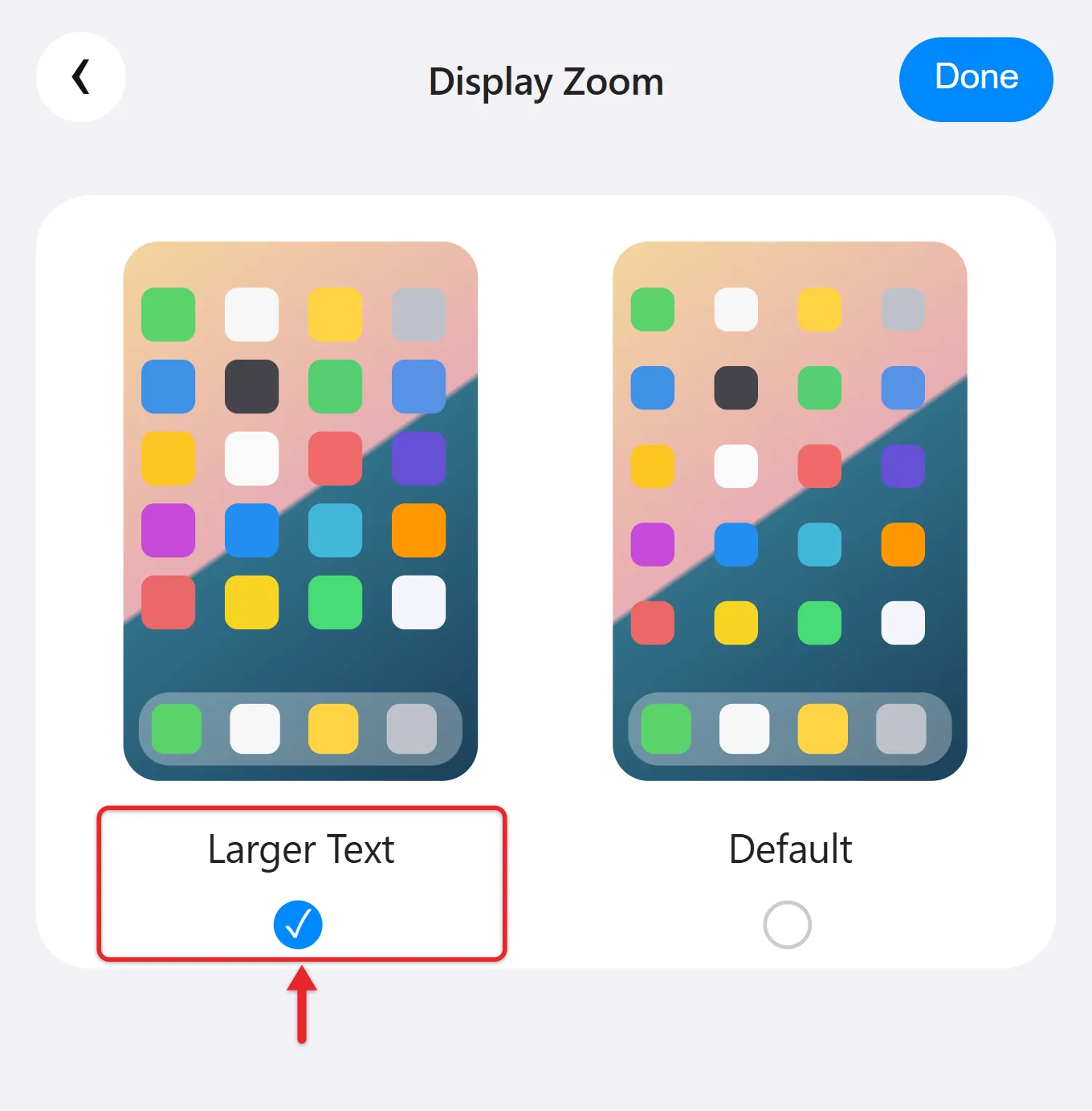
- Tap Done at the top of the screen, then tap Use Zoomed.
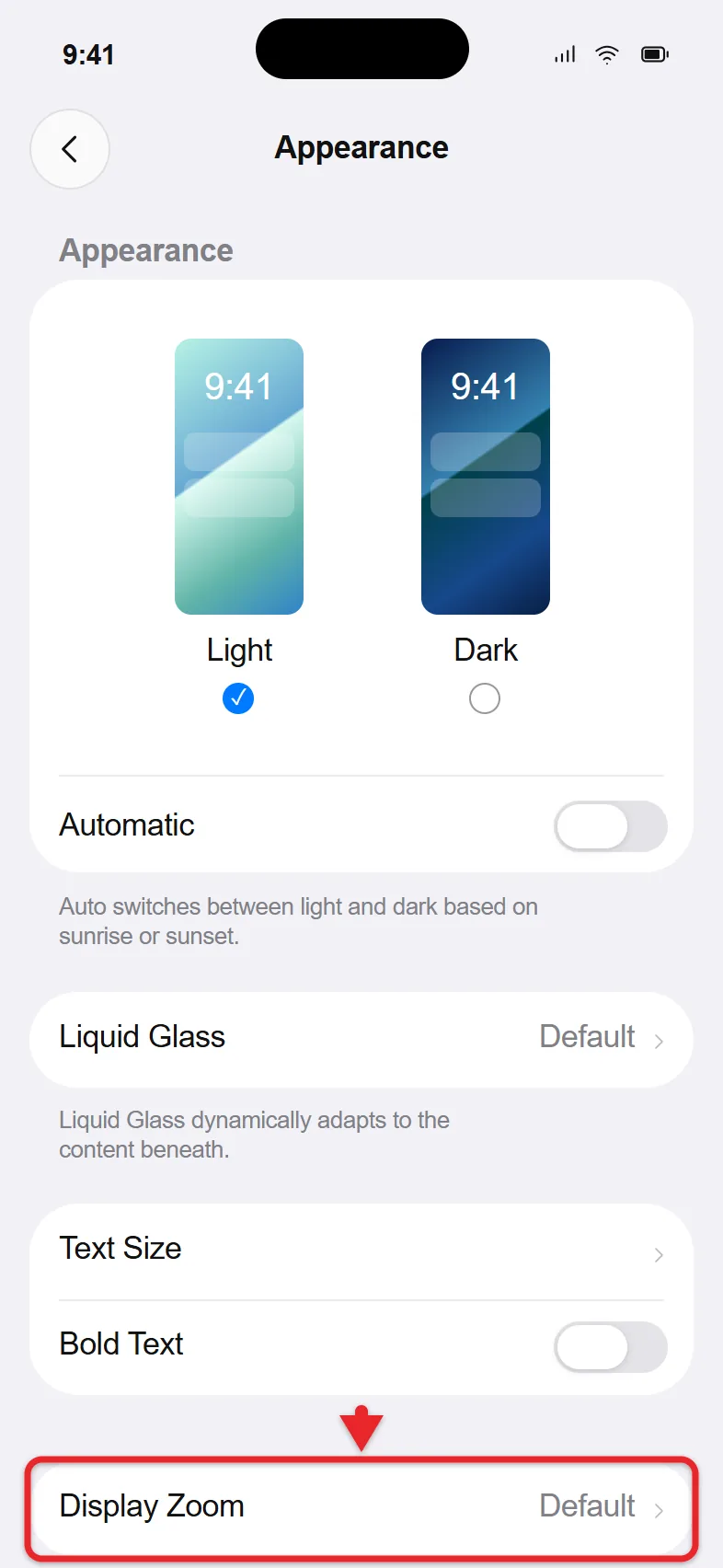
iOS 27 moved Display Zoom, Text Size, and Bold Text out of Display & Brightness and into the new Appearance screen. Brightness, Night Shift, True Tone, and Auto-Lock stay in Display & Brightness.
iOS 17, iOS 18, and iOS 26
- Open Settings.
- Tap Display & Brightness.
- Scroll down and tap Display Zoom.
- Tap Larger Text.
- Tap Done (a confirm button in iOS 26), then tap Use Zoomed.
iOS 15 and earlier
The setting is in the same place but uses different words. Go to Settings > Display & Brightness, tap View below Display Zoom, select Zoomed, then tap Set. On iOS 16, follow whichever set of labels your screen shows.

What to expect: the screen may go dark for a moment while the iPhone applies the new size. When it comes back, icons and text are larger everywhere, including inside third-party apps.
To undo it: go back to Display Zoom and choose Default (called Standard on iOS 15 and earlier), then confirm.
Can’t find it? In iOS 27, Display Zoom is under Settings > Appearance. You can also pull down on the main Settings screen and search for “Display Zoom.” If it isn’t listed, your model doesn’t offer it, so use Text Size or Zoom instead.

Method 2: Use the large icon size on the Home Screen
If the text in your apps is fine and you only want bigger icons to tap, use the large icon size. It was added in iOS 18 and does not change anything inside your apps. Apple covers it in Customize apps and widgets on the iPhone Home Screen.
Know this first: in the large size, the names of the apps disappear. You will need to recognize apps by their icons alone.
- Go to the Home Screen.
- Touch and hold an empty part of the Home Screen background until the icons begin to jiggle.
- Tap Edit at the top of the screen, then choose Customize. A small panel opens at the bottom.
- Tap the large icon size. In iOS 18 it is labeled Large; in newer versions it is a button with a size symbol.
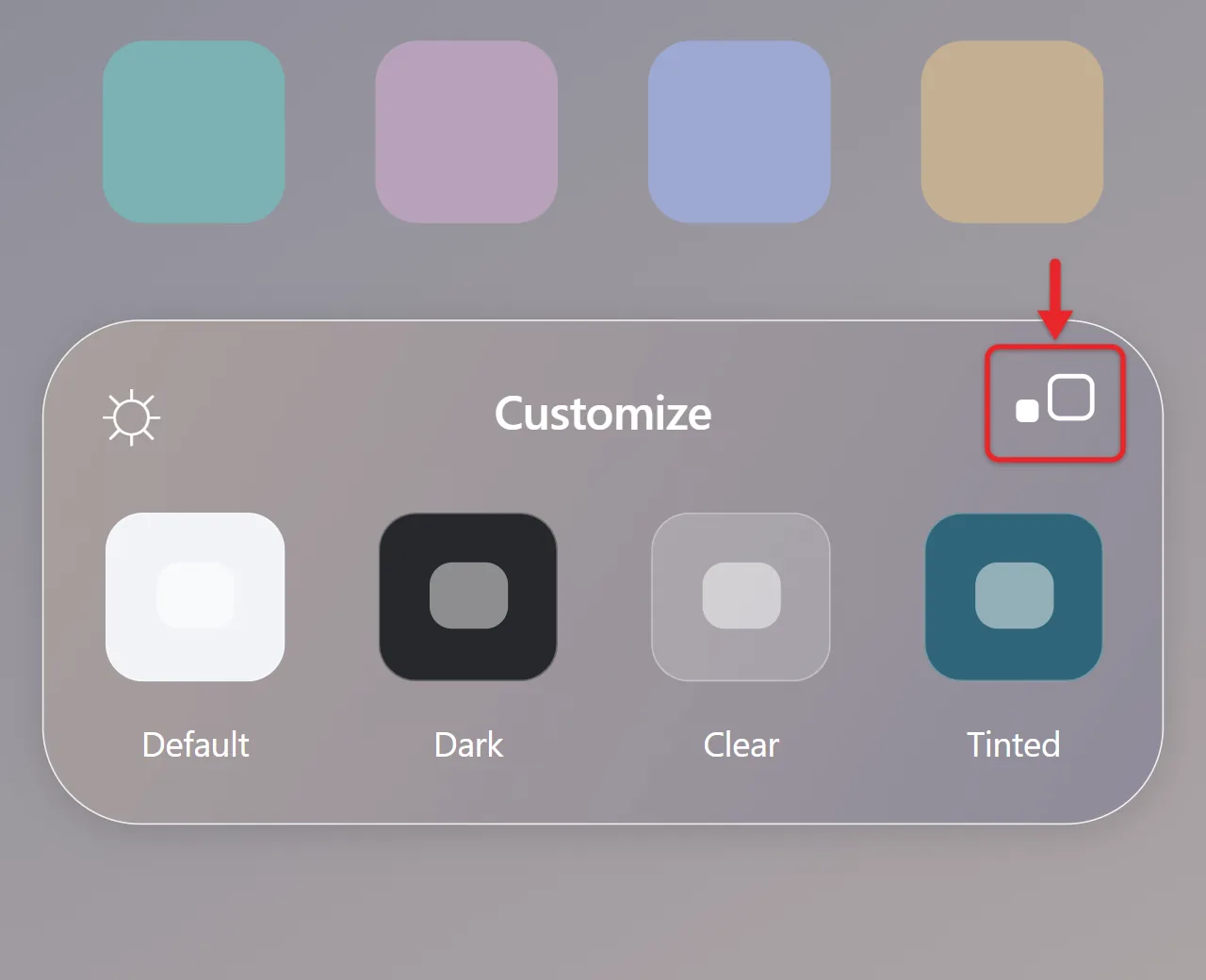
- Tap an empty area of the Home Screen to close the panel.
What to expect: every icon grows and the labels under them vanish. The same panel also holds the Dark, Tinted, and (in newer versions) Clear looks, which change color and not size.
To undo it: open Edit > Customize again and tap the small size. The app names come back.
If you forget which icon is which without the names, swipe down on the Home Screen and type the app name in Search.
No size option in Customize? The large size needs iOS 18 or later. Check your version in Settings > General > About. Also make sure you held the Home Screen background, not an app, which opens that app’s own menu.
Method 3: Turn one app into a bigger widget
You cannot enlarge a single app icon by itself. What you can do, on recent versions of iOS, is turn that app’s icon into a widget. A widget is a larger tile that shows live information from the app, such as the forecast or your next calendar event, and opens the app when you tap it.
- Touch and hold the app icon on the Home Screen.
- Look at the row of small size icons at the bottom of the pop-up menu.
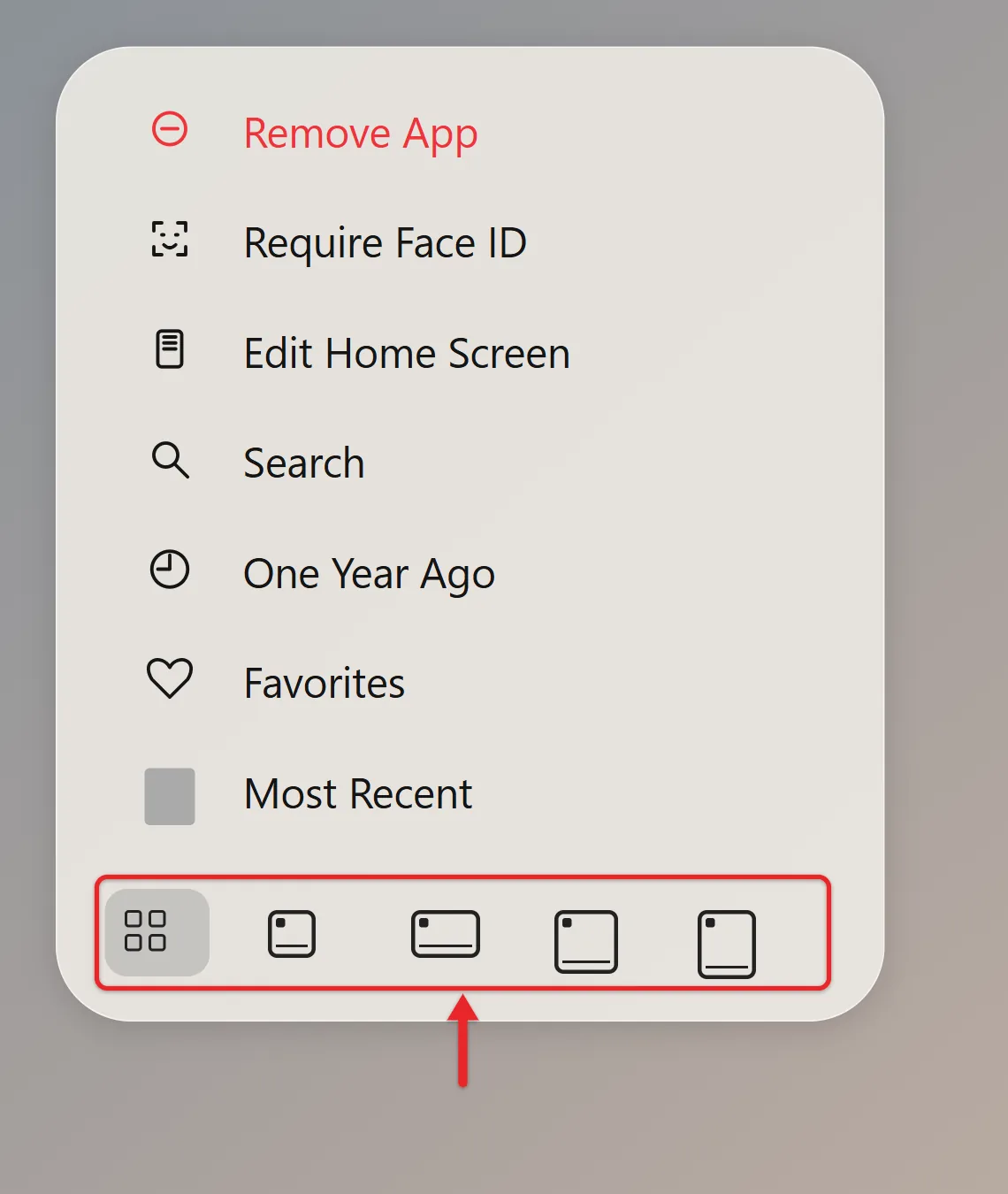
- Tap the size you want. The icon expands into a widget of that size.
Not all apps offer every widget size. Some provide only small and medium widgets, while others go up to extra large. If you see no size icons in the menu, that app does not offer a widget. If the app sits inside a folder, drag it out onto the Home Screen page first, then try again.
To undo it: touch and hold the widget, then tap the app icon button in the same row to shrink it back. Apple’s Add, edit, and remove widgets on iPhone page describes both directions. For a worked example, add a weather widget on your iPhone Home Screen.
Method 4: Make the text inside apps bigger
Often the icons are fine and the real problem is small words in Mail, Messages, or Settings. In that case change the text size and leave the icons alone.
Set one text size for all apps
- Open Settings.
- Tap Display & Brightness (or Appearance in iOS 27).
- Tap Text Size.
- Drag the slider to the right. The sample text grows as you drag.
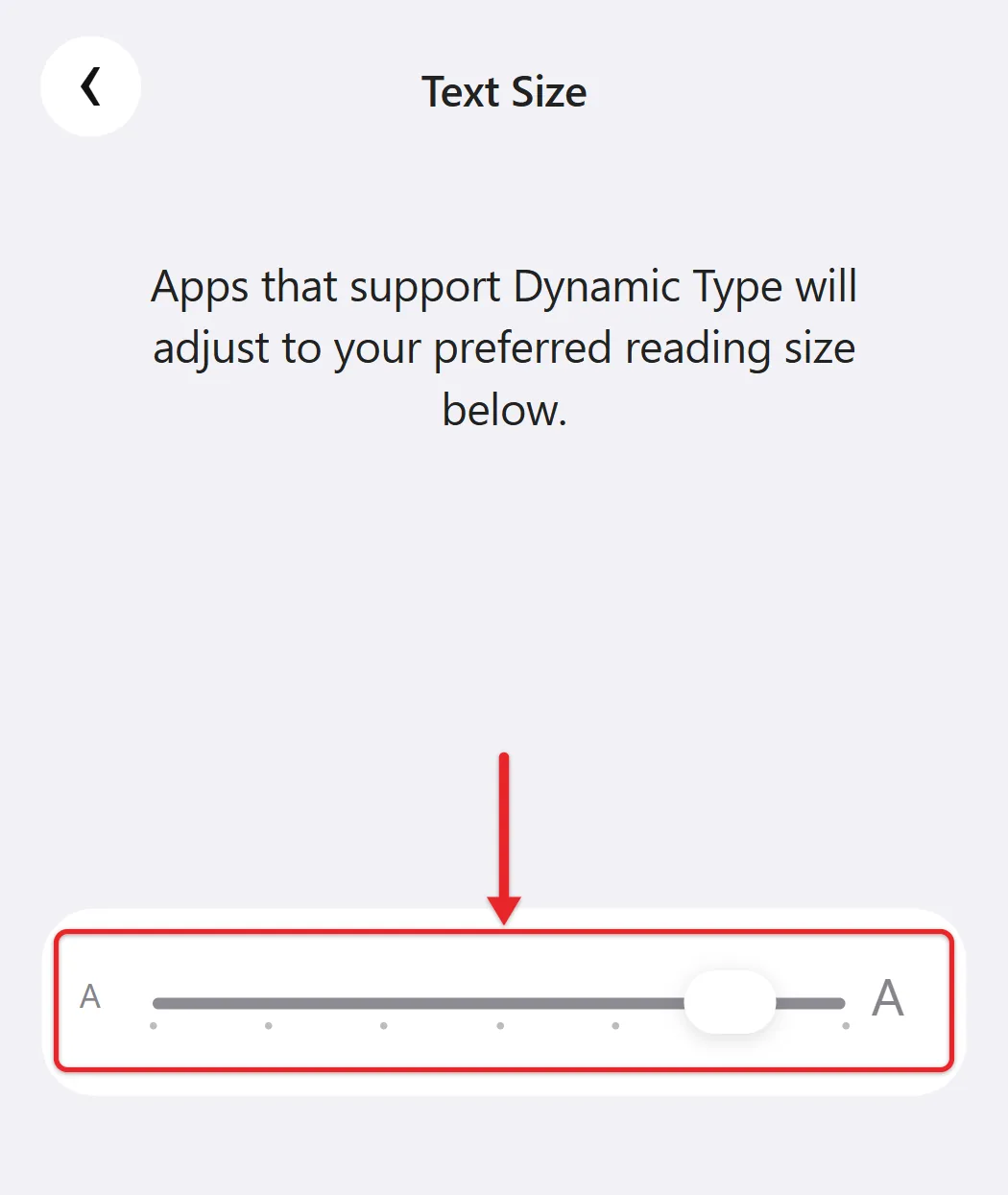
In the same menu you can turn on Bold Text to make letters heavier.
Go beyond the normal maximum
- Open Settings > Accessibility > Display & Text Size.
- Tap Larger Text.
- Turn on Larger Accessibility Sizes.
- Drag the slider to the right for the extra sizes.
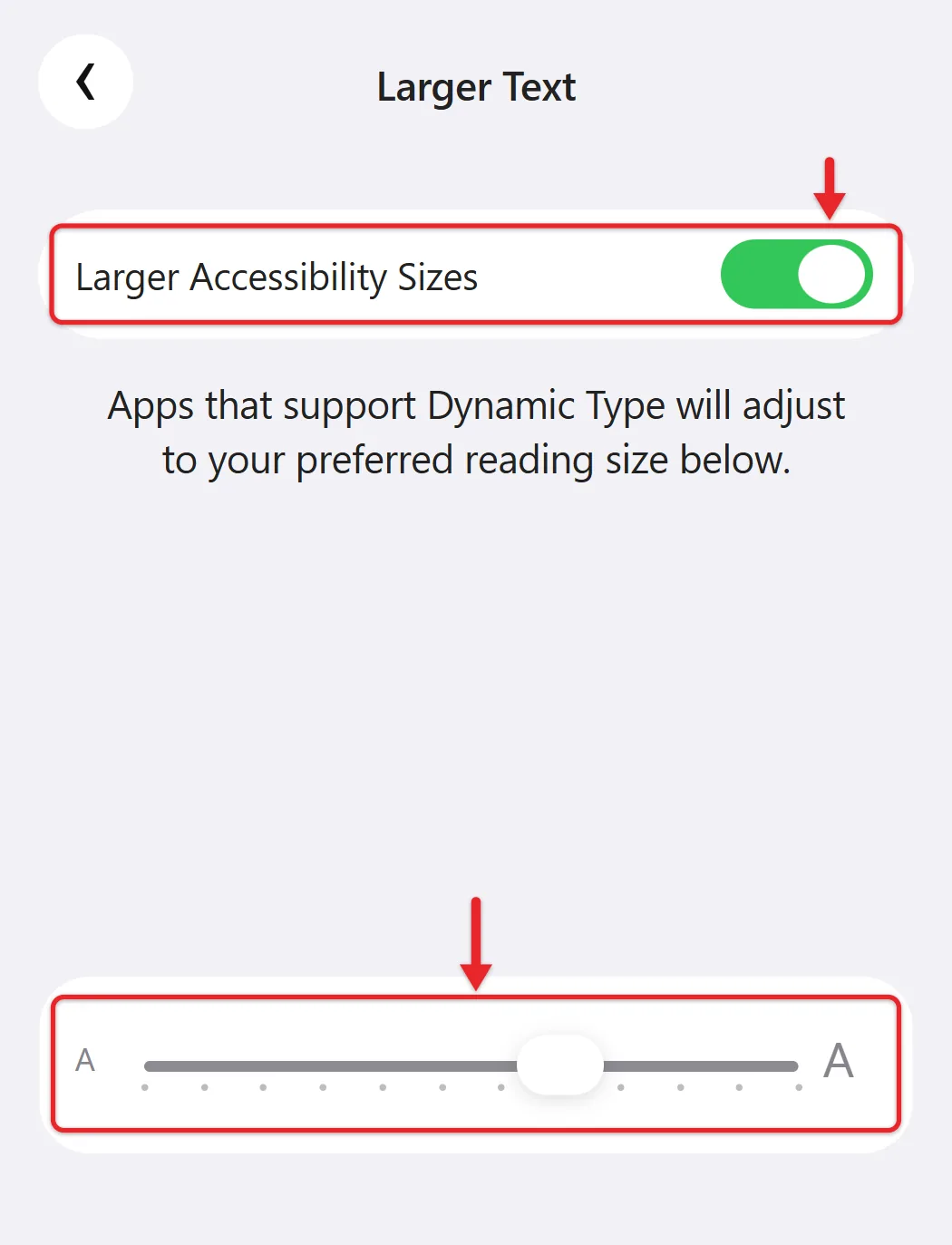
This setting only affects apps that support it. Calendar, Mail, Messages, Notes, and Settings are examples. Apps that draw their own text, such as many games, may ignore it. For those, use Display Zoom or Zoom. Apple’s page Make text easier to read on iPhone has the full details, and the steps for making text bigger on iPhone go deeper on this one setting.
Some apps also have their own size control. For example, you can change the text size in the X iPhone app from its settings without changing the rest of the phone.
Change text size without leaving the app
Apple’s tip: open Control Center and use the Text Size slider. If the slider is not there, tap the edit button in the top-left corner of Control Center, tap Add a Control, then tap the Text Size control. After that, you can adjust the size while you are looking at the text you want to read.
Method 5: Make one specific app bigger with Per-App Settings
If only one app is hard to read, you do not have to change the whole phone. Per-App Settings lets you choose different text size, color, and motion settings for certain apps, or for the Home Screen and App Library.
- Open Settings > Accessibility.
- Scroll down and tap Per-App Settings.
- Tap Add App, then choose the app from the list. You can also choose Home Screen & App Library.
- Tap the name of the app you just added to open its settings.
- Change the text size options for that app, such as Larger Text or Bold Text.
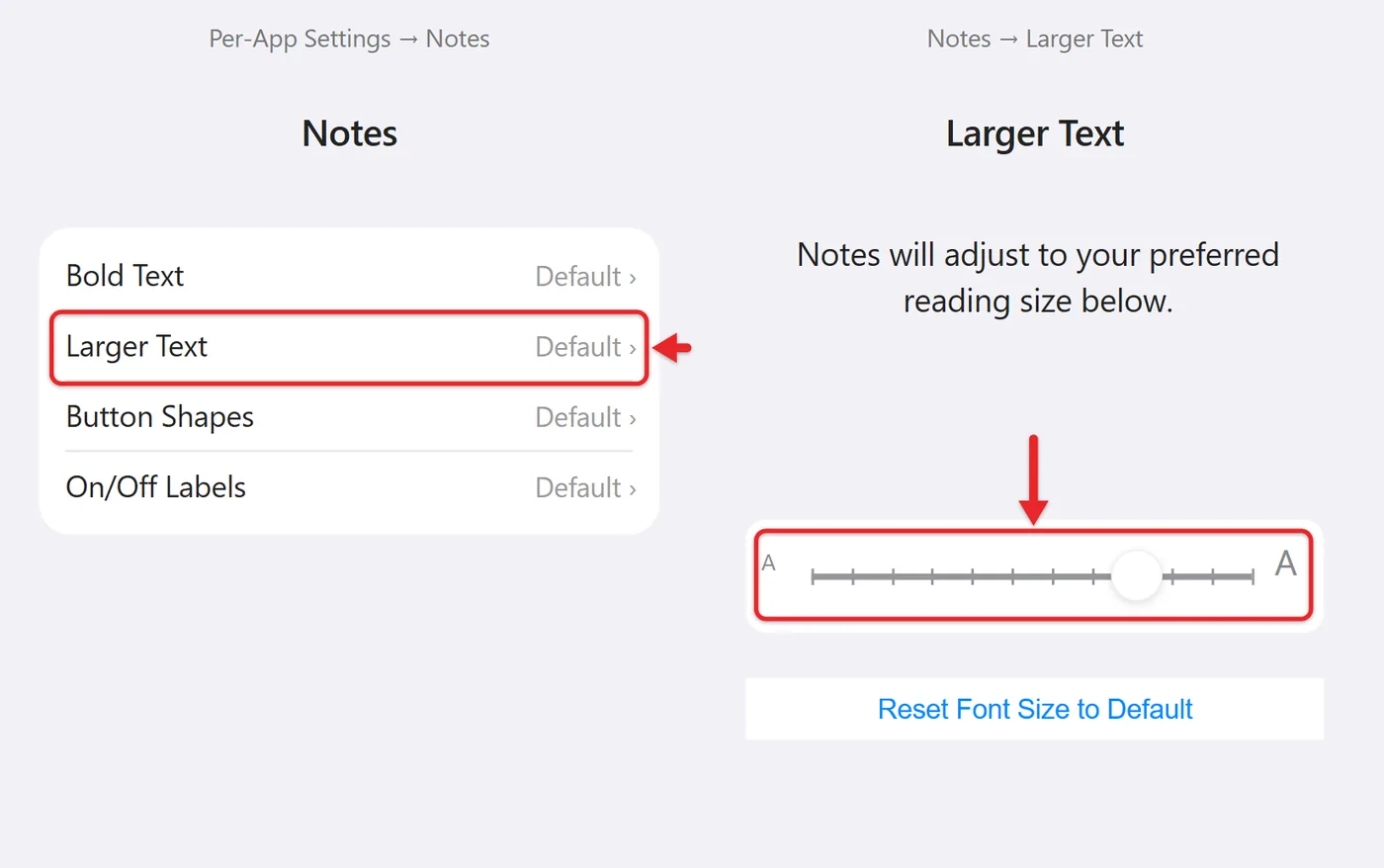
The rest of the phone keeps its normal size. To undo the change, return to Per-App Settings and set the option back to its default, or remove the app from the list. Apple’s Customize visual accessibility settings for specific apps on iPhone page explains the feature. Per-App Settings changes text and display options; it does not enlarge the app’s icon.
Safari has its own control as well. Tap the Page Menu button on the left side of the search field, tap Page Zoom, then tap the large A to enlarge the page. You can also set Safari to zoom in or out on every web page.
Method 6: Zoom in only when you need to
Zoom is an accessibility feature that magnifies the screen on demand. It is separate from Display Zoom: nothing changes until you use a gesture, and one more gesture puts everything back.
- Open Settings > Accessibility > Zoom.
- Turn on Zoom.
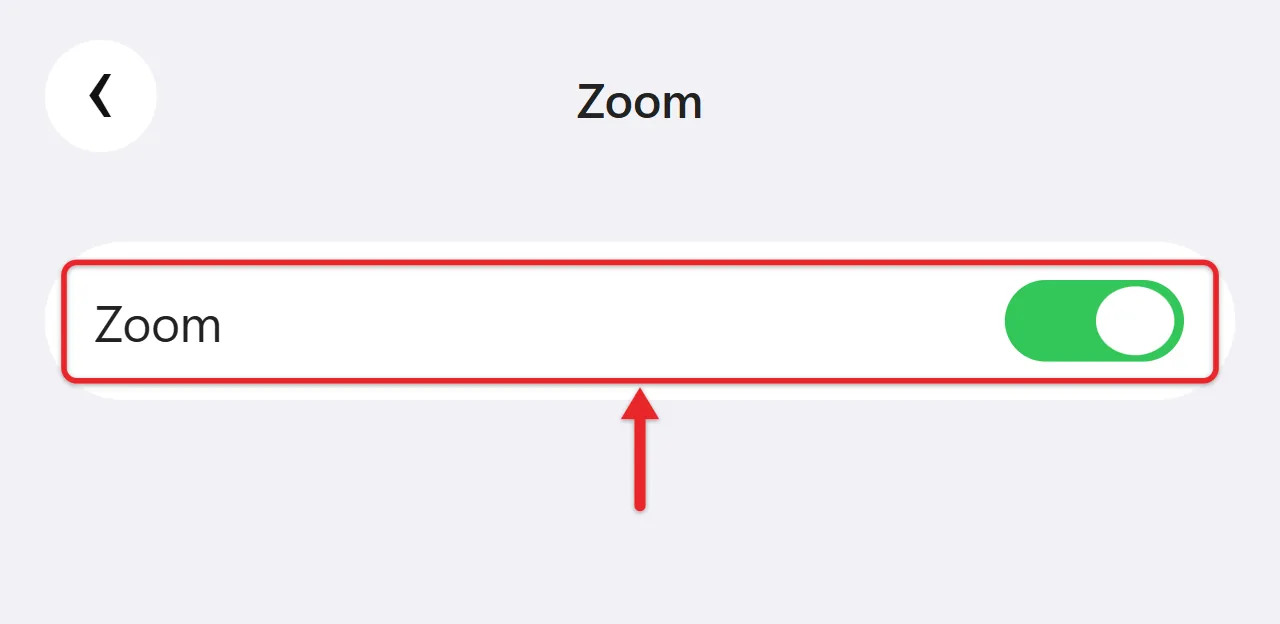
- Double-tap the screen with three fingers to zoom in.
- Drag with three fingers to move around the magnified screen.
- Double-tap with three fingers again to zoom back out.
To change how strong the magnification is, double-tap with three fingers without lifting them after the second tap, then drag up or down. In the Zoom settings, Zoom Region lets you choose Full Screen Zoom or Window Zoom, which magnifies only part of the screen inside a movable lens. Maximum Zoom Level sets how far you can zoom in. Apple’s Zoom in on the iPhone screen page explains every option, and the steps for using Zoom and changing the maximum zoom level on iPhone cover that limit.
If the whole screen suddenly looks huge and you did not mean to do it, Zoom is the usual cause. Double-tap with three fingers to return to normal.
If the top half of the screen slides down to the middle instead, that is Reachability, and you can turn Reachability on or off on iPhone in Accessibility settings.
When Icons Move or Text Doesn’t Grow
Some icons moved to another Home Screen page
That is expected after Display Zoom or the large icon size, because fewer items fit on each page. Swipe left to find them, then touch and hold the Home Screen background and drag icons back where you want them. Nothing was deleted.
An app’s text did not get bigger
Text Size only changes apps that support Apple’s adjustable text. Close the app completely and open it again. If it still looks the same, look in the app’s own settings for a text option, or use Display Zoom, which enlarges everything.
Text is cut off or overlaps
The largest accessibility text sizes can crowd some screens. Move the Text Size slider back a step or two, or use a moderate text size with Display Zoom turned on.
A setting named here is missing
Search for it from the top of the main Settings screen. If the large icon size is missing, update to iOS 18 or later in Settings > General > Software Update. If Display Zoom is not listed, your model does not offer it.
Start with Display Zoom, since it’s the one change that makes every app bigger at once. If that’s more than you need, try the large icon size or Text Size on its own.
Bigger App Icon Questions
Can I make just one app icon bigger on iPhone?
No. The large icon size applies to every icon at once. To make one app stand out, touch and hold its icon and choose a widget size, if the app offers widgets. To make the content inside one app bigger, add that app in Settings > Accessibility > Per-App Settings.
What is the difference between Display Zoom and Zoom?
Display Zoom is a setting that keeps everything on the iPhone larger all the time until you turn it off. Zoom is an accessibility feature that magnifies the screen only when you double-tap with three fingers, and returns to normal when you do it again.
Why did my app names disappear?
The large Home Screen icon size hides app names. Touch and hold the Home Screen background, tap Edit > Customize, and choose the small size to bring the names back.
Can I use Display Zoom and larger text together?
Yes. They are separate settings, and the Accessibility text options are the next step if Display Zoom alone is not enough. Start with Display Zoom, then raise Text Size until reading is comfortable.
How do I make apps smaller again?
Reverse whichever setting you changed: choose Default in Display Zoom, pick the small icon size in Edit > Customize, drag the Text Size slider back to the left, or double-tap with three fingers to leave Zoom.
Is it the same on an iPad?
Not exactly. The iPad has its own Home Screen and text settings with different menu names. For those, follow the steps for making text and apps bigger on iPad.

Matthew Burleigh is the founder, head writer, and editor of Solve Your Tech, which he launched in 2012. He has written technology tutorials since 2008 and worked in IT since 2003, including small-business support, IT management, and consulting. He holds Bachelor’s and Master’s degrees in Computer Science from Arizona State University.
Matthew writes practical guides for Windows, iPhone and iPad, Microsoft Office, Outlook, Google apps, and Android. Solve Your Tech’s guides are checked step by step against the device or app maker’s own documentation and tested on his own devices whenever he has the hardware or software, with clear steps, sources, and update dates.
Read more about Matthew and how Solve Your Tech writes and updates its guides, or report a correction.