To turn off an FPS counter in Windows 11, hide it in the app that created it. For Game Bar, press Windows key + G, unpin the Performance widget, then dismiss Game Bar. For the NVIDIA statistics overlay, the default shortcut is Alt + R; for AMD’s performance overlay, it is Ctrl + Shift + O. Steam and MSI Afterburner have their own controls.
FPS means frames per second. Windows 11 doesn’t have one switch that turns off every app’s FPS display, so use the method below for the app that shows the counter, then go back to your game to check that it’s gone.
First, identify which app owns the counter
Check what the counter looks like. A box titled Performance with CPU, GPU, RAM, and FPS readings is Game Bar. A counter that shows only in Steam games is usually Steam’s. A row of hardware readings usually comes from NVIDIA, AMD, or MSI Afterburner.
Turn off one overlay at a time. If another number stays on screen, a second overlay is running, so repeat the steps for that app.
Hide Game Bar’s Performance widget
- Press Windows key + G to open Game Bar over your game or app.
- Find the Performance widget. If it is not open, choose Performance from Game Bar’s widget menu.
- If the widget is pinned, select its Unpin pushpin control in the title bar, next to Close. You can also close the widget with its X.
- Press Windows key + G again to dismiss Game Bar. The unpinned widget should disappear from your game.
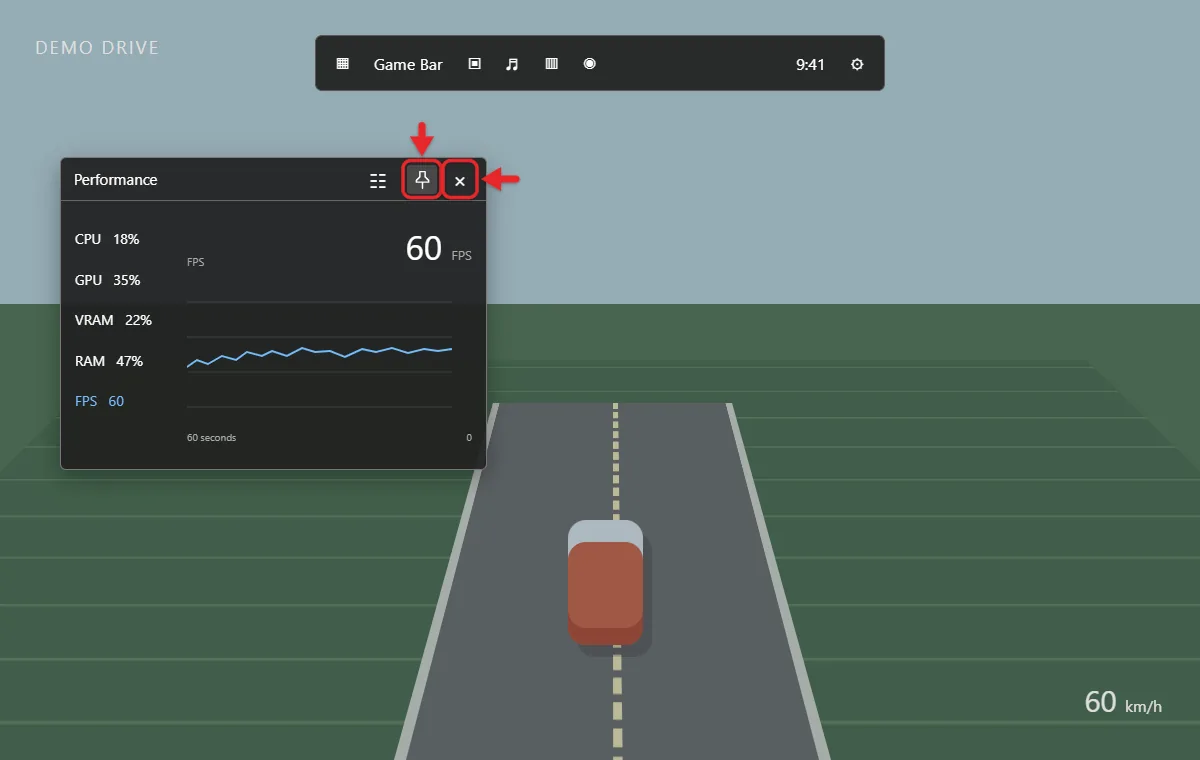
A pinned widget stays on screen after Game Bar closes. Unpinning only hides the widget; Game Bar and its recording tools still work. If you don’t see the pin, hover over the top edge of the widget to show its title bar.
To show the widget again, open Windows key + G → widget menu → Performance and pin it if desired. For the recording controls that stay available after you hide it, read recording your screen in Windows 11.
Turn off Steam’s performance monitor
- Open the Steam desktop app. Choose Steam → Settings → In Game.
- Find the Overlay Performance Monitor section and set Show performance monitor to Off. This is the visibility control, separate from the performance detail level.
- Return to the running game and check whether the Steam counter is gone.
A lower detail level still leaves FPS visible, so use Show performance monitor to hide it. Valve shows these settings in its performance monitor announcement.
A toggle shortcut may also be assigned under Toggle performance monitor key(s). Use the shortcut shown in your settings, since it can differ between PCs. To restore the display, select a screen position in Show performance monitor again.
Hide the NVIDIA statistics overlay
- With the NVIDIA statistics overlay visible, press Alt + R once. This is NVIDIA’s documented default on/off shortcut.
- If it does not respond, press Alt + Z to open the NVIDIA overlay, select its settings cog, and open Shortcuts. Check the assigned statistics-overlay shortcut.
- Use that assigned shortcut and return to your game to confirm the statistics have disappeared.
Press the shortcut once. A second press turns the overlay back on. Alt + Shift + R changes which stats show; it doesn’t hide them. NVIDIA documents both in its statistics overlay guide.
Hide AMD Software’s metrics overlay
- For an AMD performance overlay, press Ctrl + Shift + O once to toggle it off.
- For an explicit settings change, open AMD Software from Start, search for Metrics, and open Performance Metrics.
- On the Overlay tab, turn off Show Metrics Overlay, then return to your game.
If the shortcut doesn’t work, search AMD Software for Hotkey to see the current key. Don’t confuse it with Ctrl + Shift + L, which starts performance logging. AMD’s metrics and hotkey documentation covers these settings.
Remove Afterburner’s FPS reading while keeping other metrics
- Open MSI Afterburner → Settings → Monitoring.
- Select Framerate in the hardware-monitoring list. Clear Show in On-Screen Display for that selected metric.
- If you also enabled entries such as Framerate Avg or Framerate 1% Low, select each and clear its display checkbox too.
- Select Apply, then OK. Check the game again.
This lets you retain other useful readings while removing FPS. To hide the whole Afterburner display temporarily, check Settings → On Screen Display → Toggle On Screen Display for your assigned shortcut. If none is assigned, you can set one, select Apply and close Settings before using it. Scroll Lock is an example shortcut in MSI’s walkthrough, not a universal default. Leave clock speeds, voltage and fan settings unchanged.
If the counter is still there
Check the game’s own display, interface or telemetry settings for an FPS option. Menu names depend on the game. A built-in counter can remain after Steam’s or a driver’s overlay is hidden. Likewise, an overlay supplied by another launcher or monitoring tool needs that tool’s own controls.
If the counter comes back each time you launch a game, check that app’s per-game profile. Restart the game after saving the change.
Hiding the FPS number doesn’t change performance, your frame-rate limit, or your monitor’s refresh rate.
If a game actually feels slow, lowering its effects can help, for example when you turn off shadows in MTG Arena.
For steadier frame rates while you play, you can turn on Game Mode in Windows 11 under Settings > Gaming.

Matthew Burleigh is the founder, head writer, and editor of Solve Your Tech, which he launched in 2012. He has written technology tutorials since 2008 and worked in IT since 2003, including small-business support, IT management, and consulting. He holds Bachelor’s and Master’s degrees in Computer Science from Arizona State University.
Matthew writes practical guides for Windows, iPhone and iPad, Microsoft Office, Outlook, Google apps, and Android. Solve Your Tech’s guides are checked step by step against the device or app maker’s own documentation and tested on his own devices whenever he has the hardware or software, with clear steps, sources, and update dates.
Read more about Matthew and how Solve Your Tech writes and updates its guides, or report a correction.