To install an APK on Android, download the file, open it from your notifications or the Files app, and tap Install. The first time, Android asks you to allow that app (such as Chrome or Files) to install unknown apps. Turn on Allow from this source, go back, and tap Install. Only install APKs from sources you trust.
An APK is the file format Android uses for apps. Installing one from outside Google Play is often called sideloading. This guide covers the install steps, how to stay safe, and Google’s new developer verification rules, based on Google’s developer verification help page and the Android Developers timeline. Menu names vary a little by phone maker.
How to Install an APK on Android
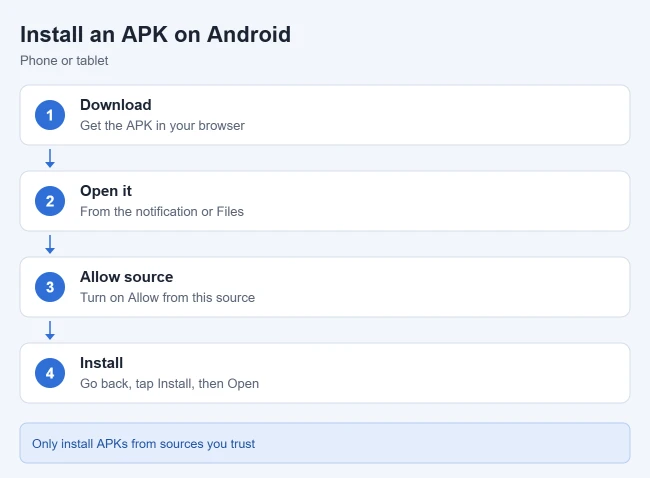
- Download the APK file in your browser.
- Open it from the download notification, or from the Downloads folder in the Files app.
- If Android asks, tap Settings and turn on Allow from this source for that app.
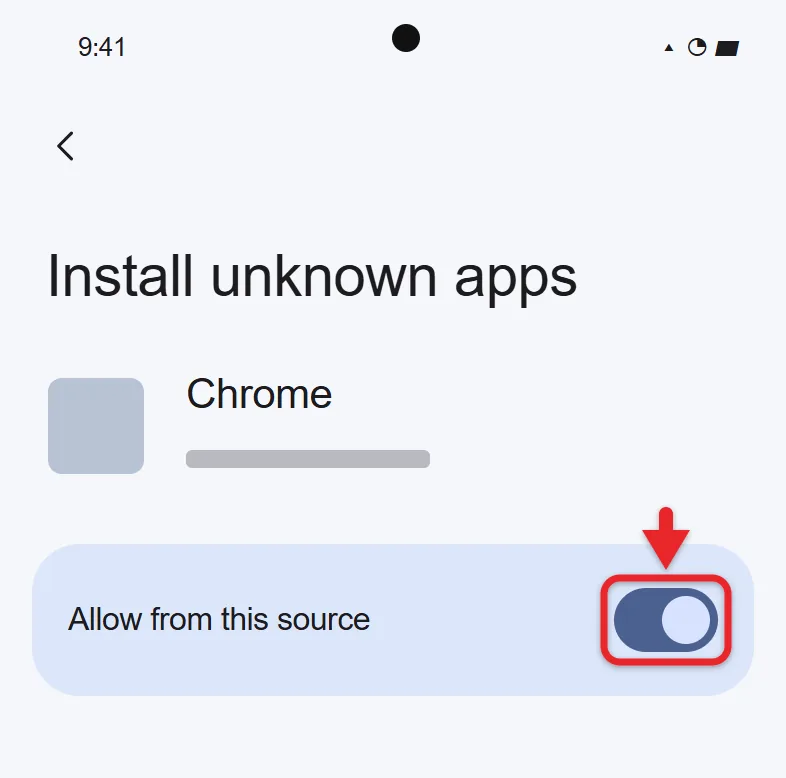
- Go back and tap Install.
- Tap Open to launch the app, or Done to close the installer. The app also appears in your app list.
Stay Safe When Installing APKs
- Take warnings seriously. Google Play Protect may scan the app and warn you before or after it installs.
- Use trusted sources. Prefer Google Play or the developer’s own website over APK mirror sites.
- Turn the permission back off. After installing, go to Settings > Apps > Special app access > Install unknown apps and turn it off for the browser or Files app. On a Samsung Galaxy phone, the path is Settings > Apps > three-dot menu > Special access > Install unknown apps.
- Be wary of pressure. Google warns that scammers often coach people over the phone to disable security settings and install malicious apps. If someone is pushing you to install an APK, stop.
Android Developer Verification: What Is Changing
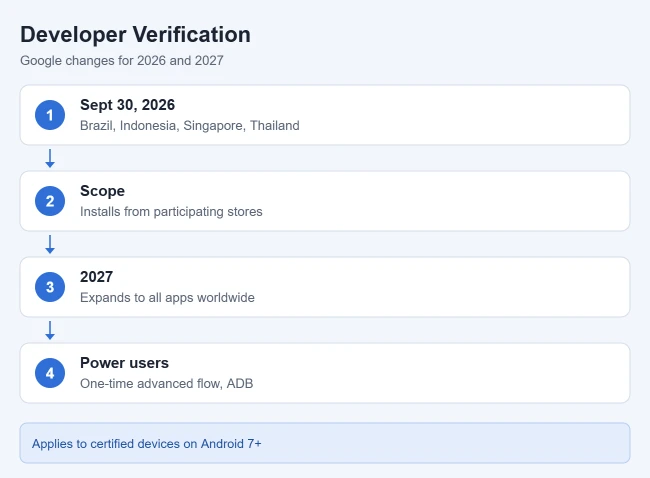
Google is adding a new layer of security called developer verification. It confirms who made an app, not what the app does. Here is Google’s timeline:
- August 2026: developer tools, free limited distribution accounts for hobbyists and students, and the power user advanced flow launched.
- September 30, 2026: protections began for users who install apps from participating app stores in Brazil, Indonesia, Singapore, and Thailand, on certified devices running Android 7 or later. Participating stores include Google Play, the Galaxy Store, and several phone makers’ app stores.
- 2027: verification expands globally for all apps on certified Android devices.
Sideloading is not going away. Verified developers can still share apps directly as APKs or through any store.
The Advanced Flow for Power Users
For people who want to install apps from unverified developers, there is a one-time advanced flow:
- Turn on developer mode in system settings. To find that menu, follow the steps for enabling Developer options on Android.
- Confirm that no one is coaching you through the process.
- Restart your phone and sign in again, which cuts off remote access or calls.
- Wait out a one-time, one-day waiting period, then confirm with your fingerprint, face, or device credential.
Developers can also keep using Android Debug Bridge (ADB) to install modified or unverified apps on their own devices.
Copy an APK From a Windows PC Before Installing
For a normal USB copy, unlock the Android phone, connect a data-capable cable, tap the Charging this device via USB notification, and choose File Transfer. On the PC, copy the trusted APK into a clearly named phone folder such as Downloads, wait for completion, and eject the device before unplugging it. Google’s USB transfer guide documents this mode.
Open that file in the phone’s Files app and follow the installer and per-source permission checks above. USB debugging is not required for ordinary file copying; ADB installation is a separate developer workflow. Do not change debugging or ignore installer warnings just because the APK came through a PC.
If a newly installed app shows up only in the app list, you can add the app to your home screen by dragging it there.
Frequently Asked Questions
Why does it say “App not installed”?
The APK may be built for a different device type or Android version, be corrupted, or conflict with a version you already have that was signed by a different developer. Uninstall the old version or download the correct file. If you see There was a problem parsing the package, the download is incomplete or needs a newer Android version. If Play Protect blocks the install, the app was flagged as harmful, so don’t install it.
What are APKM or XAPK files?
They are bundles that need a special installer app from the same source. The standard Android installer cannot open them.
Can I install APKs on Windows 11?
Not anymore without extra software. For the options, read about installing an APK on Windows 11.
Can I install APKs on a Fire TV Stick?
Yes, on models that run Fire OS. You turn on Install unknown apps for an app such as Downloader. For the full setup, follow the steps for enabling sideloading on a Fire TV Stick 4K. The Fire TV Stick 4K Select runs Vega OS and can’t install APKs.

Matthew Burleigh is the founder, head writer, and editor of Solve Your Tech, which he launched in 2012. He has written technology tutorials since 2008 and worked in IT since 2003, including small-business support, IT management, and consulting. He holds Bachelor’s and Master’s degrees in Computer Science from Arizona State University.
Matthew writes practical guides for Windows, iPhone and iPad, Microsoft Office, Outlook, Google apps, and Android. Solve Your Tech’s guides are checked step by step against the device or app maker’s own documentation and tested on his own devices whenever he has the hardware or software, with clear steps, sources, and update dates.
Read more about Matthew and how Solve Your Tech writes and updates its guides, or report a correction.