The easiest way to get help in Windows 11 is to open the Get Help app. Click the Start button, type Get Help, then select the app from the search results. Enter a description of your problem and follow the suggested troubleshooting steps.
Windows 11 gives you several other ways to get assistance, too. You can search for a setting directly from the taskbar, run troubleshooting tools, visit Microsoft’s support site, ask the Microsoft community, or use Quick Assist to let someone you trust help with the computer remotely.
The best option depends on the type of problem you’re trying to solve.
How to Use the Get Help App in Windows 11
For most Windows problems, I would start with the Get Help app.
- Click the Start button.
- Type Get Help in the search field.
- Select Get Help from the search results.
- Enter a description of the problem you’re having.
- Follow the troubleshooting suggestions that appear.
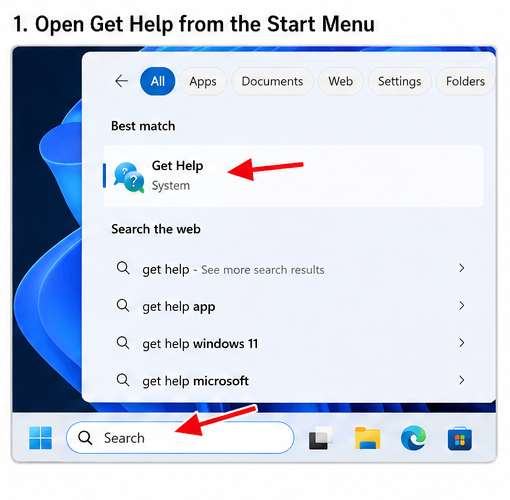
Try to describe the actual problem instead of entering something broad like “Windows doesn’t work.” For example, you might enter Bluetooth headphones connected but no sound or Windows Update error 0x80070002.
Specific descriptions and exact error codes make it much easier to find relevant troubleshooting information.
Search for Help From the Windows 11 Taskbar
Windows Search is often faster than opening a support app if you simply can’t find a setting or feature.
- Click the Search box or Search icon on the taskbar.
- Type the setting, feature, or problem you’re looking for.
- Review the results.
- Select the appropriate setting, app, or help result.

You can also press the Windows key and start typing. Search is usually the fastest approach when nothing is actually broken and you just need to find something.
Get Help From the Windows 11 Settings App
You can also find help while you’re using the Settings app.
- Press Windows + I to open Settings.
- Open the section related to your question or problem.
- Look for the available help or support option.
- Select it to view information related to that part of Windows.
Starting in the appropriate Settings section can make it easier to find relevant information. For example, if you’re having trouble connecting to Wi-Fi, start with Settings > Network & internet. If you’re having a problem with Windows Update, start with Settings > Windows Update.
Run a Windows 11 Troubleshooter
If something isn’t working properly, Windows may be able to diagnose the problem for you.
- Press Windows + I.
- Select System.
- Select Troubleshoot.
- Select Other troubleshooters.
- Find the option related to your problem.
- Run the available troubleshooter or follow the Get Help instructions that appear.
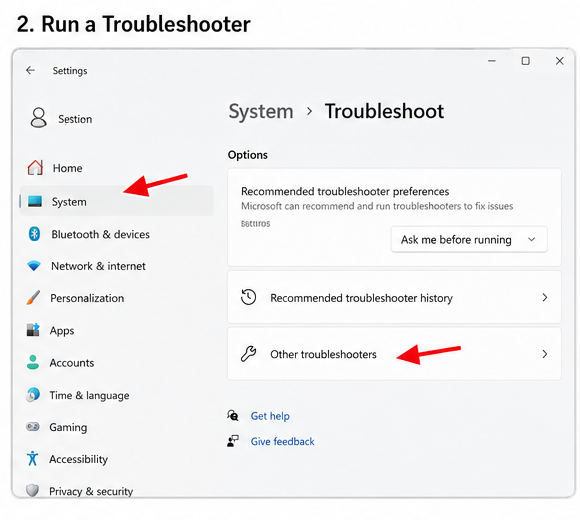
Microsoft has been moving many of its older troubleshooters into the Get Help system, so don’t be surprised if Windows opens Get Help instead of the traditional troubleshooting window.
Troubleshooting tools are particularly useful for problems involving network connections, audio, printers, Bluetooth, Windows Update, and other common Windows features.
Search Microsoft Support
For a specific error or more complicated problem, Microsoft’s support site is another good place to look. The Windows section of Microsoft Support contains instructions for Windows Update, networking, accounts, drivers, security, activation, recovery, and many other features.
When searching, include the exact error message whenever possible. For example, searching for Windows Update error 0x80070002 will usually give you better results than searching for Windows won’t update.
Contact Microsoft Support
If the normal troubleshooting options don’t solve the problem, you may be able to get additional assistance from Microsoft. Start with the Get Help app or Microsoft’s support website and describe your issue.
The contact choices you see can vary depending on the problem, product, account, and available support options, so your screen may not look exactly like screenshots from older Windows tutorials. If you don’t see the contact option you expected in Get Help, try the Microsoft Support website instead.
Use Quick Assist to Get Help From Another Person
If you know someone who can fix the problem, Windows 11 includes a remote assistance tool called Quick Assist.
- Click the Start button.
- Type Quick Assist.
- Select Quick Assist from the search results.
- Follow the instructions to get help.
- Enter the security code supplied by the person assisting you when appropriate.
- Review the connection request carefully before allowing access.
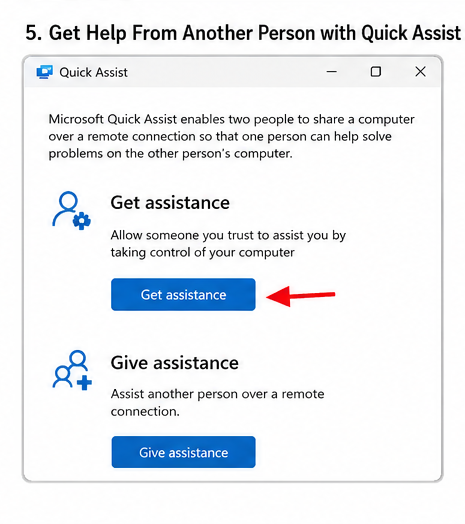
Quick Assist can be useful if a friend, family member, coworker, or support technician knows what to do but isn’t sitting in front of your computer. However, only use Quick Assist with someone you trust.
If an unexpected caller tells you that your computer has a virus and asks you to open Quick Assist, don’t give them access. Remote-access scams often rely on convincing someone to voluntarily give a stranger control of the computer.
Ask the Microsoft Community
Microsoft’s community forums can be helpful when you’re dealing with a problem that isn’t covered by a standard support article. Before creating a new question, search for the exact error message or symptom. There’s a good chance someone else has already encountered it.
If you need to create your own question, include your Windows 11 version, the exact error message, what you were doing when the problem occurred, whether it happens every time, and what troubleshooting you’ve already tried. Don’t post passwords, product keys, recovery keys, verification codes, or other private information.
Report a Windows 11 Problem With Feedback Hub
If Windows is behaving unexpectedly and you want to report the problem to Microsoft, use the Feedback Hub. This is different from Get Help: Feedback Hub is meant for bug reports and product suggestions, while Get Help and Microsoft Support are better choices when you need an immediate solution.
- Press Windows + F or search for Feedback Hub from Start.
- Select the option to report a problem.
- Describe what happened and add screenshots or a recording if they help show the issue.
- Submit the report to Microsoft.
Feedback Hub is especially useful for repeatable Windows bugs, update problems, or unexpected behavior that you think Microsoft should investigate.
Find Your Windows 11 Version Before Asking for Help
Knowing your Windows version and build number can make troubleshooting easier. The quickest way to find it is with the winver command.
- Press Windows + R.
- Type winver.
- Click OK or press Enter.
- Check the Windows version and OS build shown in the window.
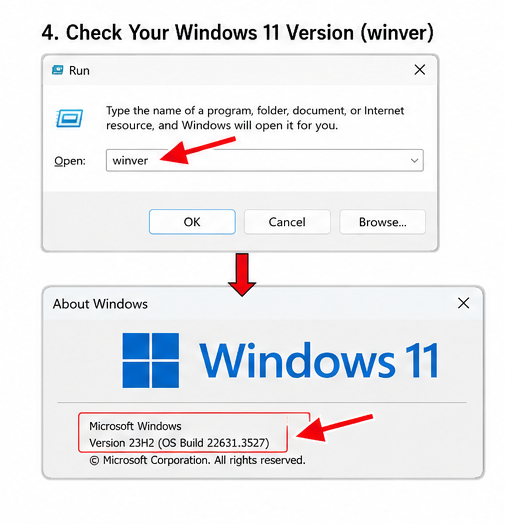
You can also find system information by going to Settings > System > About. The About page shows useful details such as your processor, installed RAM, system type, Windows edition, version, and OS build.
What to Do If Windows 11 Won’t Start
The methods above assume you can sign in to Windows. If Windows won’t start, you’ll need to use its recovery tools instead.
After repeated startup failures, Windows may automatically enter the Windows Recovery Environment, where you’ll find advanced troubleshooting options.

Depending on your PC and the problem, these can include Startup Repair, Startup Settings, System Restore, Uninstall Updates, Command Prompt, and Reset this PC.
Startup Repair is a reasonable place to begin if Windows suddenly stops booting. If the problem began immediately after an update, you may also want to investigate the update-related recovery options.
Be more cautious with options that reset or reinstall Windows. Those changes can affect installed programs, settings, and, depending on the option you select, your files.
Try Deeper Windows Diagnostic Tools for Repeated Problems
If the same crash or Windows error keeps coming back, two built-in tools can provide more information than a basic troubleshooter.
Reliability Monitor gives you a timeline of application failures, Windows failures, updates, and other system events. Open Start and search for View reliability history. Look around the date the problem first appeared for a failure or update that may explain what changed.
System File Checker can check protected Windows system files for corruption. Microsoft currently recommends running the Deployment Image Servicing and Management repair command first, followed by sfc /scannow from an administrator Command Prompt. Because these are deeper repair tools, use them when normal troubleshooting has not fixed Windows itself rather than as the first step for every problem.
What to Do If the Get Help App Isn’t Working
There’s an unfortunate possibility that you need help because the Get Help app itself isn’t working. If it won’t open or respond correctly, first restart the computer and try again.
You can also check for Windows and Microsoft Store updates. Depending on your current Windows 11 version and how Get Help is installed on your PC, you may also have repair or reset options available for the app or component in Settings.
In the meantime, you don’t need the app to access Microsoft’s online Windows support resources. Open your web browser and use Microsoft Support directly.
Does the F1 Key Open Windows 11 Help?
F1 is traditionally the Help key in Windows, but its behavior isn’t consistent enough to make it the best way to get Windows 11 assistance.
What happens when you press F1 depends on the application you’re using. It might open the program’s help page, launch a browser, perform another function, or do nothing. Some laptops also require you to press Fn + F1.
If you need general Windows help rather than help with a specific application, searching for Get Help from the Start menu is more reliable.
Which Windows 11 Help Option Should You Use?
You don’t need to try every method in this article. If you’re looking for a setting, use Windows Search. If a Windows feature isn’t working, start with Get Help or the appropriate Windows troubleshooting tool.
If you have an error code, search for that exact code on Microsoft Support. If someone you trust needs to see the problem remotely, use Quick Assist. If Windows won’t boot, use the Windows Recovery Environment.
If you think the computer itself has a hardware problem, check the support resources provided by the PC manufacturer. And if you’re using a work or school computer, contact your IT department before making major system changes.
Useful Windows 11 Help and Troubleshooting Shortcuts
| Shortcut | What it opens or does |
|---|---|
| Windows + S | Windows Search |
| Windows + I | Settings |
| Windows + F | Feedback Hub |
| Ctrl + Shift + Esc | Task Manager |
| Windows + X | Power User menu |
| Windows + R | Run dialog |
These shortcuts do not replace Get Help, but they can get you to the right Windows tool faster when a program freezes or you need to reach system settings.
Tips for Getting Better Help With Windows 11
A few minutes of preparation can make a difficult Windows problem much easier to diagnose. Take a screenshot of any error message before closing it. Error codes and exact wording are much more useful than trying to remember what the message said later.
Think about what changed immediately before the problem started. For example, did you install an application, update Windows, connect a new device, install a driver, or change a setting?
Keep track of the troubleshooting steps you’ve already tried as well. Most importantly, describe what the computer is actually doing rather than what you think is causing it.
Frequently Asked Questions
What is the easiest way to get help in Windows 11?
Open the Start menu, search for Get Help, and open the Get Help app. Enter a description of your problem and follow the troubleshooting suggestions.
Does Windows 11 have a Help app?
Yes. Windows 11 uses Microsoft’s Get Help app to provide troubleshooting information and access to support resources.
How do I contact Microsoft about a Windows 11 problem?
Start with the Get Help app or Microsoft Support website. Available contact options can vary based on the issue, product, account, and current support availability.
How do I run a troubleshooter in Windows 11?
Go to Settings > System > Troubleshoot > Other troubleshooters. Choose the option related to your problem. Some Windows troubleshooters now work through the Get Help app.
How can I let someone remotely help with my Windows 11 PC?
Open Quick Assist from the Start menu and follow the instructions to connect with the person helping you. Only establish a Quick Assist connection with someone you know and trust.
How can I get help if Windows 11 won’t start?
Use the Windows Recovery Environment. It provides advanced troubleshooting options such as Startup Repair, Startup Settings, System Restore, and other recovery tools.
How do I find my Windows 11 version?
Press Windows + R, type winver, and press Enter. A window will display your current Windows version and OS build.
Does pressing F1 open Windows 11 Help?
Sometimes, but it depends on the application and computer. F1 may open application-specific help, launch online help, perform another function, or do nothing. Opening the Get Help app is a more reliable option for general Windows 11 assistance.
Summary
To get help in Windows 11, start by clicking Start, searching for Get Help, and opening the Get Help app. Describe your problem as specifically as possible and follow the suggested troubleshooting steps.
You can also use Windows Search to find settings, run Windows troubleshooting tools, search Microsoft’s support site, ask the Microsoft community, or use Quick Assist when someone you trust needs to help remotely.
For serious startup problems where you can’t get into Windows at all, use the Windows Recovery Environment instead. The important thing is to choose the help option that matches the problem.

Matthew Burleigh has been writing tech tutorials since 2008. His writing has appeared on dozens of different websites and been read over 50 million times.
After receiving his Bachelor’s and Master’s degrees in Computer Science he spent several years working in IT management for small businesses. However, he now works full time writing content online and creating websites.
His main writing topics include iPhones, Microsoft Office, Google Apps, Android, and Photoshop, but he has also written about many other tech topics as well.