A used laptop, a cheap key from a marketplace, or a new PC from a small shop has you wondering whether its copy of Windows 11 is the real thing. Start at Settings > System > Activation and read the Activation state line. Then check the license details and where the license came from, because a copy can show as activated without being genuine.
Activated vs. Genuine: What You Are Actually Checking
Microsoft describes genuine Windows as a copy that is published by Microsoft, properly licensed, and supported by Microsoft or a trusted partner. Activation is narrower. It is the step that confirms a license (a digital license or a 25-character product key) is attached to this PC.
Most of the time the two agree, but not always. Unauthorized activation tools can make a pirated copy report itself as activated. In the other direction, a perfectly legitimate copy can show “not activated” after a motherboard replacement, a clean reinstall, or a repair where the technician used a different key. That is why this check has three parts: the Activation page, the license details behind it, and the purchase evidence. The steps are the same on Windows 11 Home and Pro.
Check the Activation Page in Settings
- Right-click the Start button and choose Settings, or press Windows + I.
- Select System in the left pane.
- Scroll down and select Activation.
- Find the Activation state row (Microsoft’s help page calls it Activation status). It reads Active or Not active. Select the row to expand it and read the full message underneath.
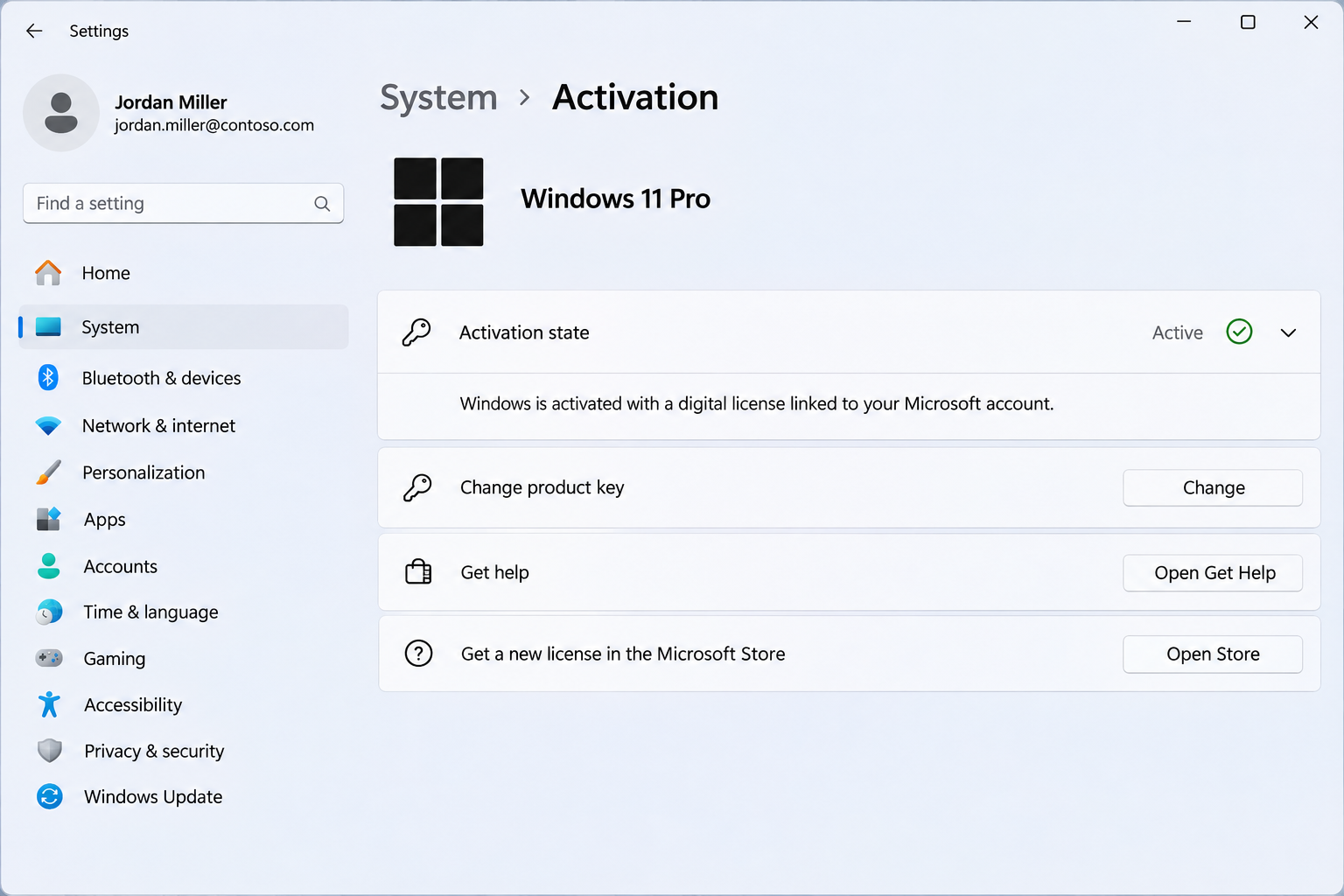
- Go back to System, select About, and look under Windows specifications to see your edition. It should match what the seller, the box or the receipt promised (for example, Windows 11 Pro rather than Home).
Reading this page works from any account. Some actions on it, such as linking your Microsoft account, need an administrator account, and Microsoft’s Activate Windows page says you can confirm your account type under Settings > Accounts > Your info.
What Each Activation Message Tells You
Microsoft lists four messages for a home PC. Here is what each one means for the genuine question.
| Message | What it means | What to do next |
|---|---|---|
| Windows is activated | Windows is activated, but no Microsoft account is linked to the license. | Confirm the key came from Microsoft, the PC maker or a store you trust. |
| Windows is activated with a digital license | Windows activated without you typing a key, and your Microsoft account is not linked to that license yet. | Link your account with Add an account so reactivation after a hardware change is easier. |
| Windows is activated with a digital license linked to your Microsoft account | The license is active and already tied to your account. | Nothing on this page. Still check the purchase evidence on a used PC. |
| Windows is not activated | No valid license was found, and an error code usually appears. | Run the troubleshooter (covered below) before assuming anything. |
Work and school PCs are different. If an organization manages the device, Windows may be activated through the organization’s volume licensing, and a “Your Windows license will expire soon” warning there is something for the IT department to handle, according to Microsoft’s activation errors page.
Example: Jordan buys a refurbished desktop listed as “Windows 11 Pro, genuine.” Settings shows “Windows is activated with a digital license” and About shows Windows 11 Pro. That is a good start. The license details in the next section and the seller’s paperwork finish the job.
Read the License Details With slmgr
Windows includes a licensing script called slmgr.vbs. Microsoft documents its slmgr options on Microsoft Learn (that reference page is labeled for Windows Server; Microsoft’s Windows 11 volume activation documentation uses the same slmgr.vbs script on client versions of Windows and points to this page for its options). The three options below only display information, and Microsoft says none of them need elevated privileges.
Warning: stick to /dli, /dlv and /xpr. Options such as /upk remove the installed product key, which leaves Windows unlicensed until you add a key again.
- Open Command Prompt from the Start menu. A regular window is fine.
- Type
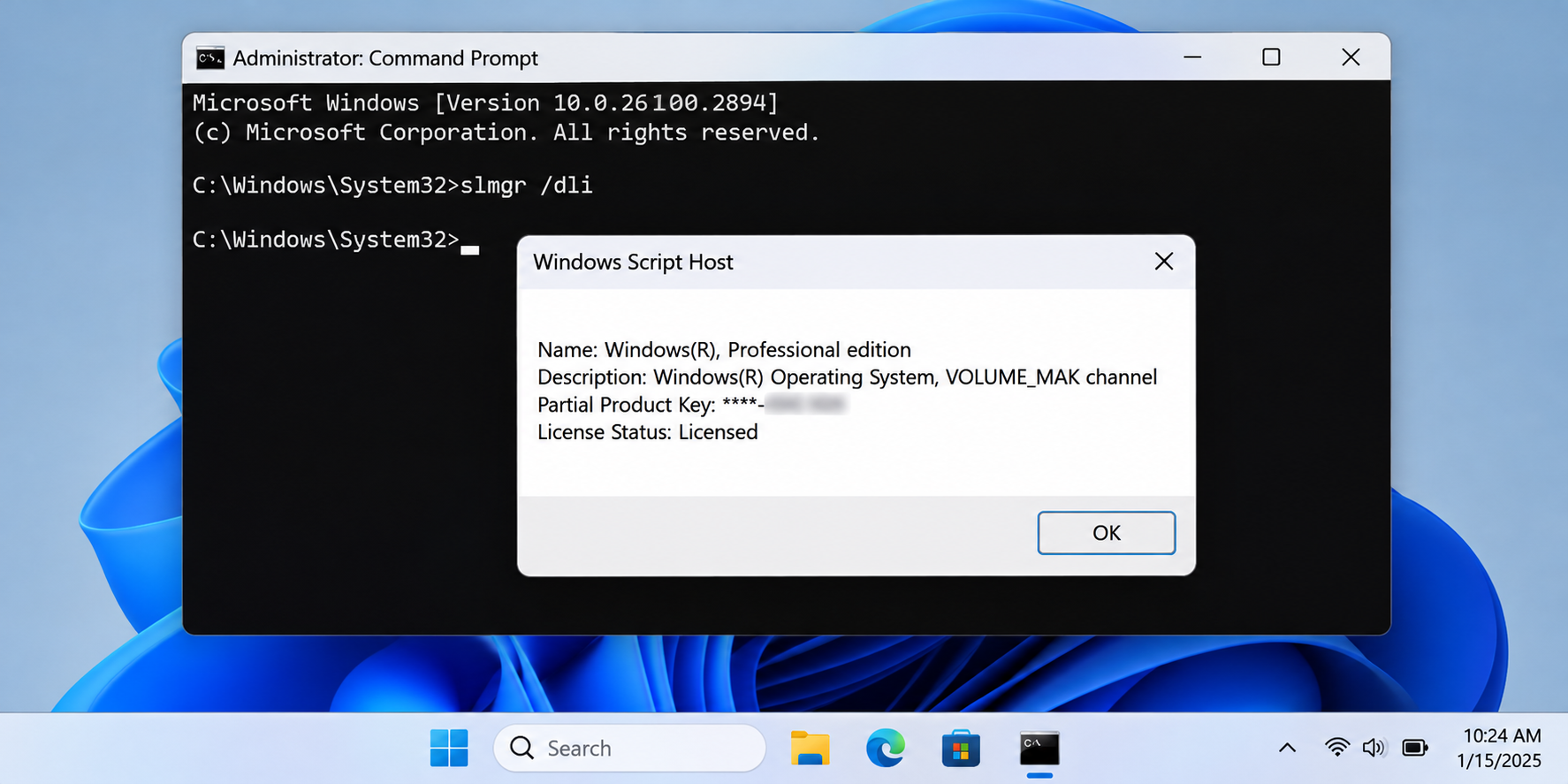
slmgr /dliand press Enter. A Windows Script Host window opens with basic license information. If you would rather read the result as text in the Command Prompt window, typecscript %windir%\system32\slmgr.vbs /dliinstead. - Read the Description line, which typically names the license channel, the Partial Product Key (the last five characters, not the full key), and License Status, which should say Licensed.
- Run
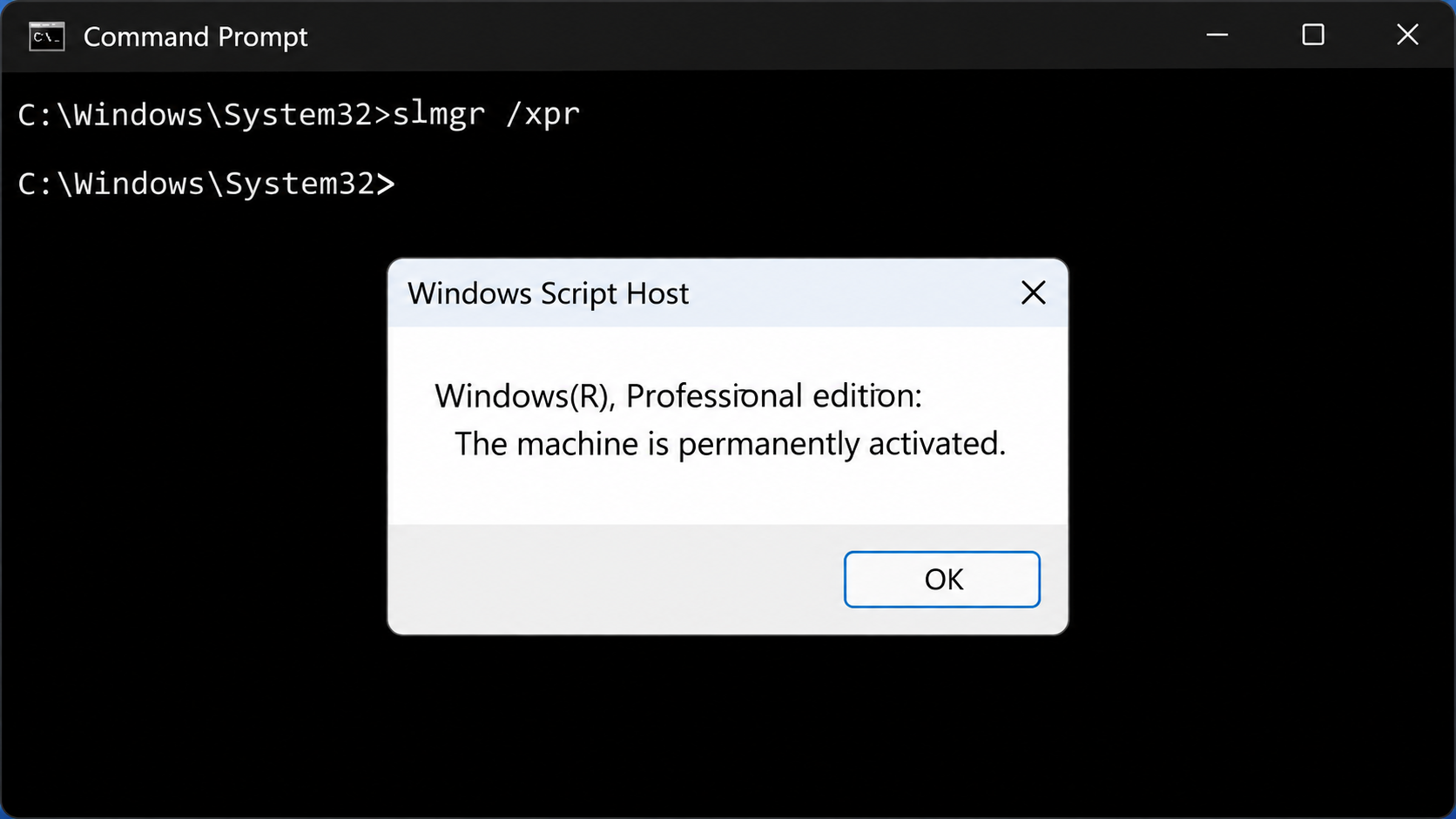
slmgr /xpr. On a retail or OEM license, expect a message without an end date (it typically says the machine is permanently activated). Microsoft notes that the expiration date mainly matters for KMS clients, because MAK and retail activation is perpetual.
- Optional: run
slmgr /dlvfor a longer, more detailed version of the same license information.
How to read the channel: RETAIL usually means a key bought on its own, OEM usually means Windows came preinstalled by the PC maker, and VOLUME (often shown with MAK or KMSCLIENT) means organization licensing. A personal laptop from a consumer seller that shows a KMS client channel and an expiration date a few months out deserves a closer look, because a home PC from a consumer seller has no reason to use organization licensing. The same result is normal on a company PC, so judge it against where the PC came from.
If you need the full key rather than the last five characters, see how to find your Windows 11 product key with CMD.
Check the Paperwork, Labels and Seller
Software can’t tell you where a license was bought. For that, Microsoft points to physical and purchase evidence: a Certificate of Authenticity, a proof of license label, and an edge-to-edge hologram on packaged copies. The Microsoft How to Tell page for packaged software shows what those look like.
For a used or refurbished PC, run through this list:
- Ask the seller for the Certificate of Authenticity and the original Windows disc, if there was one. Microsoft says validation failures are common for copies of Windows bought through online auction sites, and used PCs can have the same problem.
- Keep the receipt or order confirmation, and note whether the seller is the manufacturer, a known retailer or an individual.
- Compare the edition in Settings > System > About with the listing.
- Compare the slmgr channel with the story. A home PC sold as “new with Windows” would normally show OEM or RETAIL, not a volume channel.
Buying a key is a separate job. The guide to checking, finding or buying a legitimate Windows 11 license covers where to buy and the warning signs of a risky key seller.
When Windows Says It Is Not Activated
“Not activated” is usually a licensing problem, not proof of a counterfeit. Work through it in this order:
- Open Settings > System > Activation and select Troubleshoot to run the activation troubleshooter. Microsoft offers the same automated troubleshooter through the Get Help app.
- Write down the error code shown on the Activation page.
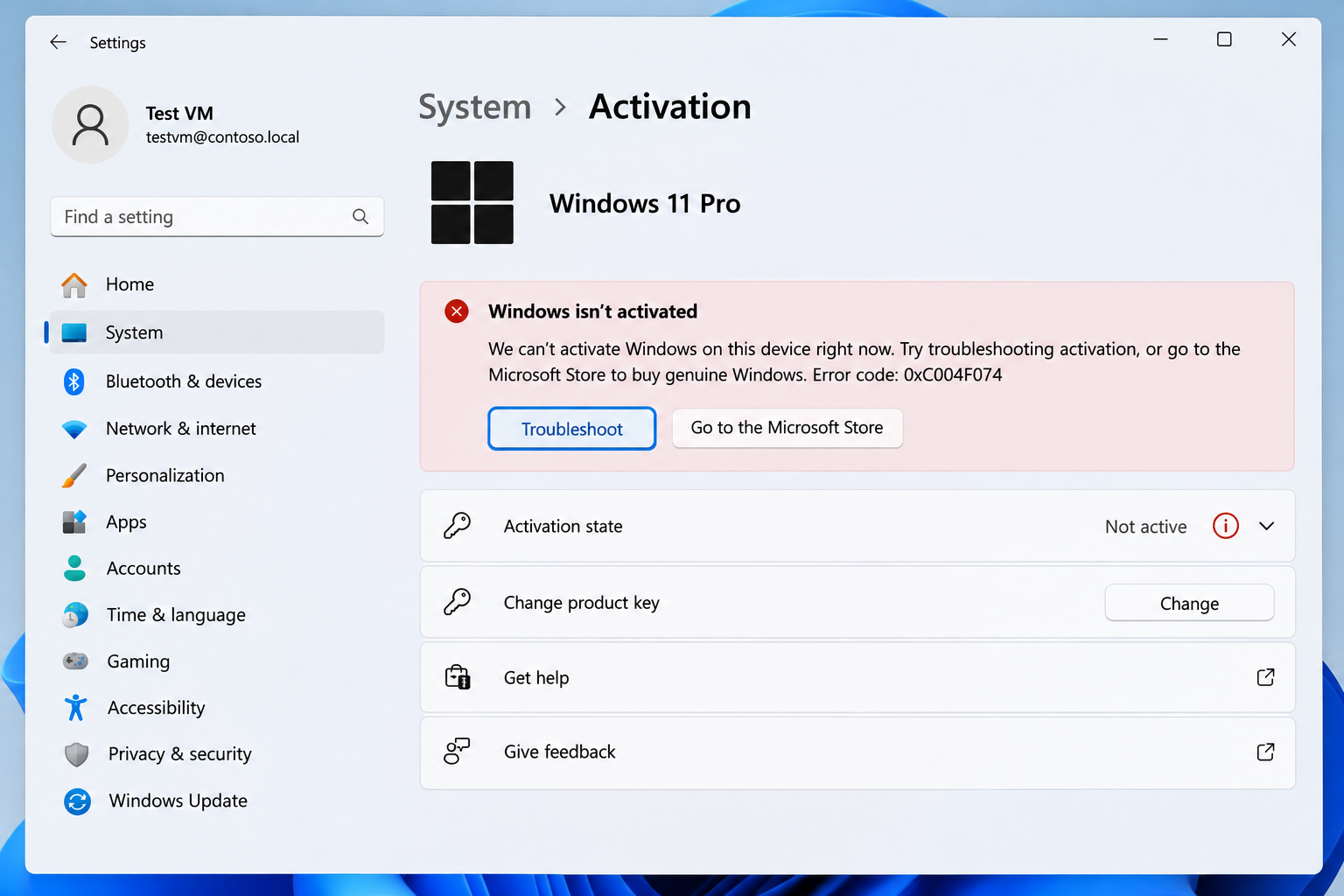
- Check that the PC is online and that the date and time are correct, then try again.
These codes from Microsoft’s activation errors page come up most often when you are judging whether a copy is legitimate:
| Code | Microsoft’s explanation | What it suggests |
|---|---|---|
| 0xC004F211 | The hardware of the device has changed. | Common after a motherboard swap; not a sign of piracy by itself. |
| 0xC004F213 | No product key was found on the device. | Often follows a reinstall or hardware change. |
| 0xC004C003 | The key was used on multiple devices and marked invalid. | A strong warning sign for a cheap or resold key. Contact the seller. |
| 0xC004C008 | The key is already used on another device or exceeds the license terms. | Each PC needs its own license. |
| 0xC004FC03 | The PC may not be connected to the internet. | Check the connection and firewall. |
| 0x803f7001 | No valid Windows 11 license was found. | Enter a valid key or buy a digital license. |
Microsoft’s advice on who to contact depends on the source: the reseller for a key you bought, the manufacturer for a PC that came with Windows, and the repair shop if the problem began after a repair. For the full activation process, see how to activate Windows 11.
If Your Copy Turns Out Not to Be Genuine
Microsoft says a non-genuine copy still receives critical security updates, but other updates and benefits are limited to genuine copies, and you may see notifications saying Windows might not be genuine. The fix is to get a real license:
- Go back to the seller first and ask for a refund or a valid license, with your receipt in hand.
- Buy a license from Microsoft or a retailer you trust. On the Activation page, Go to Store opens the Microsoft Store app to buy a digital license, and Change product key lets you enter a key you bought. If you prefer the command line, there is also a way to activate Windows 11 with Command Prompt using a legitimate key.
- If the installation itself came from unknown media, consider starting fresh with Microsoft’s media. The steps to wipe and reinstall Windows 11 walk through that.
- Report counterfeit software through the Microsoft How to Tell report form. Microsoft says reports are confidential.
Skip activation scripts and “KMS” tools passed around online. They don’t make a copy genuine, and they ask you to run unknown code with administrator rights on your PC.
Genuine Windows Questions
Can an Activated Copy of Windows 11 Still Be Non-Genuine?
Yes. Activation shows that Windows accepted a license, and unauthorized tools can fake that. Microsoft also lists a technician activating with a different key and one license installed on many PCs as reasons validation can fail later. Check the slmgr channel and the purchase evidence too.
Does the “Activate Windows” Watermark Mean My Copy Is Pirated?
No. Reminders to activate Windows, such as text on the desktop, only mean Windows hasn’t confirmed a license for this PC. A legitimate copy can show one after a hardware change or a fresh install without a key. Run the troubleshooter and read the error code before drawing conclusions.
Why Does slmgr Show an Expiration Date on My Work Laptop?
Organizations often activate PCs through KMS, which renews on a schedule, so an expiry date is expected there. Microsoft says MAK and retail activation is perpetual. If the warning appears on a managed PC, contact your IT administrator rather than changing the key yourself.
Does Reinstalling Windows 11 Change Whether It Is Genuine?
No. A genuine license stays genuine after a reinstall on the same PC, though you may need to reactivate. Linking a digital license to your Microsoft account beforehand makes reactivation easier, especially after a hardware change.
Your next step: open Settings > System > Activation now, note the exact message, run slmgr /dli, and keep both results with your receipt so you have a record if the license is ever questioned.

Matthew Burleigh is the founder, head writer, and editor of Solve Your Tech, which he launched in 2012. He has written technology tutorials since 2008 and worked in IT since 2003, including small-business support, IT management, and consulting. He holds Bachelor’s and Master’s degrees in Computer Science from Arizona State University.
Matthew writes practical guides for Windows, iPhone and iPad, Microsoft Office, Outlook, Google apps, and Android. Solve Your Tech’s guides are checked step by step against the device or app maker’s own documentation and tested on his own devices whenever he has the hardware or software, with clear steps, sources, and update dates.
Read more about Matthew and how Solve Your Tech writes and updates its guides, or report a correction.