To add a scanner to Windows 11, connect it by USB or to the same network as your PC and turn it on. If Windows doesn’t add it on its own, go to Settings > Bluetooth & devices > Printers & scanners, select Add device next to Add printer or scanner, and then select Add device next to your scanner.
These steps are for Windows 11 Home and Pro and cover USB, Wi-Fi, Ethernet and Bluetooth scanners, plus all-in-one printers with a built-in scanner. The scanning steps use Microsoft’s free Windows Scan app.
Before You Start
Microsoft’s scanner guide says Windows usually finds and installs local and network scanners by itself, so the first thing to try is connecting the scanner and waiting a minute. A little preparation makes that automatic setup far more likely to work:
- Power and startup: turn the scanner on and wait until its lights or screen stop blinking. A scanner that is still warming up often doesn’t respond to Windows.
- USB scanners: plug the cable straight into a port on the PC, not into an unpowered USB hub or a monitor’s USB port. Use the cable that came with the scanner if you still have it.
- Wireless scanners: join the scanner to your Wi-Fi from its control panel or the maker’s setup app first. Microsoft says the PC and scanner must be on the same network name (SSID). A guest network, or a mesh or extender that uses a different name, can hide the scanner from your PC.
- Bluetooth scanners: turn on Bluetooth on the PC, and put the scanner in pairing or discoverable mode as its manual describes.
- Account rights: adding a device through Settings usually works from any account, but installing the maker’s software or picking a driver by hand needs an administrator account. On a work or school PC, your IT department may control which devices you can add.
- Internet connection: Windows downloads the driver it needs, so stay online during setup.
Not sure whether you have a separate scanner or an all-in-one? If the device prints as well as scans, it’s an all-in-one. Windows sets up both parts together, as explained in the all-in-one section below.
How to Add a USB Scanner
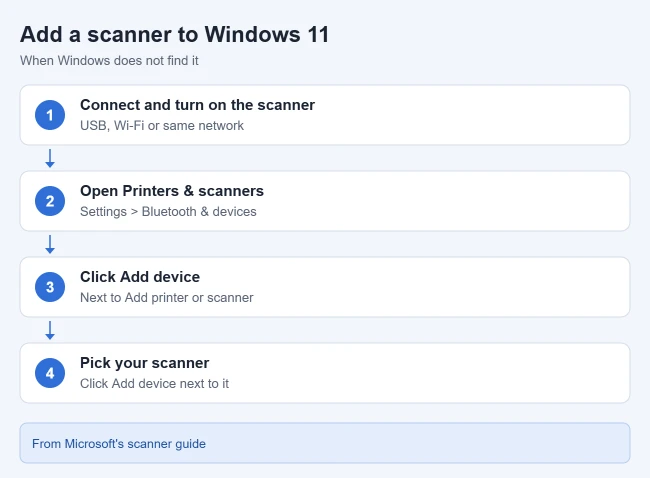
- Plug the scanner into a USB port on your PC and turn it on. Wait a minute or two. If Windows installs it by itself, you may see a notification near the clock, and you can skip to step 5 to confirm it.
- If nothing happens, select Start > Settings > Bluetooth & devices > Printers & scanners. You can also press Windows key + I to open Settings.
- Look at the list of devices. If your scanner is already there, Windows has installed it and you can go to step 5.
- Select Add device next to Add printer or scanner. The search can take a few minutes. When your scanner appears, select Add device next to it.
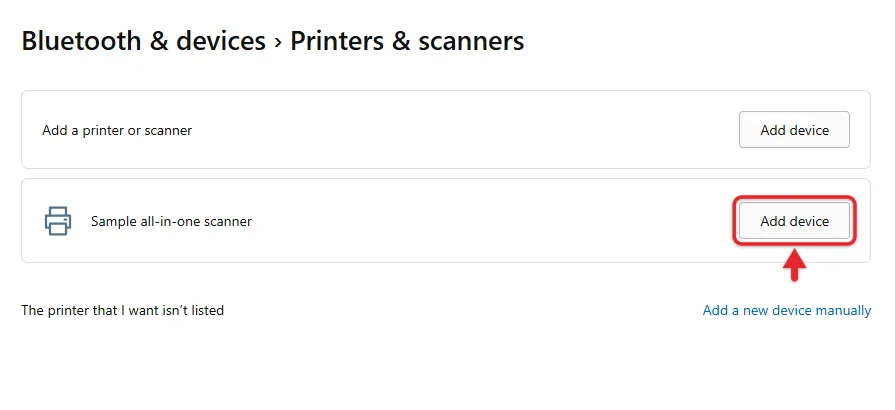
- Check that the scanner is now listed on the Printers & scanners page.
Windows installs the scanner with a driver from Windows Update, and it’s ready to use with the Windows Scan app. If the search finishes and your scanner isn’t listed, try a different USB port, restart the scanner, and run Add device again before moving on to the troubleshooting section.
How to Add a Wireless or Network Scanner
Use these steps for a scanner on Wi-Fi or connected to your router with an Ethernet cable.
- Turn on the scanner and make sure it’s connected to the same network as your PC. Most scanners with a screen show the network name in their Wi-Fi or network settings.
- On the PC, go to Settings > Bluetooth & devices > Printers & scanners.
- Select Add device next to Add printer or scanner and wait for the network search to finish. On a busy network this can take longer than a USB search.
- Select Add device next to your scanner.
The network scanner is installed and appears in the Printers & scanners list.
Add a network scanner by IP address
If the scanner never shows up in the search, you can add it by its IP address, the number that identifies it on your network. Find the address on the scanner’s network settings screen, on a printed network configuration page, or in your router’s list of connected devices. Use the scanner’s own address, not your PC’s.
- In Printers & scanners, select Add a new device manually next to The printer that I want isn’t listed. Some versions of Windows 11 label the button Add manually. The Add Printer window opens.
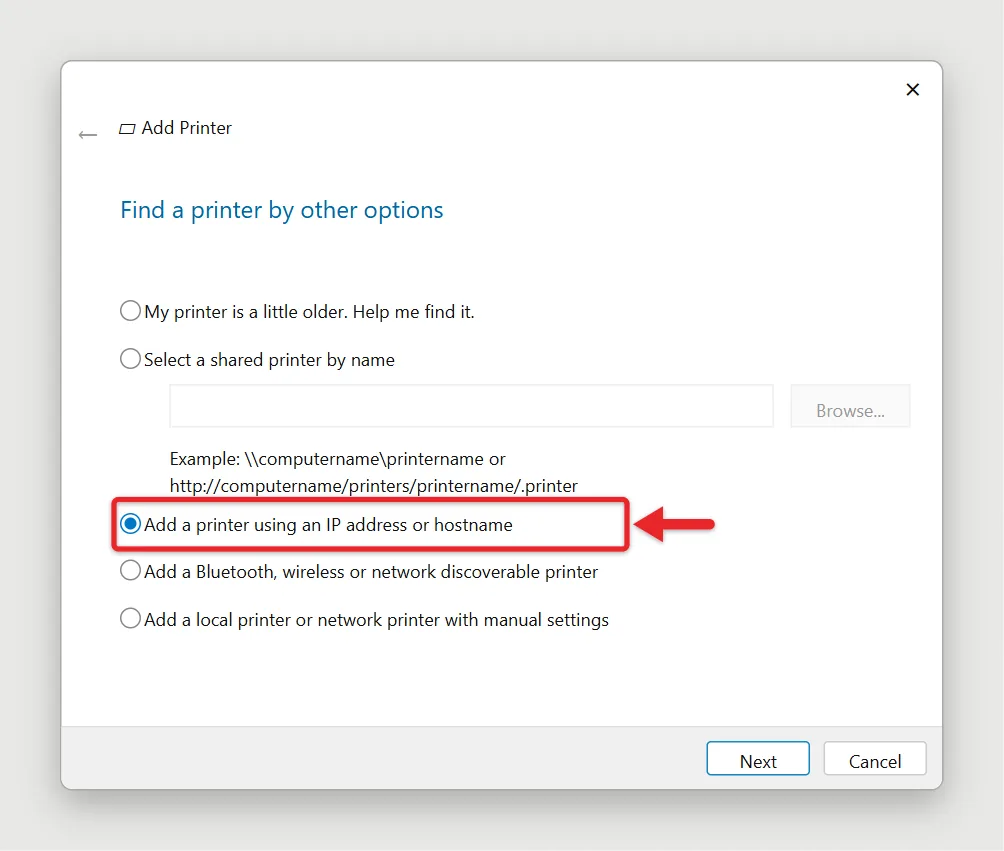
- Select Add a printer using an IP address or hostname, then select Next.
- Leave Device type set to Autodetect or choose TCP/IP Device, type the scanner’s IP address in Hostname or IP address, and select Next.
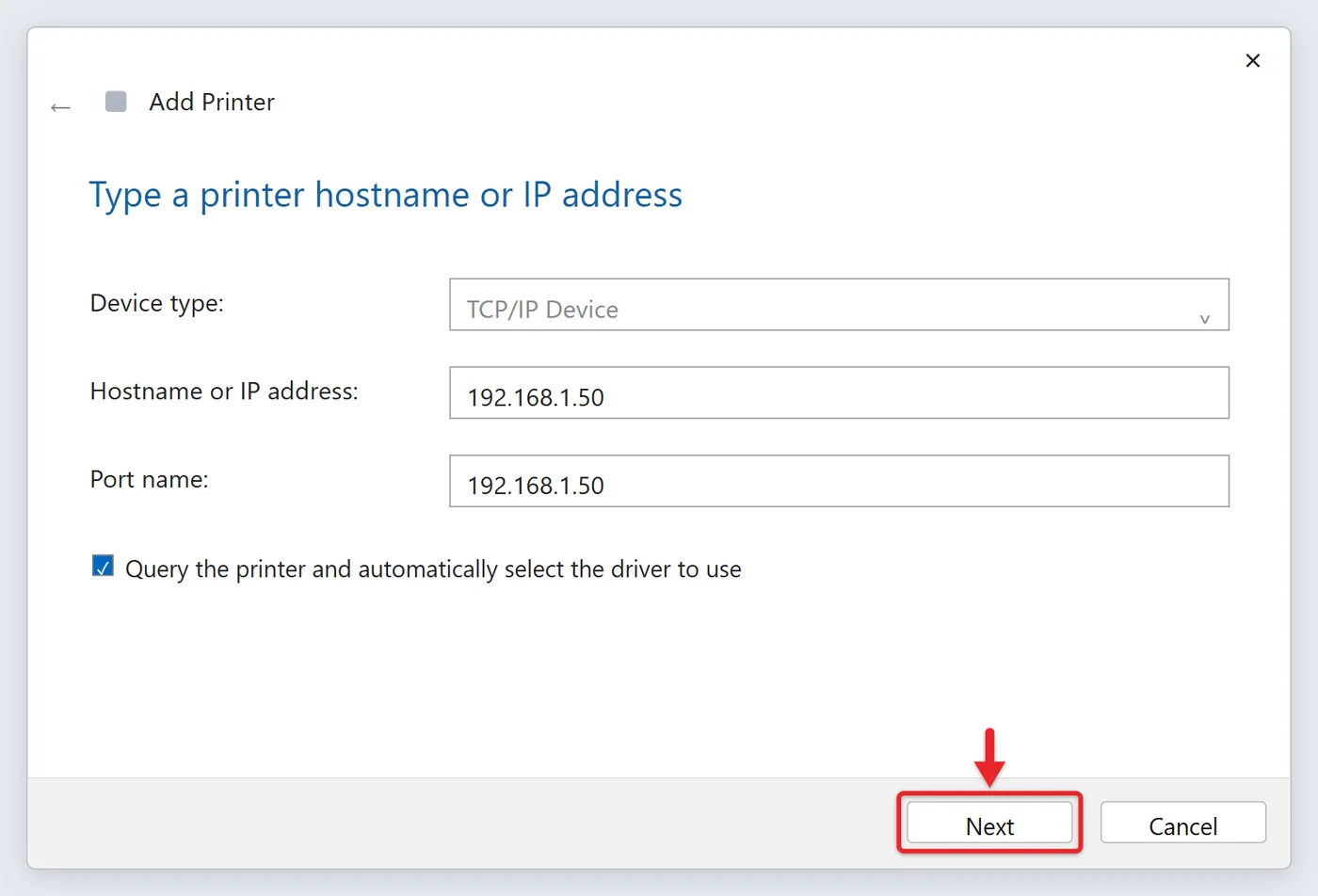
- Follow the remaining prompts. If Windows asks for a driver, choose your scanner’s maker and model, or install the maker’s driver first and run these steps again.
- Select the device in Printers & scanners and check that Scanner settings appears on its page.
If the address changes every time your router restarts, the scanner can drop off the list again later. Reserving a fixed address for it in your router’s settings prevents that. On some network all-in-ones, adding the device by IP address installs only the printer. If Scanner settings is missing afterward, install the maker’s scanner software, which handles network scanning for those models.
How to Add a Bluetooth Scanner
Microsoft groups Bluetooth scanners with network and wireless ones, so the setup is the same.
- Put the scanner in pairing or discoverable mode. The button or menu for this differs by model, so check the manual.
- On the PC, go to Settings > Bluetooth & devices and make sure Bluetooth is turned on.
- Open Printers & scanners, select Add device, and wait for the search.
- Select Add device next to the scanner. If Windows shows a pairing code, check that it matches the scanner’s screen and confirm it.
Small portable and wand scanners often store scans on a memory card and use Bluetooth or Wi-Fi only for their own phone or PC app. If yours doesn’t appear in Windows, its manual will say whether it supports scanning from Windows at all.
Using an All-in-One Printer?
A scanner that’s part of a multifunction or all-in-one printer might appear only as a printer. That’s normal. To check that Windows found the scanner too:
- Go to Settings > Bluetooth & devices > Printers & scanners.
- Select the printer.
- Look for Scanner settings on the printer’s page. If it’s there, Windows installed the scanner as well.
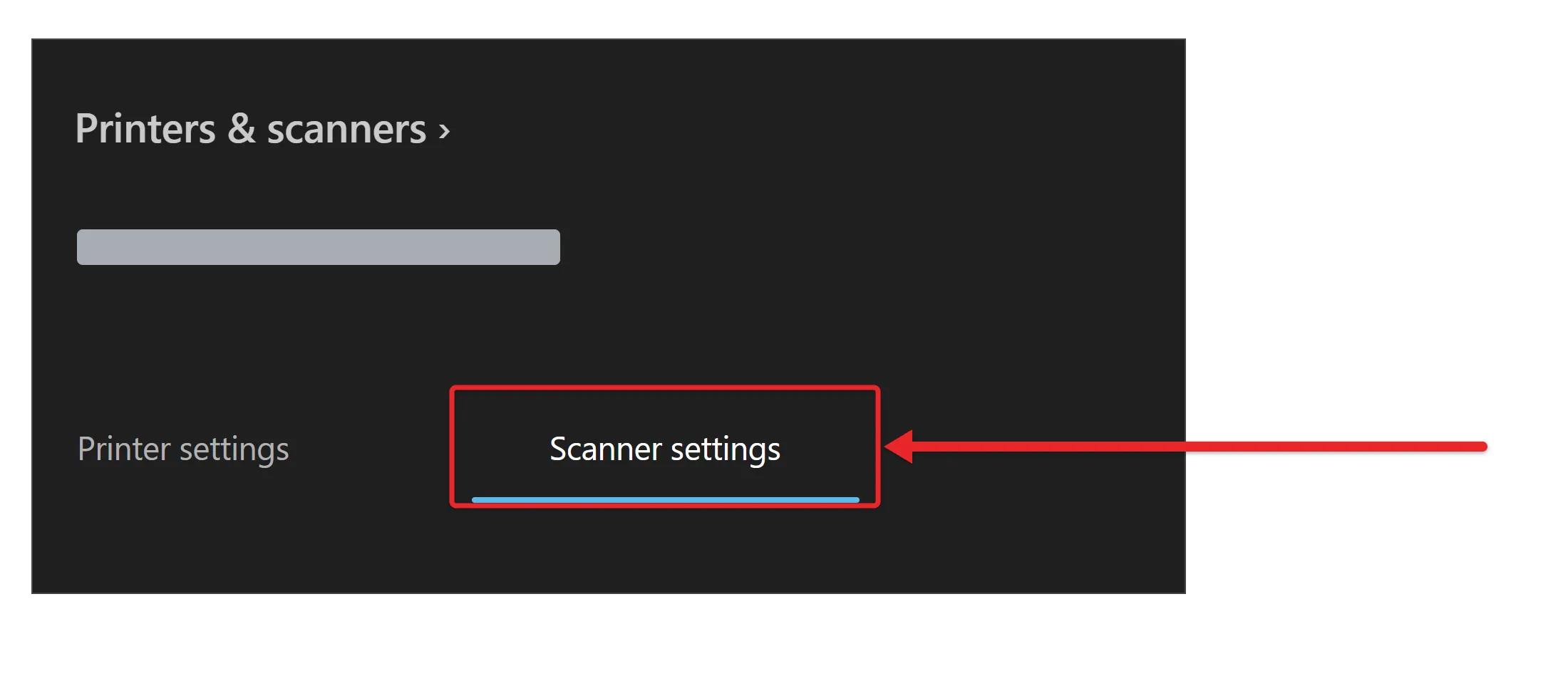
If the printer works but Scanner settings is missing, the scanner part usually needs the maker’s full software package. HP, Canon, Epson and Brother each offer free scanning apps on their support sites, and these apps are also what makes the printer’s own Scan to Computer button work. Go to the support page for your exact model and download the full software for Windows 11. Outdated drivers can be fixed by updating the printer driver in Windows 11. The printing side of the setup is in adding a printer in Windows 11.
If your all-in-one can also fax, you can fax from a computer on Windows.
ARM-based PCs: some Windows laptops, including many Copilot+ PCs, use ARM processors. Some manufacturer installers don’t run on them, so use the Add device route in Settings unless the maker offers an ARM version of its software.
Windows Scan or the Maker’s App: Which Should You Use?
| Windows Scan | Maker’s scanning app | |
|---|---|---|
| Cost | Free from Microsoft | Free from the scanner maker |
| Works with | Most scanners Windows installs | That maker’s scanners |
| File types | JPEG, PNG, TIFF, Bitmap | Usually adds PDF and multipage PDF |
| Extras | Basic settings and preview | Often two-sided scanning, text recognition (OCR) and the printer’s Scan button |
For a quick scan of a photo or a single page, Windows Scan is enough. If you need a PDF, two-sided pages, or editable text, install the maker’s app.
How to Scan a Document With Windows Scan
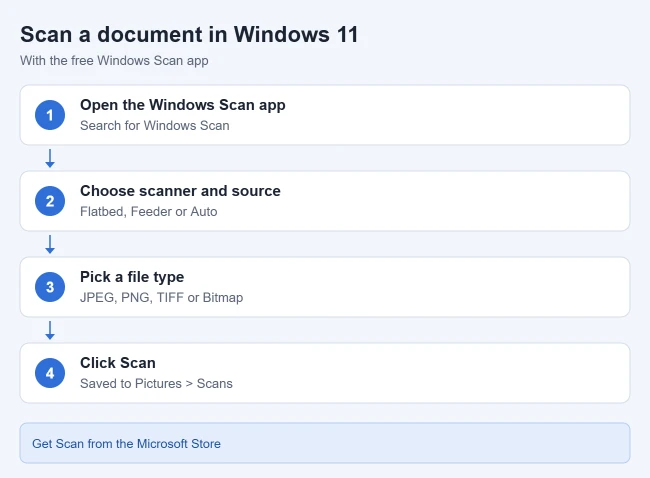
- Select Start, type Windows Scan, and open the Scan app. If it isn’t installed, get Windows Scan from the Microsoft Store.
- Place the document face down on the scanner glass and close the lid, or load it in the document feeder as the scanner’s guide marks show.
- In the Scan app, choose your scanner under Scanner.
- Under Source, choose Flatbed, Feeder or Auto-configured. Auto-configured is the default and usually works.
- Under File type, choose JPEG, PNG, TIFF or Bitmap. JPEG makes smaller files for photos, and PNG keeps text sharp.
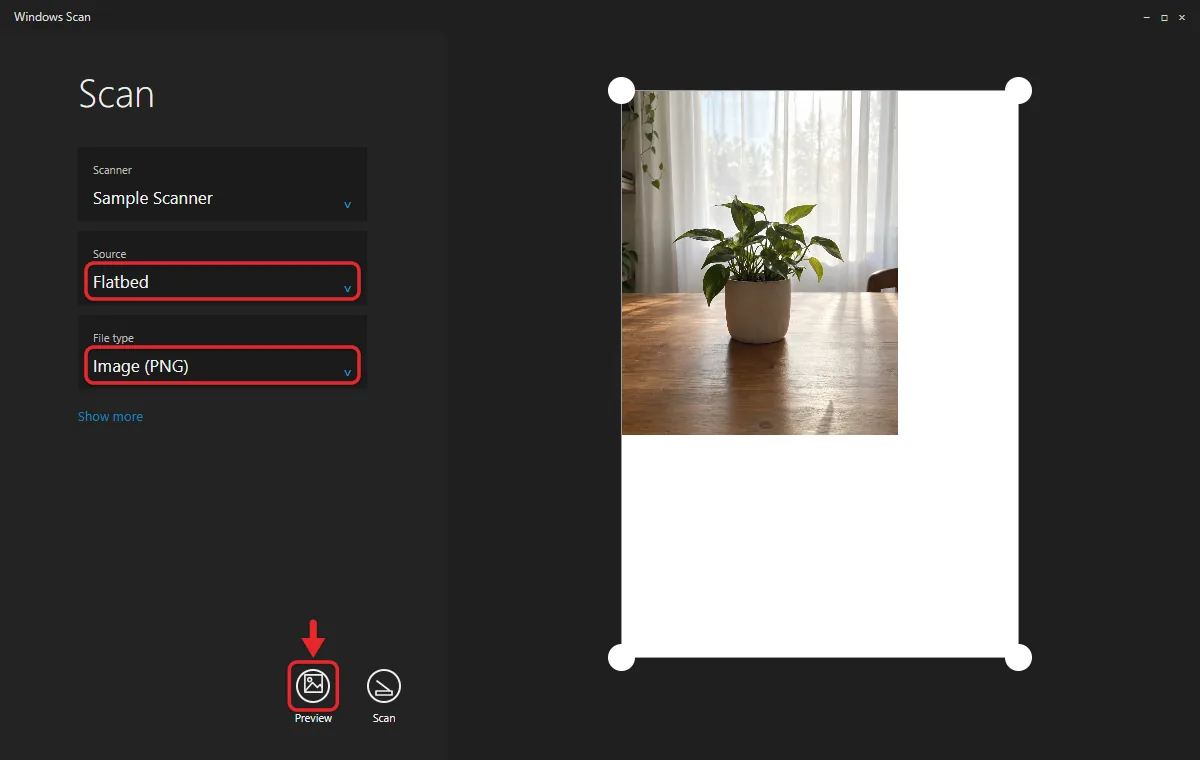
- To pick a different folder, select Show more, then select the link under Save file to, choose a folder, and select Select Folder. Depending on your scanner and source, Show more can also offer color and resolution settings.
- Select Preview if it’s available to check the page position, then select Scan.
The scan saves automatically. Select View to open it in the Photos app, or Close to start another scan. By default, scans go to the Pictures > Scans folder in your user folder. More scanning tips are in scanning on Windows 11. Need the page in a document? You can scan a document straight into Word.
Windows Fax and Scan, the older built-in program, isn’t installed on most current Windows 11 PCs, and on many it no longer appears in Settings > System > Optional features. Windows Scan is the simpler option for scanning.
How to Confirm the Scanner Works
- Open Printers & scanners and check that the scanner, or your all-in-one printer, is listed.
- For an all-in-one, select it and check for Scanner settings.
- Run one test scan in Windows Scan and open the file to make sure the whole page is there and readable.
How to Remove or Reinstall a Scanner
Reinstalling clears up many scanners that worked before and then stopped.
- Go to Settings > Bluetooth & devices > Printers & scanners.
- Select the scanner or all-in-one printer.
- Select Remove, then Yes.
- Restart the PC, then add the scanner again with Add device.
Removing an all-in-one removes the printer too, so you’ll need to add it back to print. Removing the driver as well is covered in removing a printer in Windows 11.
If Windows Still Can’t Find the Scanner
Work through these in order. Each one fixes a different cause.
- Check the basics: make sure the scanner is on and awake, the USB cable is firmly connected at both ends, or the scanner is on the same network as your PC. Try another USB port and, if you have one, another cable.
- Restart both devices: turn the scanner off, unplug it for 30 seconds, plug it back in, restart the PC, and run Add device again.
- Check the network: Wi-Fi scanners often drop off the network after a router restart. Print or view the scanner’s network report and confirm it shows the same network name as your PC. A VPN on the PC can also hide local devices, so disconnect it while you set up the scanner.
- Allow driver downloads on a metered connection: if your PC’s Wi-Fi is set as metered, scroll down on the Printers & scanners page and turn on Download drivers and device software over metered connections, then try again.
- Install the maker’s software: some scanners need the manufacturer’s driver or app before Windows can use them. Download it only from the maker’s official support page, choose Windows 11 and your exact model, and restart if asked. For an example with an older all-in-one, read about setting up network scanning on the Canon MX340.
- Check for driver updates: go to Settings > Windows Update > Advanced options > Optional updates and expand Driver updates. Install any update listed for your scanner or printer.
- Look in Device Manager: open Device Manager in Windows 11 and find the scanner. A scanner usually appears under Imaging devices or Printers. A yellow warning icon means its driver is missing or broken; right-click it, select Uninstall device, restart, and add it again.
- Check the scanning service: Windows Scan depends on a service called Windows Image Acquisition (WIA). Press Windows key + R, type services.msc, and press Enter. Find Windows Image Acquisition (WIA) and make sure its status is Running. If it isn’t, right-click it and select Start.
- Run the printer troubleshooter for an all-in-one: Microsoft’s printer troubleshooting page starts with the automated troubleshooter in the Get Help app, which can fix connection problems that affect the scanner too.
If none of this works, contact the maker’s support with your scanner’s model number and Windows version ready. A scanner from before Windows 10 may have no Windows 11 driver at all.
Frequently Asked Questions
Do I need to install software to use my scanner?
Often not. Windows installs most scanners automatically, and the free Windows Scan app handles basic scanning. You’ll need the maker’s software for features like PDF output, two-sided scanning or the printer’s own Scan button.
Why does Windows see my printer but not its scanner?
The printer and scanner parts of an all-in-one can use different drivers. If Scanner settings doesn’t appear on the printer’s page in Printers & scanners, install the maker’s full software package for your model.
How do I make my all-in-one the default printer too?
Choosing which one Windows uses first is covered in setting the default printer in Windows 11.
Where do my scans go?
By default, Windows Scan saves them to Pictures > Scans in your user folder, unless you picked another folder under Show more. The maker’s app may use a different folder, such as Documents, which you can change in its settings.
Are the steps different in Windows 10?
Slightly. In Windows 10, go to Settings > Devices > Printers & scanners and select Add a printer or scanner. Windows Scan works the same way. Microsoft ended Windows 10 support on October 14, 2025, so a PC that can run Windows 11 is worth upgrading.
Once the scanner is set up, try a test scan in Windows Scan so you know where your files land before you need them.

Matthew Burleigh is the founder, head writer, and editor of Solve Your Tech, which he launched in 2012. He has written technology tutorials since 2008 and worked in IT since 2003, including small-business support, IT management, and consulting. He holds Bachelor’s and Master’s degrees in Computer Science from Arizona State University.
Matthew writes practical guides for Windows, iPhone and iPad, Microsoft Office, Outlook, Google apps, and Android. Solve Your Tech’s guides are checked step by step against the device or app maker’s own documentation and tested on his own devices whenever he has the hardware or software, with clear steps, sources, and update dates.
Read more about Matthew and how Solve Your Tech writes and updates its guides, or report a correction.