To turn on hardware acceleration in Windows 11, go to Settings > System > Display > Graphics, expand Advanced graphics settings, turn on Hardware-accelerated GPU scheduling, and restart your PC. Browsers such as Edge and Chrome, and some apps, have their own hardware acceleration switch, covered below.
These steps cover current Windows 11 releases and follow Microsoft’s DirectX team post on GPU scheduling, its guide to the redesigned Graphics settings page, and Microsoft’s guide to graphics settings for games. The GPU scheduling switch only appears when your graphics card and driver support it.
What Hardware Acceleration Does
Hardware acceleration means handing work to specialized hardware, usually your graphics card (GPU), instead of the main processor (CPU). In Windows 11 the term covers two separate things:
- Hardware-accelerated GPU scheduling (HAGS): a Windows-wide graphics setting. Microsoft explains that, with the right hardware and drivers, Windows can offload most GPU scheduling to a dedicated processor on the graphics card, while Windows still controls priorities.
- App and browser acceleration: a switch inside a program, such as Edge, Chrome or Spotify, that lets that program use the GPU for video, scrolling and drawing the page.
Turning one on or off doesn’t change the other. Microsoft also says the scheduling change should be transparent: most people won’t notice a big difference, because apps are already designed to hide scheduling delays. Treat it as a setting worth trying, not a guaranteed speed boost.
Before You Start
- A supported graphics card and driver. The switch needs a recent GPU and a driver built for it (WDDM 2.7 or later). Graphics makers decide which models get support, so older or entry-level chips may never show the option.
- The latest graphics driver. Get it from your PC maker or from NVIDIA, AMD or Intel. Here is how to update your graphics driver in Windows 11.
- An administrator account. Windows may ask you to approve the change.
- Saved work. You’ll need to restart.
How to Turn On Hardware-Accelerated GPU Scheduling
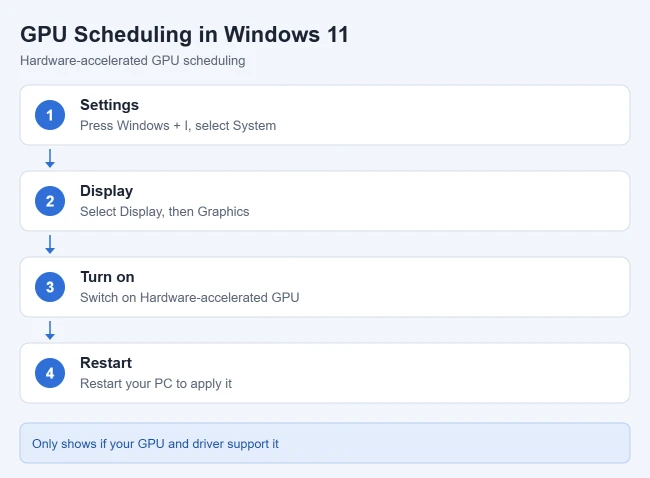
- Press Windows + I to open Settings.
- Select System, then Display.
- Scroll down and select Graphics.
- Expand Advanced graphics settings. On older Windows 11 versions, select Change default graphics settings instead.
- Turn on Hardware-accelerated GPU scheduling. If a User Account Control prompt appears, select Yes.
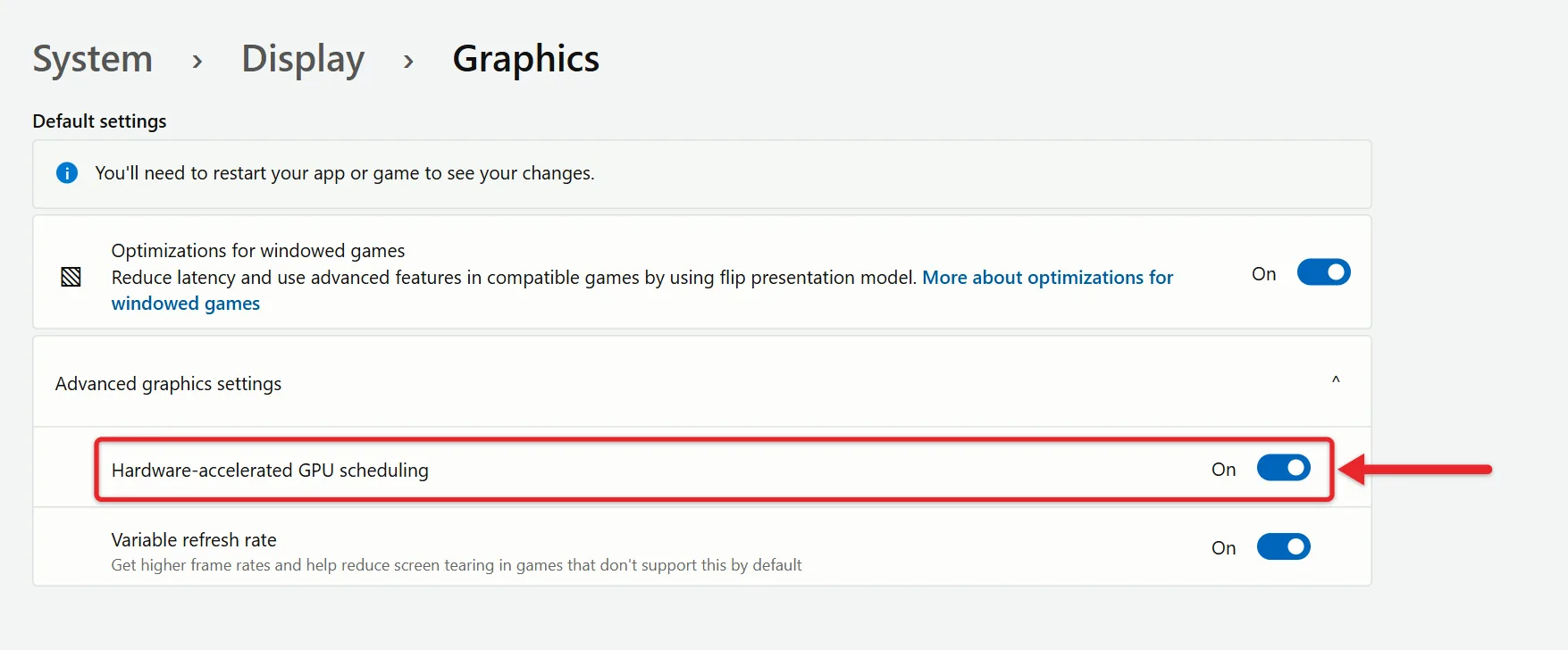
- Restart your PC. Any of the usual ways to restart Windows 11 works.
On many newer PCs the switch is already on. If yours shows On, there’s nothing more to do.
Check That It’s On
After the restart, open the same Graphics page and confirm the switch still shows On. For a second check, press Windows + R, type dxdiag, and press Enter. On the Display tab, the Drivers area lists Hardware-Accelerated GPU Scheduling as Enabled, Disabled or Not Supported.
What If the Setting Is Not There?
The switch only shows when both the graphics card and its driver support it. Work through these checks:
- Update your graphics driver from your PC maker or graphics card maker, restart, and look again.
- Open Device Manager and expand Display adapters to see which graphics card you have. If it says Microsoft Basic Display Adapter, Windows is using a generic driver and the maker’s driver isn’t installed.
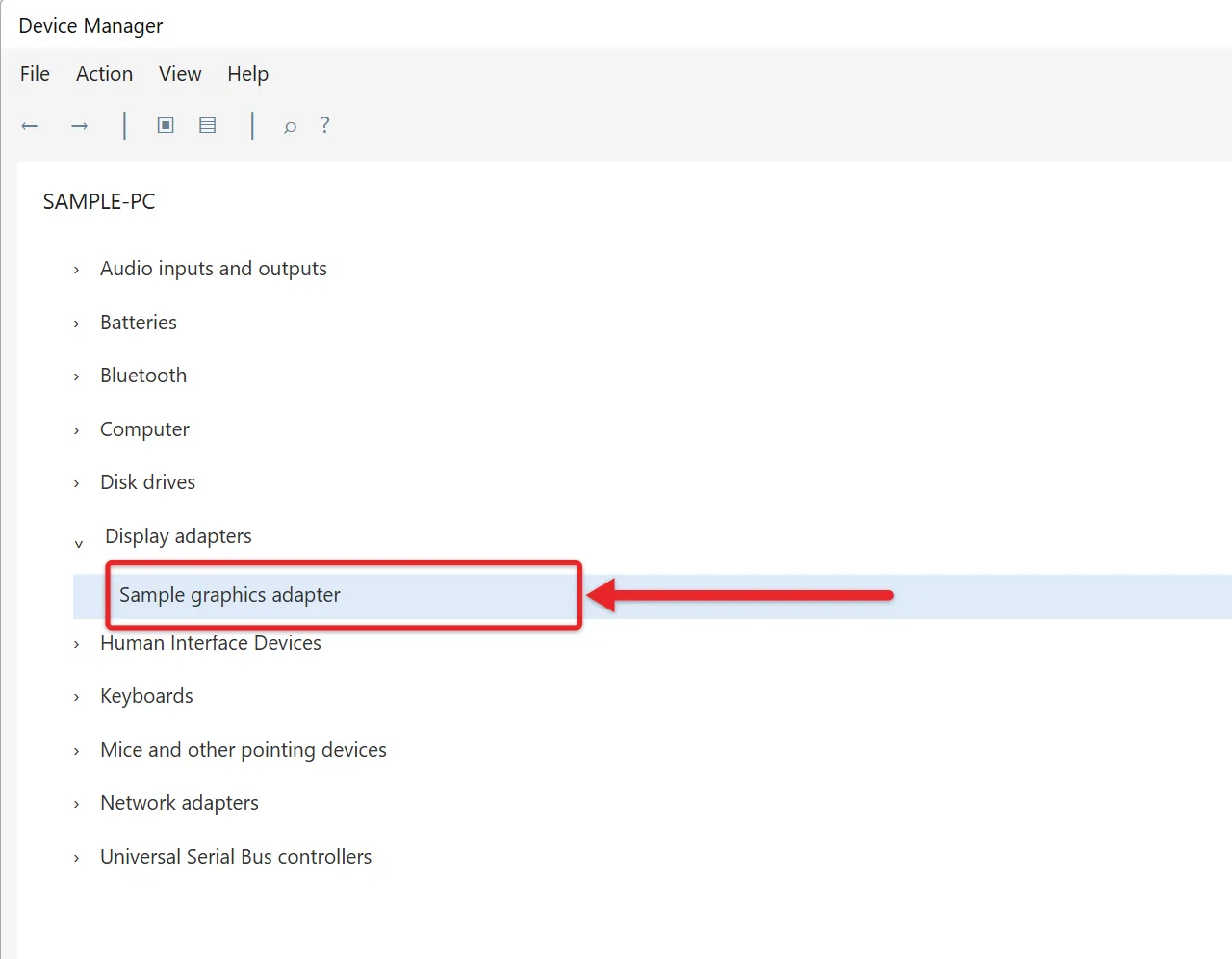
- Check your drivers on Windows 11 to read the driver version and compare it with the maker’s latest.
Windows Update can also offer driver updates, which you can install from the optional updates list in Windows 11.
If the switch still doesn’t appear, your graphics hardware doesn’t support it. Some sites suggest a registry edit to force it on, but that can’t add support your card or driver lacks, and a bad registry change can cause display problems. Leave it off and use the other settings below.
Turn Off Hardware-Accelerated GPU Scheduling
To switch GPU scheduling off, open Settings > System > Display > Graphics, expand Advanced graphics settings, set Hardware-accelerated GPU scheduling to Off, and restart the PC. Then test the app or game that was having trouble.
This changes how GPU work is scheduled; it does not turn off your graphics card or force apps to use the CPU. Browser and app acceleration switches are separate, as the browser section below explains. If turning scheduling off doesn’t help, turn it back on and restart.
Should You Leave It On?
| Your situation | Suggested setting |
|---|---|
| You play recent games or use video editing or 3D apps | Try it on and compare |
| A game’s DLSS Frame Generation option is greyed out on an NVIDIA card | Turn it on; game makers list it as required for that feature |
| Crashes, stutter or a black screen started after you turned it on | Turn it off and restart |
| You mainly browse, email and use Office apps | Either setting is fine; you’re unlikely to see a change |
Change one thing at a time and test something you use often, so you can tell whether the switch made the difference.
Choose Which GPU an App Uses
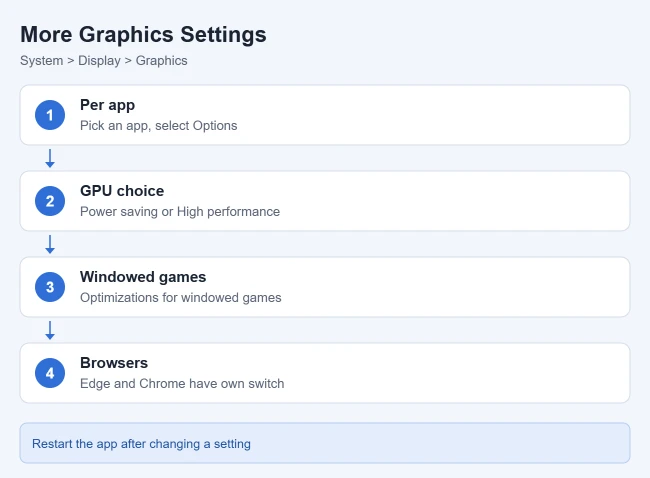
If your PC has more than one graphics processor, such as a laptop with built-in and dedicated graphics, you can pick which one an app uses. Here are the steps:
- Go to Settings > System > Display > Graphics.
- Under Custom options for apps, select the app or game, then select Options. If the app isn’t listed, add it first with the button for a desktop app or a Microsoft Store app.
- Choose Let Windows decide (Power saving), Power saving, or High performance.
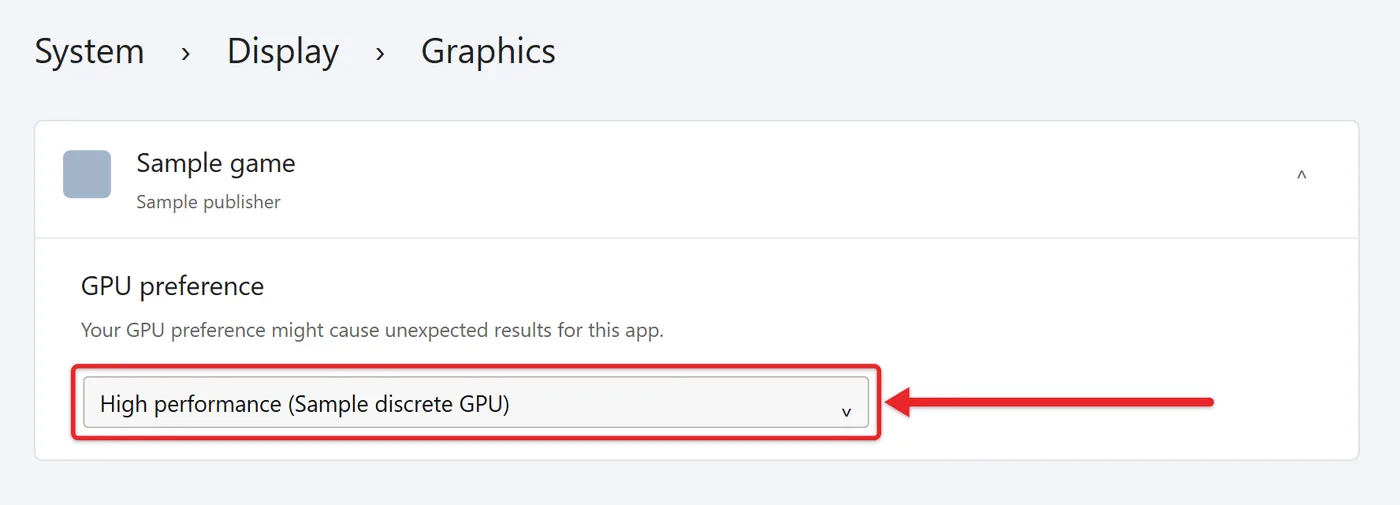
- Select Save, then restart the app.
High performance uses the dedicated graphics card, which is faster but drains a laptop battery sooner. On PCs with more than one dedicated GPU, the Advanced graphics settings section can also show a Default high performance GPU choice.
Optimizations for Windowed Games
On the same Graphics page, under Default settings, Microsoft offers Optimizations for windowed games. It improves performance for DirectX 10 and DirectX 11 games in windowed and borderless windowed modes, and supports features like Auto HDR and variable refresh rate on supported displays. Turn on the switch, then restart your game. If Auto HDR is on, this setting turns on automatically, so turn off Auto HDR first if you want to turn the optimizations off.
Game Mode is another built-in option for games. Here is how to turn on Game Mode in Windows 11.
How to Turn On Hardware Acceleration in Your Browser
Browsers have their own setting:
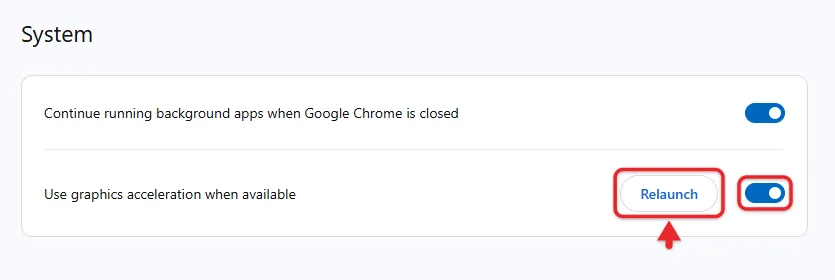
- Microsoft Edge: go to Settings > System and performance, turn on Use graphics acceleration when available, then restart Edge. Any of the usual ways to restart Microsoft Edge will apply the change.
- Google Chrome: go to Settings > System, turn on Use graphics acceleration when available, then relaunch Chrome.
To confirm it’s working, type edge://gpu or chrome://gpu in the address bar. Most items under Graphics Feature Status should read Hardware accelerated.
If a browser shows flickering or black boxes after turning this on, turn it back off. For Chrome, here is how to turn off hardware acceleration in Google Chrome. If Edge is acting up in other ways, try clearing the Edge cache. Flicker across the whole desktop is a different problem, with its own fixes for screen flickering on Windows 11.
Chrome not installed yet? You can download Google Chrome on Windows 11 first.
What About the Old Hardware Acceleration Slider?
Older guides describe a slider in Display adapter properties > Troubleshoot > Change settings. That control dates from Windows 7 and most current graphics drivers don’t offer it, so the Troubleshoot tab is usually missing or greyed out in Windows 11. That’s normal and doesn’t mean anything is broken. Use the Graphics page in Settings instead.
Frequently Asked Questions
Will this make games run faster?
It can help on some PCs, but Microsoft expects most people will not notice a significant change. If you see stuttering or crashes, turn it off and restart.
Do I need to restart after changing it?
Yes. GPU scheduling takes effect after a restart. For per-app and game settings, restart the app.
Is it safe to leave on?
Yes. Microsoft tested drivers before enabling support and did not expect performance drops. If you do run into problems, switching it off undoes the change.
Does turning it on affect my browser?
No. Edge, Chrome and other apps follow their own acceleration switch, not the Windows GPU scheduling setting.
Seeing lag in the Spotify desktop app? Here is how to turn hardware acceleration on or off in Spotify.
Colors on your screen look off? You can change monitor color in Windows 11.

Matthew Burleigh is the founder, head writer, and editor of Solve Your Tech, which he launched in 2012. He has written technology tutorials since 2008 and worked in IT since 2003, including small-business support, IT management, and consulting. He holds Bachelor’s and Master’s degrees in Computer Science from Arizona State University.
Matthew writes practical guides for Windows, iPhone and iPad, Microsoft Office, Outlook, Google apps, and Android. Solve Your Tech’s guides are checked step by step against the device or app maker’s own documentation and tested on his own devices whenever he has the hardware or software, with clear steps, sources, and update dates.
Read more about Matthew and how Solve Your Tech writes and updates its guides, or report a correction.