To set a first password for a local account on a Windows 11 laptop, open Settings > Accounts > Sign-in options > Password > Add. If the account already has a password, choose Change instead. For a personal Microsoft account, change the account password online. A Windows Hello PIN is separate from either password.
These instructions cover Windows 11 laptops and desktop PCs. Check Settings > Accounts > Your info if you are unsure which account you use (our guide to finding your Windows 11 username and account type explains what that page shows). A local account stores its sign-in credentials on this PC; a Microsoft account also signs in to Microsoft services. Work or school computers can have different password rules: use your organization’s approved process or contact IT.
Set a First Password for a Local Account
Use this method when your local account has no password. You must be signed in to that account.
- Press Windows key + I to open Settings.
- Choose Accounts > Sign-in options, then expand Password.
- Select Add. If you see Change, a password already exists; use the next Settings method instead.
- Enter the new password twice and add a hint that helps you remember it without revealing the password.
- Select Next, then Finish to save it.
Microsoft documents the Add and Change distinction in its sign-in options setup guide. After saving, lock the PC with Windows key + L and choose the password sign-in option to check the new password. If you normally use a PIN or face sign-in, adding a password does not mean Windows will always ask you to type it.
Change Your Password With Ctrl + Alt + Delete
- Press Ctrl + Alt + Delete.
- Select Change a password.
- Type your current password, then the new password twice.
- Press Enter, then select OK.
This is an alternative when Change a password is available on your security screen. Microsoft lists the shortcut in its Windows keyboard shortcuts guide. If the option is missing, use the account-specific Settings or Microsoft account method instead; availability can depend on your sign-in setup or organization.
Change a Local Account Password in Settings
- Press Windows key + I to open Settings.
- Select Accounts, then Sign-in options.
- Select Password, then Change.
- Enter your current password, then follow the prompts to set a new password and a password hint.
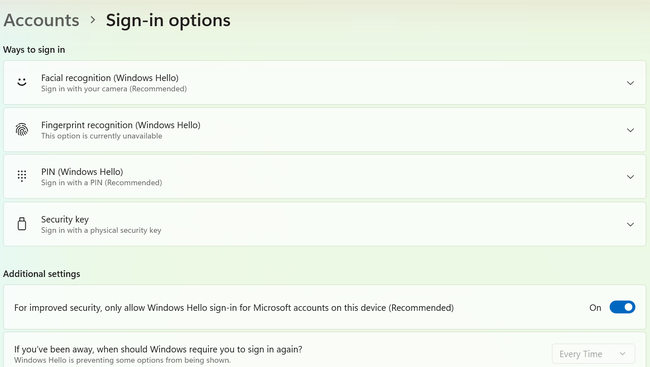
If Password is missing, check your account type and sign-in setup. Microsoft explains that Windows Hello-only sign-in disables password sign-in for Microsoft accounts on that device. Change a personal Microsoft account password online using the steps below. A passwordless Microsoft account can have no account password at all; using a PIN does not by itself establish that. For disabled controls on a managed PC, ask IT.
Change a Microsoft Account Password
- Go to account.microsoft.com/security and sign in.
- Select Change password and verify your identity if asked.
- Enter the new password and select Save.
The next time your PC is online, Windows uses the new password. If you sign in to Windows with a PIN, the PIN doesn’t change. Microsoft’s steps are on its Microsoft account password page. If you’d rather not use a Microsoft account at all, see how to switch to a local account.
How to Change Your Windows Hello PIN
- Open Settings > Accounts > Sign-in options.
- Select PIN (Windows Hello), then Change PIN.
- Enter your current PIN, then the new PIN twice, and select OK.
Microsoft has more on this, including resetting a forgotten PIN with I forgot my PIN, in its PIN help page. Our guides to changing your PIN and turning off the PIN go into more detail.
Change Another User’s Password
An administrator can reset another local account on the same PC. This does not reset a personal Microsoft account online. Prefer having the owner change a known password using the methods above.
Before an administrator reset: resetting without the old password can make password-protected credentials or EFS-encrypted files inaccessible. Read any Windows warning and check recovery arrangements with the owner first.
For a local account you are authorized to manage, right-click Start, select Terminal (Admin), and approve the administrator prompt. Run the command below, replacing Jane with the exact local user name. Keep quotation marks for names with spaces. The asterisk prompts for a password without displaying it; enter and confirm the new password, then check for a success message. Microsoft documents this syntax in its net user command reference.
net user "Jane" *Set a Windows 10 Password and Require Sign-In After Sleep
Windows 10 uses the account’s sign-in password on the lock screen; there is no separate lock-screen password. For a local account without one, open Settings > Accounts > Sign-in options > Password > Add. Enter and confirm the password, provide a hint that does not reveal it, then select Next > Finish. If Password shows Change, the account already has a password. For a Microsoft account, use the Microsoft-account password method above instead.
Adding a password and requiring sign-in after sleep are separate choices. In Windows 10’s Sign-in options, look for Require sign-in and choose the option that requires sign-in when the PC wakes from sleep. Windows 11 presents the related control as If you’ve been away, when should Windows require you to sign in again? Available options vary with the device and organization’s policies; a missing or managed control is not a reason to remove Windows Hello.
Press Windows key + L to lock immediately, then verify that you can sign back in. Also test a sleep-and-wake cycle separately. A PIN, fingerprint, or face can still be an accepted sign-in method, so requiring sign-in does not necessarily mean typing the account password each time. Microsoft’s sign-in options overview covers both Windows versions and their device-dependent controls.
Recover Access When You Forgot Your Windows 11 Password
First identify what Windows is asking for: an account password or a Windows Hello PIN. They are different. For a Microsoft account, use I forgot my password at sign-in or Microsoft’s online reset page from another device, then complete identity verification. Keep the PC online when testing the new password. Microsoft documents the supported Microsoft-account recovery routes.
For a local account, choose the password sign-in option. After an unsuccessful entry, select OK > Reset password and answer the security questions set when the account was created. If you previously made a password-reset disk, use that offered option instead. A separate authorized administrator account can reset a local account using the administrator section above, but read its encrypted-file and credential warning first. Microsoft’s local-account recovery guide distinguishes these methods.
For a forgotten PIN, use I forgot my PIN where offered; Microsoft says the signed-out reset option applies to Microsoft accounts. Otherwise, sign in with the known password and reset the PIN in Settings. Use Microsoft’s PIN recovery instructions. On a work or school PC, contact IT. These routes verify ownership or use an existing administrator; they do not bypass authentication by replacing Windows system files. If recovery fails, consult Microsoft’s reset guidance and check data and BitLocker recovery arrangements before resetting the PC.
Tips for a Strong Password
- Use at least 12 characters. A short phrase of several unrelated words is easier to remember than random symbols.
- Don’t reuse a password from another site or app.
- Consider a PIN or Windows Hello face or fingerprint sign-in for daily use, and keep the password for recovery.
Frequently Asked Questions
What if I forgot my password?
On the sign-in screen, select I forgot my password (or Reset password for a local account) and answer your security questions (if you set them up) or verify with your Microsoft account. Microsoft covers local accounts in its local account password guide.
Is a PIN safer than a password?
A Windows Hello PIN only works on the device where you set it up, so someone who learns it can’t use it to sign in to your Microsoft account elsewhere.
Can I remove my password instead?
For a local account, yes. Leave the new password fields blank when you change it. It’s less secure, though, so read how to remove a password from Windows 11 first for the steps and the trade-offs.
After saving, check the new sign-in method before closing the task. If Windows rejects a password, check Caps Lock and the keyboard layout and make sure you are entering the account password rather than the PIN.

Matthew Burleigh is the founder, head writer, and editor of Solve Your Tech, which he launched in 2012. He has written technology tutorials since 2008 and worked in IT since 2003, including small-business support, IT management, and consulting. He holds Bachelor’s and Master’s degrees in Computer Science from Arizona State University.
Matthew writes practical guides for Windows, iPhone and iPad, Microsoft Office, Outlook, Google apps, and Android. Solve Your Tech’s guides are tested on current devices or checked against official product documentation, with clear steps, sources, and update dates.
Read more about Matthew and how Solve Your Tech writes and updates its guides, or report a correction.