To move files instead of copying them in Windows 11, select them in File Explorer, press Ctrl + X, open the destination folder, then press Ctrl + V. You can also hold Shift while you drag and drop, or drag with the right mouse button and choose Move here.
These steps cover File Explorer in current Windows 11 releases. The same shortcuts work in Windows 10, which reached end of support on October 14, 2025. Use them for personal files and folders, such as documents, pictures, and downloads, not for Windows itself or installed apps. Moving changes a file’s location, while copying leaves the original where it was.
Before You Move Anything
Save and close the files you’re moving, and make sure the destination drive has room. A move leaves you with one copy, so back up anything important first.
Check whether either folder is inside OneDrive. Moving files out of OneDrive removes them from its cloud storage and from other devices that sync that account. Online-only files must download first. If you want both a local and a cloud copy, copy them instead. Before changing a synced folder, read about moving OneDrive files to your PC.
Why Dragging Sometimes Copies
When you drag without holding a key, File Explorer picks the action based on the destination:
| Where you drop the files | What a plain drag does |
|---|---|
| Another folder on the same drive | Moves them |
| A different drive, such as D: or a USB drive | Copies them |
| Anywhere, while holding Shift | Moves them |
| Anywhere, while holding Ctrl | Copies them |
| Anywhere, while holding Alt (or Ctrl + Shift) | Creates a shortcut |
“Drive” here means a volume with its own letter. Two partitions on one physical disk, such as C: and D:, count as different drives, so a plain drag between them copies. The cut-and-paste method below avoids the guesswork because it always moves.
Method 1: Cut and Paste
Microsoft’s File Explorer guide gives the same sequence with the toolbar’s Cut and Paste buttons. Here is the keyboard route:
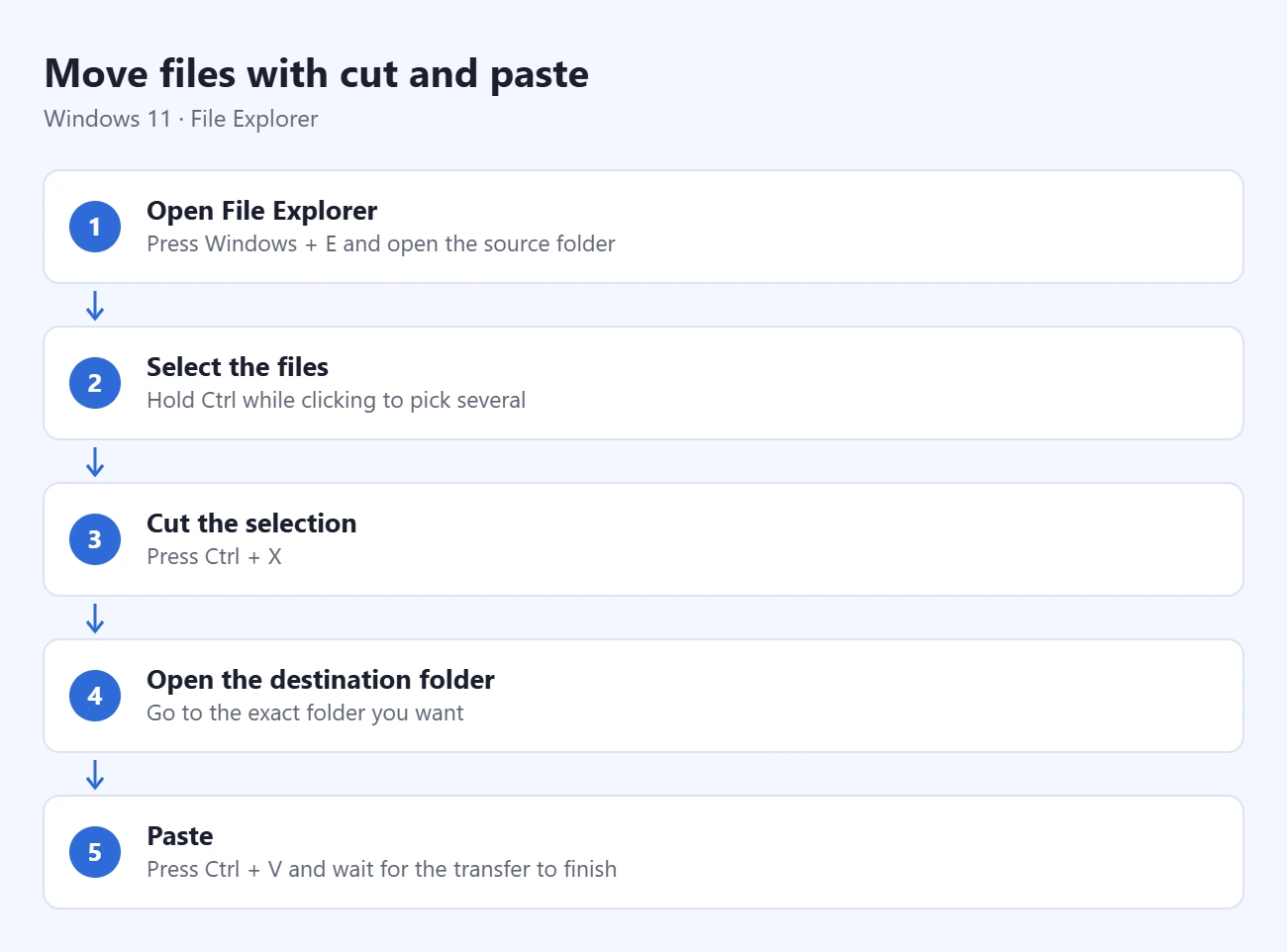
- Open File Explorer. Press Windows + E. Open the folder that has the files you want to relocate.
- Select the items. Click one file, or hold Ctrl while clicking more files. To select a run of files, click the first one and hold Shift while clicking the last. Use Ctrl + A only if you want everything in that folder.
- Cut the selection. Press Ctrl + X. The icons turn faded to show they’re ready to move. Nothing moves yet, and pressing Ctrl + C instead would prepare a copy.
- Open the destination folder. Go to the folder you want to use. To create a new folder there, press Ctrl + Shift + N, type a name, press Enter, then open it.
- Paste into that folder. Press Ctrl + V. A progress window appears for larger transfers. Wait for it to close, and keep an external drive connected the whole time.
- Check the result. Make sure the files are in the destination, open a few of them, and confirm they’re gone from the original folder. If an error appears, sort it out before deleting anything.
Using the Mouse Instead
Right-click the selected files and choose Cut, then right-click an empty spot in the destination folder and choose Paste. Windows 11 shows Cut, Copy, Paste, Rename, Share, and Delete as icons along the top or bottom of the right-click menu; hover over an icon to see its name. The Cut and Paste buttons are also on the toolbar at the top of File Explorer. For an item you reached through Home (formerly Quick access), Microsoft says to right-click it and choose Open before you cut and paste.
To keep the original where it is, follow the steps to copy and paste on Windows 11 instead.
Method 2: Hold Shift While Dragging
Microsoft’s Windows keyboard shortcuts list gives Shift + drag for moving, Ctrl + drag for copying, and Alt + drag for creating a shortcut. A shortcut only points to the original file; it doesn’t relocate anything.
- Open both locations. Press Ctrl + N to open a second File Explorer window, then arrange the windows side by side so you can see the destination.
- Select the files in the source. Start dragging the selection and hold Shift.
- Check the drop target. Point at the destination folder. The tooltip next to the pointer should say Move to followed by the folder name. If it says Copy to or Create link in, keep holding Shift or cancel by pressing Esc.
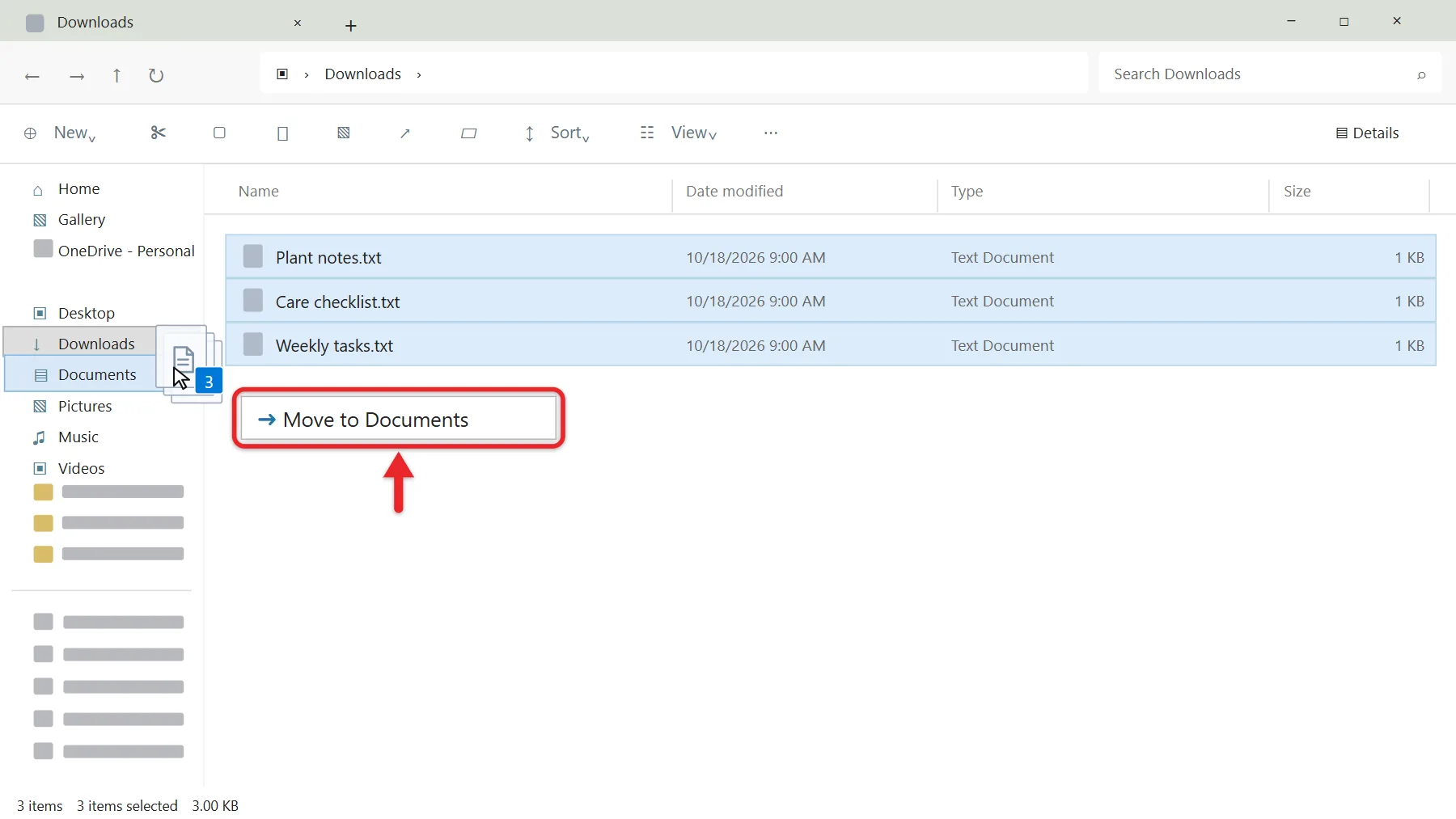
- Drop while holding Shift. Release the mouse button first, then release Shift. Wait for the transfer to finish and check the destination.
Method 3: Right-Drag and Choose Move Here
This lets you choose the action after you drop.
- Select the files in File Explorer.
- Drag with the right mouse button. Hold the right button on the selection and drag it onto the destination folder.
- Release the button. A small menu opens at the pointer.
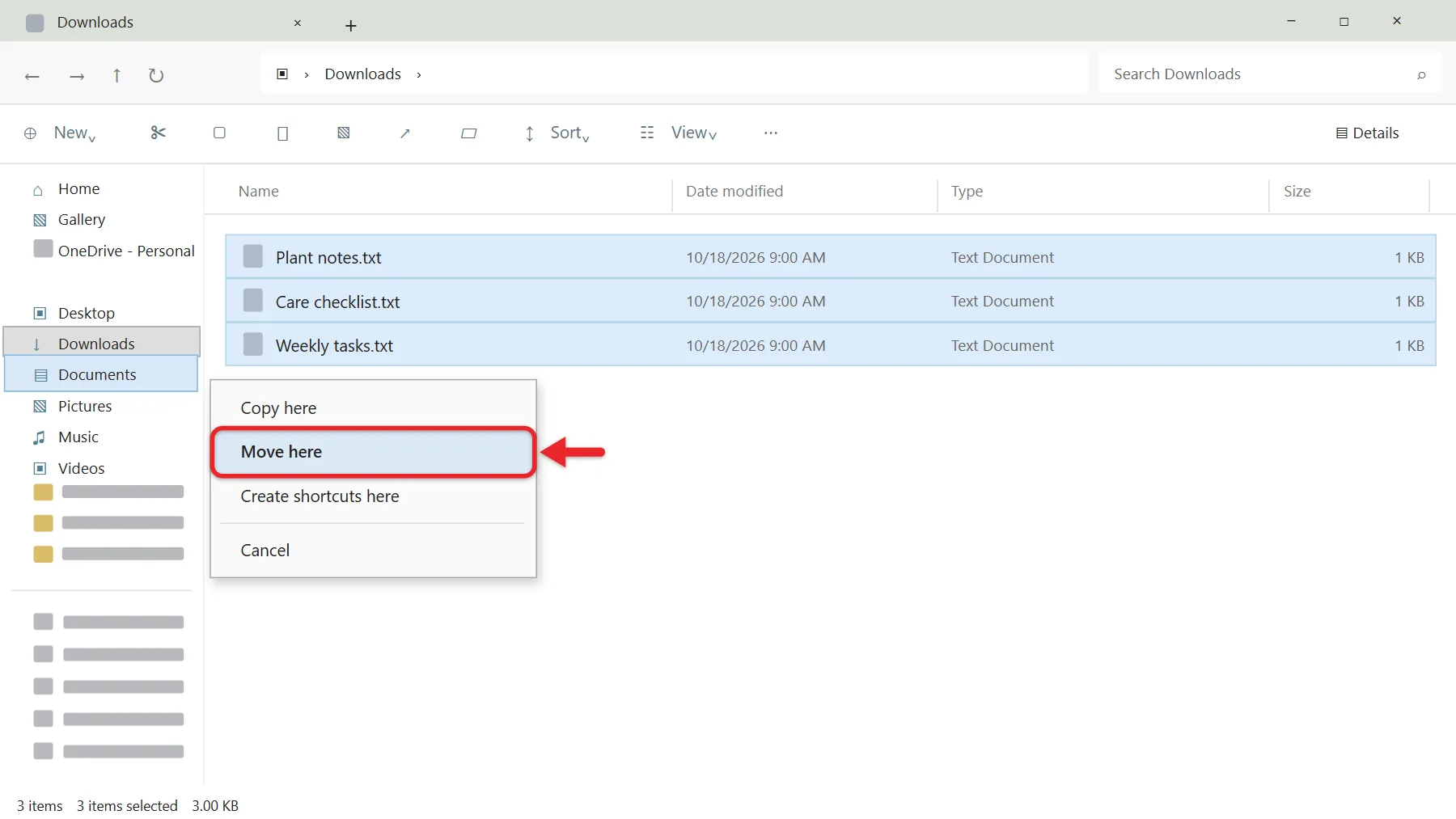
- Choose Move here. The files move. The same menu offers Copy here and Create shortcuts here, and you can press Esc to cancel.
Moving Between C:, D:, an SSD, or an External Drive
Cut and paste works for personal files whether they’re on a hard drive, an SSD, or USB storage. Connect an external drive first and find it under This PC in the left pane. Open a destination folder on that drive before pasting. Microsoft’s external storage transfer instructions explain finding the drive and checking transferred files.
Avoid Send to for this job. Sending files to a drive from the right-click menu copies them and leaves the originals behind.
Moving files within the same drive is almost instant and doesn’t free up space, because Windows only changes where the file is listed. Moving them to another drive copies the data and then deletes the originals, so it takes longer and frees space on the source drive once it’s done. When the transfer finishes, select Eject for the external drive before you unplug it.
OneDrive Files Need an Extra Check
A blue cloud icon marks an online-only file. Microsoft’s Files On-Demand documentation says that when you move files outside the OneDrive folder, they download to the new folder and are removed from your OneDrive. Stay online until large transfers finish.
If you only want offline access while the files keep syncing, right-click the OneDrive item and select Always keep on this device instead of moving it. To move your whole OneDrive folder or backed-up Desktop and Documents folders, follow the OneDrive steps linked above.
Dropbox works differently: to relocate its whole folder, move the Dropbox folder from Dropbox Preferences instead of cutting and pasting it.
Troubleshooting
Paste is unavailable or the files did not move
Go back to the source, check the selection, and cut it again. Open an ordinary folder where you can create files, then paste. If Windows shows an error, read it, since the transfer may not have finished. Check both locations when a transfer stops partway. If cut and paste fails everywhere, follow the steps to fix copy and paste not working in Windows 11.
A file is open or access is denied
Save your work and close the app using the file, then try again. Access denied can mean the folder is protected or your account lacks permission. Choose a personal folder you can use, or ask the owner or administrator. Don’t take ownership of system folders to make a move work.
There is already a file with the same name
Windows asks whether to replace the file, skip it, or choose which files to keep. Choose Skip this file, or compare dates and sizes if you’re not sure which copy you need, because replacing overwrites the existing file.
The files copied instead of moving
You probably dragged to a different drive without holding a key. Make sure the copies in the destination are complete, then delete the originals. Next time, hold Shift while you drop, use Move here, or use cut and paste.
Undo and Final Checks
Right after a move, press Ctrl + Z in File Explorer to undo it. If you’ve done other things since, move the files back with cut and paste instead.
Update any shortcuts that still point to the old location, and keep your backups until you know the files work in their new place.
Frequently Asked Questions
Does dragging move or copy files by default?
It depends on the destination. Dragging to a folder on the same drive moves the files. Dragging to a different drive, such as a USB drive or a D: partition, copies them. Hold Shift while you drop to force a move, or Ctrl to force a copy.
Can I make dragging always move files?
Windows 11 has no setting for this. Some sites describe a Registry edit that changes the default drag action, but Microsoft doesn’t document it for that use, and Registry mistakes can cause problems. Holding Shift, or right-dragging and choosing Move here, gives you the same control without changing Windows.
Is cut and paste safe for large transfers?
Yes. Cutting doesn’t delete anything, and Windows removes each original only after it reaches the destination. If the transfer stops partway, check both folders before you try again.
Is there a Move to button in Windows 11?
Not on the File Explorer toolbar. Windows 10’s ribbon had Move to and Copy to buttons, but Windows 11 uses Cut and Paste instead.
New to the toolbar and panes? Learn how to use File Explorer in Windows 11.

Matthew Burleigh is the founder, head writer, and editor of Solve Your Tech, which he launched in 2012. He has written technology tutorials since 2008 and worked in IT since 2003, including small-business support, IT management, and consulting. He holds Bachelor’s and Master’s degrees in Computer Science from Arizona State University.
Matthew writes practical guides for Windows, iPhone and iPad, Microsoft Office, Outlook, Google apps, and Android. Solve Your Tech’s guides are checked step by step against the device or app maker’s own documentation and tested on his own devices whenever he has the hardware or software, with clear steps, sources, and update dates.
Read more about Matthew and how Solve Your Tech writes and updates its guides, or report a correction.