To find the C drive in Windows 11, press Windows key + E to open File Explorer, then select This PC in the left pane. The C drive is listed under Devices and drives, usually named Local Disk (C:) or OS (C:). Double-click it to open it.
The C drive is the main storage drive where Windows and most of your apps are installed. The steps below show several ways to open it, what you will find inside, and what to do if it doesn’t show up.
How to Open the C Drive in File Explorer
- Press Windows key + E, or select the File Explorer folder icon on the taskbar.
- Select This PC in the navigation pane on the left. You may need to scroll down to see it.
- Under Devices and drives, double-click the drive that ends in (C:).
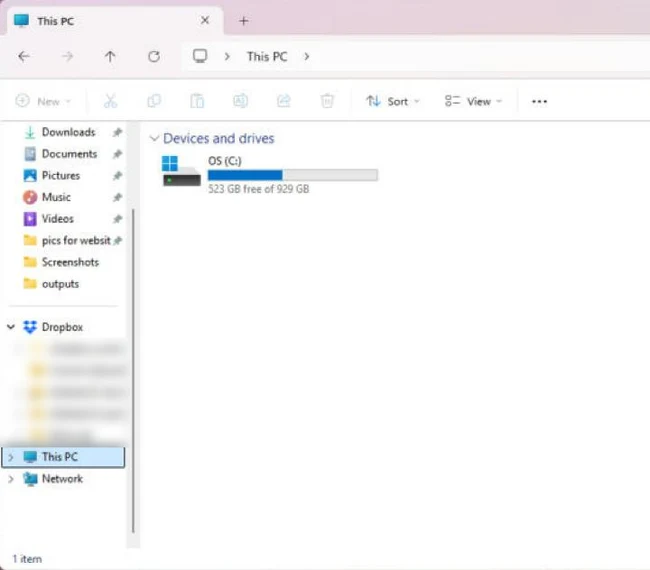
The bar under the drive shows how much space is used. It turns red when the drive is almost full.
Faster Ways to Open the C Drive
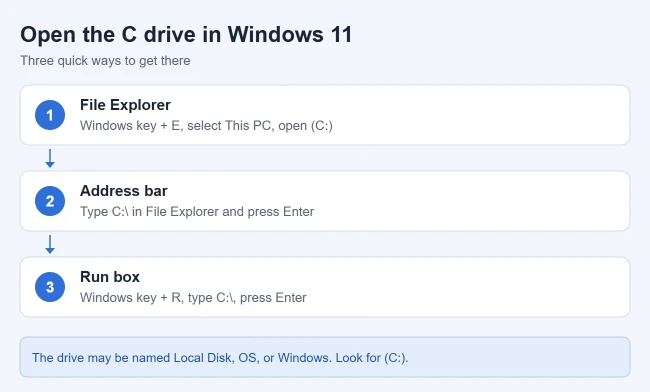
Type it in the address bar
- Open File Explorer.
- Click the address bar at the top of the window.
- Type C:\ and press Enter.
Use the Run box
- Press Windows key + R.
- Type C:\.
- Press Enter or select OK.
Keep a shortcut to it
- Open This PC in File Explorer.
- Right-click Local Disk (C:).
- Select Pin to Quick access or Pin to Start. For a desktop icon instead, select Show more options > Create shortcut, then choose Yes when Windows offers to put it on the desktop.
Make File Explorer Open to This PC
File Explorer opens to Home, which shows recent files instead of your drives. To have it open straight to This PC:
- Open File Explorer and select See more (the three dots) on the toolbar.
- Select Options.
- On the General tab, open the Open File Explorer to menu and choose This PC.
- Select OK.
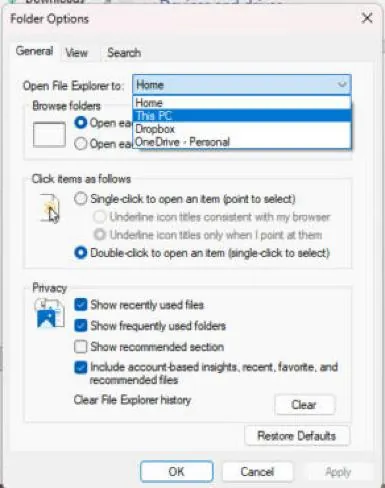
Microsoft explains Home, Quick access, and This PC in its File Explorer help. For more tips, see how to use File Explorer in Windows 11.
What’s on the C Drive?
- Windows: the operating system files. Don’t move or delete anything here.
- Program Files and Program Files (x86): installed apps.
- Users: a folder for each account on the PC, with its Desktop, Documents, Downloads, and Pictures folders.
- ProgramData and each user’s AppData folder: app settings. These are hidden by default.
Show hidden folders on the C drive
- Open the C drive in File Explorer.
- Select View on the toolbar.
- Select Show > Hidden items.
Hidden folders appear faded. Leave them alone unless a guide tells you exactly what to change, and turn Hidden items back off when you are done.
Why Your Files Might Not Be Where You Expect
If OneDrive backs up your Desktop, Documents, and Pictures folders, those files live in C:\Users\your name\OneDrive instead of the usual folders. They are still on the C drive, just inside the OneDrive folder. To copy them out of OneDrive, see how to move files from OneDrive to your PC.
Check How Much Space Is Left on the C Drive
- Open This PC for a quick look. The bar under Local Disk (C:) shows how full it is.
- For a breakdown, open Settings > System > Storage.
- Review the categories, such as apps and temporary files, and select Cleanup recommendations for files you can safely remove.
Our guides to seeing what’s taking up space and deleting temp files in Windows 11 go further if the drive is nearly full.
If you need to increase C:’s total capacity rather than clear files, see how to extend the C drive in Windows 11. It requires suitable unallocated space on the same disk.
If the C Drive Doesn’t Show Up
- Make sure you’re looking at This PC, not Home. Home lists recent files and folders, not drives.
- Type C:\ in the File Explorer address bar and press Enter. If the drive opens, it’s there, and only the view was hiding it.
- Right-click Start and select Disk Management. Look for the volume marked (C:) in the list at the top. Don’t format or delete anything here. Our guide on how to open Disk Management in Windows 11 shows other ways in.
- On a work or school PC, your IT department can hide drives from File Explorer. Ask them before changing anything.
Frequently Asked Questions
What is the C drive?
It’s the drive where Windows is installed, usually the PC’s main SSD or hard drive. Other letters, like D: or E:, are extra drives, partitions, USB drives, or discs. To make a second partition from C:, see how to split the C drive in Windows 11.
Why don’t I see This PC in File Explorer?
Scroll down in the left pane, or type This PC in the address bar and press Enter. You can also make File Explorer open to This PC, as shown above.
Why is my C drive called OS or Windows instead of Local Disk?
PC makers often rename the drive. The name doesn’t matter. Look for the letter C: in parentheses.
Can I change the C drive letter?
No. Windows needs to stay on C:, and changing that letter can stop the PC from starting.
If the C drive shows errors, run CHKDSK to check it.

Matthew Burleigh is the founder, head writer, and editor of Solve Your Tech, which he launched in 2012. He has written technology tutorials since 2008 and worked in IT since 2003, including small-business support, IT management, and consulting. He holds Bachelor’s and Master’s degrees in Computer Science from Arizona State University.
Matthew writes practical guides for Windows, iPhone and iPad, Microsoft Office, Outlook, Google apps, and Android. Solve Your Tech’s guides are tested on current devices or checked against official product documentation, with clear steps, sources, and update dates.
Read more about Matthew and how Solve Your Tech writes and updates its guides, or report a correction.