To restart Windows 11, select the Start button, select the Power icon, and select Restart. Save your work first, because Windows closes all open apps. If the Start menu isn’t responding, press Ctrl + Alt + Delete, select the Power icon in the bottom-right corner, and select Restart.
These steps apply to current Windows 11 releases on desktops, laptops, and tablets, and every method below also works in Windows 10. Microsoft gives the Start menu method on its restart your PC page. Below are the other ways in, plus what to do if the PC is frozen or stuck restarting.
Before You Restart
- Save open files. Windows asks apps to close, and an app with unsaved changes may stop the restart and ask what to do. Some methods below close apps without asking.
- Wait for file copies to finish. If you’re copying files to a USB drive, let the copy end first, and eject the drive if you’ll unplug it.
- Know your sign-in. After the restart you sign in again with your PIN, password, or Windows Hello.
Restart From the Start Menu
- Select the Start button on the taskbar (the Windows logo, centered by default) or press the Windows key.
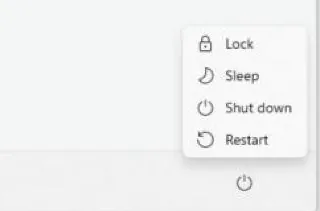
- Select the Power icon in the bottom-right corner of the Start menu. A small menu opens with options such as Lock, Sleep, Shut down, and Restart.
- Select Restart. If updates are waiting, you’ll see Update and restart instead. The screen shows Restarting, the PC turns off and on, and the sign-in screen appears.
If an app has unsaved work, Windows may pause on a screen listing the apps that are still open. Go back to those apps and save before you continue, because closing them from that screen discards the unsaved changes.
Restart From the Start Button Menu
- Right-click the Start button, or press Windows key + X.
- Point to Shut down or sign out.
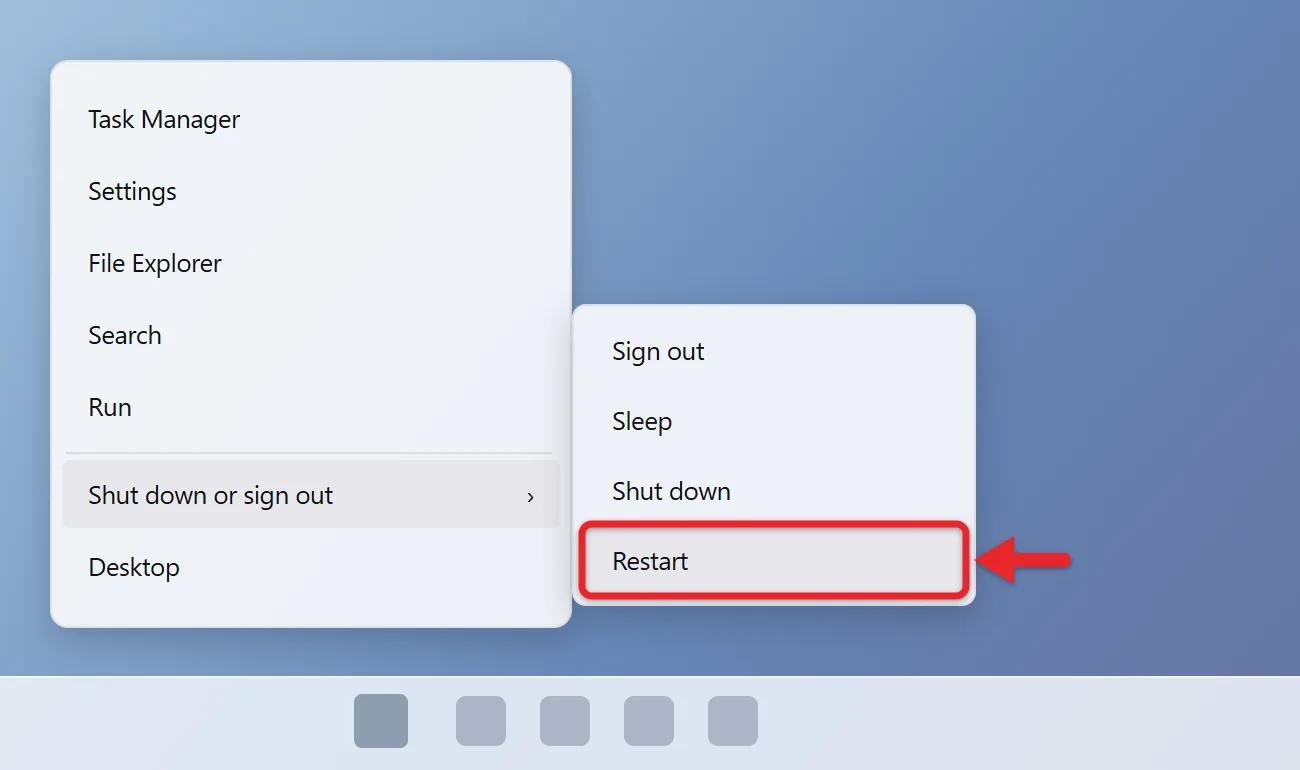
- Select Restart.
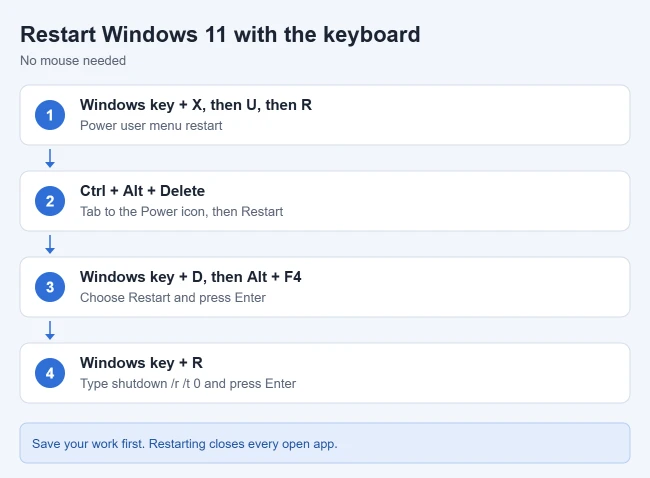
With the keyboard only, press Windows key + X, then U, then R. The restart begins right away.
Restart With Other Keyboard Shortcuts
Ctrl + Alt + Delete
- Press Ctrl + Alt + Delete. A full-screen menu opens with options such as Lock, Switch user, Sign out, and Task Manager.
- Select the Power icon in the bottom-right corner (or press Tab until it’s highlighted and press Enter).
- Select Restart.
This often works when the PC is slow or an app has frozen, because Windows handles this screen separately from your apps.
Alt + F4 on the desktop
- Press Windows key + D to show the desktop, or select an empty spot on the desktop.
- Press Alt + F4. The Shut Down Windows box opens.
- Choose Restart from the list and press Enter (or select OK).
If a window is selected when you press Alt + F4, that app closes instead, so make sure the desktop is selected first.
Restart From the Sign-In or Lock Screen
You don’t need to sign in to restart. On the sign-in screen, select the Power icon in the bottom-right corner and select Restart. If you’re signed in, press Windows key + L to lock the PC, select the lock screen to reach the sign-in screen, and use the same Power icon.
Restart to Finish Windows Updates
- Open Settings with Windows key + I.
- Select Windows Update.
- If updates are waiting, select Restart now. Windows installs them during the restart, which takes longer than a normal restart.
Our guide on how to update Windows 11 covers scheduling the restart and setting active hours so Windows doesn’t restart while you’re working.
Restart With a Command
Press Windows key + R to open Run, or open Terminal from the Start button menu, type a command, and press Enter.
| Command | What it does |
|---|---|
shutdown /r /t 0 |
Restarts right away. |
shutdown /r |
Restarts after a short delay (30 seconds by default) with a sign-out warning. |
shutdown /r /o /t 0 |
Restarts into the recovery options (Advanced options menu). |
shutdown /a |
Cancels a restart that’s still counting down. |
Restart-Computer |
Restarts the PC from PowerShell. |
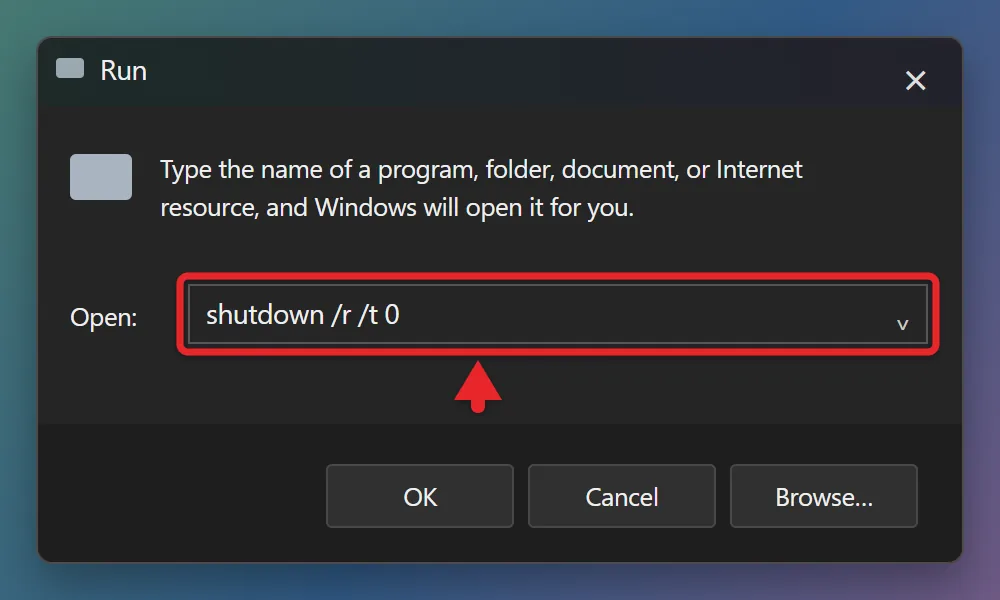
Microsoft’s shutdown command reference notes that any delay longer than 0 seconds also force-closes running apps without warning, so save your work before you use a timed restart.
To restart with a double-click, create a desktop shortcut and enter shutdown /r /t 0 as its location. Our guide on making a desktop shortcut in Windows 11 shows where to type it.
If the Computer Is Completely Frozen
- Try Ctrl + Alt + Delete first. If that screen appears, restart from there.
- If the screen is black or frozen but you hear sound, press Windows key + Ctrl + Shift + B to reset the display driver. Microsoft says you should hear a beep or see the screen flicker if it works.
- If only the taskbar or Start menu is stuck, open Task Manager with Ctrl + Shift + Esc, right-click Windows Explorer, and select Restart. This restarts the taskbar and File Explorer, not the whole PC. See how to open Task Manager in Windows 11 for other ways to open it.
- If nothing responds, press and hold the power button until the PC turns off. Microsoft’s blank screen troubleshooting gives 10 to 20 seconds.
- Wait a few seconds, then press the power button again to turn it on.
Use a forced shutdown only as a last resort, since any unsaved work is lost. Some desktops also have a small reset button on the case that does the same thing.
If Windows Is Stuck Restarting or Keeps Restarting
Try these in order:
- Give updates time. If the screen says Windows is working on updates, keep the PC plugged in and wait. Large updates can take an hour or more. Never turn the PC off during a firmware (BIOS) update.
- Open recovery from Windows. If you can reach Start or the sign-in screen, hold Shift and select Power > Restart. You can also go to Settings > System > Recovery and select Restart now next to Advanced startup. Then select Troubleshoot > Advanced options.
- Open recovery when Windows won’t load. Turn the PC off during startup twice. On the third start, Windows opens Automatic Repair, where you can select Advanced options. See Microsoft’s recovery instructions.
- Start in Safe Mode. In recovery, select Troubleshoot > Advanced options > Startup Settings > Restart, then press 4 or F4. Press 5 or F5 for Safe Mode with Networking.
- Have your password and keys ready. You may need your account password and BitLocker recovery key. Our Windows recovery guide explains each way in and how to leave without starting a reset.
Restart vs. Shut Down
Restart fully reloads Windows, which clears out stuck apps and finishes installing updates. On PCs with Fast Startup turned on, Shut down saves the Windows kernel to a file so the next startup is quicker, so a restart is the better choice when you’re fixing a problem. Microsoft explains the other power options in its shut down, sleep, and hibernate guide. See how to turn off your computer in Windows 11 for shutting down, and how to disable Fast Startup if you want every shutdown to be a full one.
If restart problems began right after Windows installed something new, see how to roll back a Windows 11 update.
Frequently Asked Questions
How do I restart into safe mode?
Hold the Shift key while you select Restart from the Power menu. Windows opens the recovery options, where you can choose Troubleshoot > Advanced options > Startup Settings and restart into safe mode.
Why does my PC say Update and restart?
Windows has downloaded updates that finish installing during the restart. Selecting it restarts the PC and installs them. It can take longer than a normal restart.
To hold off that update for now, you can cancel the Windows 11 update in progress by pausing updates first.
Does restarting delete my files?
No. Restarting only closes open apps. Save your work first, because unsaved changes in open apps can be lost.
Is rebooting the same as resetting?
No. Rebooting restarts Windows and keeps everything. Resetting reinstalls Windows and can remove your apps and files, so only do that on purpose from Settings > System > Recovery.
How often should I restart my PC?
There’s no fixed rule. Restart when Windows asks you to finish updates, when the PC feels slow, or when an app or device stops working. A restart fixes temporary software problems, but it won’t fix a failing drive or a bad driver on its own.

Matthew Burleigh is the founder, head writer, and editor of Solve Your Tech, which he launched in 2012. He has written technology tutorials since 2008 and worked in IT since 2003, including small-business support, IT management, and consulting. He holds Bachelor’s and Master’s degrees in Computer Science from Arizona State University.
Matthew writes practical guides for Windows, iPhone and iPad, Microsoft Office, Outlook, Google apps, and Android. Solve Your Tech’s guides are checked step by step against the device or app maker’s own documentation and tested on his own devices whenever he has the hardware or software, with clear steps, sources, and update dates.
Read more about Matthew and how Solve Your Tech writes and updates its guides, or report a correction.