You lift the lid on a new HP laptop, press the power button, and Windows 11 starts asking about your region, your Wi-Fi and a Microsoft account before you have even found the charger port. Plug the laptop in, keep your Wi-Fi password and Microsoft account details handy, answer the setup screens, then run Windows Update and HP Support Assistant before you install anything else.
These steps cover HP laptops that ship with Windows 11 Home or Pro, including versions 24H2 and 25H2.
Before You Press the Power Button
Setup goes faster when a few things are ready first. None of them takes long, and each one prevents a common snag later in the process.
- Power. Connect the HP charger before you start. The first boot downloads updates and can restart the laptop more than once, and you do not want the battery to run down in the middle of an update.
- Internet. Microsoft states that an internet connection is required to finish setting up a device running Windows Home or Pro. Have your Wi-Fi network name and password ready, or an Ethernet cable if your laptop or a USB adapter has a network port.
- Microsoft account. This is the email address and password you use for Outlook.com, Xbox or OneDrive. If you have never made one, you can create one during setup, so keep your phone nearby for the verification code.
- Your old PC, if you have one. If you want your apps list and settings on the new laptop, back up the old computer with Windows Backup before you start (covered in the transfer section below).
A quick note on terms. The setup screens you see on first boot are often called the out-of-box experience, or OOBE. A Microsoft account is an online account that syncs settings and connects services such as OneDrive. A PIN is a short code that signs you in on this one laptop only, which is different from your Microsoft account password.
Walk Through the Windows 11 Setup Screens
Press the power button (on most HP laptops it sits in the top row of the keyboard or on the side edge). The HP logo appears, then Windows 11 starts the setup screens. Microsoft describes the main stages below; the exact screens, their order and their wording can vary depending on your model and the updates your laptop downloads during setup.
- Choose your country or region. Pick where you live and select Yes. This sets formats for dates, currency and the Microsoft Store region.
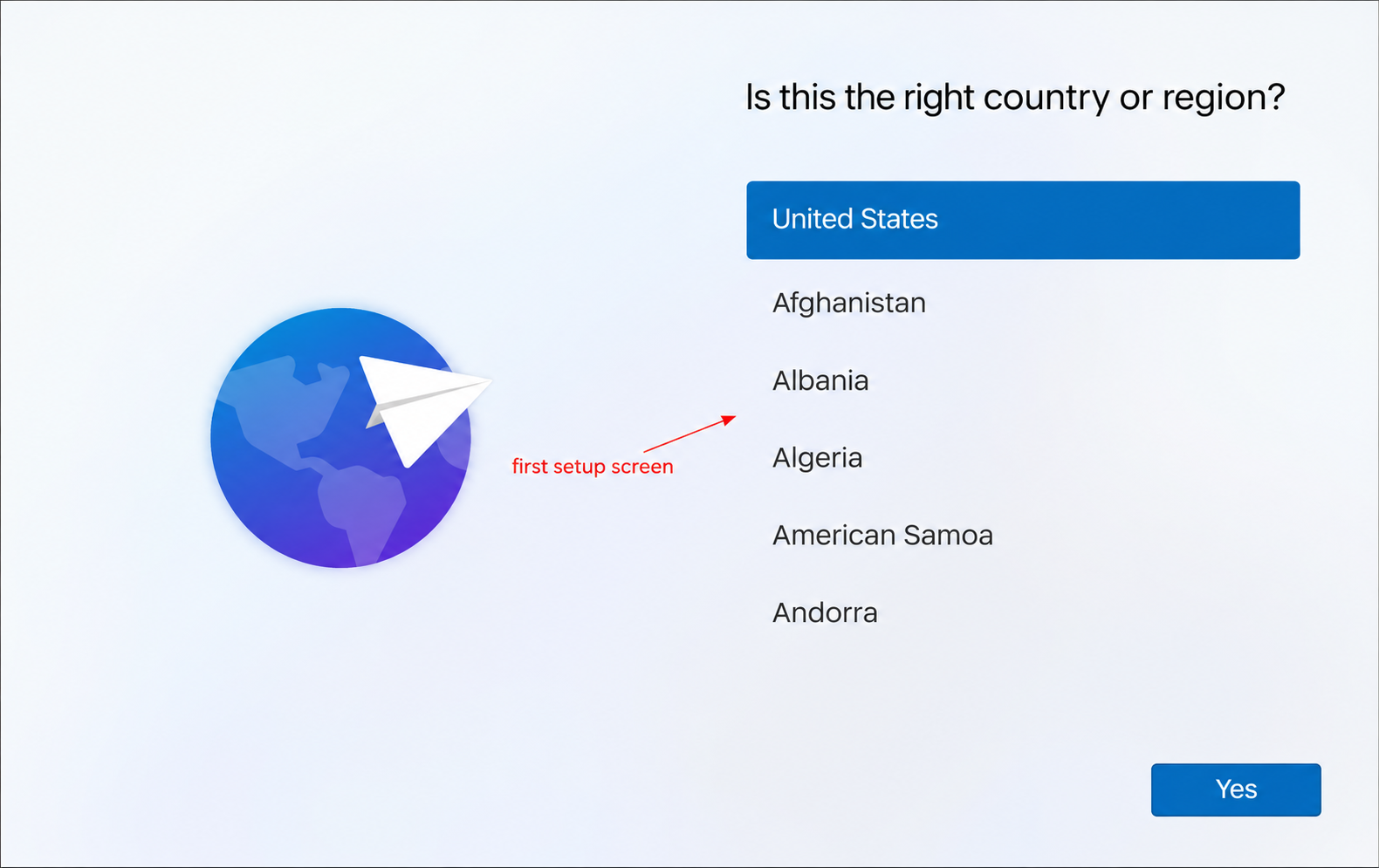
- Choose your keyboard layout. US is the usual choice in the United States. You can skip the second layout screen unless you type in another language. Microsoft notes that the language, time zone and keyboard choices can be changed later.
- Connect to a network. Select your Wi-Fi network, enter the password and check Connect automatically so you do not have to type it again. After connecting, the laptop may go quiet for a while as it checks for updates. Let it finish.
- Name your device. Give the laptop a name you will recognize on your network, such as PRIYA-HP or KITCHEN-LAPTOP. Setup may restart the laptop after this screen.
- Sign in with your Microsoft account. Enter your email address and password, or choose the option to create a new account. Signing in also signs you in to apps like Microsoft Edge and lets you sync files and settings across devices.
- Set up Windows Hello or a PIN. If your HP has a fingerprint reader or an infrared camera, setup may offer to register your fingerprint or face. You will also create a PIN. Pick something you will remember; it works as the backup if your fingerprint or face is not recognized.
- Restore from a previous PC or set up as new. If you backed up an older Windows PC with the same Microsoft account, setup can offer that backup. Choose it to bring back your settings and app list, or choose Set up as new device to start fresh.
- Choose privacy settings. You will see switches for location, Find my device and diagnostic data, among others. Read each one; turning on location helps with weather and maps, and Find my device helps you locate the laptop if it goes missing.
- Answer the optional offers. Setup may ask about OneDrive backup, Microsoft 365, Game Pass or how you plan to use the PC. These are optional. Decline anything you do not want; you can add it later.
- Wait for the desktop. Windows shows a few messages while it prepares your account. When the desktop and taskbar appear, setup is done.
Microsoft’s own walkthrough of setting up a new Windows computer covers the main stages if you want to read ahead before you start.
About the Microsoft Account Screen
Many consumer HP laptops come with Windows 11 Home, and Microsoft’s setup pages expect you to sign in with a Microsoft account and be online. The account is what makes Windows Backup, OneDrive and Find my device work. If you would rather use the laptop with a local account (one that exists only on this PC), the cleaner route is to finish setup with a Microsoft account first and then change it. The details are in options for skipping the Microsoft sign-in on Windows 11.
A Microsoft account does not include Microsoft Office. Word, Excel and the other Microsoft 365 apps need a subscription or a license. Some HP laptops ship with a trial or an offer; check the box or the HP listing to see what came with yours.
Bring Over Apps and Settings From Your Old PC
If your previous computer runs Windows, the Windows Backup app is Microsoft’s tool for moving to a new PC. It works only with a personal Microsoft account (work or school accounts are not supported), so the old PC needs to be signed in with the same account you used on the HP.
On the old PC:
- Open Settings and go to Accounts > Windows backup.
- Turn on Remember my apps, Remember my preferences and the other Windows settings you want to keep.
- Under OneDrive folder syncing, select Manage sync settings and choose which folders (Desktop, Documents, Pictures, Videos and Music) to back up to OneDrive. The free OneDrive plan includes 5 GB, so large photo libraries may need more storage or a different route such as an external drive.
On the new HP laptop, sign in with the same Microsoft account during setup. When the restore screen appears, pick the backup from your old PC (select More options if you see more than one). After you reach the desktop, Microsoft Store apps reinstall when you select their pinned icons, and other programs show a link to their web installer so you can download them again. For Microsoft Edge favorites and settings, Microsoft points you to signing in to Edge and turning on sync on both computers. Microsoft’s page on backing up and restoring with Windows Backup lists exactly what moves over.
Programs you bought outside the Microsoft Store (photo editors, tax software, games from other launchers) need to be installed again from the developer, and some need their license key or account sign-in. Make a short list of those on the old PC before you retire it.
Run Windows Update and Get Driver Updates
A laptop can sit in a warehouse for months, so the first job on the desktop is updating Windows. Updates bring security fixes and hardware drivers, the small programs that let Windows talk to the touchpad, camera, Wi-Fi card and graphics chip.
- Select Start > Settings > Windows Update.
- Optionally turn on Get the latest updates as soon as they’re available if you want new features early.
- Select Check for updates and let everything download and install.
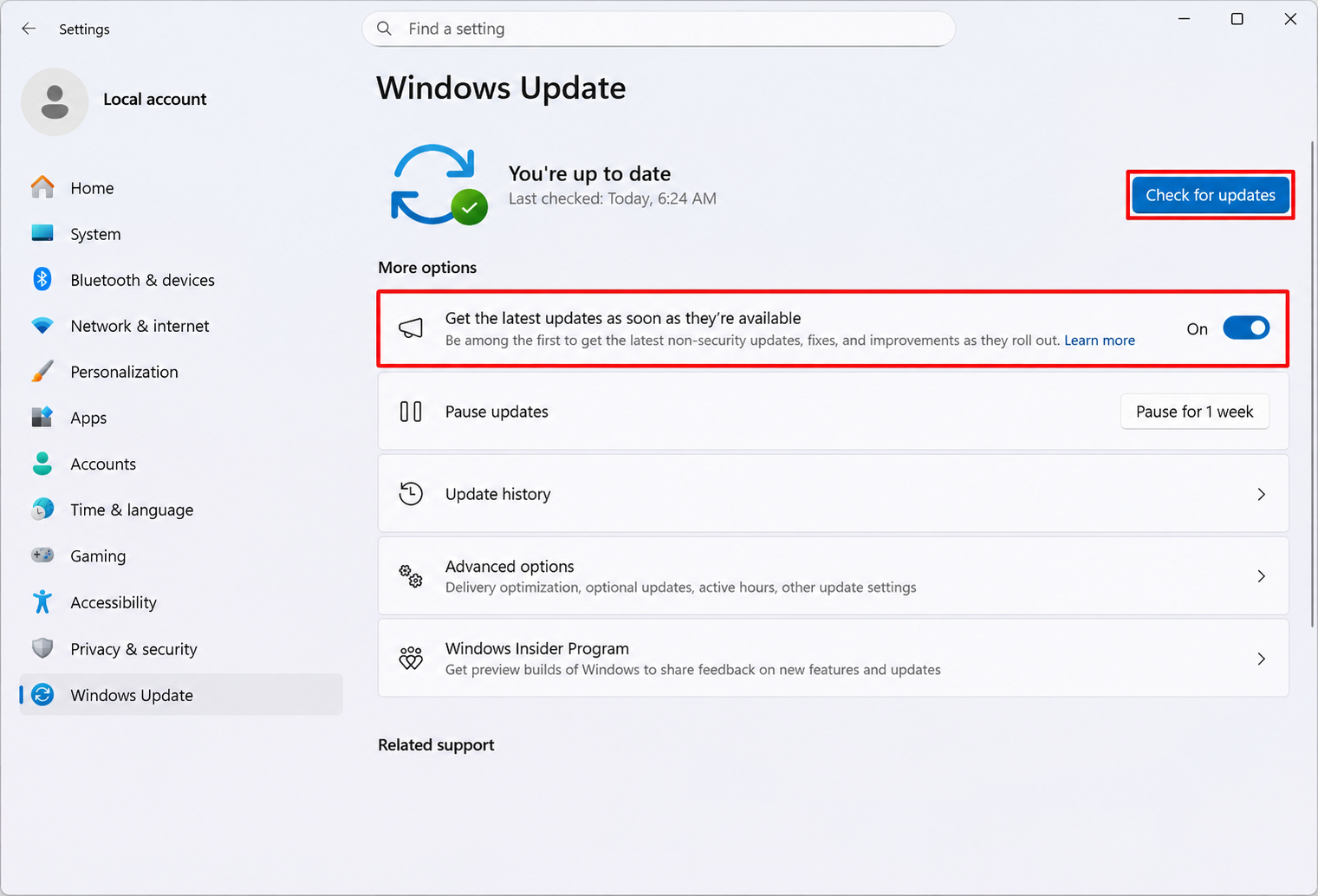
- Restart when Windows asks, then check again. It is normal to need two or three rounds on a new laptop.
- Go to Windows Update > Advanced options > Optional updates. If you see driver updates listed, select the ones for your hardware and choose Download and install.
Microsoft says Windows 11 uses Windows Update to install recommended drivers automatically, and if Windows Update can’t find a driver, check the hardware manufacturer’s website. Its page on getting recommended and updated hardware drivers explains the optional updates list. For an HP, the manufacturer route is HP Support Assistant, covered next.
Open HP Support Assistant
HP says HP Support Assistant comes preinstalled on new HP desktops and notebooks. It can install firmware and driver updates for your specific model automatically or notify you when they are available, and it is the HP-specific counterpart to Windows Update. HP notes it is not supported on ARM-based PCs, so some newer Snapdragon models rely on Windows Update and HP’s support website instead.
- Look for the HP Support Assistant icon on the taskbar, or type HP Support Assistant in the Start menu search.
- Open it and follow any first-run prompts.
- Look for the updates section for your laptop and check for updates. Install what it finds, and keep the charger connected, because firmware (BIOS) updates should never be interrupted by a dead battery.
- Restart if the app asks you to.
HP’s HP Support Assistant page has the current download if the app is missing. Some HP models also include an HP app (sometimes branded myHP) with warranty, registration and device settings; what it offers varies by model, so open it from Start if you see it and look for registration or warranty options there. HP’s support site may also let you check warranty status using the serial number, which is usually on a label under the laptop.
Remove Trial Apps You Do Not Want
New laptops often include trial software, game shortcuts and offers. Removing the ones you will never use cleans up the Start menu and can stop them from launching in the background.
- Go to Start > Settings > Apps > Installed apps.
- Find the app, select the More button (three dots) beside it, and choose Uninstall.
- Confirm, then repeat for the next app.
Be careful with anything that has HP in its name. HP Support Assistant, audio controls and keyboard or touchpad utilities may support features of your laptop, so leave HP tools in place unless you know what they do. If an antivirus trial came preinstalled and you plan to use the built-in Windows Security instead, uninstall the trial so the two do not compete. More methods are in uninstalling programs on Windows 11.
To control what launches at sign-in, press Ctrl+Shift+Esc to open Task Manager and select Startup apps. Disable anything you do not need running all day. Managing startup apps in Windows 11 explains what the impact ratings mean.
Set Power Mode and Battery Options
Windows 11 lets you pick separate power modes for when the laptop is plugged in and when it runs on battery.
- Select Start > Settings > System > Power & battery.
- Under Power mode, choose a setting for Plugged in and for On battery: Best power efficiency, Balanced or Best performance.
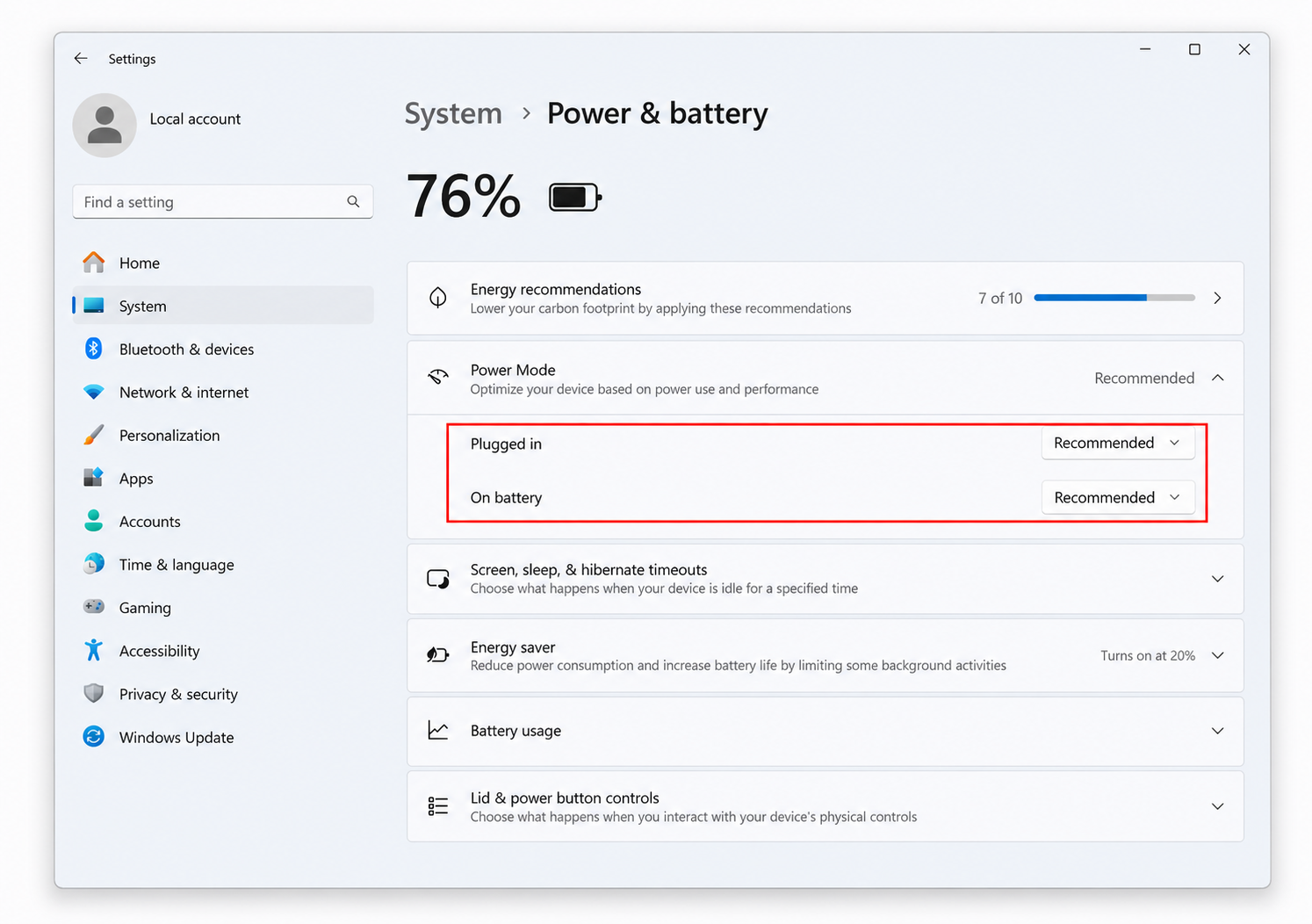
- Review Energy recommendations on the same page for suggested changes such as screen and sleep timings.
- Check Energy saver and choose when it should turn on automatically.
A sensible starting point: Balanced when plugged in, Best power efficiency on battery if you travel, or Balanced for both if you mostly work at a desk. The Battery usage view on the same page shows which apps drain the most power, and Microsoft’s battery saving tips for Windows cover background activity settings. For more ideas, see ways to extend battery life in Windows 11.
Turn On Protection and Make Your First Backup
Windows 11 includes Windows Security, its built-in antivirus and firewall. You do not need to buy anything to have basic protection on day one.
- Type Windows Security in the Start search and open the app.
- Select Virus & threat protection and run a Quick scan.
- Look over the other areas on the home page (such as firewall and account protection) and act on anything marked with a warning icon.
If you skipped Find my device during setup, look for it in Settings under Privacy & security and turn it on. It needs your Microsoft account and location services.
Next, set up a backup before you store anything important. Go back to Settings > Accounts > Windows backup and turn on the folders and settings you want saved to OneDrive. That way, if the laptop is lost or needs a reset, your files and preferences can come back on the next PC. A recovery USB drive is also worth making while the laptop is new; making a Windows 11 recovery USB walks through it.
Personalize the Basics
With the important jobs done, spend a few minutes making the laptop yours:
- Theme and background: Settings > Personalization lets you pick light or dark mode, a wallpaper and an accent color.
- Start and taskbar: right-click apps you use daily and pin them to Start or the taskbar; unpin the ones you do not.
- Browser: Microsoft Edge is built in. If you prefer another browser, download it from the developer’s website or the Microsoft Store, then set it as the default in Settings > Apps > Default apps.
- Apps: the Microsoft Store has apps for streaming, photo editing and productivity. Installing from the Store keeps them updated and makes them easy to restore on a future PC.
If Setup Goes Wrong
The Laptop Will Not Connect to Wi-Fi During Setup
Microsoft’s page on getting connected while setting up a Windows device suggests restarting your modem and router, trying the other Wi-Fi band if your router has two (2.4 GHz and 5 GHz), plugging in an Ethernet cable, or using your phone’s hotspot to get through setup. Check that you are typing the Wi-Fi password with the right capitalization; the eye icon in the password box shows what you typed.
Setup Seems Stuck on Updates
During setup, Windows can download and install updates before you reach the desktop, and on a slow connection that can take a while. Keep the laptop plugged in and give it time before you assume it has frozen. If nothing has changed on screen for a very long time, try a restart, and if setup keeps failing, the recovery options below can return the laptop to its factory state.
You Want to Start Over
If something went badly wrong, you can return the laptop to factory condition. HP describes its HP System Recovery tools as able to restore drivers and programs or return the drive to its factory state, which removes all data and software. HP also offers an HP Cloud Recovery Tool for creating recovery media; check HP’s support pages for your model before relying on it. Windows itself includes Reset this PC under Settings > System > Recovery. If you prefer a completely clean copy of Windows, installing Windows 11 from scratch covers creating installation media.
The Laptop Feels Slow After Setup
For the first day, a new laptop may be busy installing updates, indexing files and syncing OneDrive. Leave it plugged in and on overnight once, then check again. If it is still sluggish, Microsoft’s tips to improve PC performance cover startup apps, storage and scans.
A First-Day Checklist
Here is how a typical first evening might look for someone named Priya setting up an HP laptop to replace an older Windows PC:
| Task | Where | Done when |
|---|---|---|
| Back up the old PC | Old PC: Settings > Accounts > Windows backup | Backup shows a recent date |
| Finish setup screens | New HP laptop, first boot | Desktop appears |
| Update Windows | Settings > Windows Update | Shows you are up to date |
| Update HP drivers and firmware | HP Support Assistant | No pending updates |
| Remove unwanted trials | Settings > Apps > Installed apps | Only apps she wants remain |
| Pick power modes | Settings > System > Power & battery | Plugged in and On battery both set |
| Scan and back up | Windows Security; Windows backup | Quick scan clean, OneDrive folders syncing |
Doing the tasks in this order matters. Updating before you install your own programs avoids driver conflicts, and backing up the old PC first means you can wipe it later without losing anything.
Questions About Setting Up a New HP Laptop
How Long Does It Take to Set Up a New HP Laptop?
The setup screens themselves take only a few minutes of your input. Downloads during setup and the first rounds of Windows Update and HP updates add time that depends mostly on your internet speed, so plan for an evening rather than a coffee break.
Can I Change the Device Name or Region Later?
Yes. Microsoft notes the language, time zone and keyboard choices can be changed after setup. The device name can be changed in Settings > System on the main page, where your PC name appears with a Rename option.
Do I Need to Buy Antivirus for a New HP Laptop?
Windows 11 includes Windows Security with virus protection and a firewall at no extra cost. A preinstalled antivirus trial is optional; if you keep it past the trial, it usually asks for a paid subscription.
Once the checklist is done, your HP laptop is updated, protected and backed up, and the next step is simply installing the apps you use every day.

Matthew Burleigh is the founder, head writer, and editor of Solve Your Tech, which he launched in 2012. He has written technology tutorials since 2008 and worked in IT since 2003, including small-business support, IT management, and consulting. He holds Bachelor’s and Master’s degrees in Computer Science from Arizona State University.
Matthew writes practical guides for Windows, iPhone and iPad, Microsoft Office, Outlook, Google apps, and Android. Solve Your Tech’s guides are checked step by step against the device or app maker’s own documentation and tested on his own devices whenever he has the hardware or software, with clear steps, sources, and update dates.
Read more about Matthew and how Solve Your Tech writes and updates its guides, or report a correction.