To screen share on Windows 11, press Windows + K to show your screen on a nearby TV or another PC, select Share in a call app such as Microsoft Teams to show it to people in a meeting, or open Quick Assist to let someone you trust see your screen and help you. Which one you need depends on who is watching and where they are.
These steps cover Windows 11 Home and Pro, the Microsoft Teams desktop app, and the current Microsoft Store version of Quick Assist. Projecting to another PC with the Wireless Display app needs Windows 11 version 22H2 or later.
Pick the Right Method
| You want to show your screen to | Use | What you need |
|---|---|---|
| A TV, projector, or monitor in the same room | Windows + K (Miracast) | A Miracast TV or adapter and Wi-Fi turned on |
| A Chromecast or Google TV | Google Chrome’s Cast option | Both devices on the same Wi-Fi network |
| Another Windows PC nearby | Windows + K and the Wireless Display app | The optional Wireless Display feature on the receiving PC |
| People in a video call | The Share button in Teams, Zoom, or Google Meet | The call app and an internet connection |
| A friend or support agent helping you remotely | Quick Assist | Quick Assist on both PCs and a 6-digit code |
Miracast is the wireless display standard Windows uses to send your picture to a TV or another PC without a cable. It works over a direct Wi-Fi link, so you do not need to sign in to anything.
Many smart TVs support Miracast, sometimes listed as screen mirroring or wireless display on the TV’s input menu. If yours does not, a Miracast adapter plugged into an HDMI port adds it.
- Turn on the TV or projector and switch it to its screen mirroring or wireless display input, if it has one.
- Make sure Wi-Fi is turned on for your PC. Select the network icon on the right side of the taskbar to check.
- Press Windows + K. The Cast panel opens and lists nearby displays.
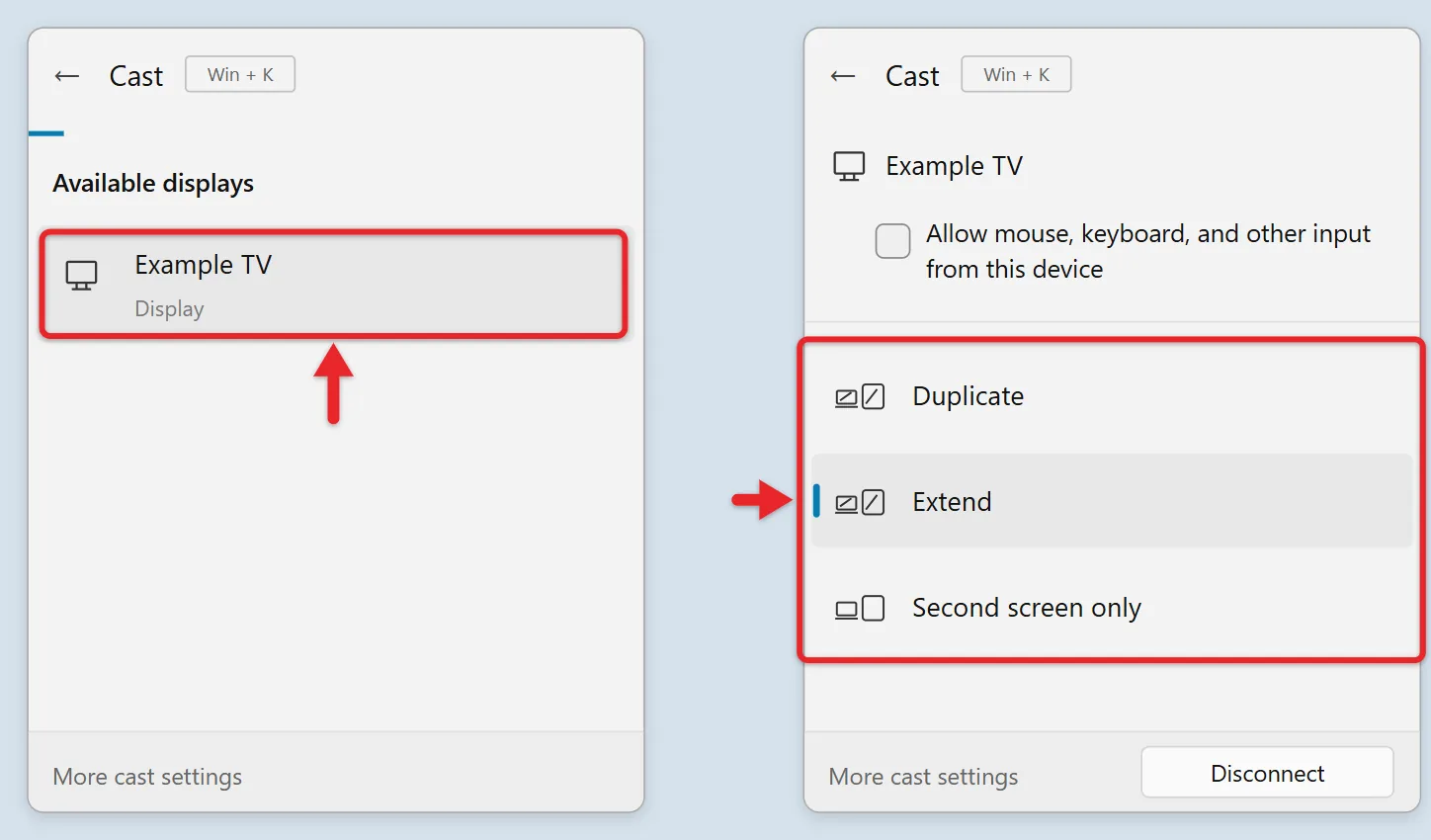
- Select your TV or adapter from the list.
- Accept the connection on the TV, or enter the PIN it shows, if it asks. Your desktop appears on the TV within a few seconds.
You can reach the same list from Settings > System > Display > Multiple displays, then select Connect next to Connect to a wireless display. For Samsung, LG, Roku, and Fire TV models, follow the steps to cast a laptop to a TV in Windows 11.
Once connected, press Windows + P to choose what the TV shows. Duplicate mirrors your screen, Extend turns the TV into a second screen you can drag windows onto, and Second screen only turns off your laptop display. To stop, press Windows + K again and select Disconnect.
Microsoft explains each part of this in its screen mirroring and projecting guide.
Cast to a Chromecast or Google TV From Chrome
Windows + K does not find Chromecast devices, because they use Google Cast instead of Miracast. Google Chrome can send to them.
- Connect the PC and the Chromecast, Google TV Streamer, or TV with Google Cast to the same Wi-Fi network.
- Open Chrome and select the three-dot More menu at the top right.
- Select Cast, save, and share, then Cast.
- To share everything on your screen instead of one tab, select Sources, then Cast screen.
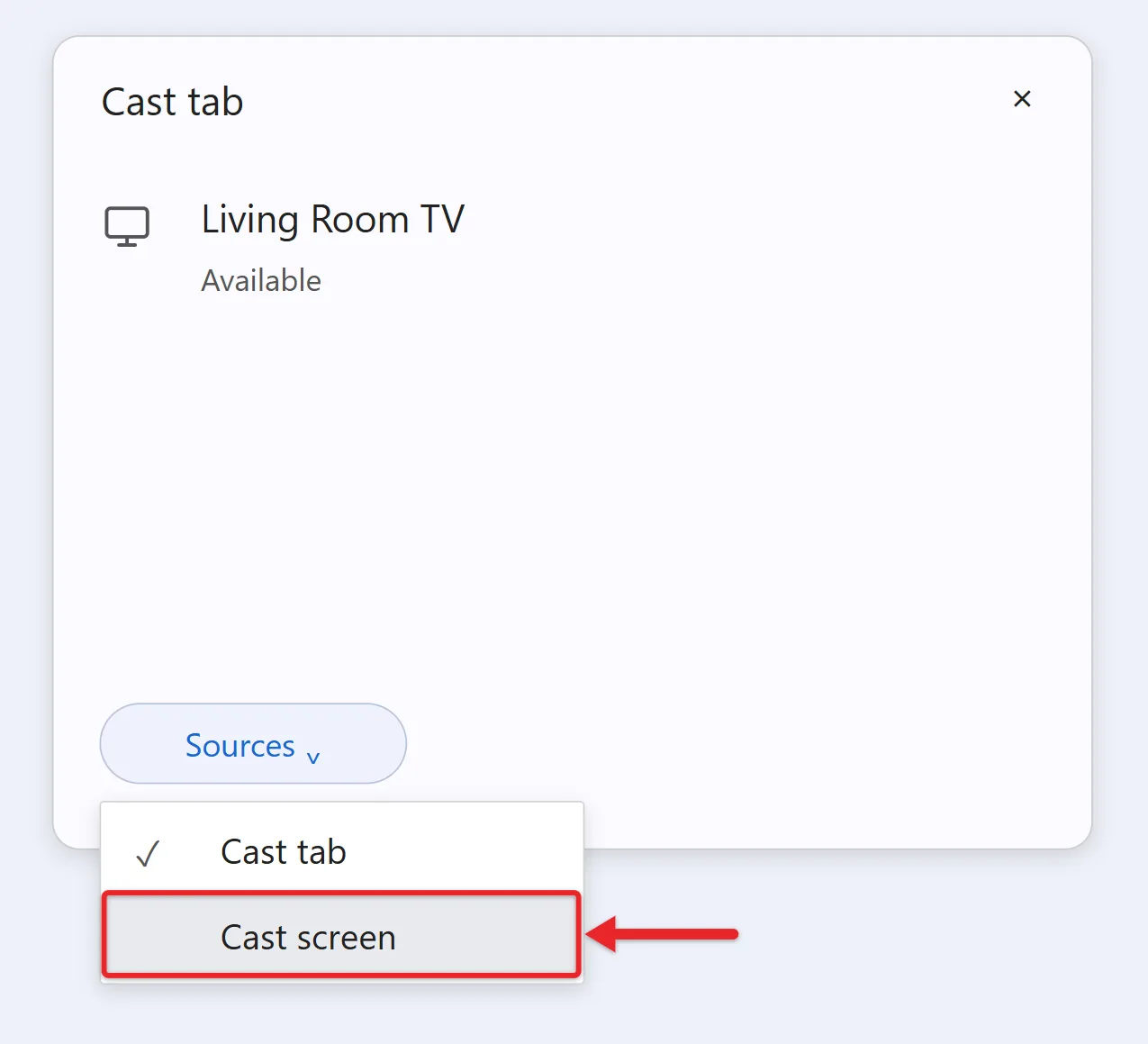
- Select your receiver. The tab or desktop appears on the TV.
When you cast a tab, its sound plays on the TV. When you cast the whole screen, sound may stay on the PC. To stop, select the Cast icon next to the address bar and choose Stop casting. All of these options are on Google’s Chrome casting help page.
Another Windows 11 PC can act as a wireless display, which helps when you want to show something on a coworker’s laptop or a desktop with a bigger monitor. Set up the receiving PC first.
On the PC that will show the screen
- Open Settings > System > Projecting to this PC.
- If the page asks you to add the Wireless Display optional feature, select Optional features, then View features, search for wireless display, check it, and select Next and Install.
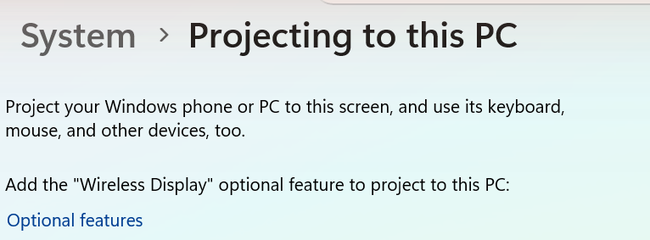
- Select Back to return to Projecting to this PC and choose when the PC can be found, whether it asks for permission, and whether it requires a PIN.
- Search the taskbar for Wireless Display and open the app. The PC is now ready to receive.
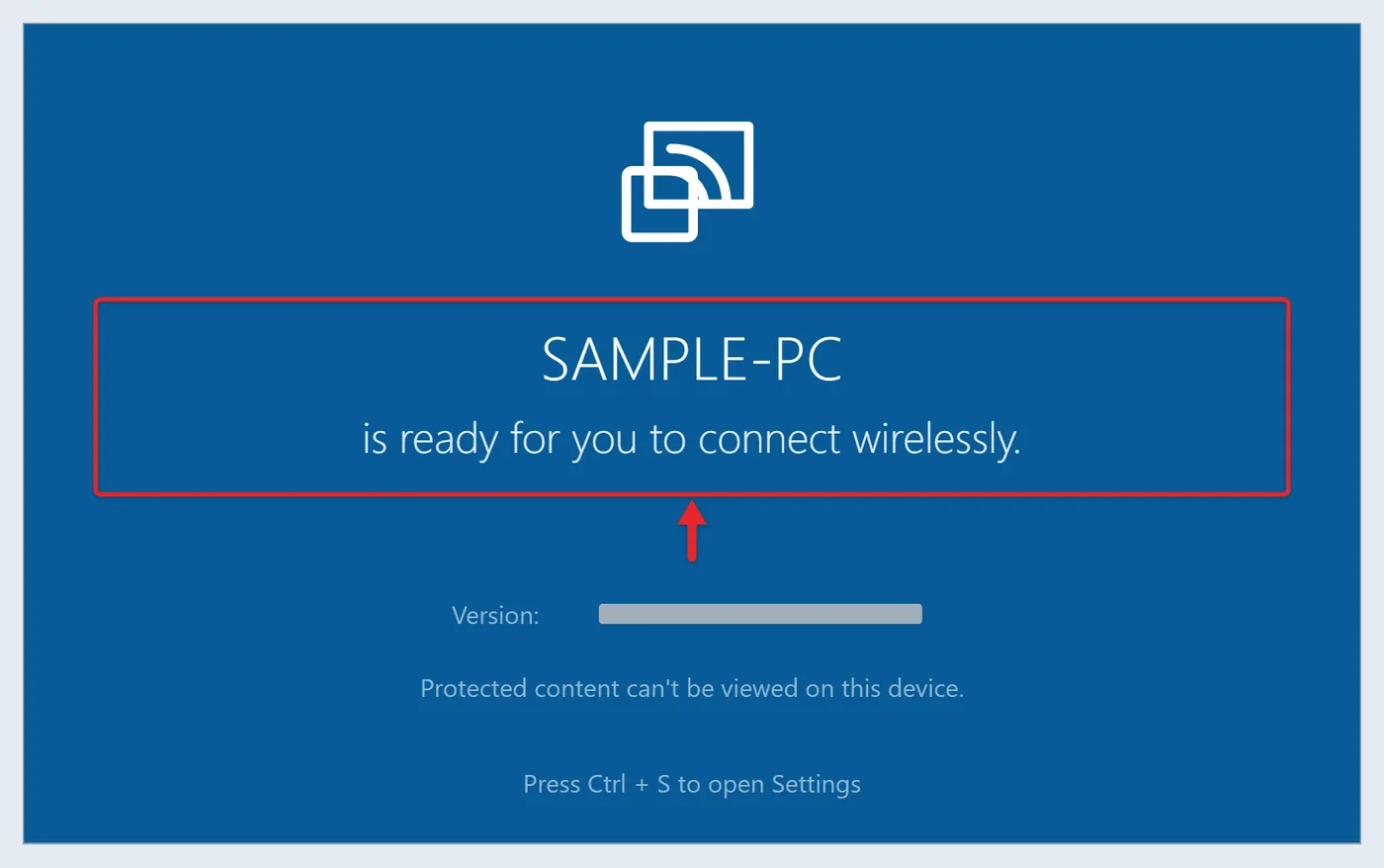
On the PC you want to share
- Press Windows + K.
- Select the name of the receiving PC.
- Accept the request on the receiving PC if it asks. Your screen appears in the Wireless Display window.
If the receiving PC is not listed, check that its Wi-Fi is on and the Wireless Display app is still open. For more on PC-to-PC projection, read about wirelessly connecting to another display in Windows.
Call apps are the way to share your screen with people who are not in the room. These steps use the Teams desktop app on Windows 11.
- Join the meeting or call.
- Select Share in the meeting controls at the top of the window. The sharing tray opens.
- Turn on Include sound if people need to hear audio from your PC, such as a video you plan to play.
- Choose Screen to share everything on a monitor, or Window to share one app. You can also pick a PowerPoint file or a whiteboard.
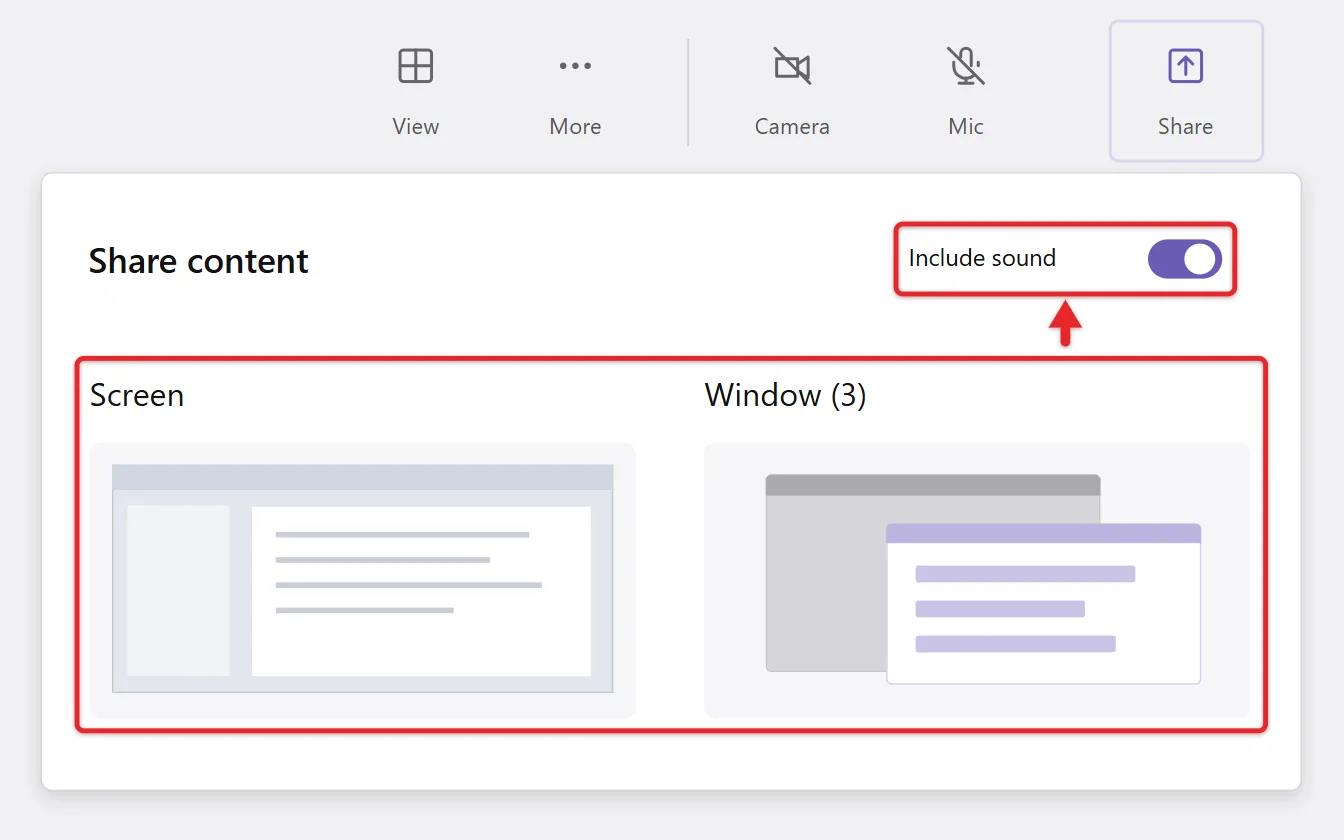
- A red border appears around what you are sharing, and the presenter toolbar appears at the top of your screen.
- Select Stop sharing on the presenter toolbar when you are done.
To let someone else point and click on your shared screen, select Give control on the presenter toolbar and choose the person. Select Take back to end it. Teams on the web can share your screen only in Microsoft Edge or Google Chrome. Microsoft covers the details in its Teams meeting sharing guide, and the free Teams version follows its Teams free screen sharing help page.
Zoom, Google Meet, and other call apps have a similar share screen button in their meeting controls, with the same choice between a whole screen and one window. Hosting the call yourself? Start by setting up a Zoom meeting. Someone on an iPad can join the same meeting to watch the shared screen, one of the options covered in showing a PC screen on an iPad.
If the call app shows the wrong webcam when your video comes on, learn how to change your default camera in Windows 11.
Keep private things off the shared screen
- Share a single window instead of the whole screen when you only need one app. Other windows and pop-ups stay hidden.
- Turn on Do not disturb from the notification center (select the date and time on the taskbar) so message previews do not appear while you present.
- Close tabs, email, and chats you do not want anyone to see before you start.
- When you share a whole screen with sound on, notification sounds are heard in the meeting too.
Quick Assist lets a friend, family member, or Microsoft support agent see your screen over the internet. Only use it with someone you know and trust. Allow a support connection only if you contacted Microsoft yourself, since scammers often call and ask people to open Quick Assist. A Microsoft agent may ask to use it after you start a live chat with Microsoft Support.
- Open Quick Assist. Press Ctrl + Windows + Q, or open Start, type Quick Assist, and select it.
- Ask the helper to open Quick Assist on their PC, select Help someone, and read you the 6-digit code.
- Type the code in the Code from assistant box and select Submit.
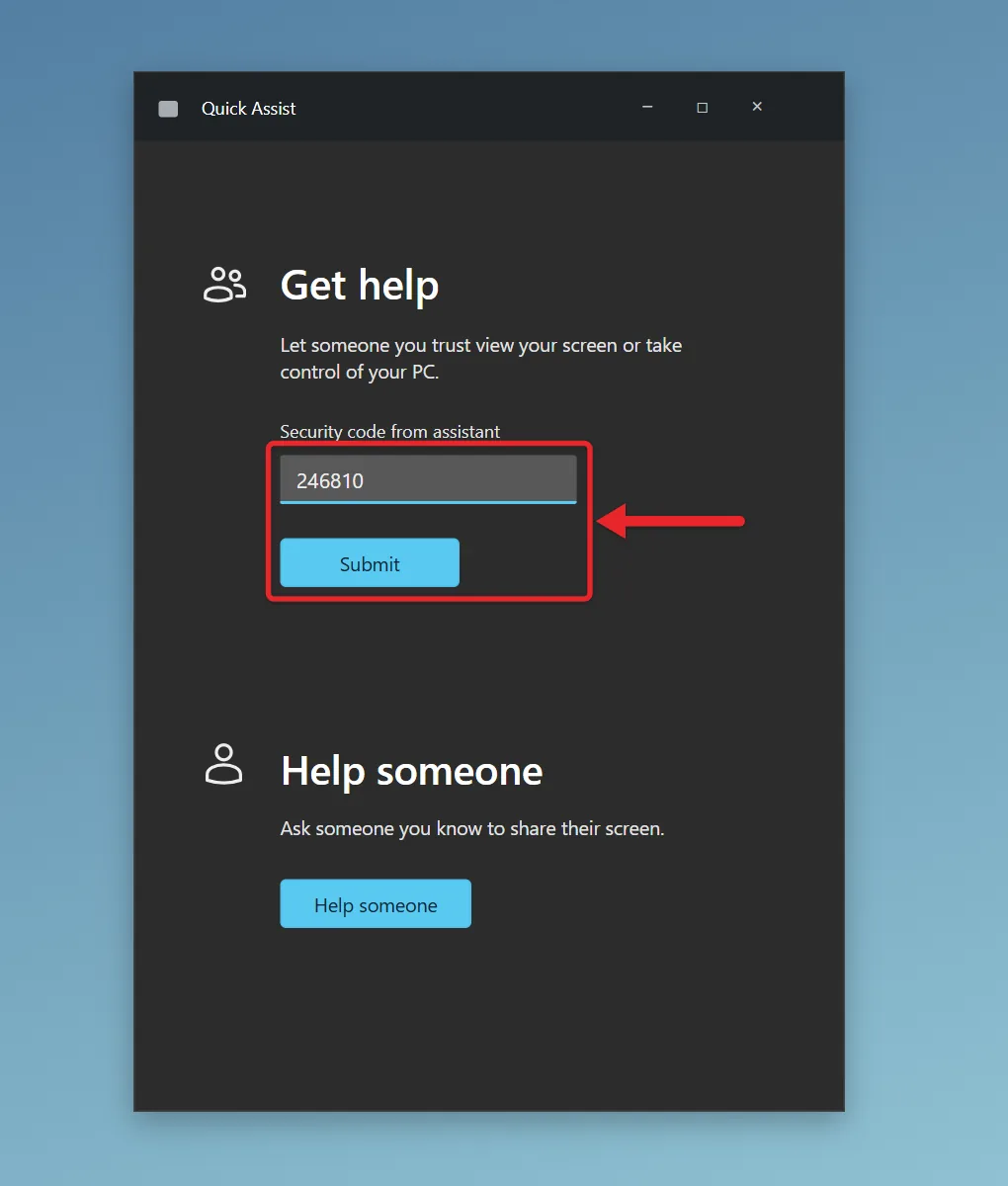
- Select Allow to start sharing your screen. The helper can now see it, but cannot click anything yet.
- If the helper selects Request control and you agree, select Allow again. Select Cancel control at any time to take it back.
- Select Leave when you are finished.
If Quick Assist is missing, open Microsoft Store, search for Quick Assist, and select Get. It needs Microsoft Edge WebView2, which Windows 11 usually already has and installs on first launch if it does not. A work or school PC may block the install. Both sides of the process are in Microsoft’s Quick Assist guide, and there are other ways to get help in Windows 11 too.
Enable the Older Windows Remote Assistance Tool
Windows Remote Assistance is an older tool, separate from Quick Assist. To turn it on:
- Search Start for remote assistance and choose Allow Remote Assistance invitations to be sent from this computer.
- On the Remote tab, check Allow Remote Assistance connections to this computer and select OK.

To ask for help:
- Search remote assistance again and open Invite someone to connect to your PC and help you.
- Select Invite someone you trust to help you.
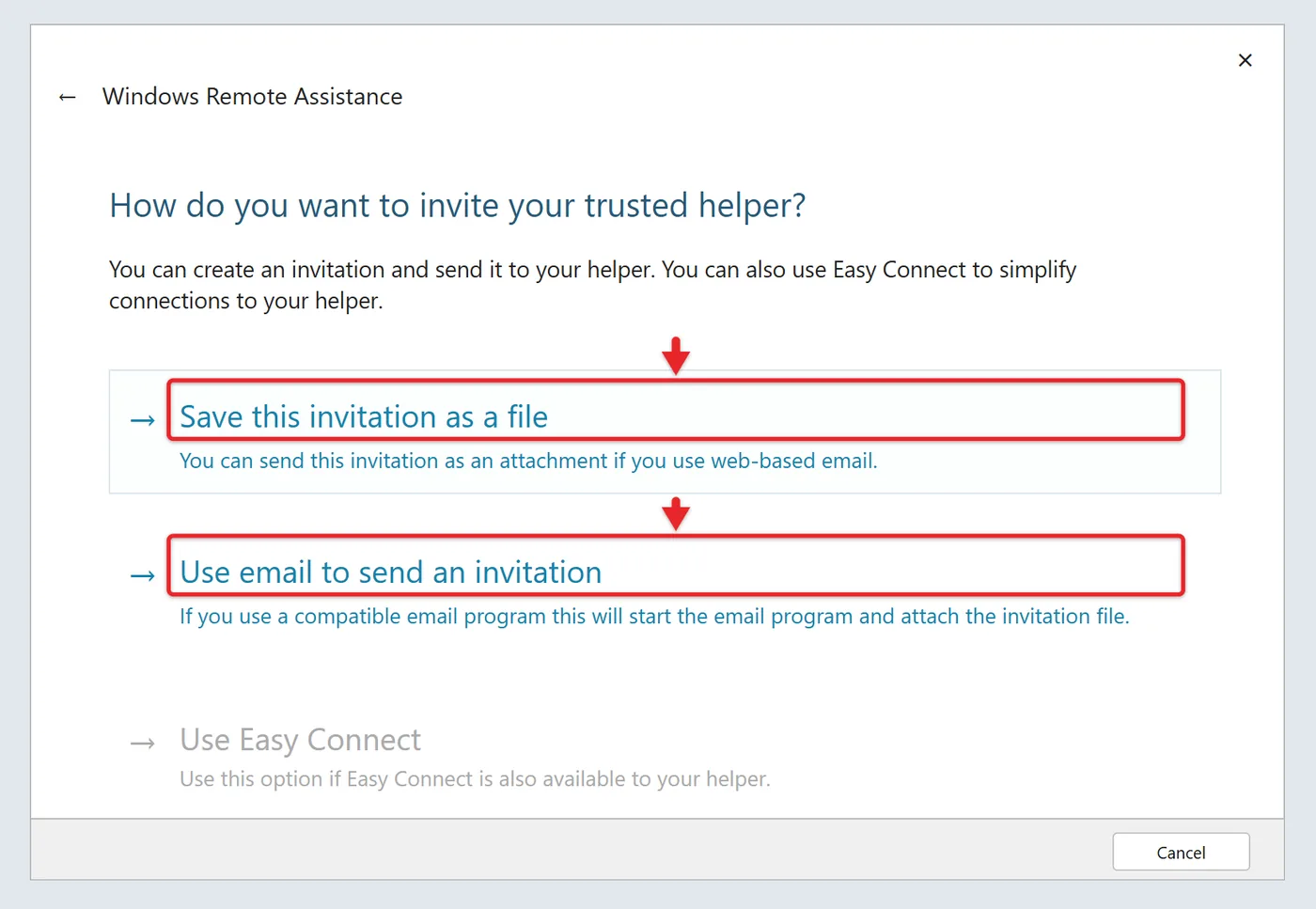
Only send the invitation to someone you contacted yourself, and clear the checkbox again when you no longer need it. Microsoft’s Remote Assistance guide has the full steps.
Remote Desktop is a different tool. It lets you sign in to your own PC from another device instead of showing your screen to someone, and only Windows 11 Pro and higher can accept connections. If that’s what you need, turn on Remote Desktop in Windows 11.
Why Doesn’t My TV or PC Show Up?
- Windows says to connect a display with a cable: your PC does not support Miracast, so casting with Windows + K will not work on it. Use an HDMI cable or Chrome casting instead.
- The TV is not in the list: confirm it supports Miracast and is on its screen mirroring input. If it does not support Miracast, add a Miracast adapter.
- The TV was found before but will not connect now: go to Settings > Bluetooth & devices > Devices, select it under Wireless displays & docks, select Remove device, and connect again with Windows + K.
- Chrome cannot find your Chromecast: put both devices on the same network. Guest Wi-Fi networks often block devices from seeing each other.
- Still nothing: install updates from Settings > Windows Update, update the TV or adapter firmware, and restart both devices. These checks come from the wireless display troubleshooting page.
- The picture lags: wireless casting is fine for slides and video but slow for games. A cable gives a steady picture, and you can then extend your display or set up multiple monitors.
- People in a Teams call cannot hear your video: stop sharing and share again with Include sound turned on.
Windows Screen Sharing Questions
What is the shortcut to screen share on Windows 11?
Press Windows + K to cast your screen to a wireless display or another PC. For Quick Assist, press Ctrl + Windows + Q. To share in a video call, use the Share button inside the call app.
Can I share just one window instead of my whole screen?
Yes, in call apps like Teams. Choose Window instead of Screen when you start sharing. Casting with Windows + K always shares the whole screen, and Chrome can cast a single tab.
Can the other person control my PC?
Not unless you allow it. In Quick Assist, the helper must select Request control and you must select Allow. In Teams, control passes only when you select Give control. You can take it back at any time.
Can I share my screen with someone on a Mac or an older PC?
Use a call app such as Teams, Zoom, or Google Meet, which work on Mac and Windows 10 as well as Windows 11. The Mac version of Quick Assist is available only during Microsoft Support sessions.
Does casting to a TV send sound too?
Usually, yes. If sound still plays from the PC, select the speaker icon on the taskbar and choose the TV as the output device.

Matthew Burleigh is the founder, head writer, and editor of Solve Your Tech, which he launched in 2012. He has written technology tutorials since 2008 and worked in IT since 2003, including small-business support, IT management, and consulting. He holds Bachelor’s and Master’s degrees in Computer Science from Arizona State University.
Matthew writes practical guides for Windows, iPhone and iPad, Microsoft Office, Outlook, Google apps, and Android. Solve Your Tech’s guides are checked step by step against the device or app maker’s own documentation and tested on his own devices whenever he has the hardware or software, with clear steps, sources, and update dates.
Read more about Matthew and how Solve Your Tech writes and updates its guides, or report a correction.