To pin an app to the taskbar in Windows 11, open Start, right-click the app, and select Pin to taskbar. If the app is already open, right-click its taskbar icon and select Pin to taskbar instead. To remove it later, right-click the icon and select Unpin from taskbar. Once an app is pinned, you can remove its desktop icon without deleting the app.
These steps are for current Windows 11 releases, including versions 25H2 and 26H2, on Home and Pro. Menu wording can vary a little between versions.
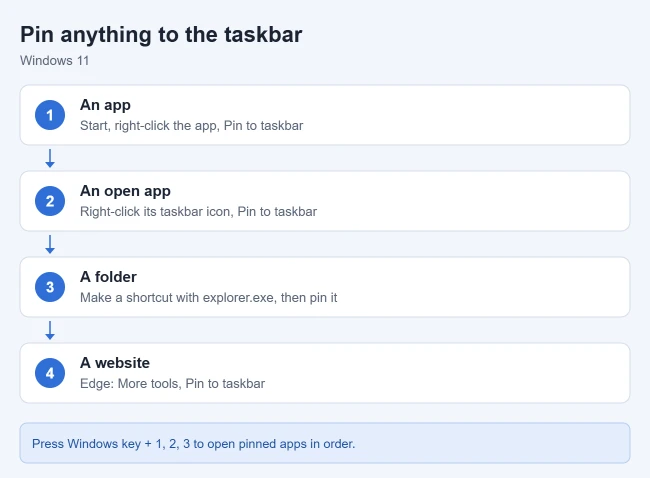
What You Can Pin and How
| What you want to pin | Best method |
|---|---|
| An installed app | Right-click it in Start or in search results |
| An app that’s open now | Right-click its taskbar icon |
| A desktop shortcut or program file | Right-click > Show more options > Pin to taskbar |
| A folder | Make a shortcut that starts with explorer.exe, or pin it to File Explorer’s jump list |
| A file | Pin it to the jump list of the app that opens it |
| A website | Pin it from your browser’s menu |
| A Settings page | Make a shortcut to its ms-settings address |
Pinning only adds a shortcut. It doesn’t move, copy or change the app or file.
Once your apps are pinned, you can also customize the rest of the Windows 11 taskbar, from tray icons to alignment.
Pin an App From the Start Menu
- Select the Start button or press the Windows key.
- Find the app in the Pinned section, or select All (labeled All apps on some versions) to see every app.
- Right-click the app.
- Select Pin to taskbar. In the full app list, this option may be under More.
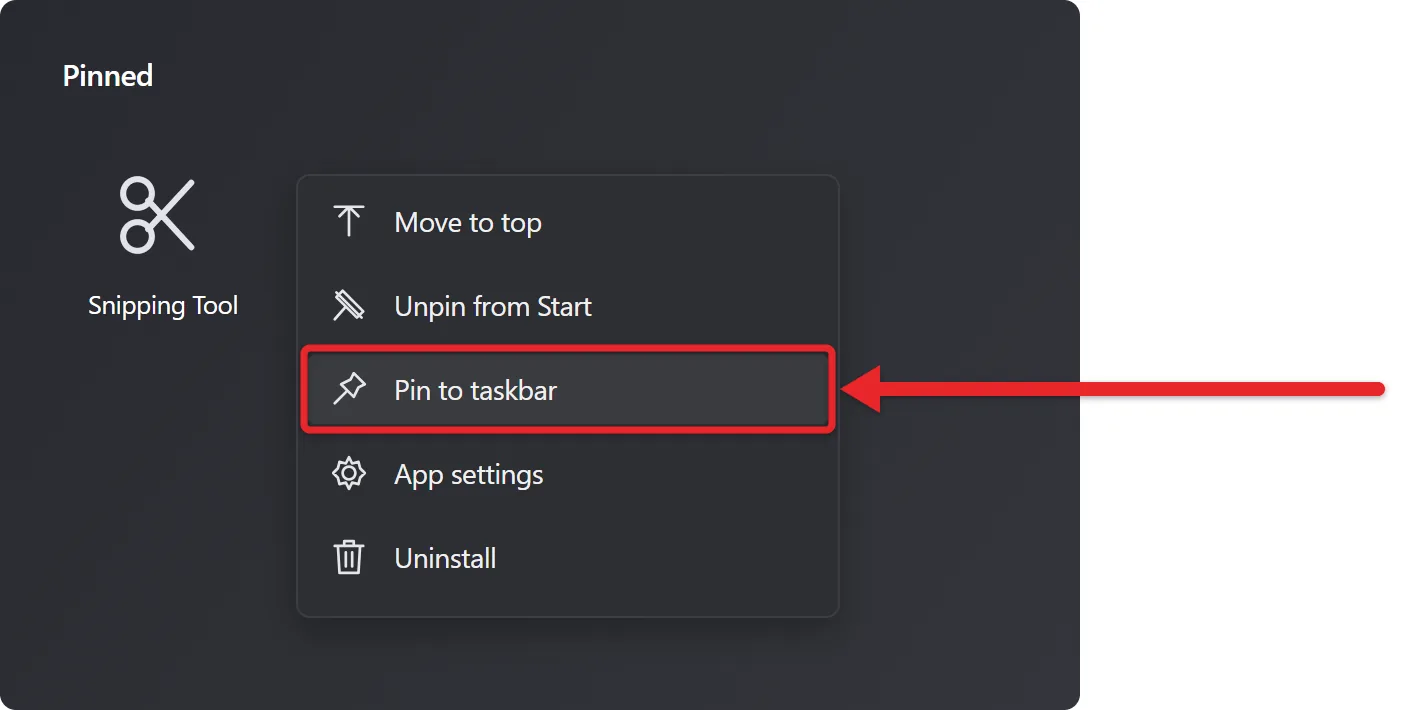
The icon appears at the right end of your pinned apps on the taskbar. Microsoft covers pinning in its Customize the taskbar guide.
Pin an App From Search
This is the quickest route for an app you can’t find in Start.
- Press Windows key + S, or select the search box or icon on the taskbar.
- Type the app’s name.
- Right-click the app in the results and select Pin to taskbar.
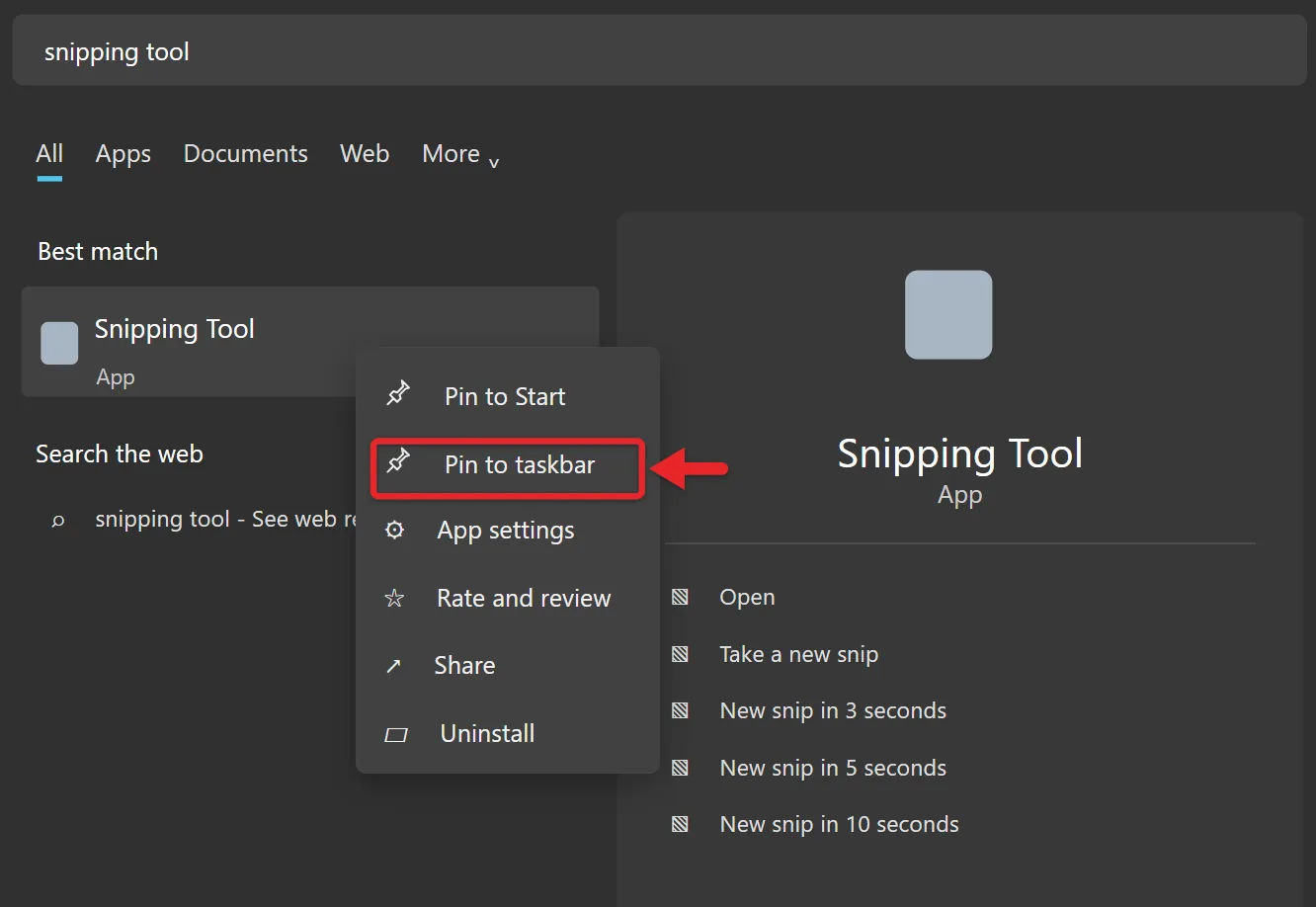
Microsoft’s taskbar guide uses this search method as its main way to pin an app.
Pin an App That’s Already Open
- Open the app.
- Right-click its icon on the taskbar.
- Select Pin to taskbar.
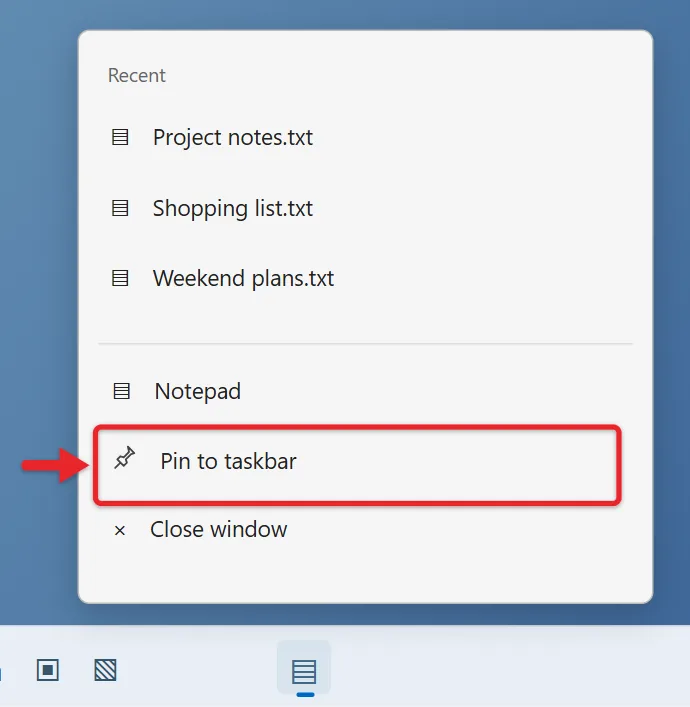
The icon stays on the taskbar after you close the app. If the menu shows Unpin from taskbar instead, the app is already pinned. This is also the easiest way to pin Control Panel, Task Manager, and other system tools. If a pinned browser lists websites in its right-click menu, you can hide most visited Chrome links from the taskbar right-click menu.
Deciding which apps belong on the taskbar, on Start, or on the desktop? Here’s how to put apps on the home screen in Windows 11.
Pin a Desktop Shortcut or Program File
- Right-click the shortcut on the desktop, or the program’s .exe file in File Explorer.
- Select Show more options. This opens the older, full right-click menu.
- Select Pin to taskbar.
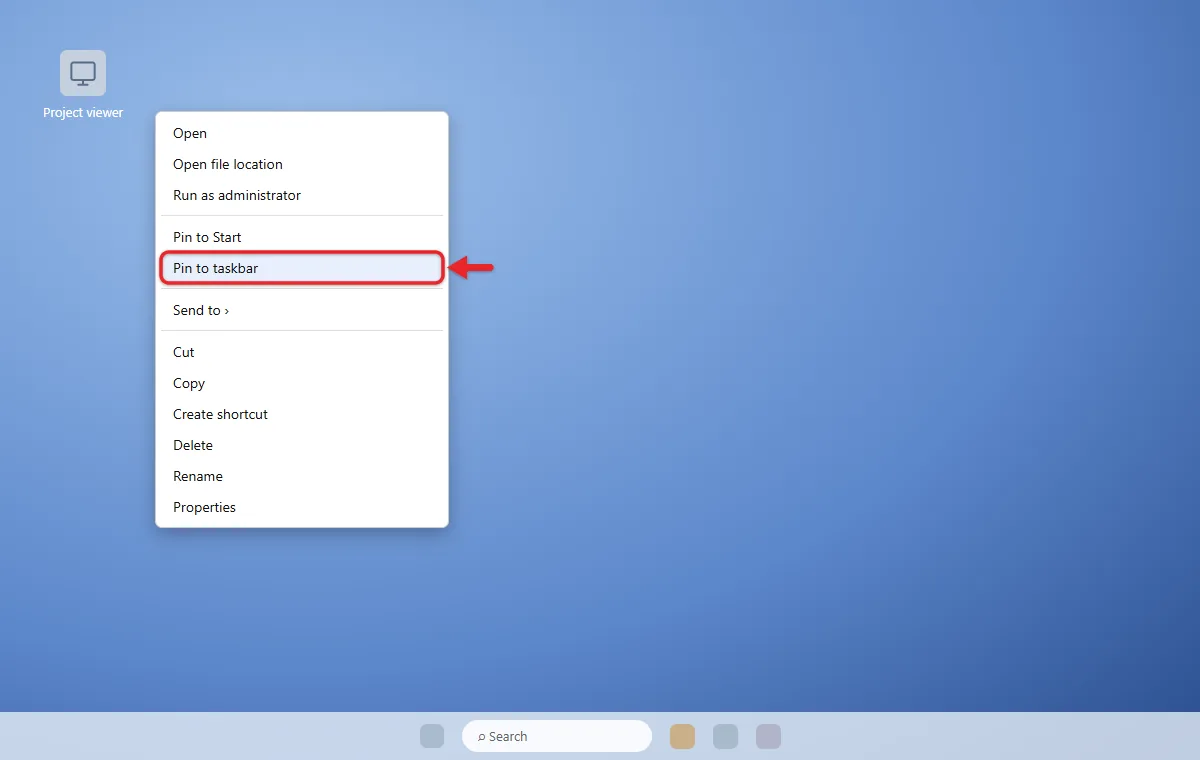
You can also drag a desktop shortcut onto the taskbar and release it there to pin it.
Pin a Folder to the Taskbar
Windows 11 doesn’t offer Pin to taskbar for folders directly, but a shortcut works.
- Right-click the desktop and select New > Shortcut.
- Type explorer.exe, a space, and the folder’s full path, such as
explorer.exe C:\Users\Public\Documents. Select Next.
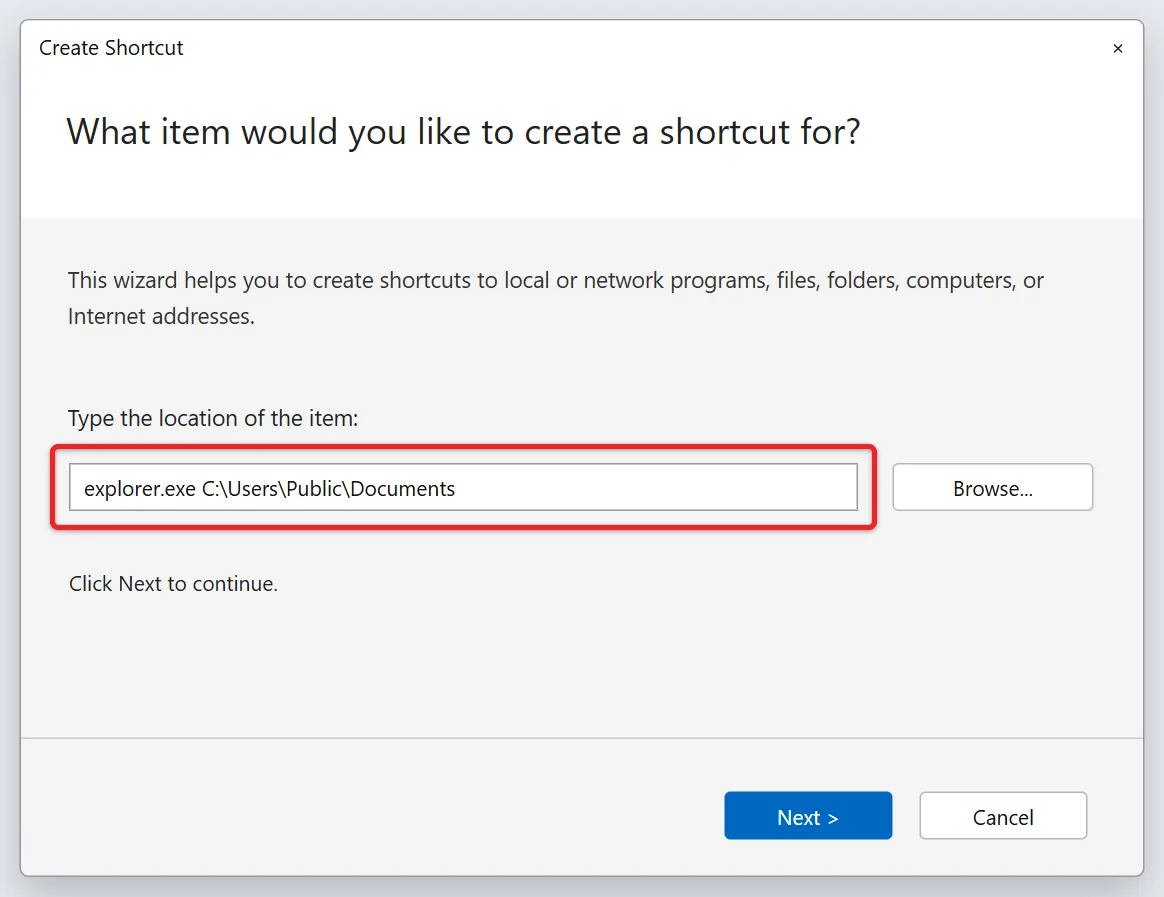
- Name the shortcut and select Finish.
- Right-click the new shortcut, select Show more options, and choose Pin to taskbar.
The space after explorer.exe matters. Without it, Windows can’t find the target. Every folder pinned this way uses the File Explorer icon, so if you pin several, right-click each shortcut before pinning, select Properties > Change Icon, and give each one its own icon.
Quicker option: drag a folder onto the File Explorer icon on the taskbar. It’s pinned to File Explorer’s jump list, which you open by right-clicking the File Explorer icon. You can also right-click any folder and select Pin to Quick access.
Using Quick access in Windows 11 shows how to reorder, unpin, or reset those Quick access folders.
For Downloads, Documents and other built-in folders, you can also personalize Start folders in Windows 11 so they sit beside the Power button.
Pin a File to an App’s Jump List
Files can’t get their own taskbar icon, but you can pin them to the app that opens them. A jump list is the menu of recent files and shortcuts you see when you right-click a taskbar icon.
- Pin the app, such as Word or Excel, to the taskbar.
- Right-click the app’s taskbar icon to see its recent files.
- Hover over the file and select the pin icon next to it.
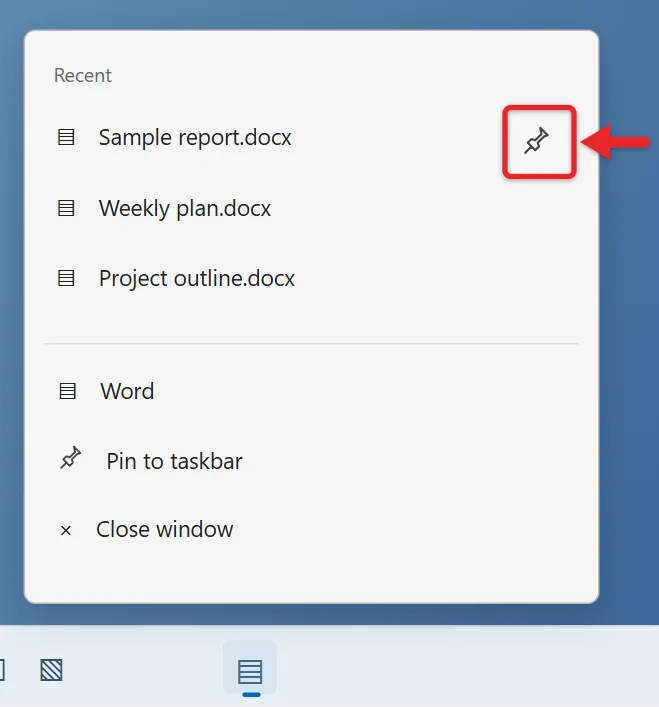
You can also drag a file onto the app’s taskbar icon to pin it there. Pinned files stay at the top of that right-click list. If the file isn’t listed, open it once in the app so it shows up as a recent file.
Jump lists are one of several places to see recent files in Windows 11.
Pin a Website
In Microsoft Edge, open the site and select Settings and more (…) > More tools > Pin to taskbar. Microsoft’s Edge pin to taskbar page shows the same steps. Chrome and Firefox can add a website to the taskbar too. Gmail makes a good example: pin Gmail to the taskbar in Windows 11.
Prefer an icon on the desktop? Here’s how to make a desktop shortcut for a website in Windows 11, or create an internet shortcut from your browser.
Pin a Settings Page
Each Settings page has its own address that starts with ms-settings:, which Microsoft lists in its Settings app URI reference. You can turn one into a pinned shortcut.
- Right-click the desktop and select New > Shortcut.
- Type explorer.exe, a space, and the page address, such as
explorer.exe ms-settings:windowsupdatefor Windows Update. Select Next. - Name the shortcut, select Finish, then pin it with Show more options > Pin to taskbar.
Other useful addresses are ms-settings:display, ms-settings:bluetooth and ms-settings:taskbar.
Rearrange or Unpin Taskbar Icons
- Move an icon: click and drag it left or right along the taskbar. Pinning does not fix an icon in place; see locking the taskbar in Windows 11 for what is and is not possible.
- Unpin an icon: right-click it and select Unpin from taskbar. The app stays installed.
- Open a pinned app with the keyboard: press Windows key + a number. Windows key + 1 opens the first pinned app, Windows key + 2 the second, and so on.
- Show pins on every monitor: right-click the taskbar, select Taskbar settings, expand Taskbar behaviors, and check Show my taskbar on all displays.
Built-in apps such as Microsoft Teams are regular pins on current Windows 11, so right-click them and select Unpin from taskbar. Unpinning doesn’t uninstall Teams or delete your chats. The Search, Task view and Widgets buttons aren’t pins. Turn them on or off under Settings > Personalization > Taskbar > Taskbar items.
If Pinned Icons Disappear or Look Blank
- Press Ctrl + Shift + Esc to open Task Manager.
- Right-click Windows Explorer and select Restart. The taskbar reloads.
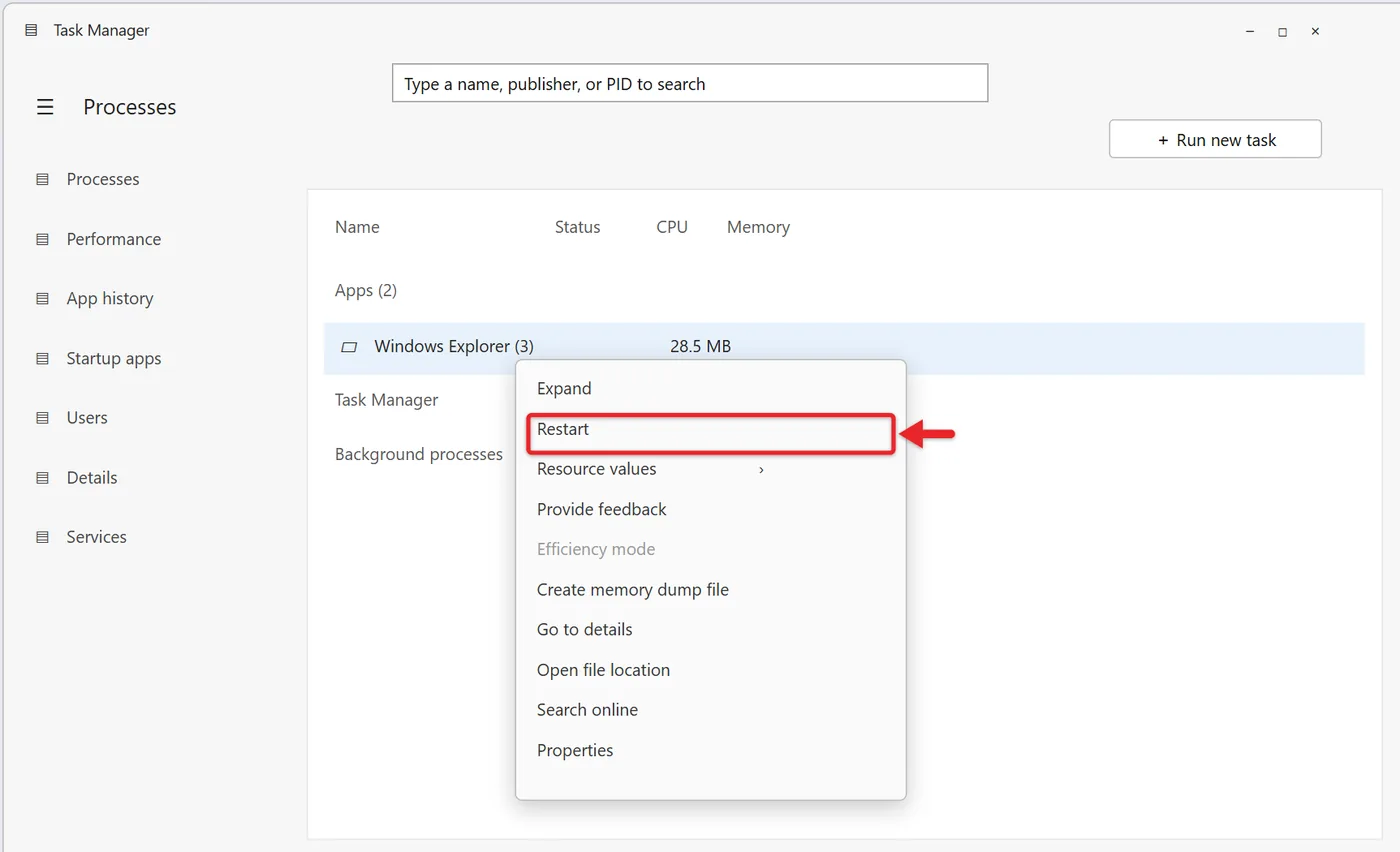
- If an icon is still blank, unpin it and pin it again from Start.
- If a pinned folder or file shortcut stops working, check that the folder or file still exists at the same path. If it moved, delete the pin and make a new shortcut.
- If pins keep vanishing after a restart, check whether cleanup software or a work policy resets the taskbar. On a work or school PC, your IT team may control the taskbar layout.
When the whole bar is missing, not just your pins, you’ll need to get the taskbar back in Windows 11.
Frequently Asked Questions
Why is Pin to taskbar missing?
In the new Windows 11 right-click menu, the option is often hidden. Select Show more options first, or pin the app from Start or search. Some items, such as individual files and folders, can’t be pinned directly, so use a shortcut or a jump list. On work or school PCs, an administrator may also block taskbar changes.
Why is an app’s jump list empty?
Jump lists only show recent files when that setting is on. Go to Settings > Personalization > Start and turn on Show recently opened items in Jump Lists on Start or the taskbar.
Can I move the taskbar icons to the left?
Yes. Go to Settings > Personalization > Taskbar > Taskbar behaviors and set Taskbar alignment to Left. Left alignment is explained further in how to move the taskbar icons to the left. The taskbar itself always stays at the bottom of the screen in Windows 11.
Can an app be pinned to both Start and the taskbar?
Yes. The two pins are separate. Unpinning from one leaves the other in place.
Does unpinning uninstall the app?
No. Unpinning only removes the shortcut from the taskbar. The app is still in the Start menu. To take an app off Start instead, right-click it and select Unpin from Start. Microsoft’s Start menu guide covers it.
The numbers and symbols that appear on pinned apps go away when you turn off taskbar badges in Windows 10 and Windows 11.
Once your favorite apps are pinned, you can also change the taskbar color in Windows 11 to match your desktop.
The weather button at the left end of the taskbar opens the Widgets board. Here’s how to add widgets in Windows 11.

Matthew Burleigh is the founder, head writer, and editor of Solve Your Tech, which he launched in 2012. He has written technology tutorials since 2008 and worked in IT since 2003, including small-business support, IT management, and consulting. He holds Bachelor’s and Master’s degrees in Computer Science from Arizona State University.
Matthew writes practical guides for Windows, iPhone and iPad, Microsoft Office, Outlook, Google apps, and Android. Solve Your Tech’s guides are checked step by step against the device or app maker’s own documentation and tested on his own devices whenever he has the hardware or software, with clear steps, sources, and update dates.
Read more about Matthew and how Solve Your Tech writes and updates its guides, or report a correction.