To use a different wallpaper on each monitor in Windows 11, open Settings > Personalization > Background, set Personalize your background to Picture, then right-click an image under Recent images and choose Set for monitor 1, Set for monitor 2, and so on. Windows applies each picture right away, and you don’t need to install anything.
These steps are for current Windows 11 releases with two, three, or more monitors in Extend mode. Windows 10 uses the same Background page. For connecting screens, stopping mirroring or fixing mouse direction, follow the multiple-monitor setup steps. Spreading work across screens? You can open multiple windows in Windows 11.
Before You Start
- Every monitor is on and detected. Each screen should appear as a numbered box at the top of Settings > System > Display.
- The screens are extended, not duplicated. Press Windows + P and choose Extend. Duplicated screens show one desktop, so they can only share one picture. For more detail, read about extending your display on Windows 11.
- You’re using one desktop. If you’ve created extra virtual desktops in Task View, Windows replaces the per-monitor choices with per-desktop ones. The fix is below.
- You have the images ready. Put the pictures in an easy folder such as Pictures so you can find them quickly.
Set a Different Background on Each Monitor
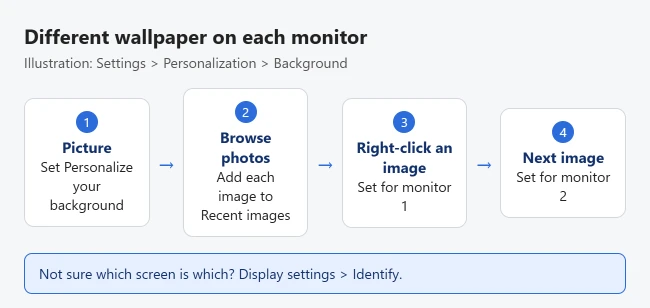
- Right-click an empty spot on the desktop and select Personalize, then Background. You can also press Windows + I and go to Personalization > Background.
- Set Personalize your background to Picture. A row of thumbnails labeled Recent images appears.
- Select Browse photos next to Choose a photo and pick the first image. Windows puts it on every screen for now and adds it to Recent images. Repeat for each picture you want to use.
- Right-click the thumbnail you want on your first screen and select Set for monitor 1. Only that screen changes.
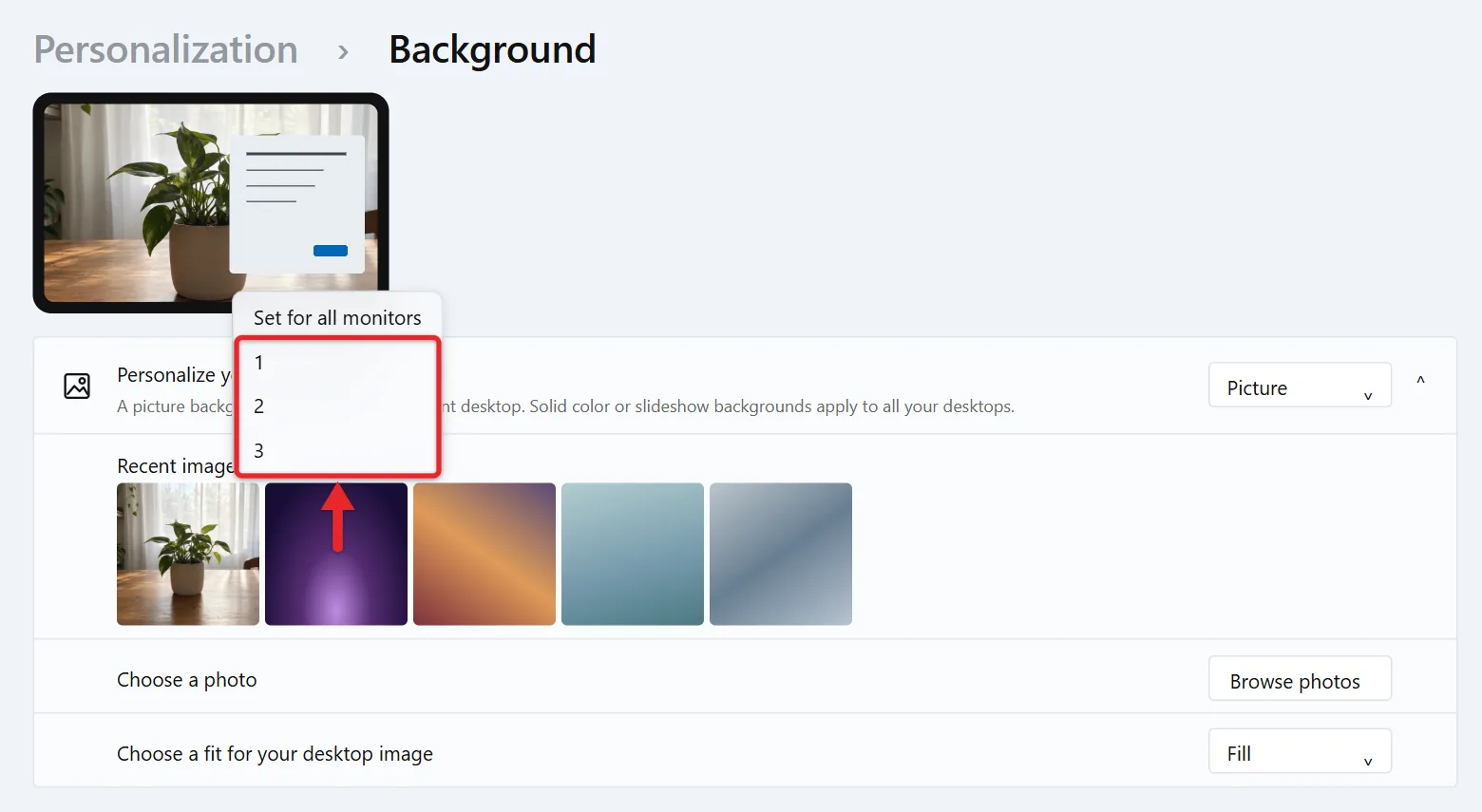
- Right-click another thumbnail and select Set for monitor 2. Repeat with Set for monitor 3 and higher for any other screens. Each screen now shows its own picture. If a picture looks cut off or blurry, resize your desktop background.
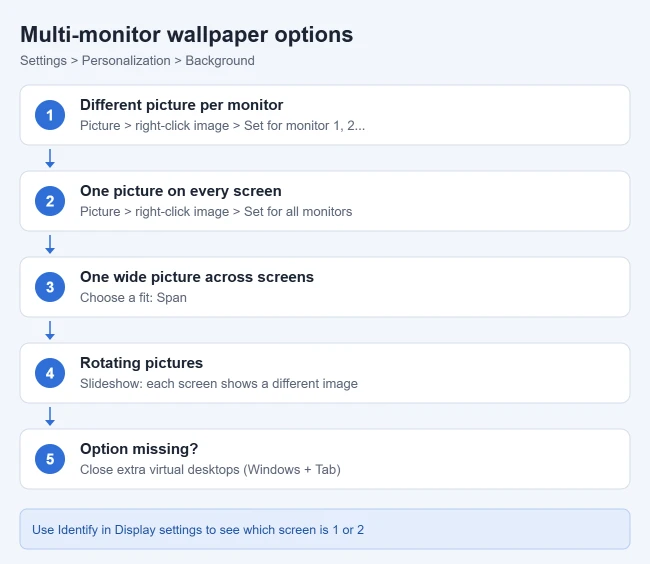
Microsoft’s desktop background guide confirms that with Picture selected you can use the same picture on all displays or a different one on each. To put one picture back on every screen, right-click it and choose Set for all monitors.
Which monitor is 1 and which is 2?
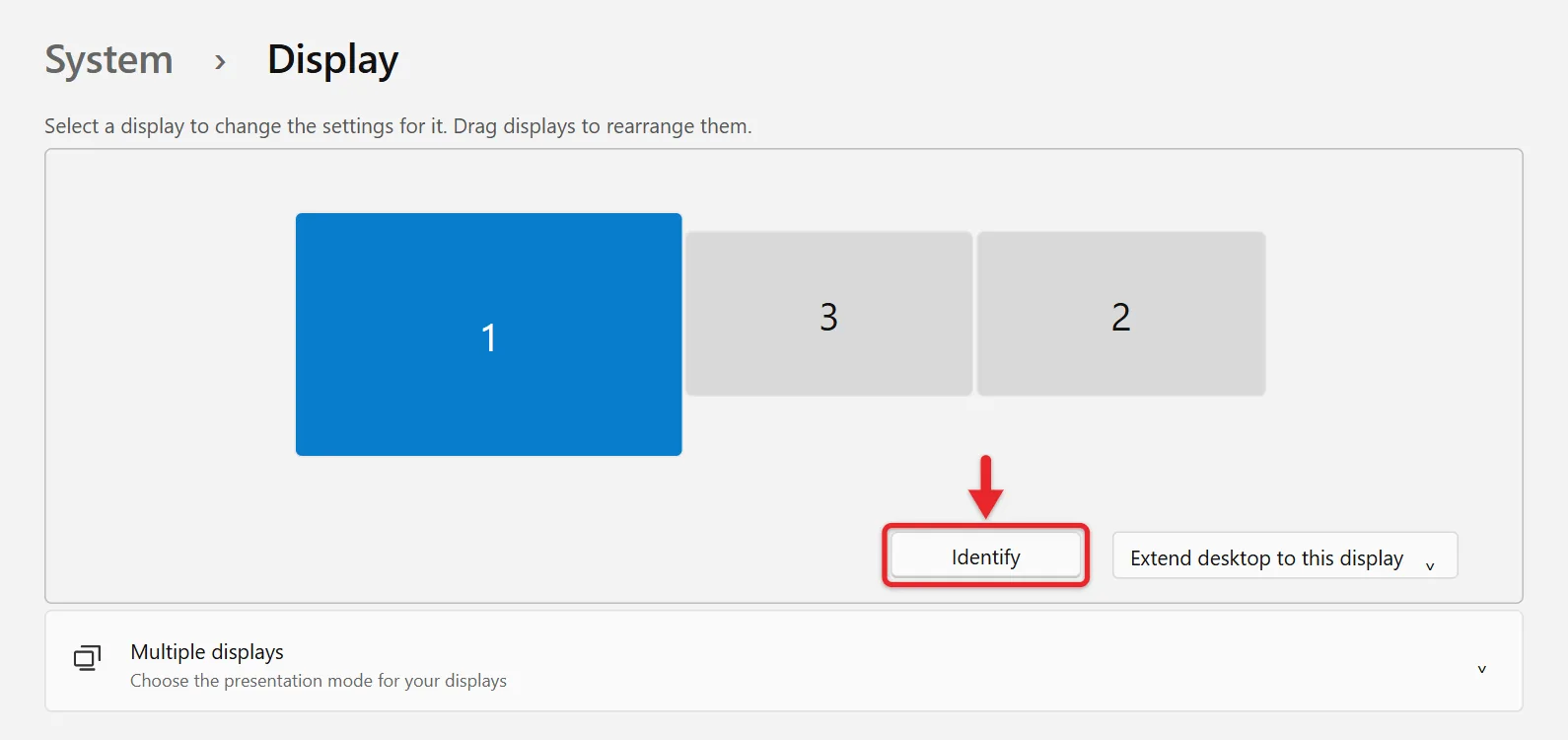
Open Settings > System > Display and select Identify. A large number appears on each screen for a few seconds. Those are the numbers the Set for monitor menu uses. They don’t follow left-to-right order, so check before you assign pictures. To choose which screen has the taskbar and Start menu, change the main display.
On that same Display page, you can also adjust the screen size on a second monitor if text or apps look too big or small there.
Add Pictures From File Explorer
If you’re already looking at your pictures in File Explorer, right-click one and select Set as desktop background. Microsoft lists this as a quick way to set a picture, but it doesn’t let you choose a monitor, and selecting several files at once can start a slideshow. Use it to get the image into Recent images, then open Settings > Personalization > Background and assign each screen with Set for monitor.
Pick Images That Fit Each Screen
- Match the resolution: select a monitor on the Display page to see its resolution. An image at least that size looks sharp. A 1920 × 1080 picture on a 2560 × 1440 screen will look soft.
- Portrait monitors: use a tall image for a monitor turned on its side, or Windows will crop or shrink a wide one.
- Choose a fit: the Choose a fit for your desktop image list offers Fill, Fit, Stretch, Tile, Center, and Span. Fill may crop the edges, Fit keeps the whole image but can leave bars, and Stretch can distort it.
- Mixed screen sizes: the list has one setting for all your monitors, so pick pictures with the same shape as their screens, then choose Fill. That gives you the fewest bars and the least cropping.
Stretch One Image Across All Monitors
- Pick one wide image, ideally as wide as all your screens combined. Two 1920 × 1080 monitors side by side add up to 3840 × 1080.
- Set it as your background with Picture.
- Set Choose a fit for your desktop image to Span. The image continues from one screen to the next.
If your screens have different resolutions or sit at different heights, the seam won’t line up perfectly. Arranging the boxes on the Display page to match your desk helps. Span is also the usual reason one picture suddenly stretches across every screen when you wanted separate ones. Change the fit back to Fill and set each monitor again.
Use a Slideshow on Multiple Monitors
Set Personalize your background to Slideshow, select Browse and choose a folder. Each screen then shows a different picture from that folder. You can set how often it changes and turn on Shuffle the picture order. To skip ahead, right-click the desktop and select Next desktop background. Windows can’t use a separate folder for each monitor or keep the screens in sync. For that, you’d need a third-party wallpaper app.
If your accent color is set to Automatic, the taskbar can follow your wallpaper too, or you can change the taskbar color in Windows 11 yourself.
If “Set for Monitor” Is Missing
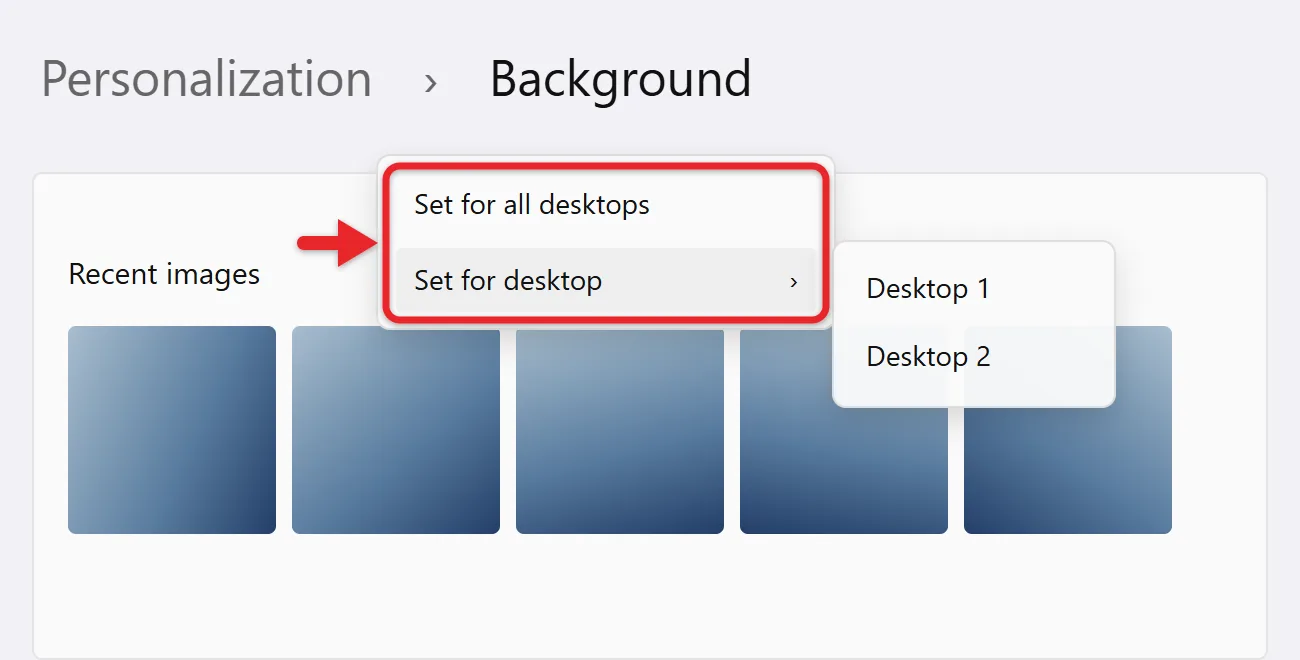
- You see “Set for desktop” instead: you have more than one virtual desktop, and the per-monitor option isn’t available then. Press Windows + Tab, hover over each extra desktop at the bottom of the screen, and select its X until only one remains. Open windows move to the remaining desktop, so nothing closes. Set your monitor pictures, then add desktops again if you need them. For more on Task View, read about switching between desktops in Windows 11.
- Background isn’t set to Picture: Slideshow, Solid color, and Windows Spotlight don’t offer per-monitor choices.
- Your displays are duplicated: press Windows + P and choose Extend.
- Only one monitor is detected: check the cable and the monitor’s input, then go to Settings > System > Display, expand Multiple displays, and select Detect.
- The Background page is grayed out: a message about activation means Windows isn’t activated. Check Settings > System > Activation. A work or school PC can also lock the wallpaper; ask your IT administrator.
- Another wallpaper app is running: apps that manage the desktop can overwrite your choice. Close or turn off the app’s wallpaper feature, then set the pictures again.
Switching from Spotlight to Picture also removes the Spotlight desktop icon, which is one way to get rid of Learn about this picture in Windows 11.
To match the screens’ brightness too, change brightness on a second monitor.
How to Undo It
Go back to Settings > Personalization > Background, right-click the picture you want everywhere, and select Set for all monitors. Choosing a new picture with Browse photos also applies it to every screen. For themes, colors and the lock screen, follow the steps to change the desktop background in Windows 11.
Frequently Asked Questions
Can each virtual desktop have its own background?
Yes. Right-click an image under Recent images and choose the desktop to apply it to, or choose Set for all desktops. You can also right-click a desktop’s thumbnail in Task View and select Choose background. Per-monitor backgrounds and slideshows aren’t available while you use multiple desktops.
Does the fit setting apply to each monitor separately?
No. There’s one Choose a fit setting for all monitors, so pick images with similar shapes to their screens, or choose Fill and accept some cropping.
Why does my wallpaper reset after sleep or reconnecting a monitor?
Windows can reassign monitor numbers when displays reconnect in a different order, and there is no supported way to change monitor identity numbers yourself. Set the pictures again with Set for monitor, or plug monitors into the same ports each time.
Can I use more than two monitors?
Yes. The right-click menu lists one Set for monitor entry for each detected screen, so a three-monitor setup shows Set for monitor 1, 2 and 3.
Can I do this in Windows 10?
Yes. The steps are almost the same: Settings > Personalization > Background, then right-click an image and choose a monitor. Microsoft ended Windows 10 support on October 14, 2025, so it no longer gets security updates.

Matthew Burleigh is the founder, head writer, and editor of Solve Your Tech, which he launched in 2012. He has written technology tutorials since 2008 and worked in IT since 2003, including small-business support, IT management, and consulting. He holds Bachelor’s and Master’s degrees in Computer Science from Arizona State University.
Matthew writes practical guides for Windows, iPhone and iPad, Microsoft Office, Outlook, Google apps, and Android. Solve Your Tech’s guides are checked step by step against the device or app maker’s own documentation and tested on his own devices whenever he has the hardware or software, with clear steps, sources, and update dates.
Read more about Matthew and how Solve Your Tech writes and updates its guides, or report a correction.