To reset network settings in Windows 11, go to Settings > Network & internet > Advanced network settings > Network reset, select Reset now, and then select Yes. Windows removes every network adapter and its settings, restarts your PC, and then reinstalls the adapters with default settings. Have your Wi-Fi password ready before you start, because you should expect to join your network again afterward.
In this guide
- What a network reset changes, and what to write down first
- The reset steps in Settings
- What to set up again after the restart
- How to check that it worked
- A lighter alternative using network commands
- Troubleshooting and common questions
Which versions this covers
These steps follow Microsoft’s current instructions for Windows 11, as published in October 2026. Windows 10 has the same feature in a different place: Settings > Network & Internet > Status > Network reset. Network reset only works on the PC you run it on. It does not change anything on your router or modem.
Try these first
A reset is a last resort. These smaller fixes come first in Microsoft’s list and leave your settings alone:
- Run the troubleshooter. In Windows 11 it opens in the Get Help app. Here’s how to run the network troubleshooter.
- Restart the modem and router. Unplug both, wait at least 30 seconds, plug in the modem, wait for its lights to settle, and then plug in the router.
- Test another device. If a phone on the same Wi-Fi also has no internet, the problem is the router or your provider, and resetting the PC will not fix it.
- Forget and rejoin the network. If only one network is the problem, forget that Wi-Fi network in Windows 11 and connect again.
- Update the driver. Here’s how to update your Wi-Fi driver.
- Restart one adapter. To turn a single adapter off and on instead of resetting all of them, use the Windows 11 adapter settings.
- Install Windows updates. Go to Settings > Windows Update > Check for updates, then restart.
Before you reset: what changes
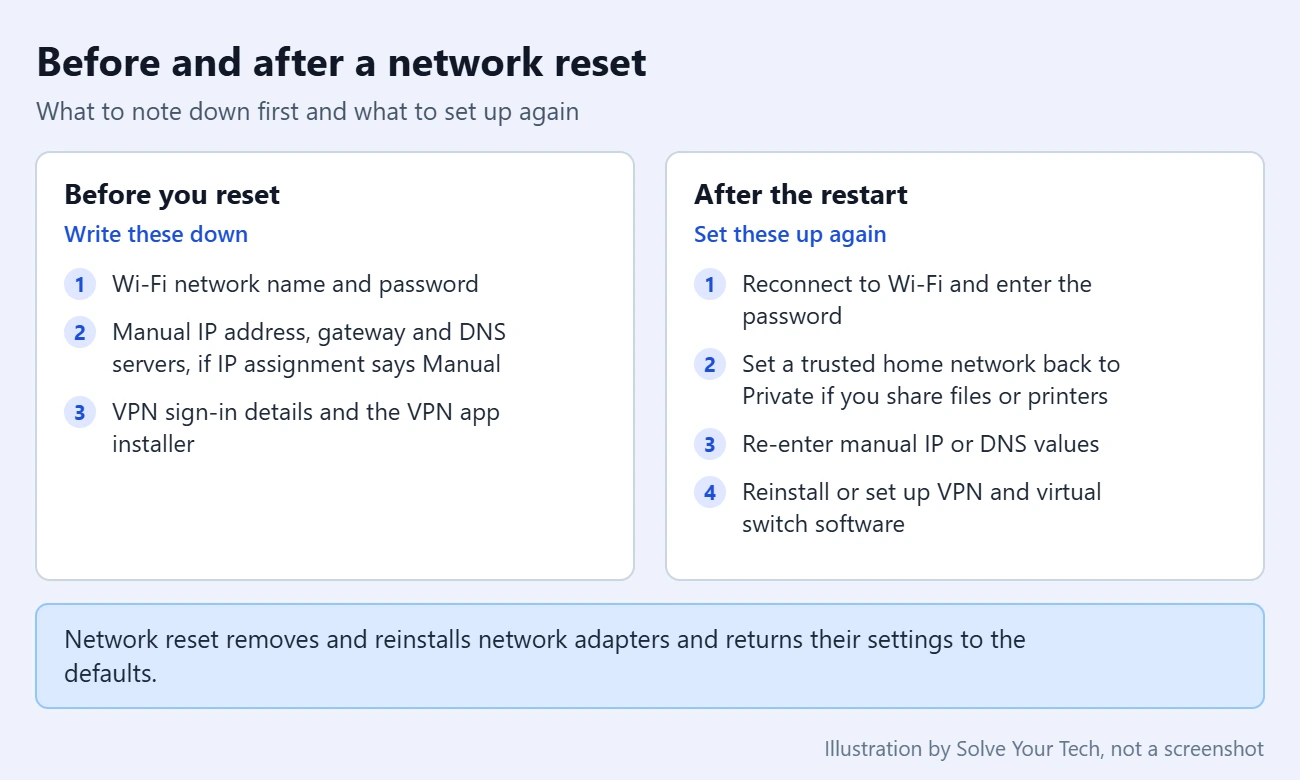
Read this first, because Microsoft’s instructions do not include a way to reverse a network reset. A network adapter is the hardware or software that connects your PC to a network, such as your Wi-Fi card or Ethernet port. Microsoft says network reset removes any network adapters you have installed and the settings for them. After the PC restarts, the adapters are reinstalled and their settings go back to the defaults.
Microsoft also calls network reset the last step to try, after the other fixes have failed. Here is what to expect:
- Wi-Fi: plan to select your network and type its password again.
- Manual IP and DNS settings: adapter settings return to their defaults, so a static IP address or custom DNS server you entered has to be typed in again.
- VPN and virtual machine software: you might need to reinstall and set up VPN client software or virtual switches from Hyper-V and other network virtualization software.
- Network profile: the reset might set each of your known networks to the public network profile, which hides your PC from other devices on the network.
- Restart: your PC restarts on its own, so save open work first.
The reset targets network adapters and network settings. It is not a PC reset, and the list of what it removes does not include documents, photos, or installed apps.
If you are comparing this with a full Windows recovery, here’s how to choose the right Windows 11 recovery option. Reset PC reinstalls Windows; a network reset targets connection settings, so choose according to what is actually broken.
Write these down first
- Your Wi-Fi network name and password.
- Any manual IP settings. Go to Settings > Network & internet, select Wi-Fi or Ethernet, open your network, and look at IP assignment. If it says Manual, copy the IP address, subnet mask, gateway, and DNS servers. If it says Automatic (DHCP), your router hands these out and there is nothing to copy. The steps for changing your IP address in Windows 11 use the same screen.
- VPN sign-in details and the installer for your VPN app.
Optional: back up saved Wi-Fi networks
If your PC remembers many Wi-Fi networks, you can export them to files first. Warning: with key=clear, each file contains that network’s password in readable text. Keep the folder private and delete it when you are done.
- Create a folder, for example C:\WiFiBackup. The folder must already exist.
- Select Search on the taskbar, type command prompt, and select Run as administrator > Yes.
- Type
netsh wlan export profile key=clear folder="C:\WiFiBackup"and press Enter. Windows saves one XML file per network.
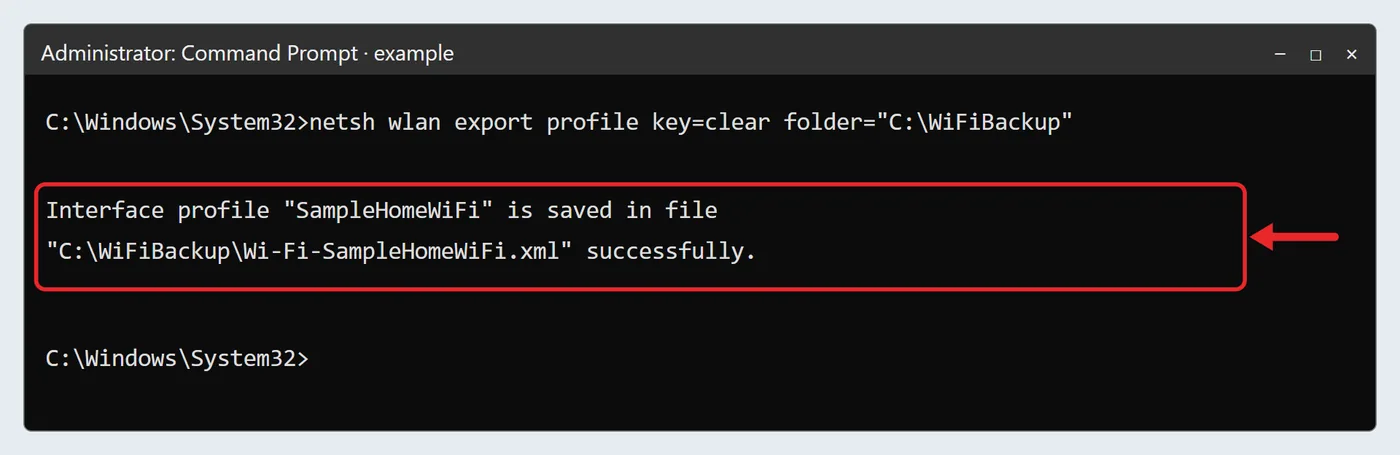
- After the reset, bring a network back with
netsh wlan add profile filename="C:\WiFiBackup\FILE-NAME.xml", using the real file name.
The netsh wlan command reference covers both commands.
How to reset network settings in Windows 11
- Save your work and close your apps.
- Select Start, then Settings. You can also right-click the network icon on the taskbar and select Network and internet settings.
- Select Network & internet in the left column.
- Scroll to the bottom and select Advanced network settings.
- Under More settings, select Network reset. The page explains what will be removed.
- Select Reset now.
- Select Yes to confirm.
- Wait for your PC to restart. Do not start new work while you wait, because Windows restarts by itself.
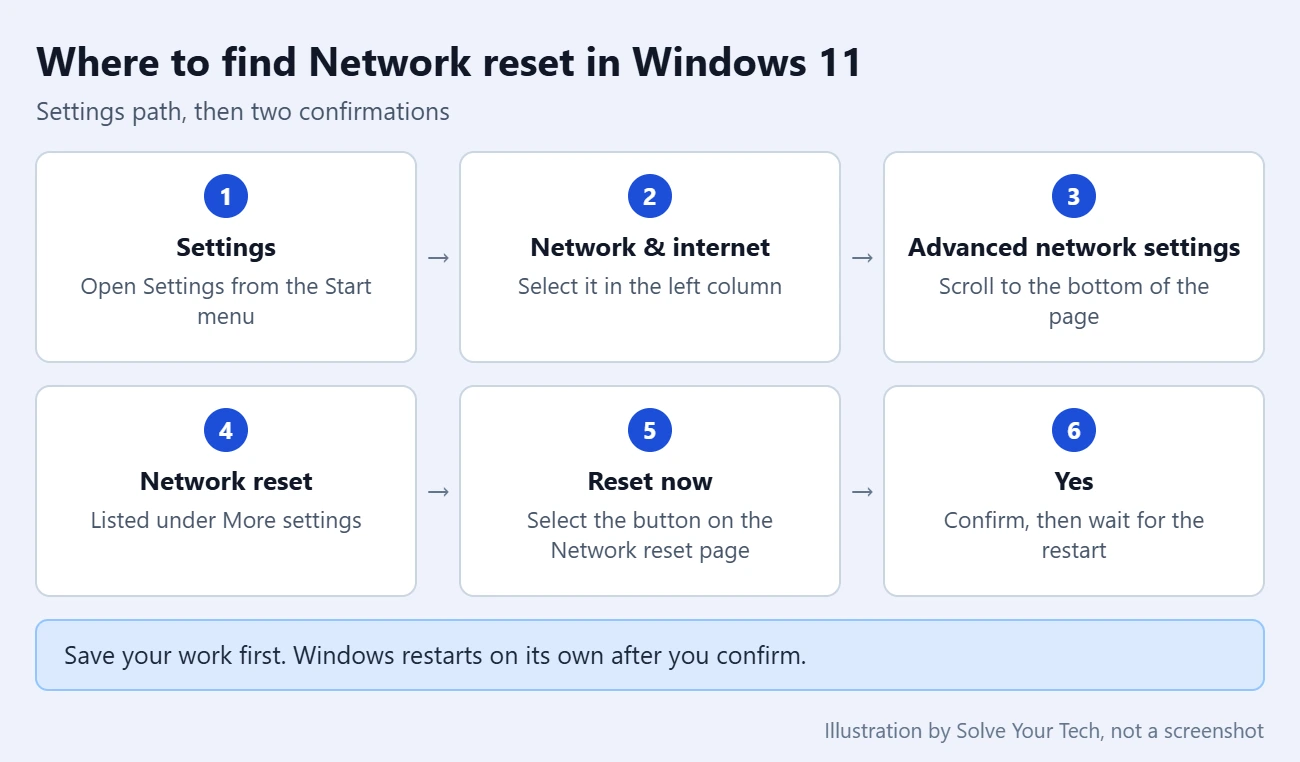
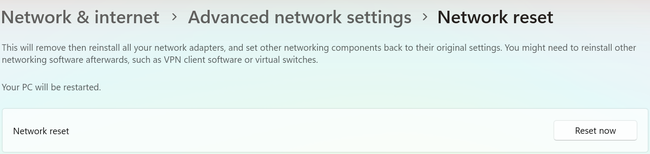
These steps match Microsoft’s instructions in Fix Wi-Fi connection issues in Windows, where network reset is the final step.
What to do after the restart
- Reconnect. Select the network icon on the taskbar, choose your Wi-Fi network, and enter the password. A wired Ethernet connection that gets its address automatically should reconnect without any typing. If a desktop shows no Wi-Fi option because it has no wireless hardware, you can add Wi-Fi to a non-wireless computer.
- Set your home network to Private if you share files or printers. Go to Settings > Network & internet, select Wi-Fi or Ethernet, open your network, and under Network profile type select Private network. Leave it on Public network (Recommended) anywhere you do not trust the other devices. If shared PCs still do not appear, check whether network discovery needs to be turned on.
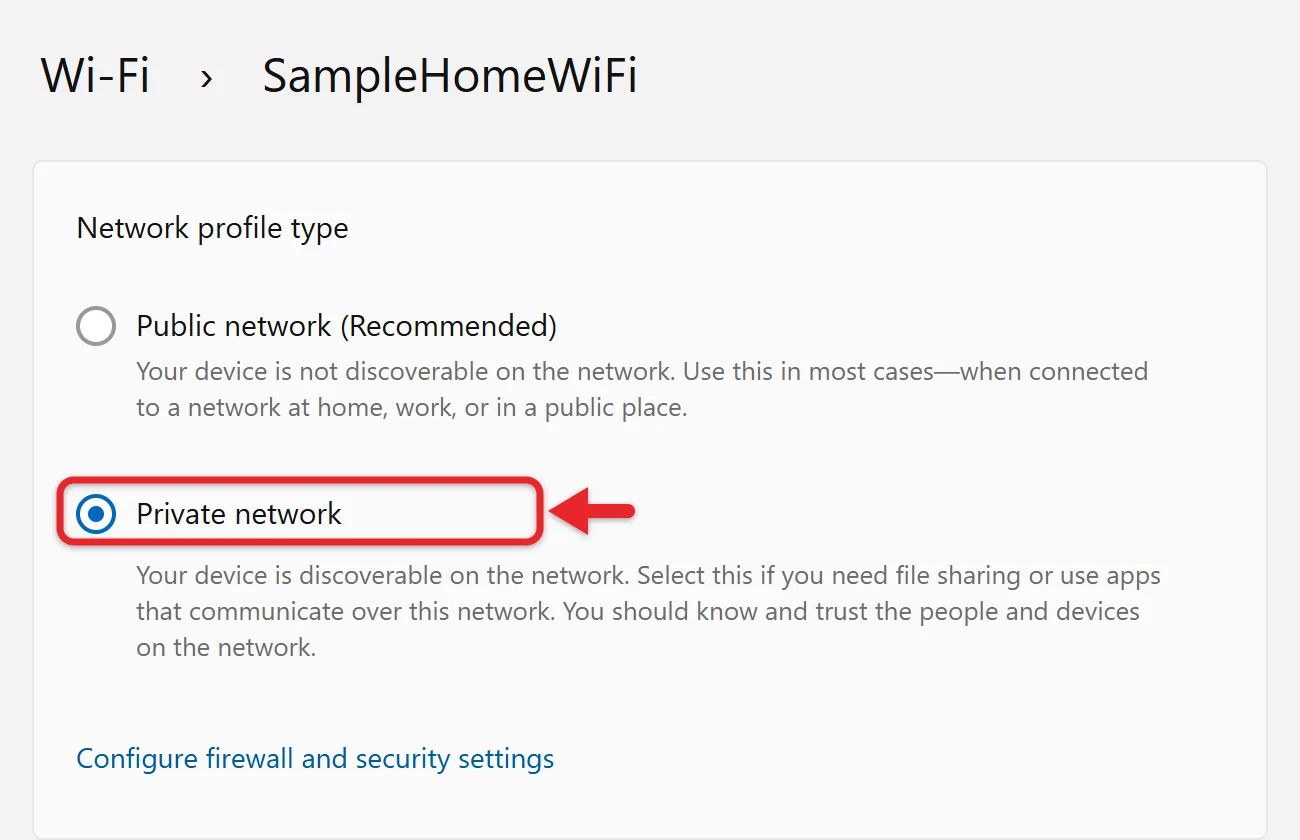
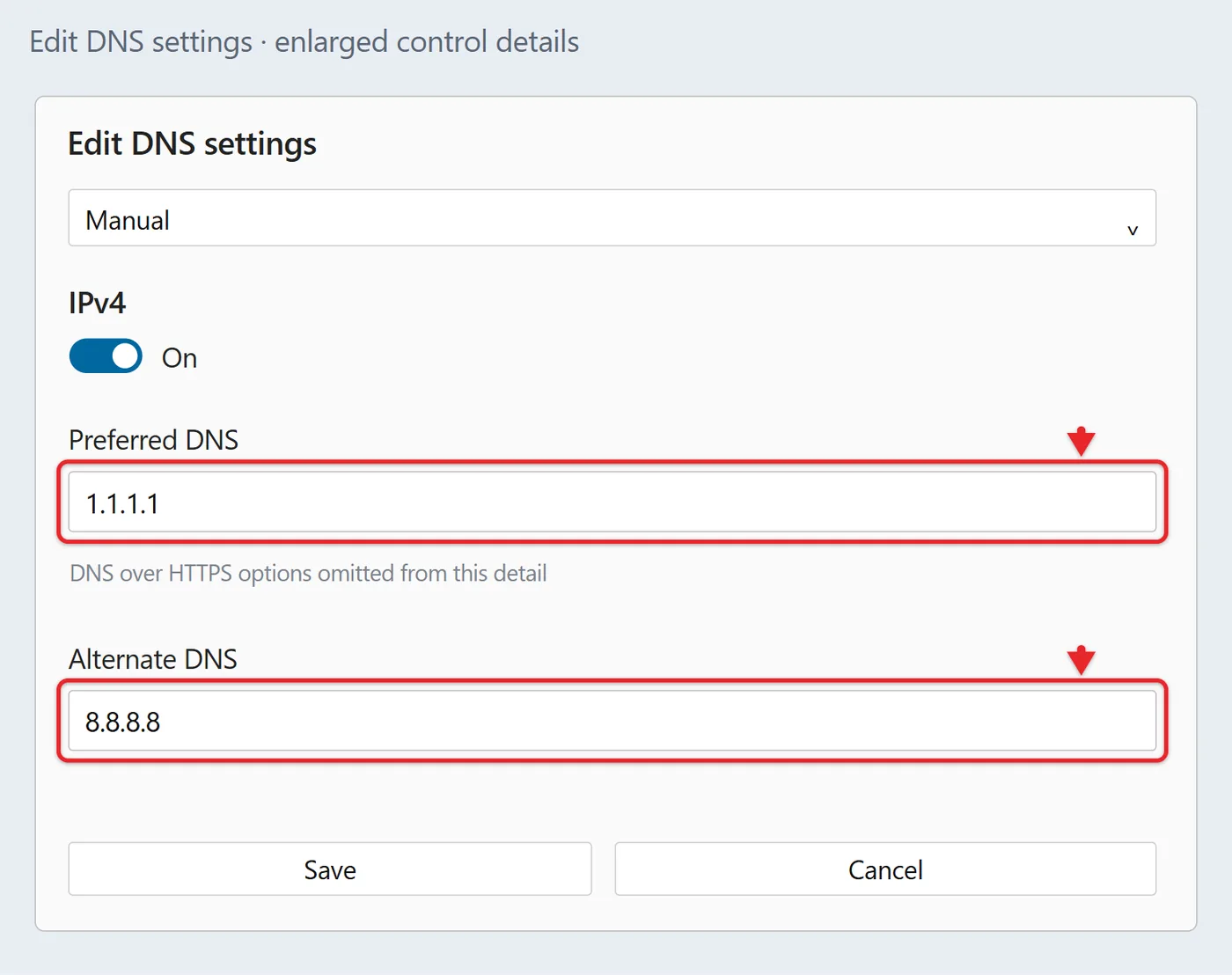
- Re-enter manual IP or DNS settings. On the same network page, select Edit next to IP assignment, choose Manual, turn on IPv4, type the values you wrote down, and select Save. Skip this if you were on Automatic (DHCP). If you only had custom DNS servers, the steps to set a DNS server in Windows 11 put them back without touching your IP address.
- Set up VPN and virtual machine networking again. Reinstall the VPN app if it no longer connects, and recreate any Hyper-V virtual switches.
Microsoft covers the profile and IP screens in Essential network settings and tasks in Windows.
How to confirm the reset worked
- Open Settings > Network & internet. The status of your connection appears at the top of the page.
- Load a website you have not visited today, so you are not looking at a saved copy.
- Open your network’s properties and check that IP assignment shows Automatic (DHCP), unless you set it to Manual on purpose.
- If the IPv4 address starts with 169.254, Windows could not get an address from your router. Restart the router, or check that DHCP is turned on in the router’s settings.
Alternative: run network commands instead of a full reset
A set of network commands is an earlier step to try before network reset. They reset the TCP/IP stack (the software Windows uses to talk to networks), get a fresh IP address from your router, and clear the DNS cache (the saved list of website addresses). They do not remove or reinstall your adapters. To compare the address before and after, check your IP address in Windows 11.
Warning: ipconfig /release drops your connection until you run ipconfig /renew, so do not run these over a remote desktop session. netsh int ip reset removes IP settings you entered by hand, such as a static IP address.
- Select Search on the taskbar and type command prompt.
- Select Run as administrator, then Yes.
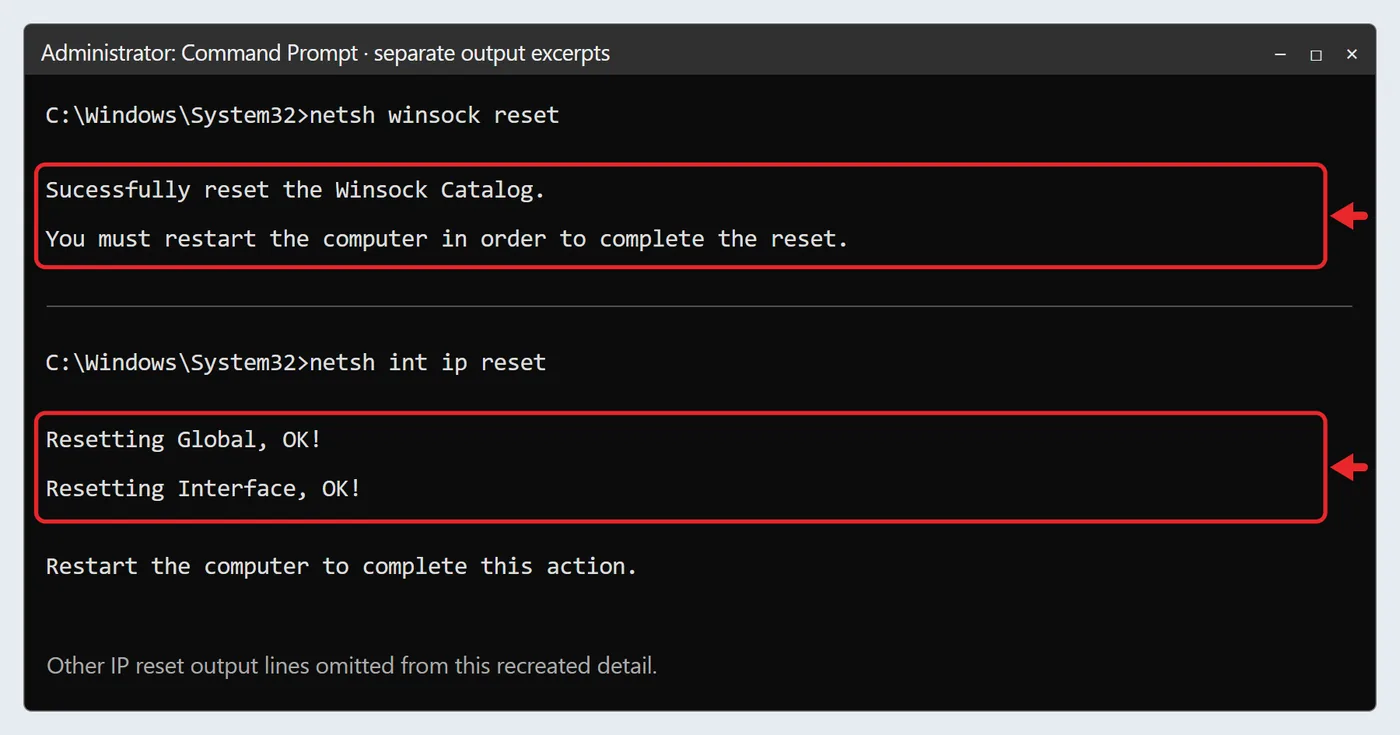
- Type each command in the table below, in order, and press Enter after each one.
- Restart your PC, then test your connection.
| Order | Command | What it does |
|---|---|---|
| 1 | netsh winsock reset | Resets the Winsock catalog, the list Windows uses to hand network requests to apps, to a clean state. |
| 2 | netsh int ip reset | Removes user-configured IP settings. The defaults take effect after a restart. |
| 3 | ipconfig /release | Gives up the IP address your router assigned. |
| 4 | ipconfig /renew | Asks the router for an IP address again. |
| 5 | ipconfig /flushdns | Clears and resets the DNS cache. |
The order comes from Microsoft’s Wi-Fi and Ethernet troubleshooting guides, and the ipconfig reference explains each ipconfig option. If the commands do not help, use the Settings reset above.
Troubleshooting
I can’t find Network reset
In Windows 11 it is under Advanced network settings, not on the main Network & internet page. Scroll to the bottom of Network & internet to find that row. If your PC runs Windows 10, look under Status instead. On a work or school PC, your organization may manage network settings, so ask your IT support before resetting.
Wi-Fi is missing after the reset
Restart once more to give Windows a chance to finish reinstalling the adapter. Then open Device Manager, expand Network adapters, and check that your wireless adapter is listed. If it is disabled, right-click it and select Enable device. If it is not listed at all, Windows is not detecting it and you may need to install the driver from your PC maker’s website. Download it on another device and copy it over with a USB drive if you have no connection. On laptops with a physical Wi-Fi switch, make sure the switch is on.
Still no internet after the reset
A network reset only fixes settings on your PC. If other devices are also offline, contact your internet provider or check your router. If only this PC is affected, try uninstalling the network adapter driver in Device Manager and restarting so Windows installs it again. Download a backup driver from your PC maker first.
If the internet works but one site won’t open, a reset won’t help. Instead, check whether it’s a blocked website on Windows 11.
Other PCs or shared folders disappeared
The reset may have switched your network to Public, which hides your PC. Set the network back to Private network using the steps in the section above.
Frequently asked questions
Will a network reset delete my Wi-Fi passwords?
Plan for it. The reset removes your network adapters and their settings, so expect to select your Wi-Fi network and enter the password again. Keep the password handy, or export your saved networks first.
Does a network reset delete my files or apps?
Network reset works on network adapters and network settings. It is separate from Reset this PC, which reinstalls Windows. The software you may need to reinstall is networking software, such as VPN clients and virtual switches.
How long does a network reset take?
Starting it takes a few clicks. Most of the time goes to the automatic restart and to reconnecting to Wi-Fi and re-entering any custom settings afterward.
Can I undo a network reset?
Microsoft does not describe an undo option. You get your old setup back by reconnecting to Wi-Fi, re-entering manual IP or DNS values, and reinstalling VPN software, which is why it helps to write those details down first.
What is the difference between network reset and the netsh commands?
Network reset removes and reinstalls every network adapter and returns its settings to the defaults. The commands only reset the TCP/IP stack and Winsock catalog, renew your IP address, and clear the DNS cache. Try the commands first, because they change less.
Does a network reset fix problems after upgrading to Windows 11?
It can. Network reset can help with connection problems that appear after upgrading from Windows 10 to Windows 11, and with cases where you can reach the internet but not shared network drives. It is not a guaranteed fix.
Once you are back online, check your network profile type first. It is the setting most likely to have changed without you noticing.

Matthew Burleigh is the founder, head writer, and editor of Solve Your Tech, which he launched in 2012. He has written technology tutorials since 2008 and worked in IT since 2003, including small-business support, IT management, and consulting. He holds Bachelor’s and Master’s degrees in Computer Science from Arizona State University.
Matthew writes practical guides for Windows, iPhone and iPad, Microsoft Office, Outlook, Google apps, and Android. Solve Your Tech’s guides are checked step by step against the device or app maker’s own documentation and tested on his own devices whenever he has the hardware or software, with clear steps, sources, and update dates.
Read more about Matthew and how Solve Your Tech writes and updates its guides, or report a correction.