To reset all settings in Windows 11, go to Settings > System > Recovery, select Reset PC, and choose Keep my files. Windows reinstalls itself and returns every setting to its default while keeping your documents, photos, and other personal files, but it removes your installed apps, so plan to reinstall them afterward.
These steps cover Windows 11 Home and Pro, versions 24H2, 25H2, and the current 26H2, and follow Microsoft’s Reset your PC guide. Windows 10 has the same tool under Settings > Update & Security > Recovery > Get started, but Windows 10 reached end of support on October 14, 2025.
Windows 11 doesn’t have a button that resets only your settings and leaves your apps in place. If one area is the problem, such as your network or display, reset just that area instead. The table below shows which option fits.
Choose the Right Kind of Reset
| What you want | Use this | Keeps files | Keeps apps |
|---|---|---|---|
| Every setting back to default | Reset PC > Keep my files | Yes | No |
| A completely clean PC to sell or give away | Reset PC > Remove everything | No | No |
| Fix a broken Windows install without losing your setup | Fix problems using Windows Update | Yes | Yes |
| Undo something that went wrong in the last 3 days | Point-in-time restore | Files changed after the snapshot are lost | Apps added after the snapshot are lost |
| Undo a recent driver, update, or app change | System Restore | Yes | Apps added after the restore point are removed |
| Fix one app | Reset in that app’s Advanced options | Yes | Yes |
| Fix Wi-Fi or Ethernet | Network reset | Yes | Yes |
For the single-area resets, follow the steps for resetting network settings in Windows 11 and resetting display settings in Windows 11. To reset one app, go to Settings > Apps > Installed apps, select the three dots next to the app, choose Advanced options, and select Reset. That option appears for Microsoft Store apps and some others.
If a problem started recently, a rollback may fix it without removing any apps. Learn how to do a System Restore on Windows 11, or use Point-in-time restore, which Microsoft lists in its recovery options in Windows for Windows 11 version 24H2 and later. Point-in-time restore keeps snapshots for up to three days and rolls back the whole PC, including personal files that are not stored in OneDrive, so anything you changed after the snapshot is lost.
Sysprep is a different tool: it’s for IT admins who prepare a Windows 11 image for deployment, not a way to reset a PC you already use.
Before You Reset
A full reset takes time and removes your apps, so do these things first:
- Back up your files. Keep my files is designed to keep your personal files, but copy anything important to an external drive or OneDrive anyway. The steps for backing up Windows 11 to an external hard drive walk through File History, and Microsoft’s Windows Backup guide shows how to save folders, your app list, and preferences to a Microsoft account.
- List the apps you need. Write down the programs you use, where to download them, and any license keys. Apps from the Microsoft Store are easy to reinstall; desktop programs like Office, Adobe apps, or games need their own installers.
- Save your BitLocker recovery key. If your drive is encrypted, Windows may ask for this 48-digit key, especially when you reset from the recovery screen. Here’s where to find your BitLocker recovery key; for a personal PC it’s usually stored in the Microsoft account you set it up with, at aka.ms/myrecoverykey. Write it down or print it on another device before you start, because Microsoft Support can’t recover a lost key.
- Note Wi-Fi and account details. Have your Wi-Fi password and Microsoft account password handy for setup and app sign-ins.
- Plug in your laptop and set aside an hour or more.
Reset All Settings With Reset PC
- Press Windows + I to open Settings.
- Select System in the left pane, then select Recovery.
- Under Recovery options, next to Reset this PC, select Reset PC. A blue Reset this PC window opens.
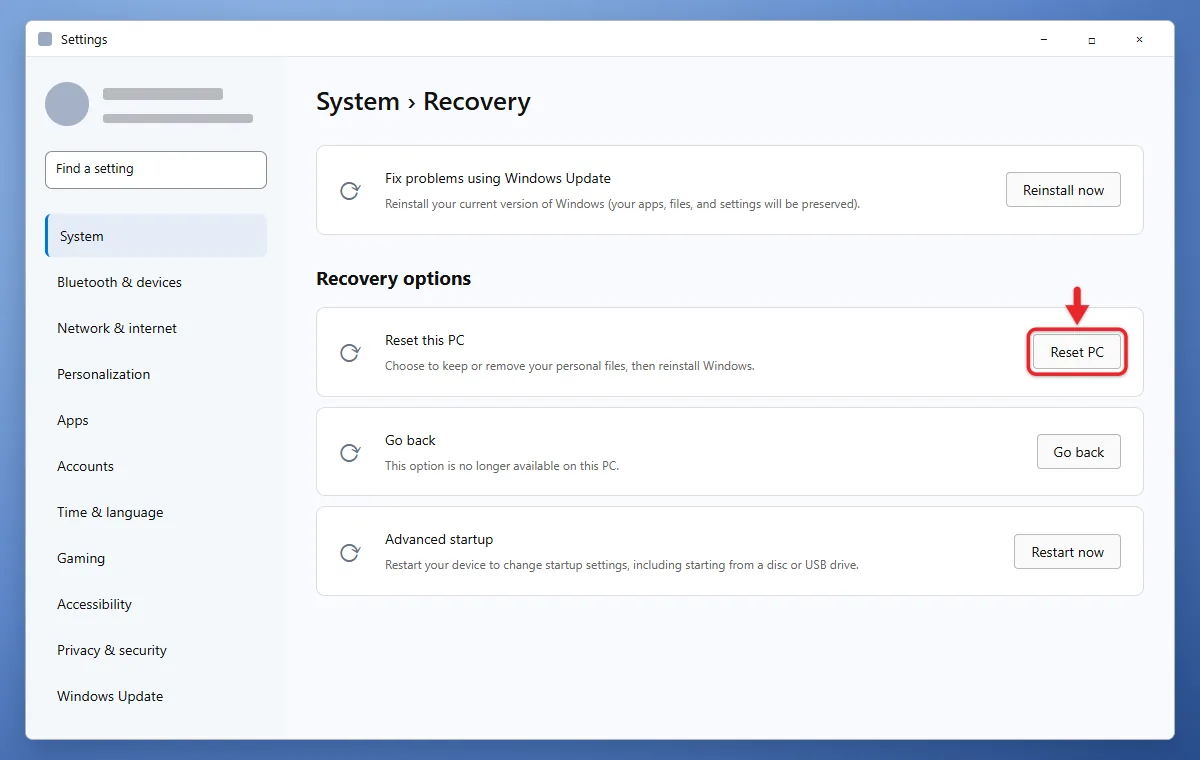
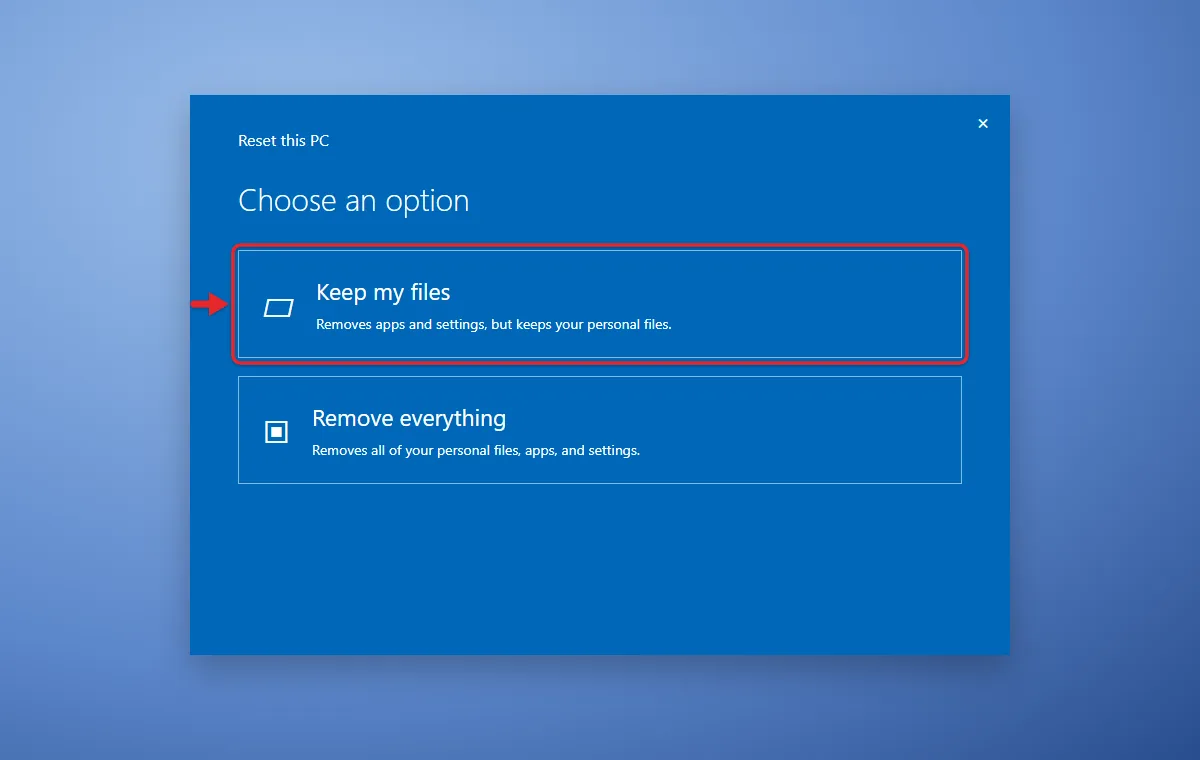
- Select Keep my files. This removes apps and settings but keeps your personal files. (Choose Remove everything only if you also want your files deleted.)
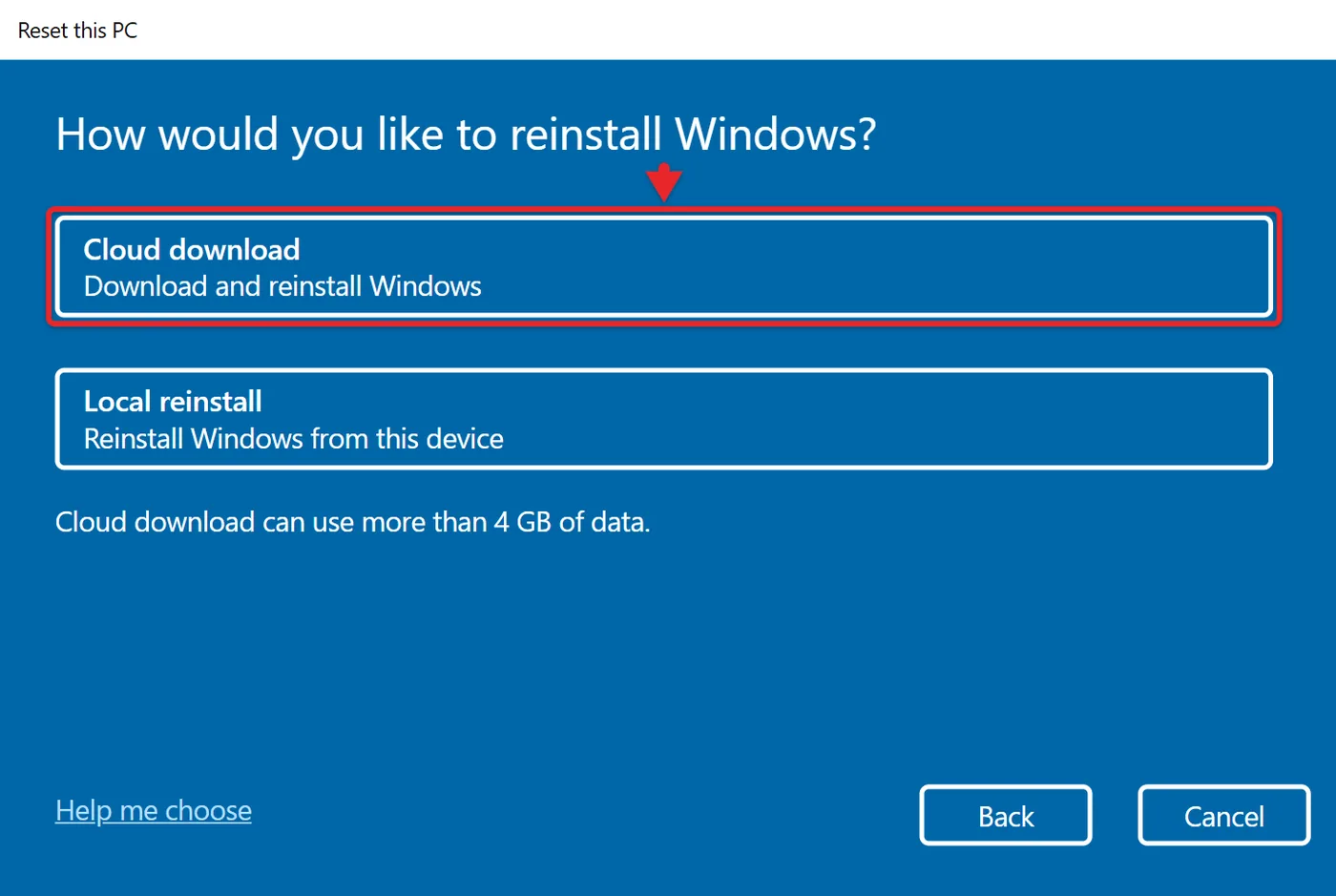
- Choose how to reinstall Windows. Cloud download gets a fresh copy from Microsoft with the latest updates and needs a good internet connection; it’s the better choice if Windows files are damaged. Local reinstall uses files already on the PC and is faster on a slow connection, but it may not include the newest updates.
- On the Additional settings screen, review the summary. Select Change settings if you want to adjust options such as Restore preinstalled apps, which brings back the apps and tools your PC maker installed. Select Confirm if you changed anything, then select Next.
- Review the Ready to reset this PC screen, which lists what will happen, including the apps that will be removed. Select Reset.
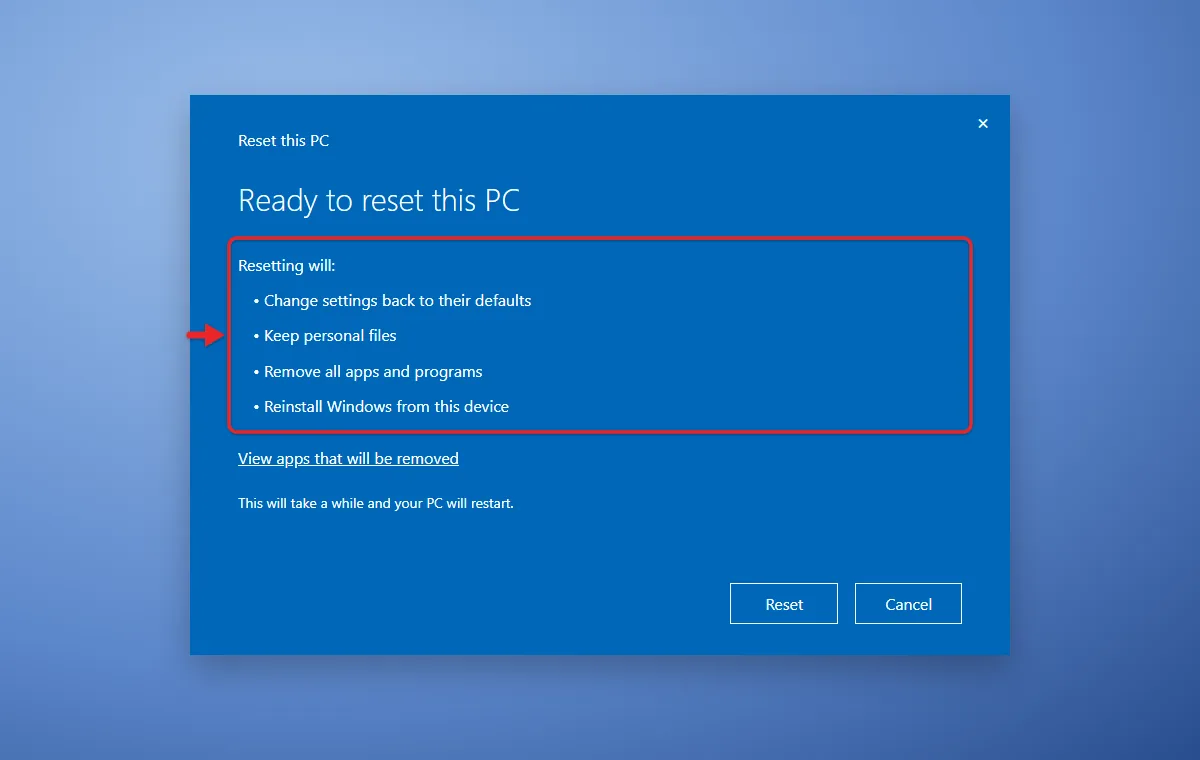
Windows restarts several times. The screen can stay black for a long time, sometimes more than 15 minutes, and restarting the PC yourself during this can make the reset fail, so leave it alone. When the reset finishes, you sign in to a fresh Windows desktop with default settings. A list of removed apps is saved on the desktop so you know what to reinstall.
To erase your files as well, for example before selling the PC, follow the steps to wipe and reinstall Windows 11.
Reset Windows 11 When You Can’t Open Settings
If Windows won’t start normally, or Settings won’t open, use the Windows Recovery Environment (Windows RE), a set of repair tools that runs outside the normal desktop.
Open the recovery screen in one of these ways:
- On the sign-in screen, hold Shift while you select Power > Restart.
- From a working desktop, go to Settings > System > Recovery and select Restart now next to Advanced startup.
- From a working desktop, open Command Prompt, type
shutdown /r /o /t 0, and press Enter. The PC restarts into recovery right away, so save your work first. - If Windows fails to start twice in a row, it opens recovery on its own.
A Windows 11 recovery USB made in advance can open these tools when the PC can’t start at all.
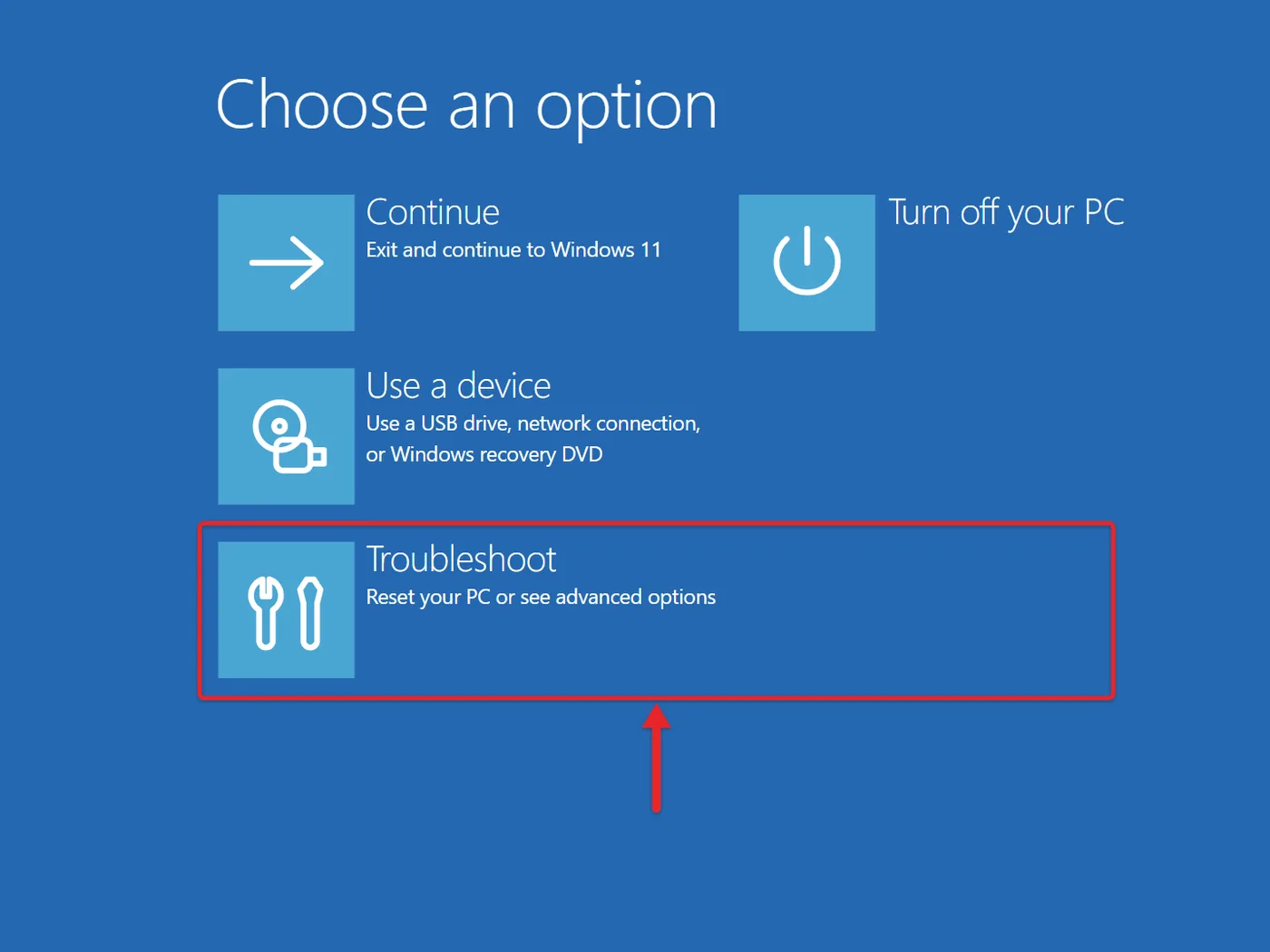
- On the Choose an option screen, select Troubleshoot.
- Select Reset this PC.
- Select Keep my files.
- Pick Cloud download or Local reinstall.
- Enter your BitLocker recovery key if asked, review the summary, and select Reset.
For other ways to reach this screen, read about booting into Windows 11 recovery mode.
Repair Windows Without Losing Your Apps or Settings
If you want to fix a problem but keep your apps and preferences, try this first. Fix problems using Windows Update reinstalls the current version of Windows over itself and leaves your apps, files, and settings alone. For details, read Fix issues by reinstalling the current version of Windows.
- Connect the PC to power and the internet.
- Open Settings > System > Recovery.
- Next to Fix problems using Windows Update, select Reinstall now.
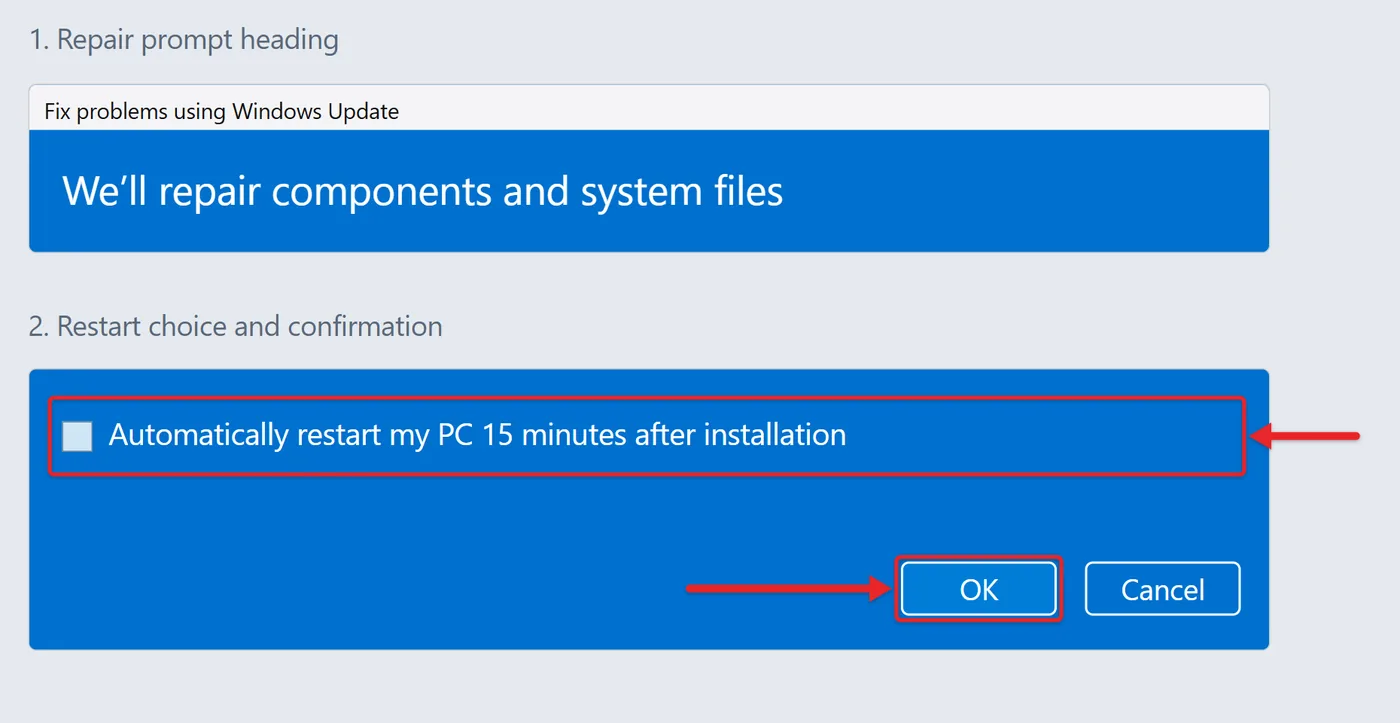
- Choose whether to restart automatically 15 minutes after the install finishes, then select OK. Windows downloads and installs the repair in the background.
This option may be hidden on work or school PCs that an organization manages. It won’t change your settings back to defaults, so use Reset PC if that’s what you need.
If the Reset Doesn’t Start or Fails
Reset PC is missing or grayed out. On a work or school PC, an administrator may block it. Ask your IT department. On a personal PC, try the recovery screen method above.
The reset stops with an error. Restart and try again with the other reinstall choice (Cloud download instead of Local reinstall, or the reverse). Cloud download replaces damaged local files, which is a common cause of this error.
Windows asks for a BitLocker recovery key. Look it up at aka.ms/myrecoverykey from a phone or another computer and match the key ID shown on screen. If the PC belongs to an employer or school, the key is usually in that account, so contact IT.
Cloud download fails or stalls. Check that you’re connected by Ethernet or strong Wi-Fi, or switch to Local reinstall.
Nothing works. A recovery USB or Windows installation media can reinstall Windows, but those routes erase your files, so make sure your backup is complete first.
After the Reset
- Install pending updates in Settings > Windows Update and select Check for updates. Driver updates may appear under Advanced options > Optional updates.
- Open Device Manager and look for an Other devices section or a yellow warning icon. If you see one, get that driver from your PC maker’s support site.
- Reinstall your apps from the Microsoft Store or their official websites, using the removed-apps list on the desktop.
- Check that your files are where you expect them, and sign in to OneDrive if you use it.
- Make a fresh restore point in Windows 11 once everything works, so you have a quick way back next time.
If old preferences such as your wallpaper or theme come back after you sign in, they’re being restored from your Microsoft account. To start completely fresh, go to Settings > Accounts > Windows backup and clear the options under Remember my preferences before you set things up again.
Frequently Asked Questions
Does resetting Windows 11 delete my files?
Not if you choose Keep my files. Your documents, pictures, and other personal files stay, while apps and settings are removed. Remove everything deletes your files too. Make a backup either way.
How long does resetting Windows 11 take?
Usually between 30 minutes and two hours, depending on your PC’s speed, the amount of data, and whether you chose Cloud download. Leave it running even if the screen stays black for a while.
Can I undo a reset?
No. Once the reset starts, there’s no undo, and your old apps and settings are gone. You can cancel on any screen before you select Reset.
Will resetting remove a Windows 11 virus?
Remove everything is the strongest option for a stubborn infection because it deletes all files and apps. Keep my files leaves your personal files in place, so infected files in your folders could stay. Run a full scan with Windows Security after the reset either way.
Do I need a product key after resetting?
No. Windows 11 reactivates automatically once you connect to the internet, as long as it was activated before the reset.
Will a reset keep my user accounts?
Keep my files keeps the user accounts on the PC along with their personal files. Remove everything deletes the accounts, so Windows starts with the first-time setup screens.

Matthew Burleigh is the founder, head writer, and editor of Solve Your Tech, which he launched in 2012. He has written technology tutorials since 2008 and worked in IT since 2003, including small-business support, IT management, and consulting. He holds Bachelor’s and Master’s degrees in Computer Science from Arizona State University.
Matthew writes practical guides for Windows, iPhone and iPad, Microsoft Office, Outlook, Google apps, and Android. Solve Your Tech’s guides are checked step by step against the device or app maker’s own documentation and tested on his own devices whenever he has the hardware or software, with clear steps, sources, and update dates.
Read more about Matthew and how Solve Your Tech writes and updates its guides, or report a correction.