To update your Wi-Fi driver in Windows 11, open Settings > Windows Update > Advanced options > Optional updates, expand Driver updates, and install the wireless driver if one is listed. If nothing is listed, download the driver from your PC maker’s support page and install it, or point Device Manager to the downloaded files.
These steps apply to Windows 11, including the current 26H2 release and earlier versions such as 24H2 and 25H2, with a Windows 10 section near the end. The same approach works for display drivers; here’s how to update your graphics driver in Windows 11.
Before You Start
- Sign in with an administrator account. Installing or rolling back a driver needs administrator permissions. On a work or school PC, your IT department may handle drivers for you.
- Have a backup connection. Wi-Fi drops for a few seconds while a new driver installs, and it stays down if the install goes wrong. Keep an Ethernet cable, a phone you can connect over USB, or a second computer handy.
- Write down the current driver version. You’ll use it to confirm the update worked. The next section shows where to find it.
- Download the replacement first. If you plan to uninstall or reinstall the driver, save the new driver package to the PC before you remove the old one.
Find Out Which Wi-Fi Adapter You Have
- Right-click Start and select Device Manager.
- Select the arrow next to Network adapters to expand it.
- Look for the entry with Wi-Fi, Wireless, or 802.11 in its name, such as an Intel, Realtek, MediaTek, or Qualcomm adapter. Ignore entries named WAN Miniport, Bluetooth Device, or Wi-Fi Direct Virtual Adapter.
- Right-click the adapter, select Properties, and open the Driver tab. Note the Driver Date and Driver Version.
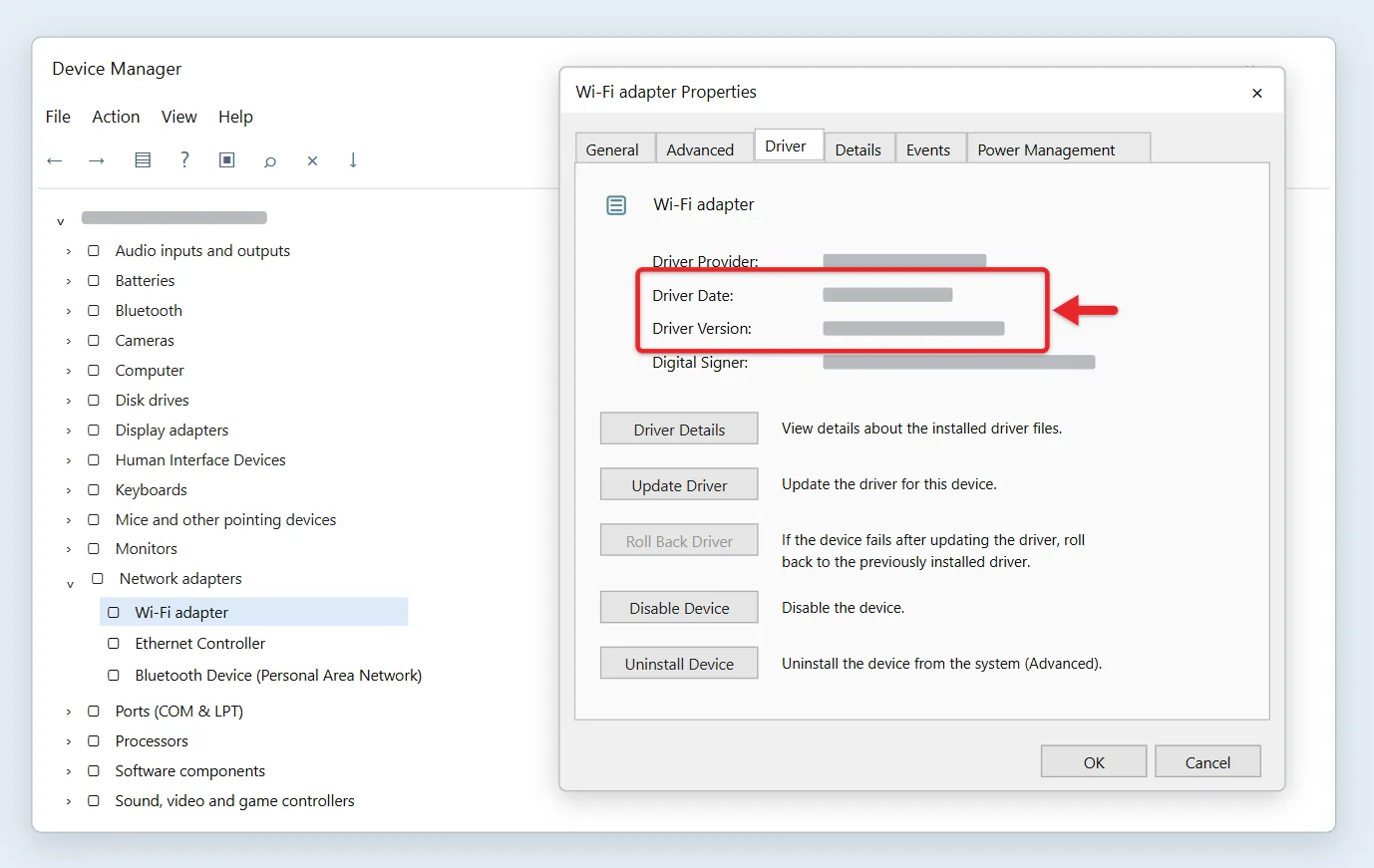
You can also open Terminal and run netsh wlan show drivers. It lists the adapter name, vendor, driver date, and version in one place.
Option 1: Windows Update
Microsoft recommends Windows Update as the first place to get drivers. Windows 11 installs recommended drivers on its own, but optional drivers, which often include newer Wi-Fi drivers, are never installed automatically.
- Open Settings (press Windows + I) and select Windows Update.
- Select Check for updates and install anything offered.
- Select Advanced options and make sure Receive updates for other Microsoft products is turned on.
- Under Additional options, select Optional updates, then expand Driver updates.
- Check the network or wireless driver if one is listed, and select Download and install.
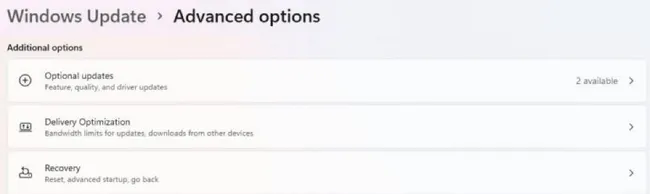
- Restart the PC when the install finishes, even if Windows doesn’t ask you to.
Windows downloads the driver from Microsoft and installs it. If no driver appears under Optional updates, Windows Update isn’t offering a newer one for your adapter right now, so move on to Option 2. There’s more background in Microsoft’s help page on getting recommended and updated hardware drivers.
Option 2: Your PC or Adapter Maker
Laptops and prebuilt desktops often need the driver version the PC maker tested for that model, so start there.
- Go to the official support site for your PC maker, such as Dell, HP, Lenovo, ASUS, Acer, or Microsoft Surface. For a desktop you built, use the motherboard maker’s site.
- Enter your exact model or serial number. Both are usually on a sticker on the bottom of a laptop or the back of a desktop.
- Choose Windows 11, then open the Network, Wireless, or WLAN driver category and download the newest Wi-Fi driver.
- Run the installer. If the download is a ZIP file, right-click it, select Extract All, then run the setup file inside.
- Restart the PC.
Many PC makers also offer an update app, such as Dell Update, Lenovo System Update, HP Support Assistant, or MyASUS, that finds drivers for your model.
For an Intel adapter, use Intel Driver & Support Assistant or download the driver manually from Intel. Intel also notes that your PC maker may provide drivers configured for your system, so check the maker first. See Intel’s Update your Wi-Fi adapter driver page.
Avoid third-party “driver updater” apps and download sites. Get drivers only from the device maker’s official site.
Option 3: Device Manager
Use Device Manager to install a driver you downloaded that has no installer, or to switch to another driver already on the PC.
It’s worth taking a minute to create a restore point in Windows 11 before you swap drivers.
- In Device Manager, expand Network adapters.
- Right-click your Wi-Fi adapter and select Update driver.
- Choose Browse my computer for drivers, select Browse, pick the folder you extracted, and select OK. Leave Include subfolders checked.
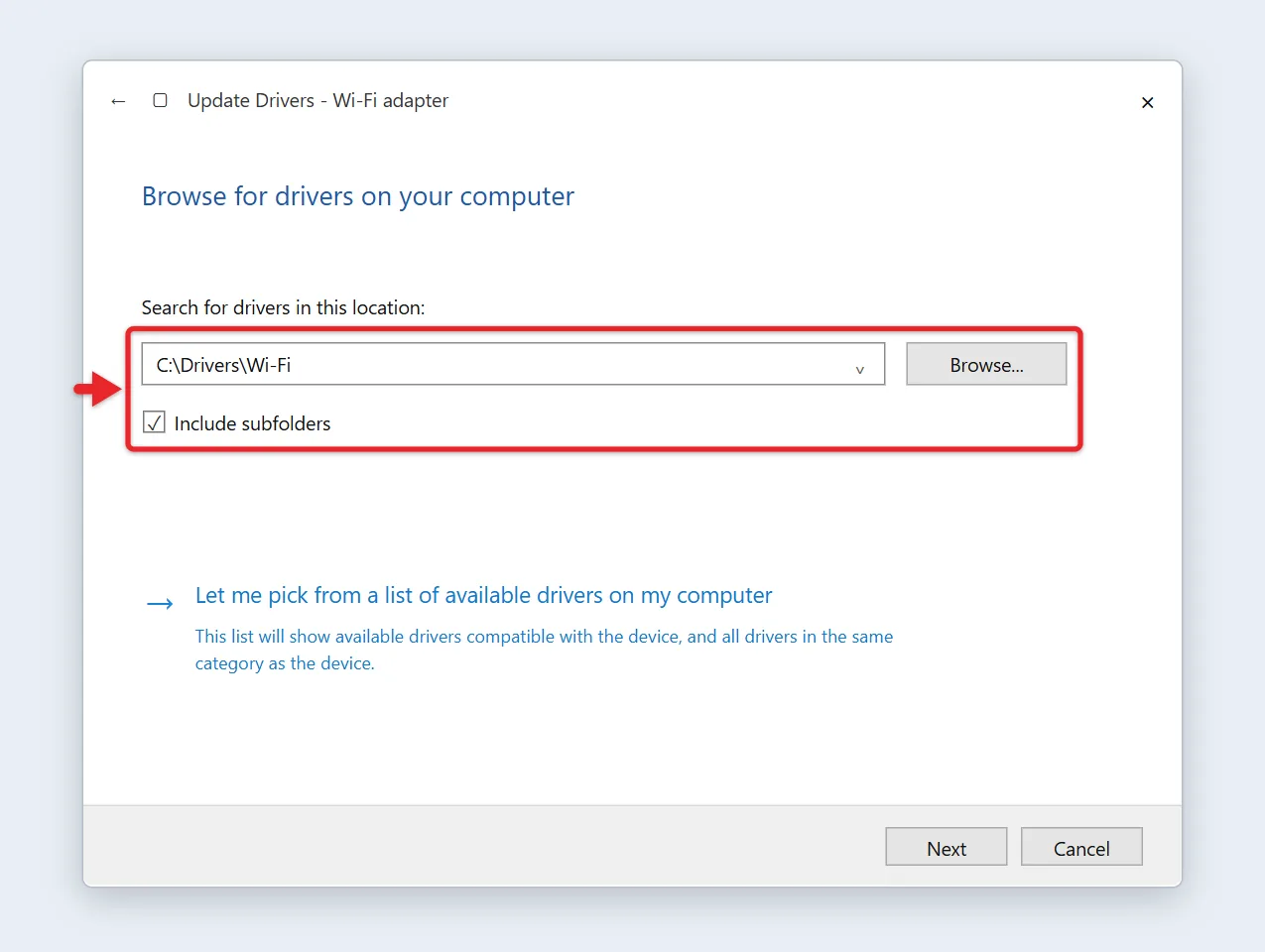
- Select Next. Windows installs the driver and shows a confirmation screen. Select Close.
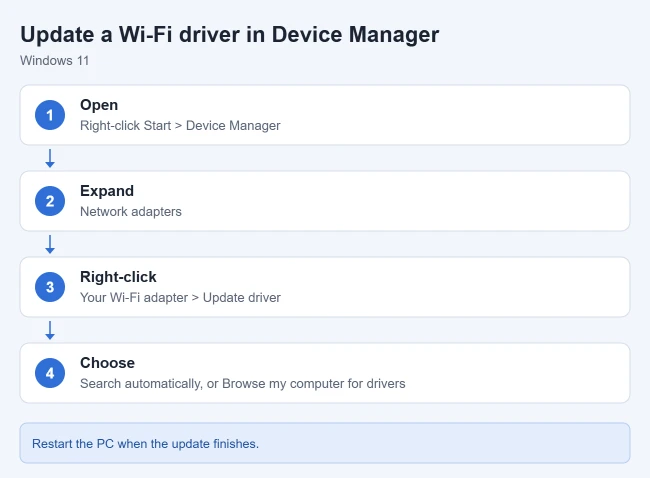
- Restart the PC.
You can also choose Search automatically for drivers in step 3. Since Windows 10 version 2004, this option only searches drivers already stored on the computer. It doesn’t download new ones. So “The best drivers for your device are already installed” doesn’t mean you have the newest driver. Select Search for updated drivers on Windows Update to jump to Optional updates, or use Option 2. Microsoft’s Device Manager driver steps cover both choices.
Confirm the Update Worked
- Open Device Manager, right-click the Wi-Fi adapter, select Properties, and open the Driver tab.
- Compare the Driver Date and Driver Version with what you wrote down. A newer date or higher version means the update took.
- Check the General tab. Device status should say the device is working properly.
- Connect to your Wi-Fi network and load a few web pages or a video to check that the connection stays up.
If Wi-Fi Stopped Working After an Update
- Roll back: in Device Manager, right-click the adapter, select Properties, open the Driver tab, select Roll Back Driver, choose a reason, and select Yes.
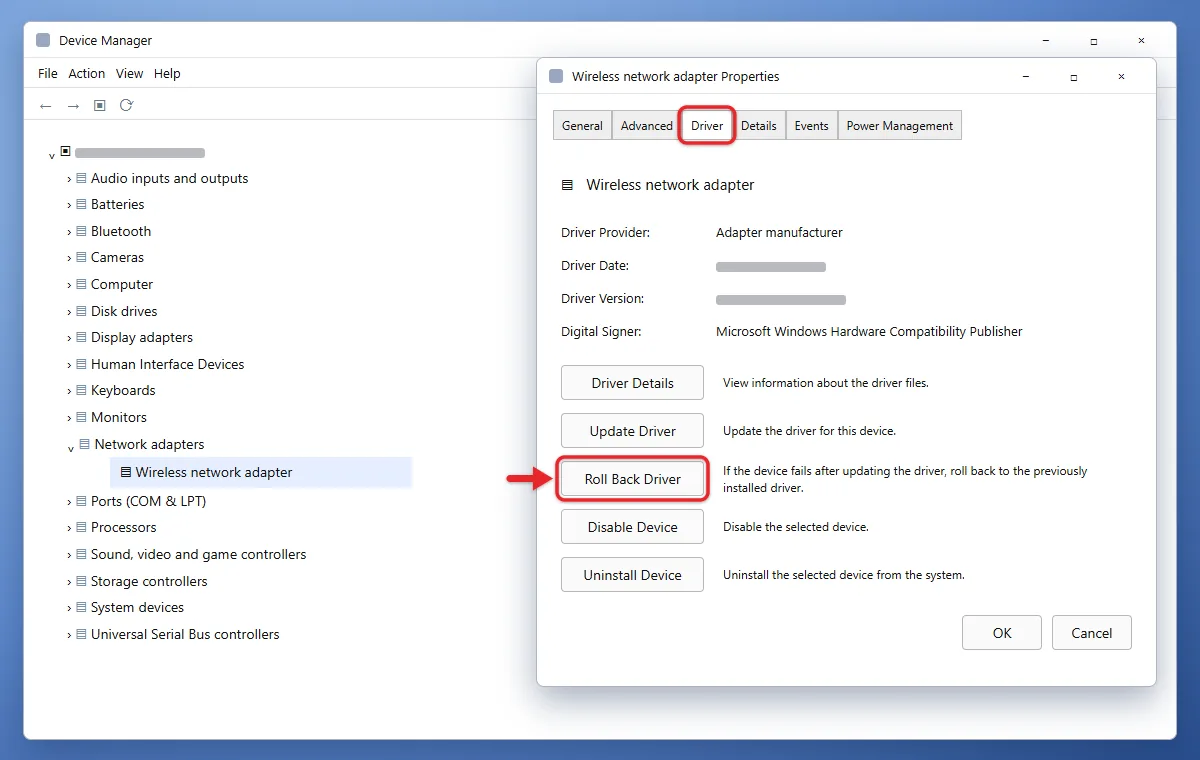
- Roll Back Driver is grayed out: Windows didn’t keep the previous driver. Select Update driver > Browse my computer for drivers > Let me pick from a list of available drivers on my computer, choose an older entry for your adapter, and select Next. Or install an older version from your PC maker’s site.
- Reinstall: right-click the adapter, select Uninstall device, leave Attempt to remove the driver for this device unchecked, and select Uninstall. Restart, and Windows tries to reinstall the driver on its own. If it doesn’t, install the package you downloaded earlier.
- Reset networking: if the driver is fine but the PC still won’t connect, you can reset network settings in Windows 11. This reinstalls all network adapters and removes saved Wi-Fi networks, so you’ll need your Wi-Fi passwords again.
You must be signed in with administrator permissions to roll back a driver, and going back to the previous driver often fixes problems that started after a Windows Update.
If rolling back the driver doesn’t help, you can also roll back a Windows 11 update that installed just before Wi-Fi stopped working.
Troubleshooting
- No internet to download a driver: plug in an Ethernet cable, share your phone’s connection over USB (USB tethering on Android), or download the driver on another computer and copy it over on a USB drive. Then use Option 3. A PC with no Wi-Fi hardware at all needs a different approach to connect to a wireless network.
- The Wi-Fi adapter isn’t listed: in Device Manager, select View > Show hidden devices, then Action > Scan for hardware changes. Also check Other devices for an unknown device, and make sure Airplane mode is off and any Wi-Fi key or switch on a laptop is on. If it still doesn’t appear, Wi-Fi may be turned off in the PC’s firmware settings, or the card may have failed.
- The adapter shows a down arrow: it’s disabled. Right-click it and select Enable device.
- A yellow warning triangle: open Properties and read Device status for the error. A rollback, a reinstall, or the PC maker’s driver usually clears it.
- The installer won’t run: check that the package is for Windows 11 and your adapter model, and that you’re signed in as an administrator.
Install a Wi-Fi Driver in Windows 10
Windows 10 uses the same Device Manager steps. For Windows Update, go to Settings > Update & Security > Windows Update and select View optional updates if it appears. Use your PC maker’s Windows 10 driver for Option 2. Microsoft’s driver instructions cover Windows 10 and 11.
Frequently Asked Questions
How do I check my Wi-Fi driver version?
In Device Manager, right-click the Wi-Fi adapter, select Properties, and open the Driver tab. It lists the driver provider, date, and version.
Will a new driver make my Wi-Fi faster?
Sometimes. A newer driver can fix dropouts and bugs, but your speed still depends on your router, signal strength, and internet plan. If only one network gives you trouble, forgetting that Wi-Fi network in Windows 11 and rejoining it is a quicker first step.
Will updating the driver delete my files or saved Wi-Fi networks?
No. Updating or rolling back a driver doesn’t touch your files or saved networks. A network reset does remove saved networks, and in rare cases you may need to retype a Wi-Fi password after a reinstall.
How often should I update my Wi-Fi driver?
There’s no set schedule. Check Optional updates and your PC maker’s site when you have connection problems, after a major Windows update, or when you get a new router that uses a newer Wi-Fi standard.
What about my Bluetooth driver?
On many laptops, Wi-Fi and Bluetooth share one card, but they use separate drivers. The Bluetooth side has its own steps to install a Bluetooth driver in Windows 11.
If the driver is current and the problem seems to be the router, update the router firmware.

Matthew Burleigh is the founder, head writer, and editor of Solve Your Tech, which he launched in 2012. He has written technology tutorials since 2008 and worked in IT since 2003, including small-business support, IT management, and consulting. He holds Bachelor’s and Master’s degrees in Computer Science from Arizona State University.
Matthew writes practical guides for Windows, iPhone and iPad, Microsoft Office, Outlook, Google apps, and Android. Solve Your Tech’s guides are checked step by step against the device or app maker’s own documentation and tested on his own devices whenever he has the hardware or software, with clear steps, sources, and update dates.
Read more about Matthew and how Solve Your Tech writes and updates its guides, or report a correction.