To transfer photos from a camera to a Windows 11 computer, connect the camera with a USB data cable (or put its memory card in a card reader), turn the camera on, and open the Photos app. Select Import, choose the camera or card, pick the photos, and choose where to save them.
These steps cover digital cameras, including DSLRs, mirrorless cameras, point-and-shoots and action cameras, on a current Windows 11 PC with the built-in Photos app and File Explorer. Microsoft’s Photos app guide confirms you can import photos and videos from a camera’s SD card, a USB drive or another device (checked October 2026). Every method below copies the files, so the originals stay on the card until you erase them.
Which Method Should You Use?
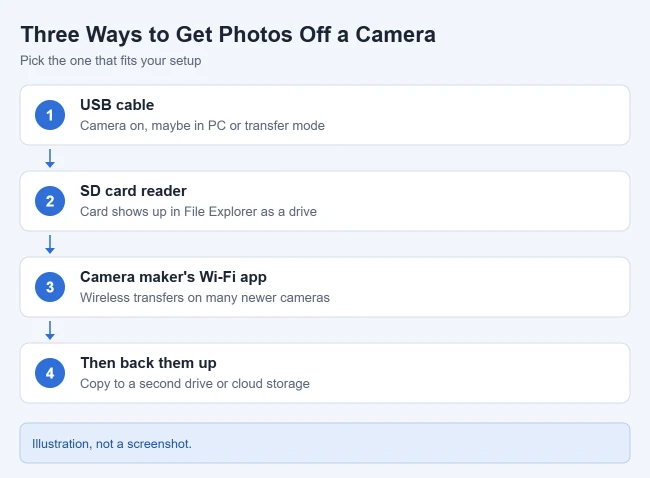
| Method | What you need | Best for | Watch out for |
|---|---|---|---|
| USB cable | The camera’s data cable | A quick import with no extra hardware | Uses the camera battery; some cameras need a USB mode setting |
| Memory card reader | A built-in SD slot or a USB card reader | Large batches, RAW files and video | CFexpress and CompactFlash cards need a reader made for them |
| Wi-Fi app | The camera maker’s phone or desktop app | A few shots to share right away | Much slower for a full card |
If you’re moving a whole trip or a card full of RAW files, the card reader is usually the fastest and most reliable choice. Speed also depends on the connection: a USB-C reader on a USB-C port is typically quicker than an older USB-A reader.
Before You Start
- Charge the camera if you plan to use the USB cable. A camera that shuts off mid-transfer can leave a file half copied.
- Use a data cable. Some USB cables only charge. The cable that came with the camera is the safest choice, and some older cameras only work with the maker’s own cable.
- Check free space on the PC. A card of 4K video or RAW photos can take tens of gigabytes.
- Know where the files live. Cameras save photos in a folder called DCIM (Digital Camera Images), usually inside subfolders such as 100CANON or 101MSDCF. Some cameras store video separately, in a folder such as PRIVATE or AVCHD.
Import With the Photos App
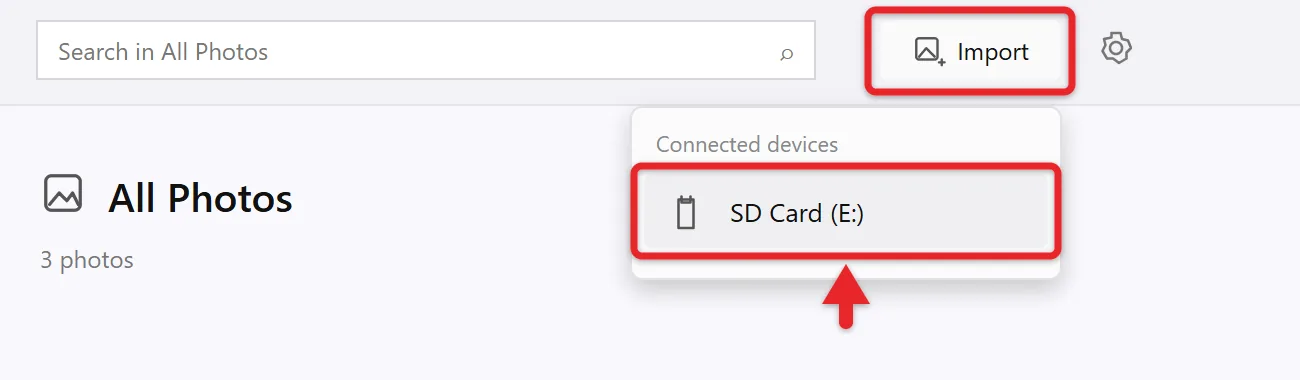
- Connect the camera to the PC with the USB cable, then turn the camera on. If the camera has a USB or PC connection setting, choose the option for connecting to a computer. Windows plays a connection sound when it detects the camera.
- Select Start and open the Photos app.
- Select Import at the top of the Photos window, then select your camera or memory card from the list of connected devices. Photos scans the device, which can take a minute on a full card.
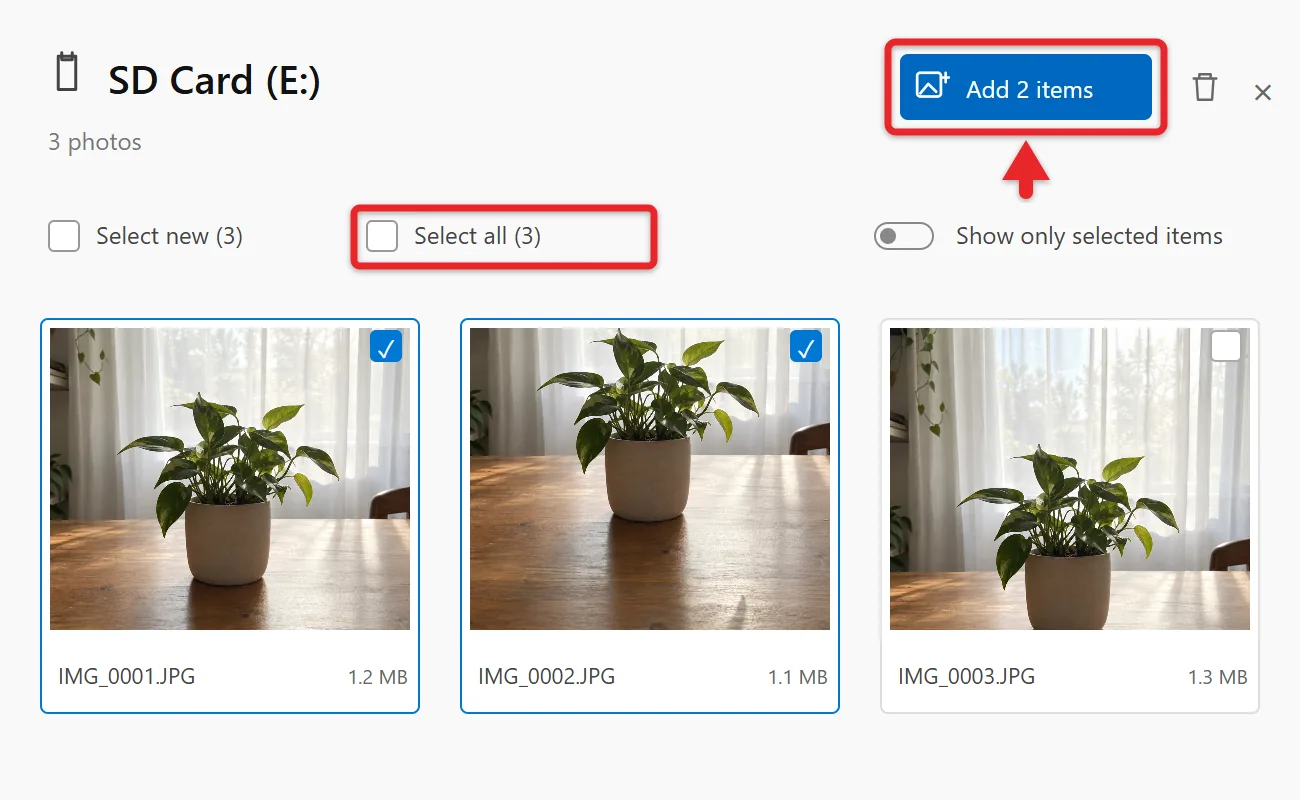
- Tick the photos and videos you want, or use Select all. If you’ve imported from this card before, Select new picks only the items Photos hasn’t imported yet.
- Select Add in the top-right corner. The button shows how many items you picked.
- Check the destination folder. Photos suggests your Pictures folder. Select Change to pick another location, or Create folder to make a new one for this batch, then select Confirm.
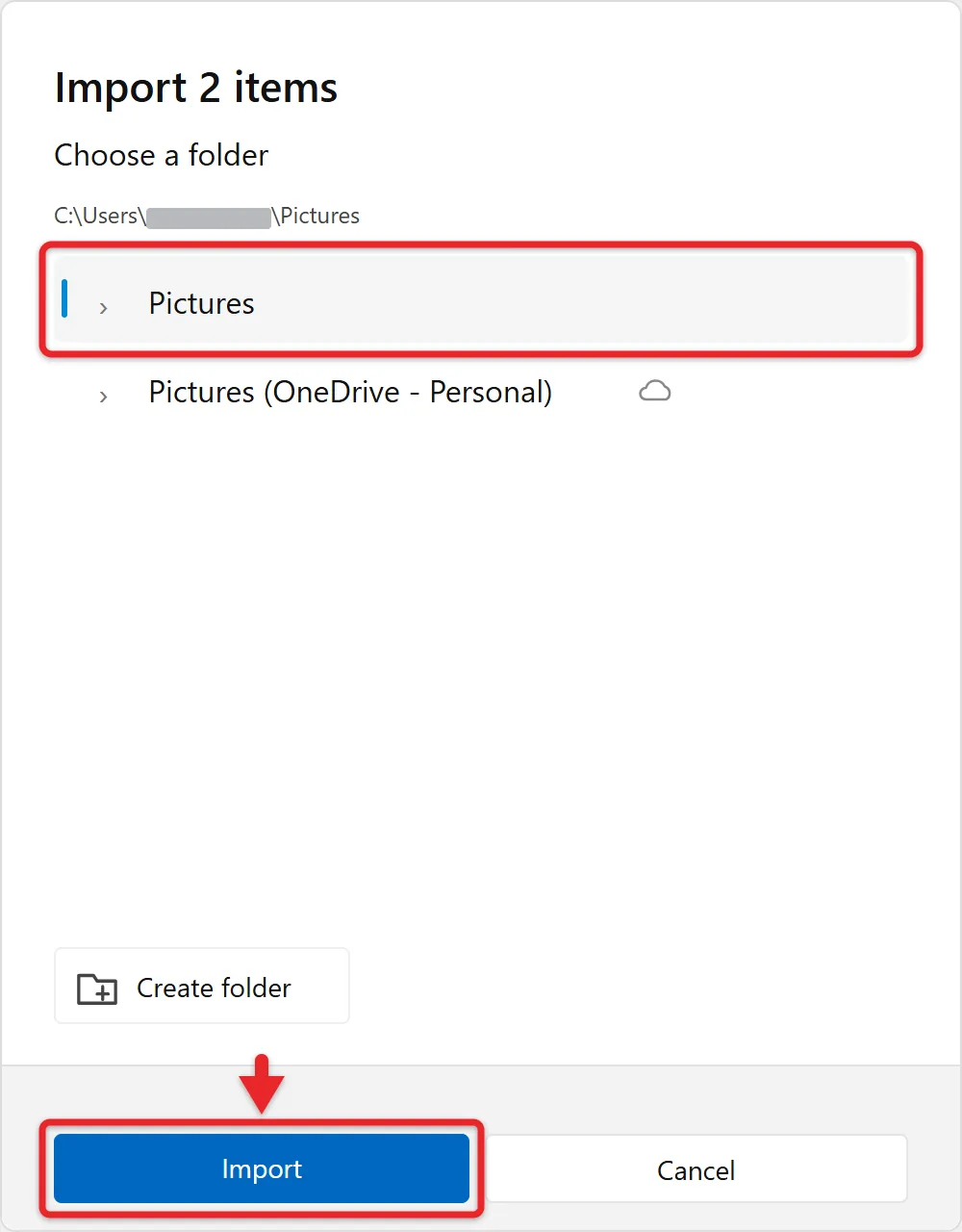
- Select Import and wait for the confirmation that the import is complete before you turn off or unplug the camera.
Microsoft describes the same flow for phones in its import photos and videos guide: select Import, pick the connected device, choose the items, and pick where to save them. The Photos app doesn’t delete anything from the camera.
After the import, you can mark your best shots as favorites in Photos so they’re easy to find later.
Use a Memory Card Reader
- Turn the camera off and remove its memory card.
- Insert the card into your PC’s SD slot or a USB card reader. A microSD card from an action camera may need a full-size adapter.
- Windows shows the card as a drive under This PC in File Explorer, often with the camera brand or a drive letter such as E:.
- Open the card, then the DCIM folder and the subfolders inside it.
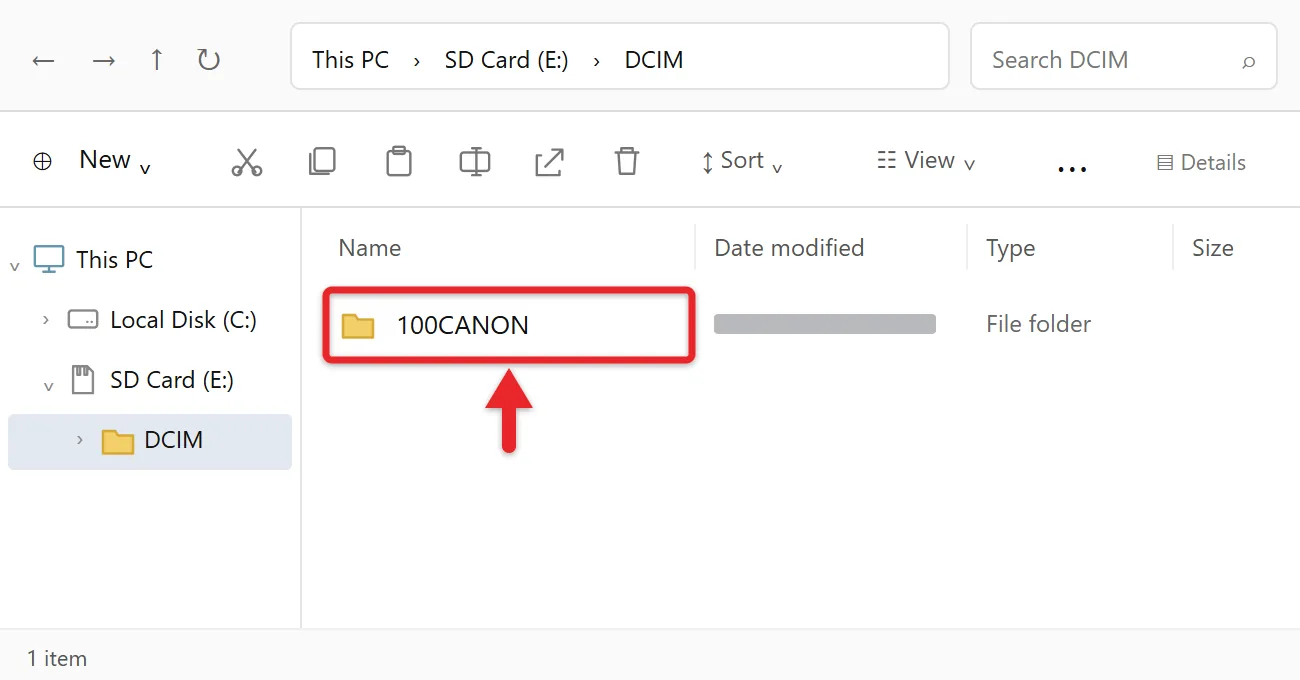
- Copy the photos to a folder on your PC, or open the Photos app and use Import with the card as the source.
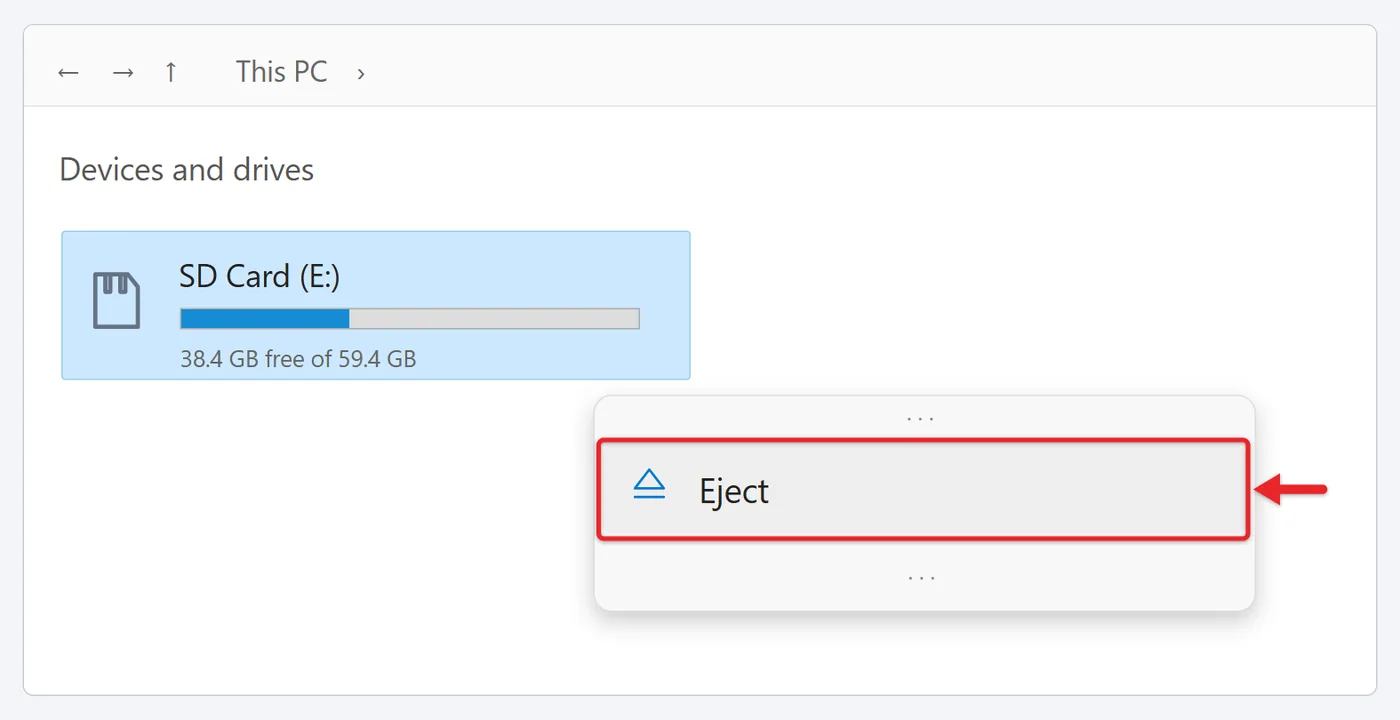
- When the copy finishes, right-click the card in File Explorer and select Eject, then remove it.
If a full-size SD card won’t accept changes, check the small lock switch on its side. The locked position makes the card read-only, which is fine for copying but blocks deleting files.
Copy Photos With File Explorer
File Explorer is the best choice if you like to organize files yourself, or if Photos won’t open your camera’s RAW files.
- Press Windows key + E to open File Explorer, then select This PC.
- Open the camera or card, then DCIM.
- Select the photos you want. Press Ctrl + A to select everything in the folder.
- Press Ctrl + C to copy.
- Open the destination folder on your PC and press Ctrl + V.
- Wait for the progress window to close, then open two or three of the copied photos to make sure they display.
Use copy and paste rather than cut. Cutting removes each file from the card as it moves, so an interrupted transfer can lose photos. Copying keeps the original files exactly as the camera saved them, including RAW files and video.
Movie files copy the same way. If you shoot video on a Nikon D3200, you can adjust the D3200 video frame rate before your next recording.
Name folders so they sort by date. A pattern such as “2026-10-12 Lake trip” lists your shoots in order and keeps working if you later move the folders to another drive.
Use the Import Pictures and Videos Wizard
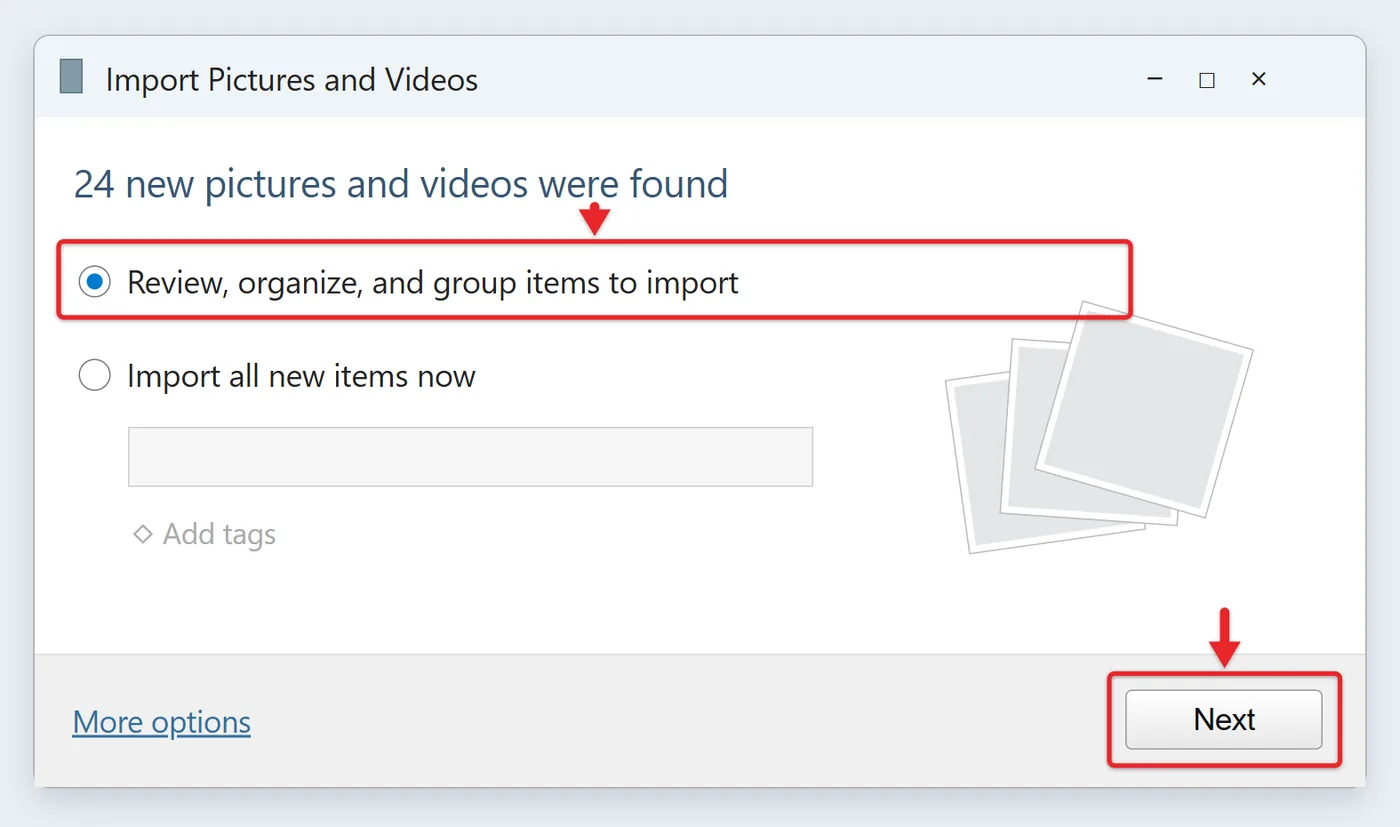
File Explorer also has an older import tool that renames folders by date as it copies. In This PC, right-click the camera or card and select Import pictures and videos. If you don’t see it, select Show more options first. You can review and group the items or import all new items, and More options lets you choose the folder and naming. The wizard can also erase files from the device after importing; leave that option off until you’ve checked your copies.
Transfer Photos Over Wi-Fi
Many newer cameras can send photos without a cable, but the route depends on the brand:
- To your phone: apps such as Canon Camera Connect, Nikon SnapBridge, Sony’s Creators’ App and Fujifilm XApp pair with the camera over Bluetooth or the camera’s own Wi-Fi network. From the phone, you can then sync to OneDrive, email the photos or plug the phone into the PC.
- Straight to the PC: some cameras can send photos directly to a computer on the same Wi-Fi network using the maker’s desktop software, such as Canon’s Image Transfer Utility 2.
Wireless transfers are handy for a few shots, but they’re far slower than a card reader for RAW files or video. Check your camera’s manual for the exact pairing steps, because menu names differ between models.
If the PC Doesn’t See the Camera
- Try a different USB cable. A charge-only cable powers the camera but carries no data.
- Use a different port. Plug directly into the PC rather than a hub or keyboard port.
- Check the camera’s USB setting. Look for an option such as PC connection, USB mode or Mass Storage in the camera’s setup menu. The camera manual names the exact setting for your model.
- Check the battery. A low battery can make the camera turn off during the transfer.
- Check Disk Management for a card. If a card reader lights up but no drive appears, right-click Start, select Disk Management, and see whether the card needs a drive letter. The steps for fixing a USB drive that isn’t showing up walk through assigning one.
- Restart and update. Restart the PC with the camera unplugged, then check Settings > Windows Update for driver updates.
- Switch methods. If the camera still won’t show up, remove the card and use a card reader. That works for almost every camera.
Photos show up but won’t open. Windows may not recognize your camera’s RAW format. Install Microsoft’s free Raw Image Extension from the Microsoft Store, which adds RAW thumbnails in File Explorer and viewing in Photos. It doesn’t support every RAW format, so very new cameras may need the maker’s software or an editor that supports your model.
Make Imports Start Automatically
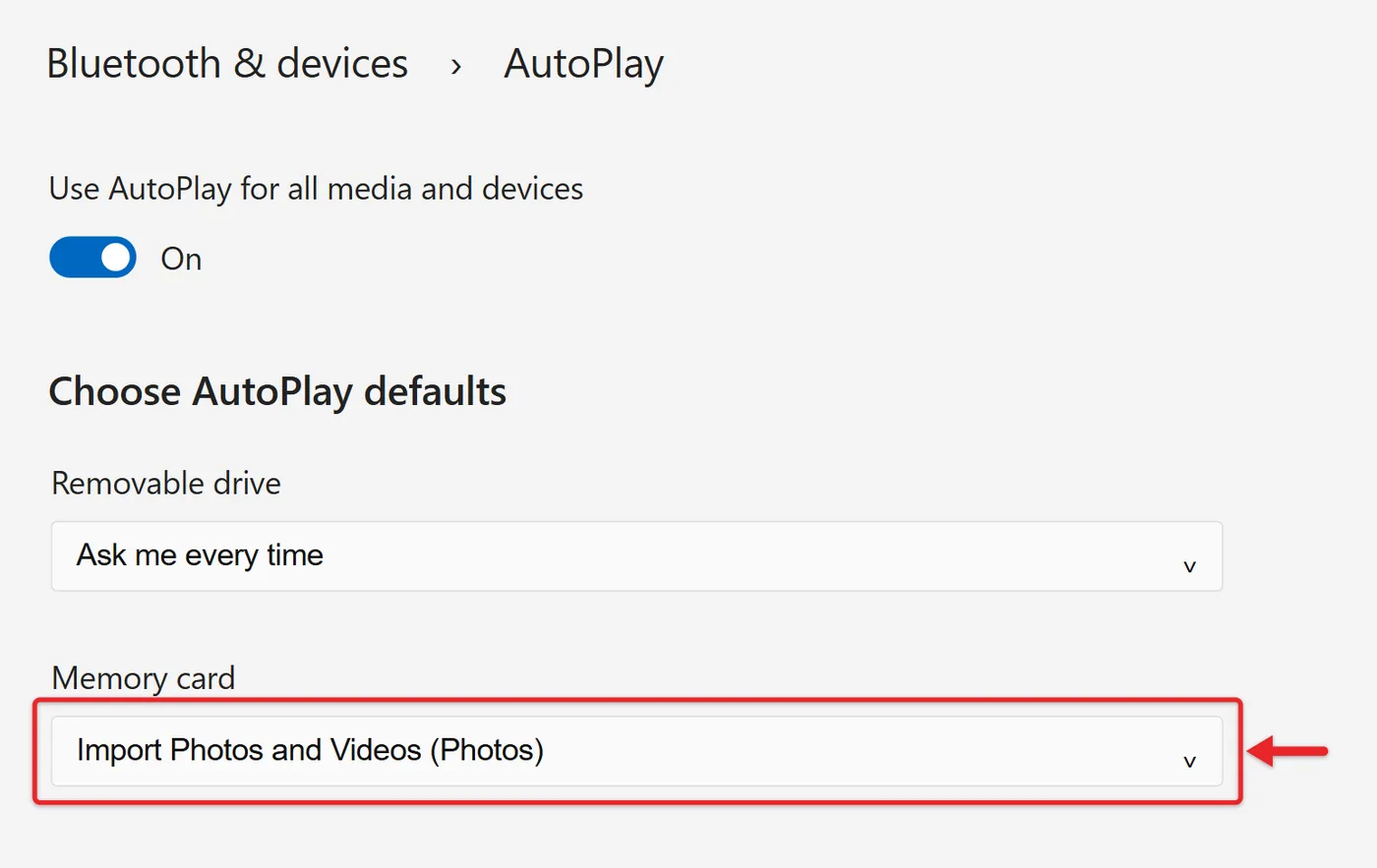
Windows can open an import option as soon as you insert a card. Open Settings > Bluetooth & devices > AutoPlay, make sure Use AutoPlay for all media and devices is on, and under Choose AutoPlay defaults pick what happens when you connect a memory card or camera, such as importing photos and videos or opening the folder. Choose Ask me every time if you want to decide each time.
Confirm the Transfer and Free Up the Card
- Open the folder you imported to and check that the number of files matches what was on the card. Open a few photos and play a video.
- Make a second copy on an external drive or a cloud service such as OneDrive before you erase anything. A single copy on one PC isn’t a backup. Many photographers follow the 3-2-1 rule: three copies, on two kinds of storage, with one kept somewhere else.
- Put the card back in the camera and use the camera’s Format command. Formatting in the camera sets the card up the way that camera expects. If you need to do it on the PC, format the SD card in Windows 11, and remember that formatting erases every file on the card.
Can’t find the photos after importing? Try these ways to find all photos on your computer.
Frequently Asked Questions
Do I need special software to transfer camera photos?
No. Windows 11’s Photos app and File Explorer can copy photos from a camera or memory card. Camera makers’ apps are optional and mainly add Wi-Fi transfer, remote shooting or RAW editing.
Why can’t I see my RAW photos?
They’re usually on the PC, but Windows can’t preview every RAW format. Install the Raw Image Extension, or open the files in an editor that supports your camera, such as the maker’s own software.
Does importing delete the photos from my camera?
No. Photos, File Explorer copy and paste, and a card reader all leave the originals on the card. Only the import wizard’s erase option or formatting the card removes them.
Where do imported photos go?
To the folder you chose during the import. In the Photos app that’s the Pictures folder unless you selected Change.
Can I transfer photos from an iPhone the same way?
Yes, with a few extra steps, such as trusting the computer and installing Apple Devices. The steps for transferring iPhone photos to a PC cover them.
Want to share a few shots with family? One option is to send a photo by email.

Matthew Burleigh is the founder, head writer, and editor of Solve Your Tech, which he launched in 2012. He has written technology tutorials since 2008 and worked in IT since 2003, including small-business support, IT management, and consulting. He holds Bachelor’s and Master’s degrees in Computer Science from Arizona State University.
Matthew writes practical guides for Windows, iPhone and iPad, Microsoft Office, Outlook, Google apps, and Android. Solve Your Tech’s guides are checked step by step against the device or app maker’s own documentation and tested on his own devices whenever he has the hardware or software, with clear steps, sources, and update dates.
Read more about Matthew and how Solve Your Tech writes and updates its guides, or report a correction.