To turn on Game Mode in Windows 11, open Settings > Gaming > Game Mode and switch Game Mode on. It’s on by default, so on most PCs you only need to confirm the switch shows On. Game Mode tells Windows to put the game you’re playing first, for example by stopping Windows Update from installing drivers and showing restart notifications while you play.
These steps apply to current Windows 11 releases, including versions 25H2 and 26H2, and follow Xbox Support’s Use Game Mode while gaming on your Windows device. Windows 10 uses the same path. You need nothing extra: no admin rights, no download, and no restart.
Turn On Game Mode
- Press Windows key + I to open Settings.
- Select Gaming in the left pane. The Gaming page lists Game Bar, Captures and Game Mode, along with other gaming options on some PCs.
- Select Game Mode.
- Turn Game Mode on. The switch shows On, and the change is saved right away.

- Close Settings and start your game. Game Mode only does anything while Windows recognizes a game is running.
A quicker route: click Start, type Game Mode, and select the Game Mode settings result to land on the same page.
To turn it off, follow the same steps and switch Game Mode off.
What Game Mode Does
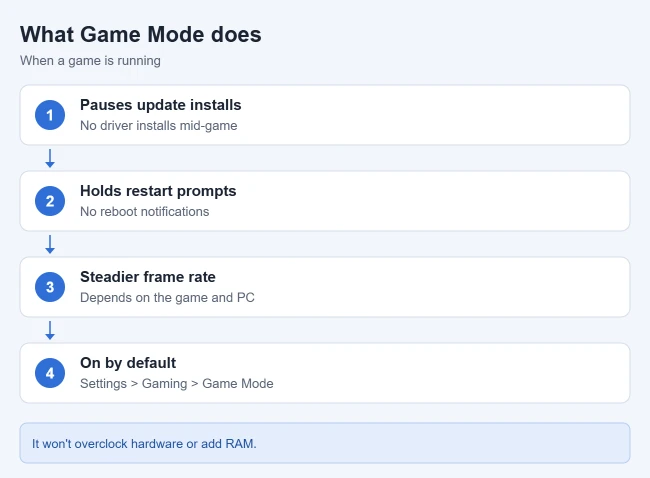
According to Xbox Support, when you’re running a game, Game Mode:
- Prevents Windows Update from performing driver installations and sending restart notifications.
- Helps achieve a more stable frame rate, depending on the specific game and system.
Windows does this by giving the game priority over background work. That matters most when something else is busy at the same time, such as a large download, a cloud sync, or a lower-end PC with little spare power. On a fast gaming PC with nothing running in the background, you may not notice any change.
Windows can also turn on Do not disturb while you play, so if you miss alerts during games, here is how to stop Do not disturb from turning on automatically.
Game Mode doesn’t overclock your hardware, add memory, or change your in-game settings, so don’t expect big jumps in frame rate on its own. Lowering graphics options inside a game, such as shadows or resolution, usually makes a bigger difference. Game Mode also has no effect on regular apps, so leaving it on won’t slow down your other work.
Settings like these won’t help a game that never opens. For that problem, follow the steps to fix Roblox not launching on Windows 11.
Mark a Game That Windows Doesn’t Recognize
Windows detects most games automatically. If an older or less common game doesn’t seem to get Game Mode:
- Start the game and click inside its window so it’s in focus.
- Press Windows key + G to open Game Bar.
- Select the Settings gear in Game Bar.
- On the General tab, check Remember this is a game, then close Game Bar.
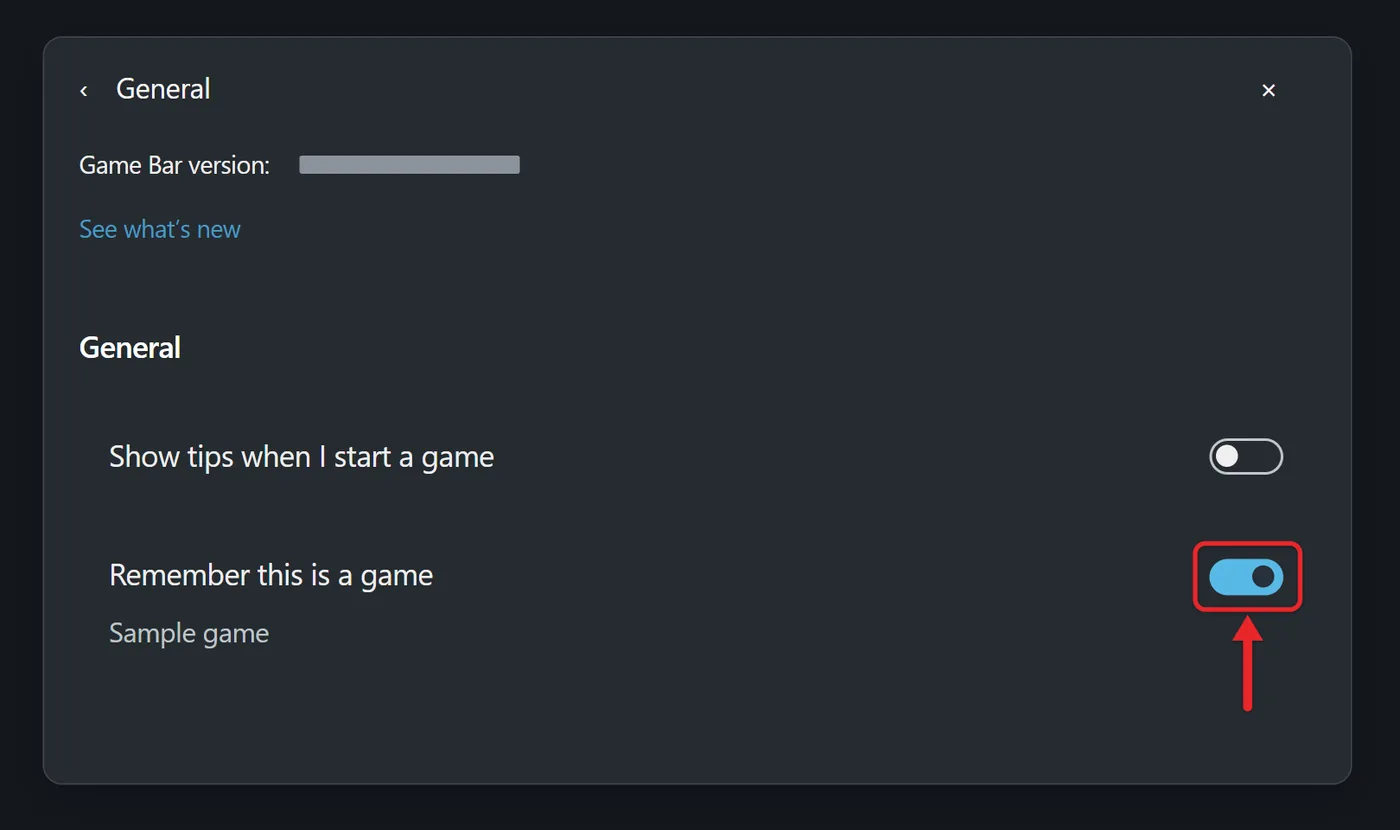
If you don’t see that checkbox, Windows already treats the app as a game, or the game window wasn’t in focus when you opened Game Bar.
Other Settings That Help Games
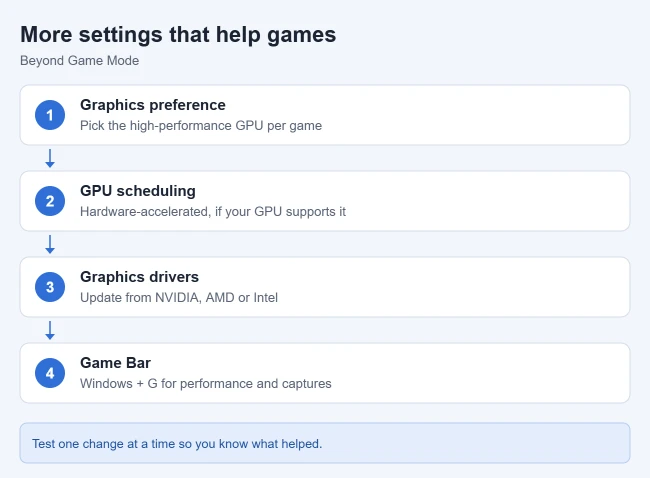
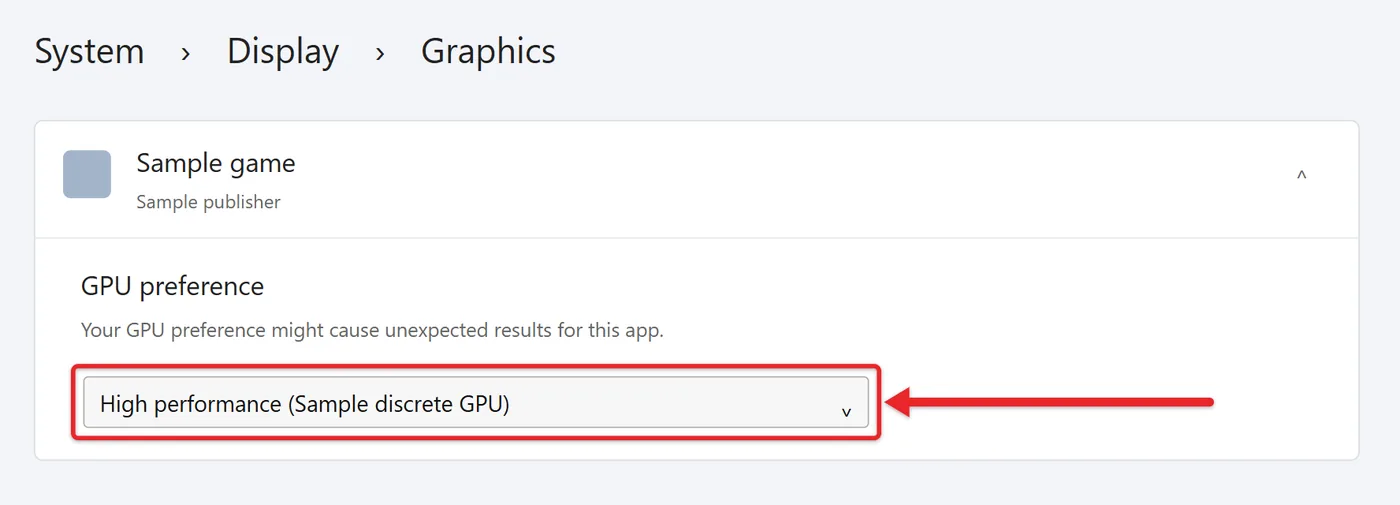
- Graphics preference: in Settings > System > Display > Graphics, select the game under custom options for apps (or add it), choose Options, and pick High performance on laptops with two graphics processors.
- Optimizations for windowed games: on the same Graphics page, turn this on to improve DirectX 10 and 11 games that run in windowed or borderless windowed mode, as described in Microsoft’s Optimizations for windowed games article. Restart the game afterward.
- Hardware-accelerated GPU scheduling: also on the Graphics page, under the advanced graphics settings. It only appears if your graphics card and driver support it, and it needs a PC restart. To turn it on, follow the steps for enabling hardware acceleration in Windows 11.
- Power mode: in Settings > System > Power & battery (Power on desktop PCs), set Power mode to Best performance while you play. It uses more power and makes laptops run warmer, so switch back to Balanced when you’re done.
- Drivers: keep your graphics driver up to date from NVIDIA, AMD or Intel. Here’s how to update your graphics driver in Windows 11.
- Game Bar: press Windows key + G to see performance stats and capture clips while you play. To record gameplay, use these steps to record your screen in Windows 11.
Change one setting at a time and test a game you know well, so you can tell what actually helped.
Before you play, it also helps to see what apps are running in the background and close the ones you don’t need.
If You Don’t See Game Mode
- No Gaming section in Settings: type Game Mode in the Settings search box at the top left. Some trimmed-down editions, such as Enterprise LTSC, leave out Xbox gaming apps, so the page may be limited or missing.
- The switch won’t stay on or is grayed out: on a work or school PC, your organization may control gaming features. Ask your IT department.
- A game stutters or crashes with it on: turn Game Mode off and test again. If the game runs better, leave it off while you play that game and turn it back on afterward.
If your whole PC is sluggish, not just games, see How to Fix a Slow Computer in Windows 11. If Xbox app or Game Pass games will not install or start at all, install Gaming Services on Windows 11.
If Minecraft says it’s out of date, here’s how to update Minecraft Bedrock on Windows.
Frequently Asked Questions
Does Game Mode really help?
It can help achieve a more stable frame rate, depending on the game and your PC, and it keeps Windows Update from interrupting. The gain is usually small on a powerful PC and more noticeable when background tasks compete with the game.
Should I turn Game Mode off?
Only if a specific game runs worse with it on. Most people can leave it on.
Do I need to restart after turning it on?
No. The switch takes effect the next time Windows detects a running game.
Is Game Mode the same as Xbox mode?
No. Xbox mode, found under Settings > Gaming on supported PCs in supported markets, is a full-screen, controller-friendly game launcher. Game Mode is the background setting that prioritizes a game, and it works whether or not you use Xbox mode.
Where is Xbox Game Bar?
Press Windows key + G. Its settings are in Settings > Gaming > Game Bar.

Matthew Burleigh is the founder, head writer, and editor of Solve Your Tech, which he launched in 2012. He has written technology tutorials since 2008 and worked in IT since 2003, including small-business support, IT management, and consulting. He holds Bachelor’s and Master’s degrees in Computer Science from Arizona State University.
Matthew writes practical guides for Windows, iPhone and iPad, Microsoft Office, Outlook, Google apps, and Android. Solve Your Tech’s guides are checked step by step against the device or app maker’s own documentation and tested on his own devices whenever he has the hardware or software, with clear steps, sources, and update dates.
Read more about Matthew and how Solve Your Tech writes and updates its guides, or report a correction.