To connect a phone to a Windows 11 laptop, pick the connection for your task: a USB cable for copying files, Phone Link for calls, texts and notifications, or your phone’s hotspot for internet access. You don’t need all three. Pairing with Bluetooth alone does not make a phone appear as a drive in File Explorer.
These steps cover current Windows 11 releases, with Android 10 or later and current iPhones. Menu names differ a little between phone makers. Windows 10 reached end of support on October 14, 2025; most steps are similar there, but some Phone Link features need Windows 11.
Choose the Connection You Need
- Android files: use a data-capable USB cable and File Transfer mode, or Quick Share for wireless transfers.
- iPhone photos: use Apple Devices and Microsoft Photos, or the dedicated iPhone photo-transfer guide.
- Calls, messages and notifications: set up Phone Link. Android phones get more features than iPhones.
- Laptop internet: join the phone’s hotspot. It shares mobile data, not files.
Before moving important files, back them up, and copy rather than move them until you’ve checked the copies. Skip unknown “phone transfer” programs from download sites; the built-in and vendor tools below cover these tasks.
Copy Android Files by USB
Use a cable that carries data, not just power. Google’s Android file-transfer instructions cover this procedure and note that some steps need Android 14 or later. Check your phone maker’s labels if yours differ.
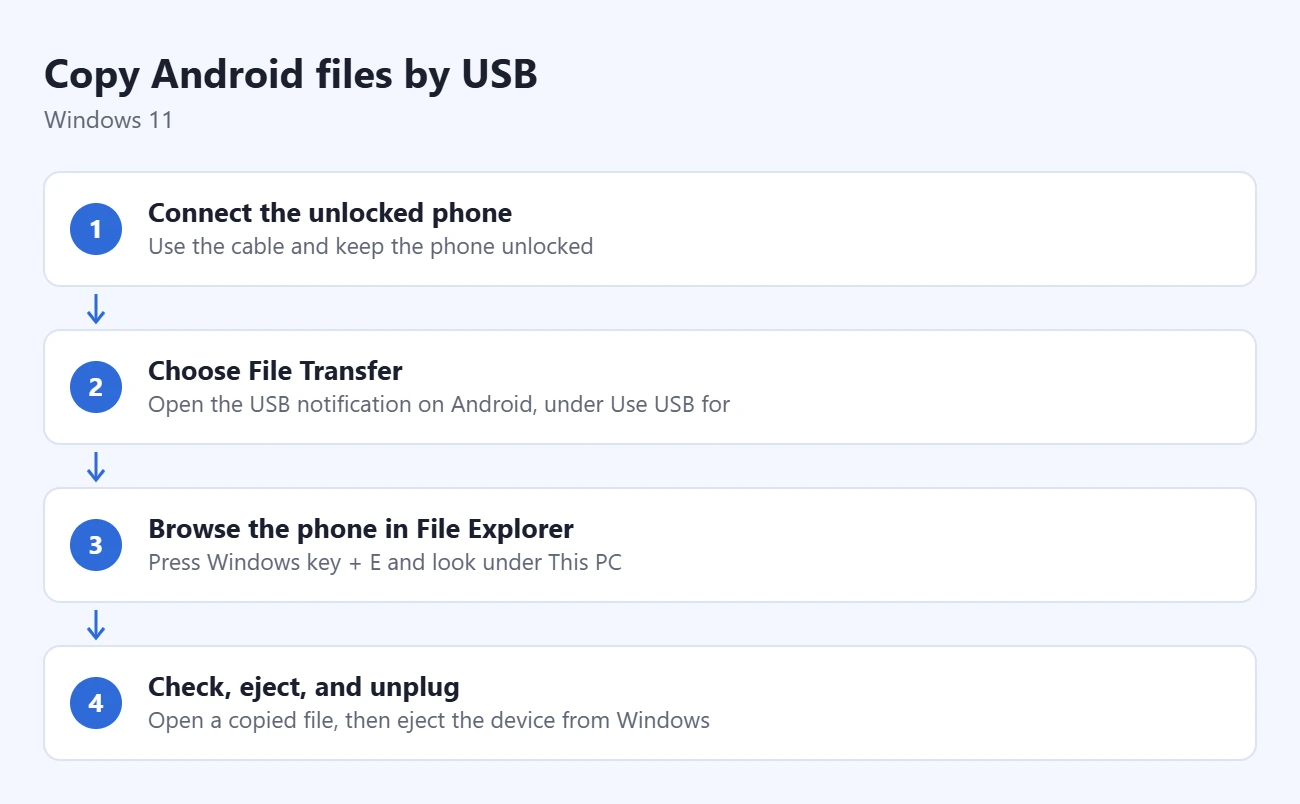
- Unlock the phone and connect it directly to the laptop with the cable. Keep it unlocked while Windows detects it.
- On the phone, tap the USB notification, usually Charging this device via USB. Under Use USB for, select File Transfer. A charge-only connection hides your files.
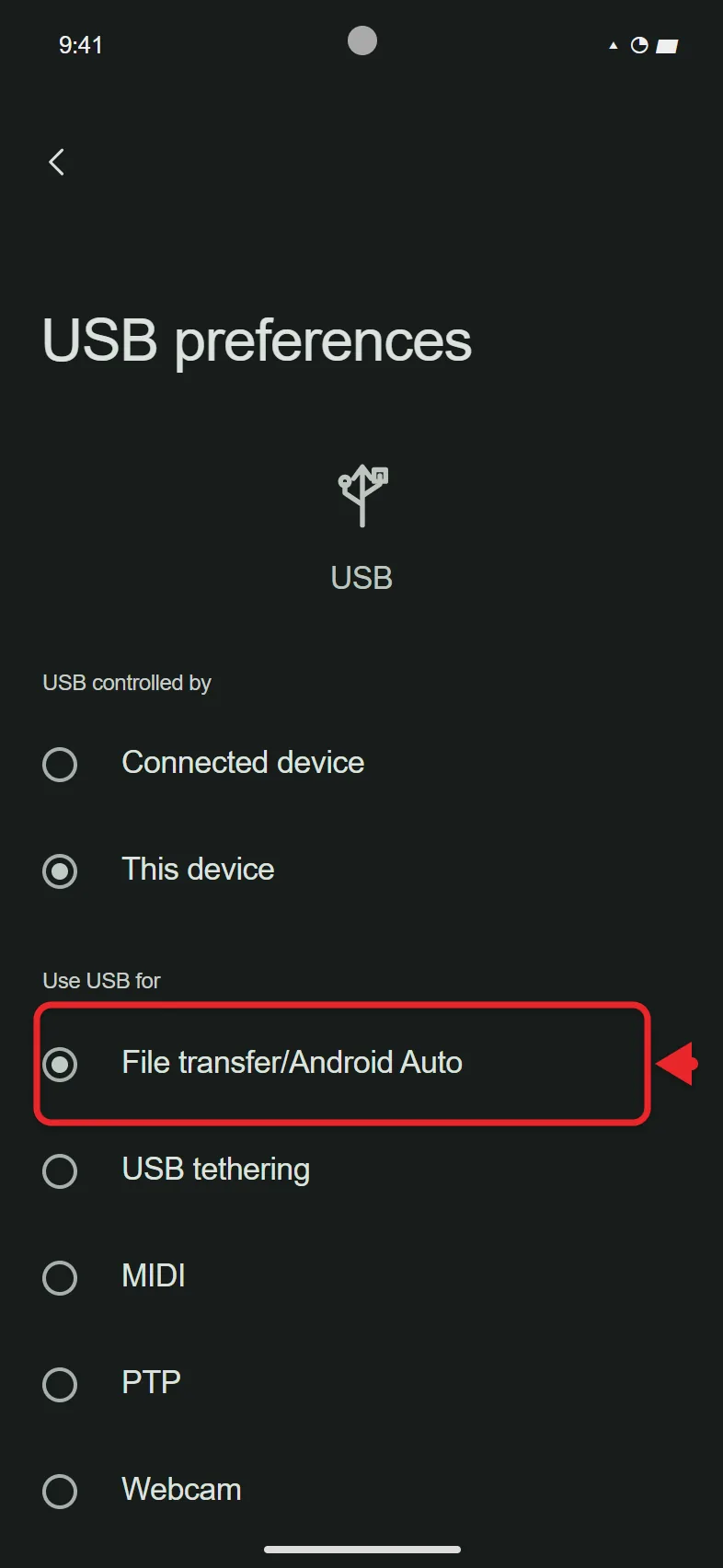
- Use the file-transfer window that opens. If none appears, press Windows key + E and look under This PC for the phone. Open its storage and copy the files to a folder on the laptop.
- Open a copied file on the laptop to check it. When copying is done, eject the phone in Windows, then unplug the cable.
Some apps keep private data that a USB connection can’t reach. If the phone still isn’t detected, Google suggests restarting the computer, updating and restarting the phone, and trying another cable and port.
Copy iPhone Photos by USB
An iPhone has no File Transfer switch like Android. Apple’s Windows photo-import instructions use the Apple Devices app, a USB cable and a trust prompt.
- Install or update Apple Devices from the Microsoft Store, then connect the iPhone with a data-capable cable and unlock it.
- If asked, tap Trust or Allow on the iPhone and enter your passcode. Keep it connected.
- On Windows, open Photos, select Import and choose the iPhone. Pick the items and destination, then start the import. Microsoft’s Photos import guide shows this workflow.
- Open a saved photo from its destination before you disconnect.
If you use iCloud Photos with optimized storage, download the full-resolution originals to the iPhone first, or use iCloud for Windows. For documents and other app files, follow the iPhone-to-PC file-transfer steps.
Connect Android With Phone Link
Microsoft’s Phone Link setup guide requires Android 10 or later and the Link to Windows app, which comes preinstalled on many Samsung Galaxy and other phones. Keep both devices nearby on the same Wi-Fi network, and use the same personal Microsoft account. Work or school accounts and multiple Android profiles aren’t supported.
- Search the taskbar for Phone Link, open it, choose Android and sign in if prompted.
- On the phone, open Link to Windows, or go to aka.ms/yourpc in the phone’s browser to get it. Sign in with the same Microsoft account.
- On the PC, select Pair with QR code, then scan the code with the camera inside Link to Windows. Choose Pair manually if you’d rather type a code.
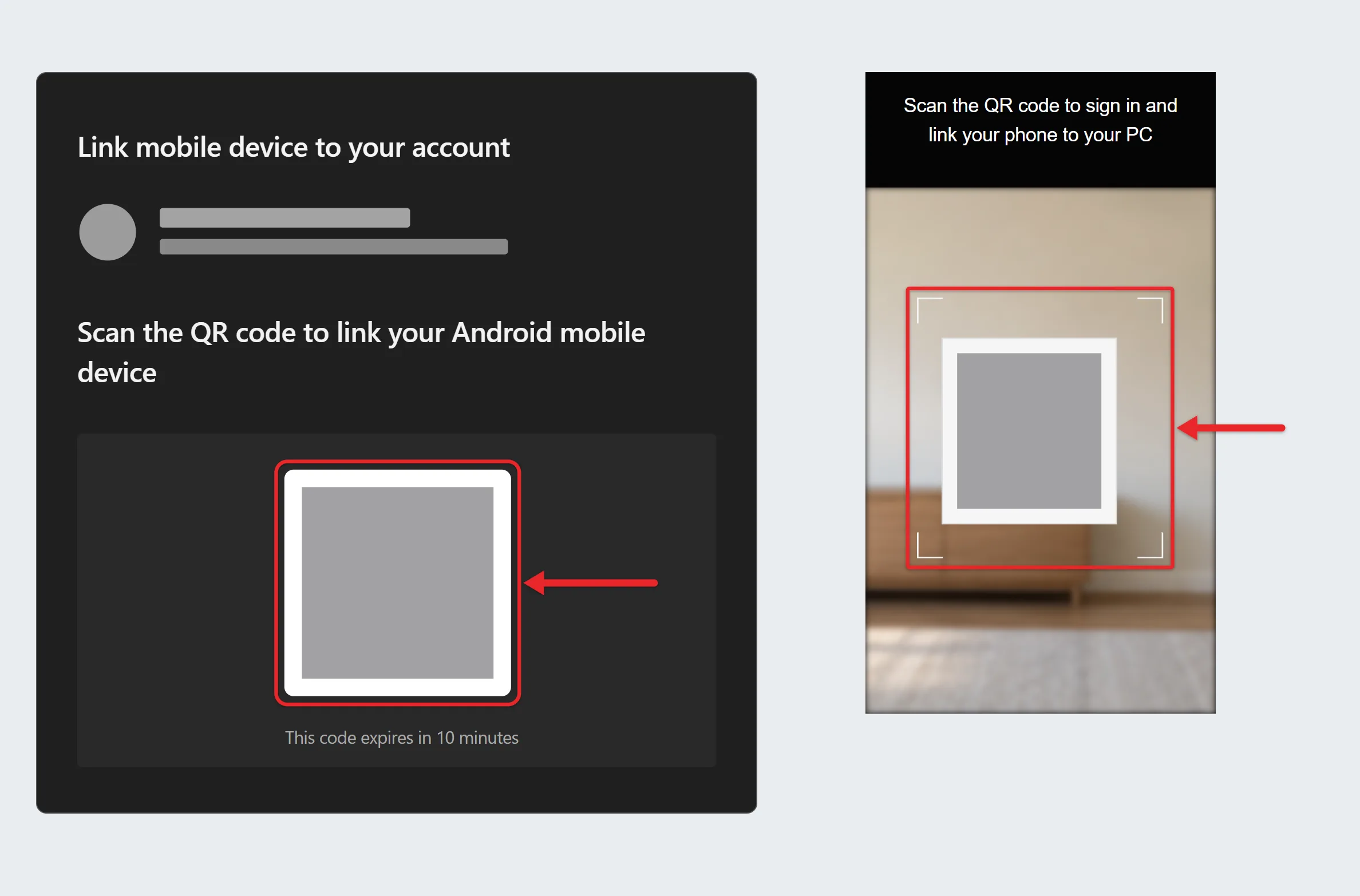
- Review each permission request, select Done on the phone and return to the PC. Open Messages or Calls in Phone Link to confirm the connection.
Connect an iPhone With Phone Link
For an iPhone, use iOS 16 or later and a laptop with Bluetooth turned on.
- Open Phone Link and choose iPhone.
- Scan its QR code with the iPhone Camera.
- Follow the pairing and permission prompts.
The steps for linking an iPhone to Windows 11 with Phone Link explain each setting.
Phone Link shows texts, including sign-in codes, to anyone using your Windows account, so review each permission and lock the PC when you step away.
Use Your Phone From the Start Menu
On recent Windows 11 builds, the Start menu can show a panel for your linked phone with battery status, messages, calls and a Send files option. Microsoft’s Start menu phone panel guide says it is rolling out gradually. To turn it on or off, open Settings > Personalization > Start and use Show mobile device in Start.
To run an Android app on the PC itself instead of mirroring it from your phone, follow the steps to install an APK on Windows 11.
Use Your Phone’s Hotspot for Laptop Internet
A hotspot uses your mobile data, so check your carrier plan’s hotspot allowance first. Google’s Android tethering guide covers Wi-Fi, Bluetooth and USB tethering, and Apple’s Personal Hotspot guide covers iPhone.
First turn on the hotspot on the phone.
Android: open the Hotspot quick setting or search Settings for hotspot. Turn on the Wi-Fi hotspot and note its name and password. On a Pixel, for example, you can turn on the hotspot on a Google Pixel 4a.
iPhone: open Settings > Personal Hotspot, turn on Allow Others to Join and note the Wi-Fi password. Stay on that screen while the laptop connects.
Then connect the laptop:
- On the laptop, open the Wi-Fi list, choose the phone’s hotspot, select Connect and enter the password. Open a web page to confirm it works.
- When you’re done, disconnect the laptop and turn off the hotspot to save battery and data.
USB tethering is a separate option: Android has its own USB tethering switch, and an iPhone needs current Apple Devices or iTunes on Windows. Choosing Android File Transfer does not turn on tethering. On an iPhone, you can change the Personal Hotspot password before sharing it.
Wireless File Transfer Alternatives
Quick Share for Android
Google’s Quick Share for Windows guide lists Android 6 or later and 64-bit Windows 10 or later (Windows 11 for ARM laptops). Samsung PCs use Samsung’s own Quick Share app from the Microsoft Store. Turn on Bluetooth and Wi-Fi, join the same network and keep the devices within about 16 feet.
- Install Google’s Windows app and sign in with your Google account. Under Receiving, choose who can share with you, such as Your devices or Contacts.
- On the phone, use Quick Share in a file’s Share menu and select your laptop. Confirm any PIN on both devices.
- Accept on Windows if asked, then find the file in the Quick Share folder inside Downloads.
Set visibility back to No one when you don’t want to receive more files.
Ordinary Bluetooth Transfer
Use this only when your phone has a Bluetooth share option. Most Android phones do; an iPhone doesn’t, so use the photo or file methods above for iPhone.
- Turn on Bluetooth on both devices. In Windows, open Settings > Bluetooth & devices > Add device > Bluetooth, select the phone and confirm the matching codes.
- Go to Bluetooth & devices > Devices > Send or receive files via Bluetooth and choose Receive files. Leave it waiting.
- On the phone, share the file over Bluetooth and select the laptop. When it finishes, choose a save location and select Finish in Windows.
Microsoft’s Bluetooth file-transfer guide covers sending the other way with Send files.
If the Connection Does Not Work
- Phone only charges: try a known data cable and another port directly on the laptop. On Android, recheck File Transfer; on iPhone, unlock it and answer the trust prompt.
- Phone Link will not pair: confirm the phone type, versions, Wi-Fi or Bluetooth, and that both devices use the same account. Restart pairing from the PC. Microsoft’s setup troubleshooting guide covers failed code matching.
- Phone Link is missing: open Settings, search for Phone Link, choose Enable or disable Phone Link and turn it on.
- Bluetooth controls are missing: check the laptop’s adapter and drivers. The steps for installing a Bluetooth driver in Windows 11 cover that problem.
- Hotspot connects without internet: check mobile data and your plan. On iPhone, turning on Maximize Compatibility can help.
- A work laptop blocks the phone: your IT department may restrict phone connections. Ask them.
Disconnect or Undo the Setup
For USB, eject the phone before unplugging. For a hotspot, disconnect and turn it off. Bluetooth pairings can be removed on each device.
To stop Phone Link, remove the phone in Phone Link > Settings > Devices, then check Settings > Bluetooth & devices > Mobile devices > Manage devices and sign out of Link to Windows on the phone. Microsoft’s device-removal instructions explain each place.
Frequently Asked Questions
Do I need all these methods at once?
No. Use USB or Quick Share for files, Phone Link for calls and messages, or a hotspot for internet.
Can I mirror every phone screen with Phone Link?
No. Microsoft’s Phone screen documentation limits screen mirroring to supported Android devices and markets. An iPhone can’t mirror its screen in Phone Link.
Why doesn’t my iPhone show up as a drive?
An iPhone shows only its camera photos and videos in Windows. Use Photos for pictures, and Apple Devices File Sharing or iCloud Drive for other files.
Does Phone Link need the internet?
Android pairing needs both devices on the same Wi-Fi network. An iPhone links over Bluetooth, so keep it within range of the laptop.

Matthew Burleigh is the founder, head writer, and editor of Solve Your Tech, which he launched in 2012. He has written technology tutorials since 2008 and worked in IT since 2003, including small-business support, IT management, and consulting. He holds Bachelor’s and Master’s degrees in Computer Science from Arizona State University.
Matthew writes practical guides for Windows, iPhone and iPad, Microsoft Office, Outlook, Google apps, and Android. Solve Your Tech’s guides are checked step by step against the device or app maker’s own documentation and tested on his own devices whenever he has the hardware or software, with clear steps, sources, and update dates.
Read more about Matthew and how Solve Your Tech writes and updates its guides, or report a correction.