To scroll with a Magic Mouse on Windows 11, pair it in Settings > Bluetooth & devices, then install a Magic Mouse driver, because Windows has no built-in support for the mouse’s touch surface. On an ordinary Windows PC, that means an independent paid utility called Magic Utilities. On an Intel Mac running Windows through Boot Camp, it means Apple’s own Boot Camp support software.
This guide covers every Magic Mouse model (the AA battery original, Magic Mouse 2 and the Lightning models, and the 2024 USB-C model) on a Windows 11 PC or laptop. The pairing steps also match Windows 10, which reached end of support on October 14, 2025.
Why the Magic Mouse Doesn’t Scroll in Windows
A regular mouse has a scroll wheel that Windows understands out of the box. The Magic Mouse has no wheel. Its top is a touch surface, and the mouse sends raw touch data that needs a driver to turn finger movement into scrolling. Without that driver, Windows still treats it as a basic Bluetooth mouse, so the pointer moves and the left button clicks, but sliding a finger across the top does nothing.
That splits the job in two:
| Stage | What it gives you | What you need |
|---|---|---|
| Bluetooth pairing | Pointer movement and left click | Windows 11 and a Bluetooth adapter |
| Touch driver | Scrolling, and gestures with some drivers | A driver that supports your setup |
If the pointer doesn’t move at all, the problem is the Bluetooth connection, not scrolling. Fix pairing first.
Before You Start
- A Bluetooth adapter. Most laptops have one built in. Many desktops need a USB Bluetooth adapter. The Lightning and USB-C cables only charge the mouse; they don’t carry pointer or scroll data.
- A charged mouse. Charge a rechargeable model, then unplug the cable. The charging port is on the bottom, so you can’t use the mouse while it charges. Put fresh AA batteries in the original model.
- A backup way to control the PC. Keep a touchpad, keyboard or spare mouse handy while you change input drivers.
- Permission to install software. On a work or school PC, ask the administrator before installing a driver.
- The mouse released from any Mac. If the mouse was paired with a Mac nearby, turn off Bluetooth on that Mac, or remove the mouse there in System Settings > Bluetooth, so it doesn’t reconnect to the Mac instead.
Step 1: Pair the Magic Mouse With Windows 11
These steps follow Microsoft’s Pair a Bluetooth device in Windows instructions.
- Turn the mouse off and on. Slide the switch on the bottom so green shows. The mouse is ready to be found.
- Open Bluetooth settings. Select Start > Settings > Bluetooth & devices and make sure the Bluetooth switch is On.
- Start pairing. Select Add device, then choose Bluetooth. Windows starts searching for nearby devices.
- Select the Magic Mouse. Choose it when it appears in the list and follow any prompts. If Windows asks for a PIN, enter 0000. Select Done when Windows says the device is ready.
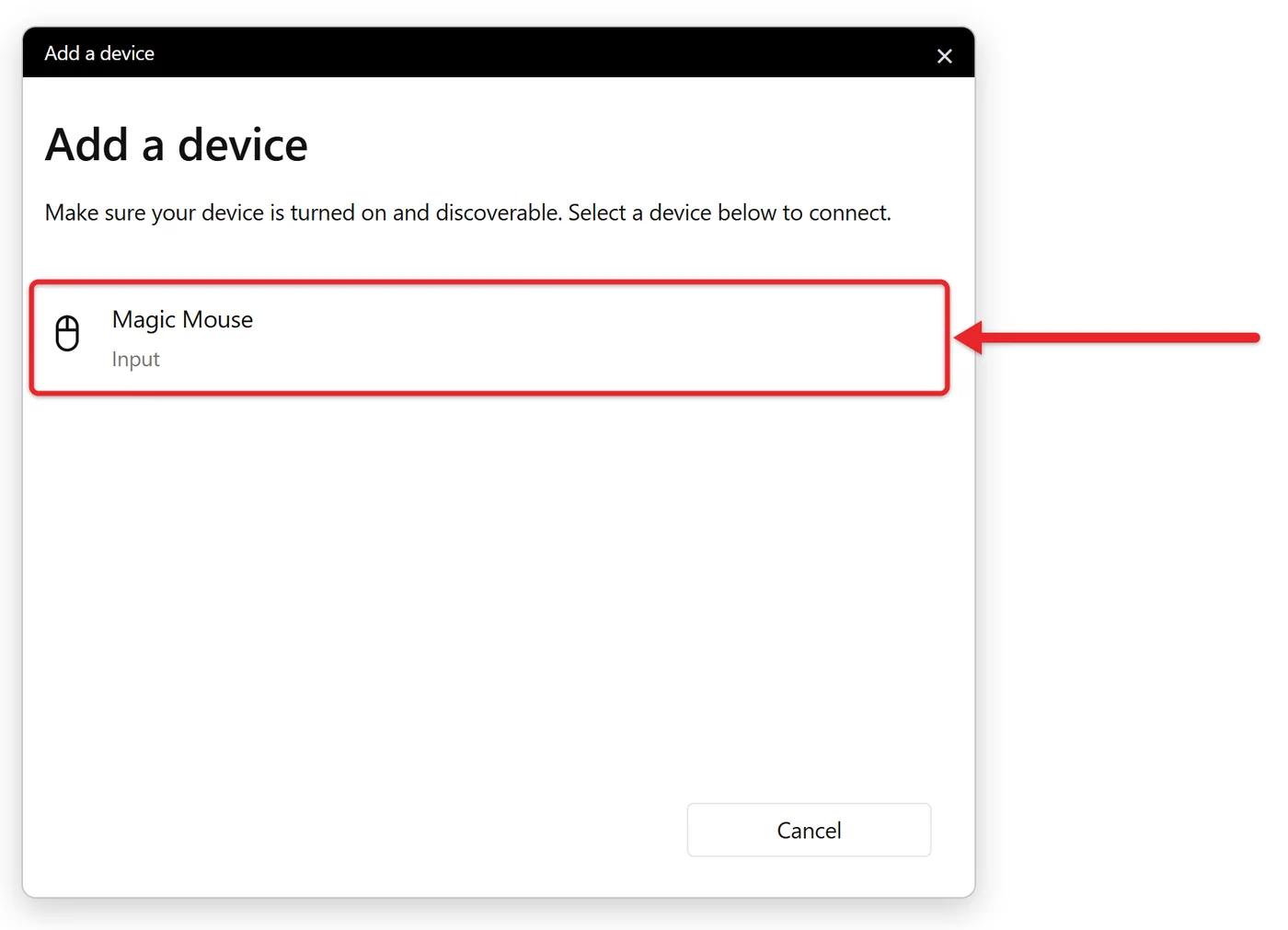
- Test the pointer. Move the mouse and click an empty part of the desktop. The pointer should move and the click should register, even though scrolling doesn’t work yet.
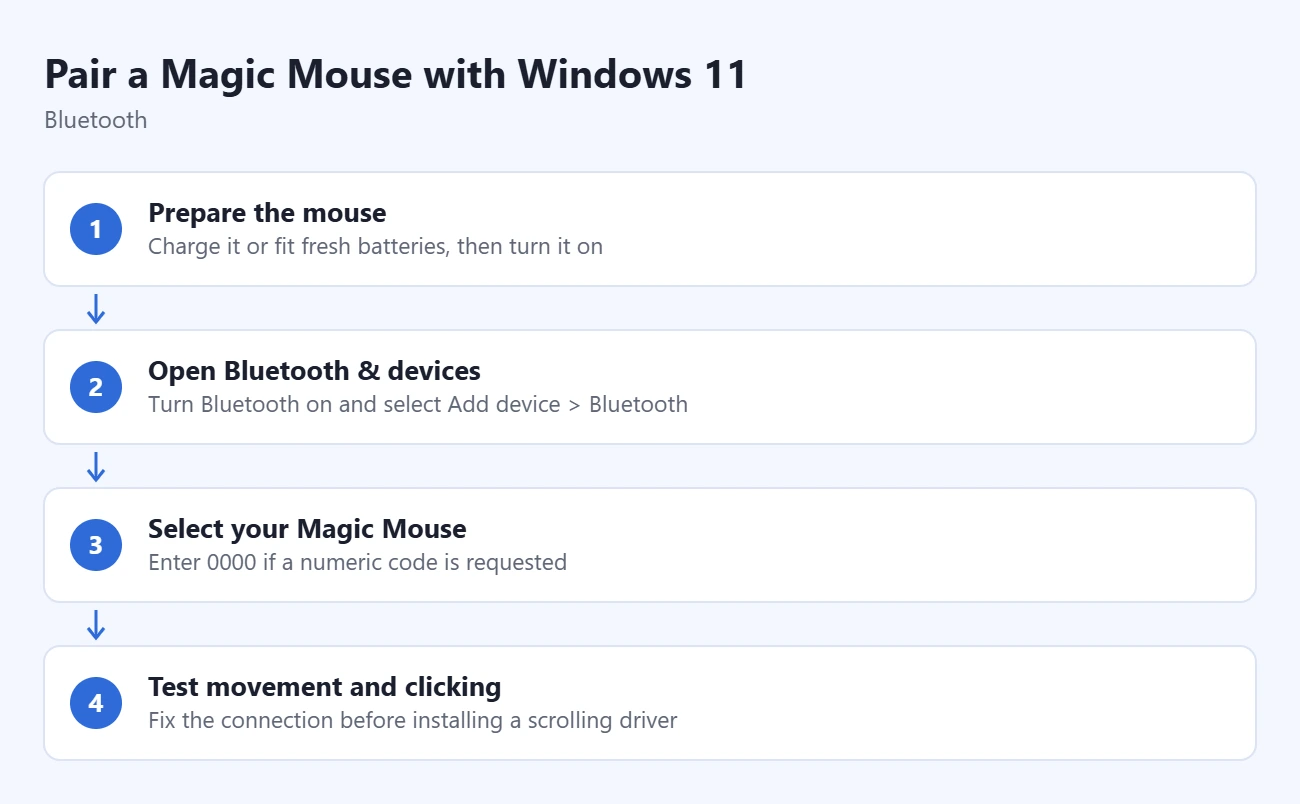
A quicker route: select the Network, Sound or Battery icon next to the clock, select the arrow on the Bluetooth tile (Manage Bluetooth devices), and pick the mouse under New devices.
If you need help with the switch itself, here’s how to turn on Bluetooth in Windows 11.
Step 2: Install a Scrolling Driver on a Windows PC
On a regular Windows PC (anything that isn’t an Intel Mac), Apple offers no Magic Mouse driver. The supported option is Magic Utilities, an independent paid utility that isn’t made by Apple or Microsoft. Its developer lists Windows 10 and 11 64-bit on x64 and ARM processors, and every Magic Mouse model from the 2009 AA battery version to the 2024 USB-C version. It offers a 28-day free trial, then one-year or two-year licenses tied to your mouse that don’t renew automatically.
- Download the installer from the developer. Search for Magic Utilities and get the Windows 10/11 setup file from the developer’s own website, not from a download portal.
- Run the installer. Open the file, allow the changes when Windows asks, and select Magic Mouse if setup asks which devices you use.
- Restart the PC. Save your work first. After the restart, open Magic Mouse Utilities from the Start menu and check that your mouse is listed.
- Test scrolling. Open a long web page, rest one finger on the top of the mouse and slide it slowly toward you or away from you. The page scrolls. Lift your finger to stop.
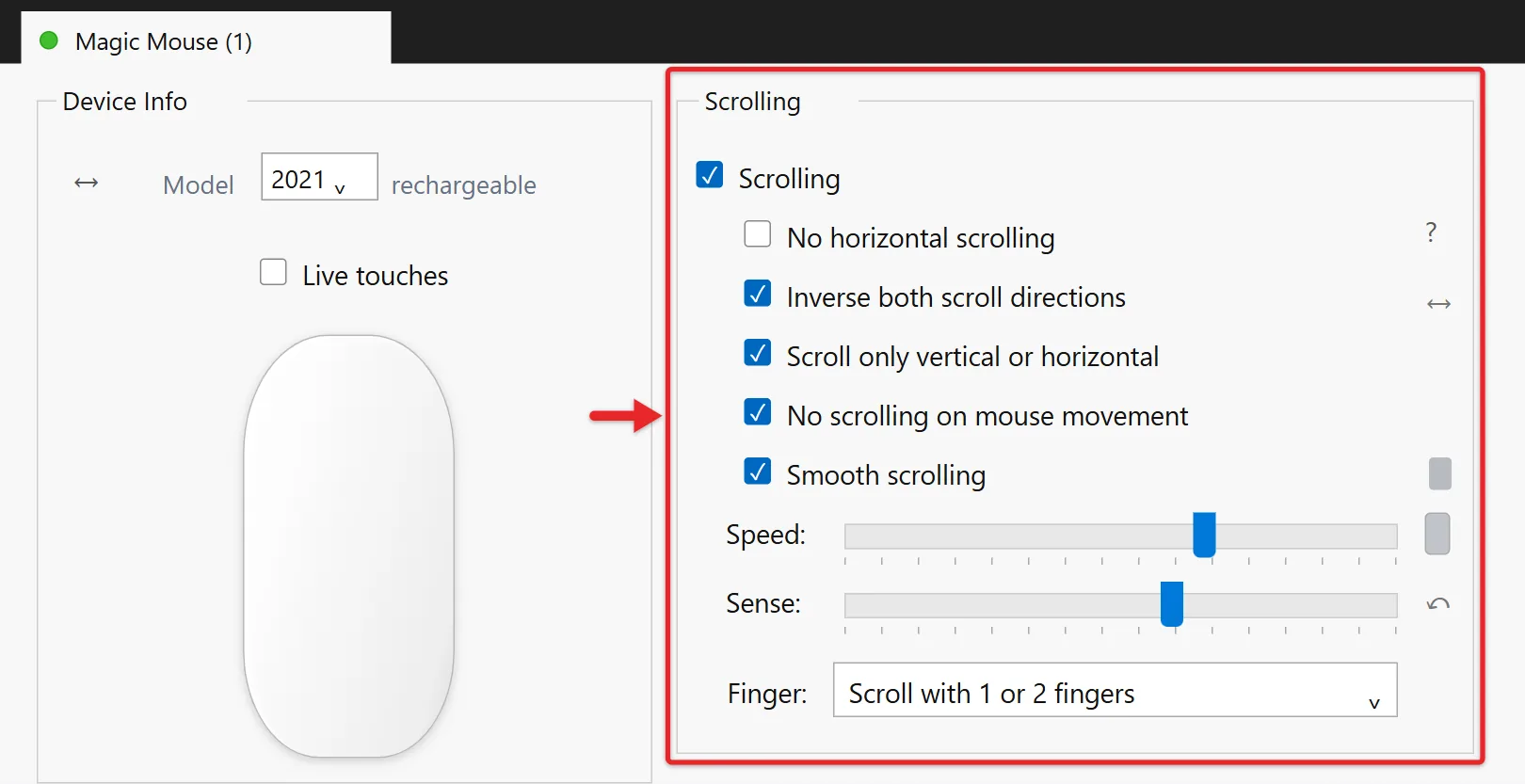
The utility treats a slow slide as a scroll and a quick flick as a swipe gesture. If a flick sends you back a page or switches something you didn’t mean to, lift your finger and slide more slowly. Use the utility’s own settings to change scroll speed, smooth scrolling and gestures, and change one setting at a time so you can tell what helped. If the page moves the opposite way from what you expect, look for the scroll direction option in the utility.
After scrolling works, restart the PC once to confirm it still scrolls after the mouse reconnects.
Avoid unofficial driver downloads
Many videos and blog posts tell you to pull Apple’s Boot Camp mouse driver out of a Boot Camp package with a command-line tool, or to install a free driver project from a code-sharing site, onto an ordinary PC. Don’t. Apple provides Boot Camp software for Macs only, extracted driver files are old and unsupported on non-Apple hardware, and driver files from mirror sites can be altered or bundled with unwanted software. A driver runs with deep access to Windows, so a bad one can cause crashes or worse. If you don’t want a paid utility, a regular mouse with a wheel is the safer choice.
If You Run Windows on an Intel Mac With Boot Camp
On a Mac with Boot Camp, Apple’s support software already includes the drivers for Apple mice. Apple’s Boot Camp installation guide lists only Intel-based Macs and names Windows 10. After Windows and the Apple support software are installed, the Magic Mouse scrolls and right-clicks in Windows.
If scrolling stopped working on a Boot Camp Mac, reinstall the drivers with Apple’s Windows support software steps:
- Update macOS. Start up in macOS and install the latest updates, which can include Boot Camp updates.
- Prepare a USB flash drive. Use a drive of 16GB or larger. In Disk Utility, choose View > Show All Devices, select the drive, select Erase, and choose MS-DOS (FAT) and Master Boot Record.
- Download the software. Open Boot Camp Assistant, choose Action > Download Windows Support Software, and save it to the USB drive.
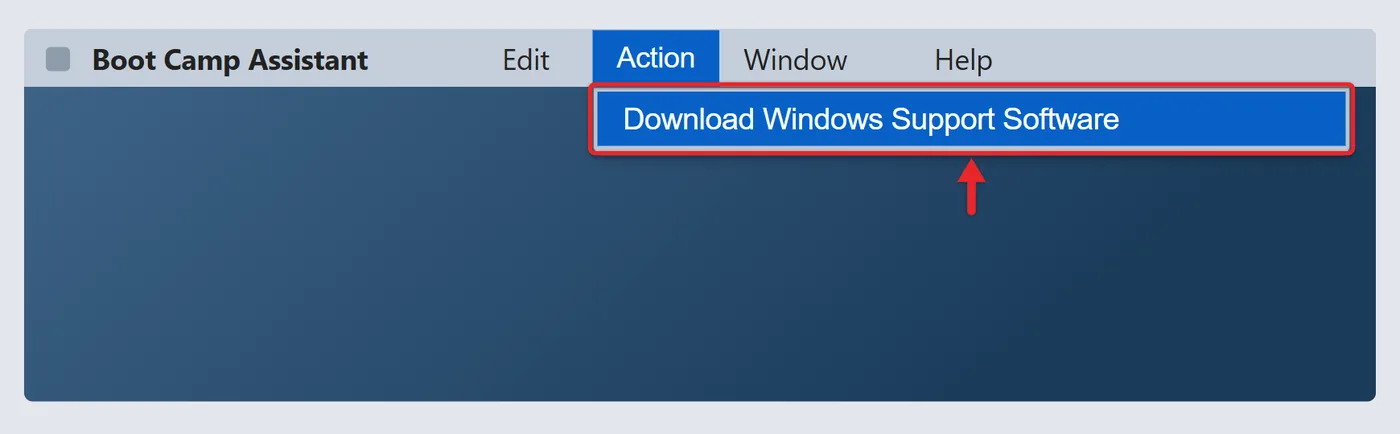
- Run the repair in Windows. Start up in Windows, open the drive in File Explorer, open Setup in the WindowsSupport or BootCamp folder, and select Repair. Restart when it finishes.
Apple silicon Macs (M1 and later) can’t use Boot Camp. Don’t install Apple’s Boot Camp package and a third-party Magic Mouse utility on the same Mac at once; use one driver or the other.
Windows Mouse Settings Won’t Add Touch Scrolling
Settings > Bluetooth & devices > Mouse has a Scrolling section with Lines to scroll at a time, Scroll inactive windows when hovering over them and Scrolling direction, as Microsoft’s mouse settings page explains. These settings change how a scroll wheel behaves. They can’t make Windows read the Magic Mouse’s touch surface, so set up the driver first.
Pointer speed is a separate setting, covered in the Windows mouse pointer-speed guide. To change how the pointer looks rather than how it moves, change your mouse cursor in Windows 11.
If Scrolling Still Doesn’t Work
The mouse doesn’t show up when pairing
Turn the mouse off and on again, and move it closer to the PC. Make sure Airplane mode is off. If a Mac nearby still has it, remove it there first. Microsoft’s Fix Bluetooth problems in Windows page suggests the Bluetooth troubleshooter in the Get Help app, and setting Bluetooth devices discovery to Advanced under Settings > Bluetooth & devices > Devices.
The pointer lags or disconnects
Charge the mouse, keep it away from USB 3.0 devices and their cables, which can interfere with Bluetooth, and update the Bluetooth adapter driver in Device Manager or from your PC maker’s support site. The steps for installing a Bluetooth driver in Windows 11 walk through it. On some laptops, the adapter’s Power Management tab in Device Manager has an option that lets Windows turn the adapter off to save power; clearing it can stop drops after idle time.
Clicks work, but touching the top does nothing
The driver isn’t active. Check that the utility lists your mouse and that its trial or license hasn’t expired, since the features stop when a license runs out. Restart if setup asked you to. If it still fails, remove the mouse in Settings > Bluetooth & devices > Devices (select More options next to it, then Remove device), restart, pair it again and test. If you can’t find that option, here’s how to remove a paired Bluetooth device.
Scrolling is jerky after sleep or too fast in one app
Reconnect the mouse from the utility, or turn the mouse off and on. If scrolling is too fast only in one app, lower the scroll speed or turn off smooth scrolling in the utility, then compare that app with a web browser.
How to Undo the Driver Installation
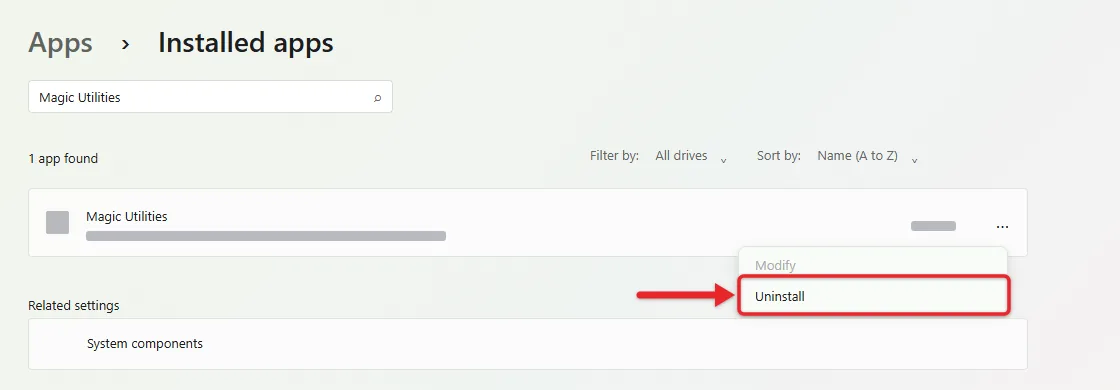
Open Settings > Apps > Installed apps, find Magic Utilities, select the three dots next to it and choose Uninstall. Restart if asked. The mouse goes back to pointer and click only, and there’s no subscription to cancel. To disconnect the mouse completely, remove it under Bluetooth & devices > Devices.
Frequently Asked Questions
Can I scroll with a Magic Mouse on Windows 11 without extra software?
No. Without a driver, Windows only gets pointer movement and clicks from the Magic Mouse.
Is there a free, supported option?
Only on an Intel Mac running Windows with Boot Camp, where Apple’s support software includes the driver. On other PCs, Magic Utilities has a 28-day free trial, and free driver downloads from unofficial sites aren’t supported by Apple.
Does the USB-C Magic Mouse work with Windows 11?
Yes, over Bluetooth, the same as earlier models. Its USB-C cable only charges it, so plugging it in doesn’t make it a wired mouse.
Can I right-click with a Magic Mouse in Windows?
Right-click depends on the driver. Apple’s Boot Camp software and Magic Utilities both support a right click on the right side of the mouse, but without a driver it may not work. If left and right seem swapped, check the Primary mouse button setting in Settings > Bluetooth & devices > Mouse.
What’s the easiest alternative?
A regular Bluetooth or USB mouse with a scroll wheel, or a laptop touchpad. Both scroll in Windows 11 with no extra software. If your touchpad keeps opening menus while you scroll, you can turn off two-finger tap to right-click.

Matthew Burleigh is the founder, head writer, and editor of Solve Your Tech, which he launched in 2012. He has written technology tutorials since 2008 and worked in IT since 2003, including small-business support, IT management, and consulting. He holds Bachelor’s and Master’s degrees in Computer Science from Arizona State University.
Matthew writes practical guides for Windows, iPhone and iPad, Microsoft Office, Outlook, Google apps, and Android. Solve Your Tech’s guides are checked step by step against the device or app maker’s own documentation and tested on his own devices whenever he has the hardware or software, with clear steps, sources, and update dates.
Read more about Matthew and how Solve Your Tech writes and updates its guides, or report a correction.