Your pen keeps opening a handwriting panel, or your palm on the screen triggers pen shortcuts, and you just want the pen features to stay out of the way. Windows 11 has no single Windows Ink off switch. Instead, you turn off the specific pen behavior that bothers you in Settings > Bluetooth & devices > Pen & Windows Ink, and use a tablet driver or policy setting only if that isn’t enough.
Match the Problem to the Right Setting
Windows Ink is the umbrella name for the pen features built into Windows: handwriting input, the pen menu, pen shortcut buttons and pen support inside apps. In Windows 10 there was a dedicated Windows Ink Workspace that people often switched off. Windows 11 doesn’t offer one toggle for all of it, and an earlier version of this page described a “Turn off Windows Ink Workspace” switch that Windows 11 Settings doesn’t have.
Start with whatever you are actually seeing, then use the matching section below.
| What happens | What to change |
|---|---|
| A handwriting panel opens or your scribbles turn into typed text | The handwriting option in Pen & Windows Ink |
| Your palm or fingers move things while you draw | Ignore touch input when using the pen |
| Pressing the pen button launches an app | Pen shortcut button actions |
| A pen icon sits in the taskbar corner | Pen Menu under System tray icons |
| Lag, offsets or errors in a drawing app with a Wacom tablet | The Windows Ink checkbox in Wacom Tablet Properties |
| You manage work PCs and want the old Ink Workspace off | The Allow Windows Ink Workspace policy |
| Nothing else works and you don’t need touch at all | Disable the touchscreen in Device Manager |
Open Pen and Windows Ink Settings
Most of the fixes live on one Settings page. Microsoft’s pen setup instructions for Windows give this path for Windows 11.
- Select Start, then Settings (or press Windows key + I).
- Select Bluetooth & devices in the left pane.
- Select Pen & Windows Ink. The page lists options for your writing hand and for what the pen’s shortcut button does.
If Pen & Windows Ink isn’t in the list, Windows may not detect pen hardware on your PC. See the troubleshooting section further down.
Stop the Pen From Writing Into Text Fields
When you tap a search box or a form field with the pen, Windows can open a handwriting area and convert what you write into typed text. If you’d rather use the keyboard, turn that off.
- On the Pen & Windows Ink page, look for the Handwriting section.
- Turn off Use your handwriting to enter text, the setting Microsoft names in its Windows handwriting tips. If it expands to show a separate on/off switch inside, turn that off too.
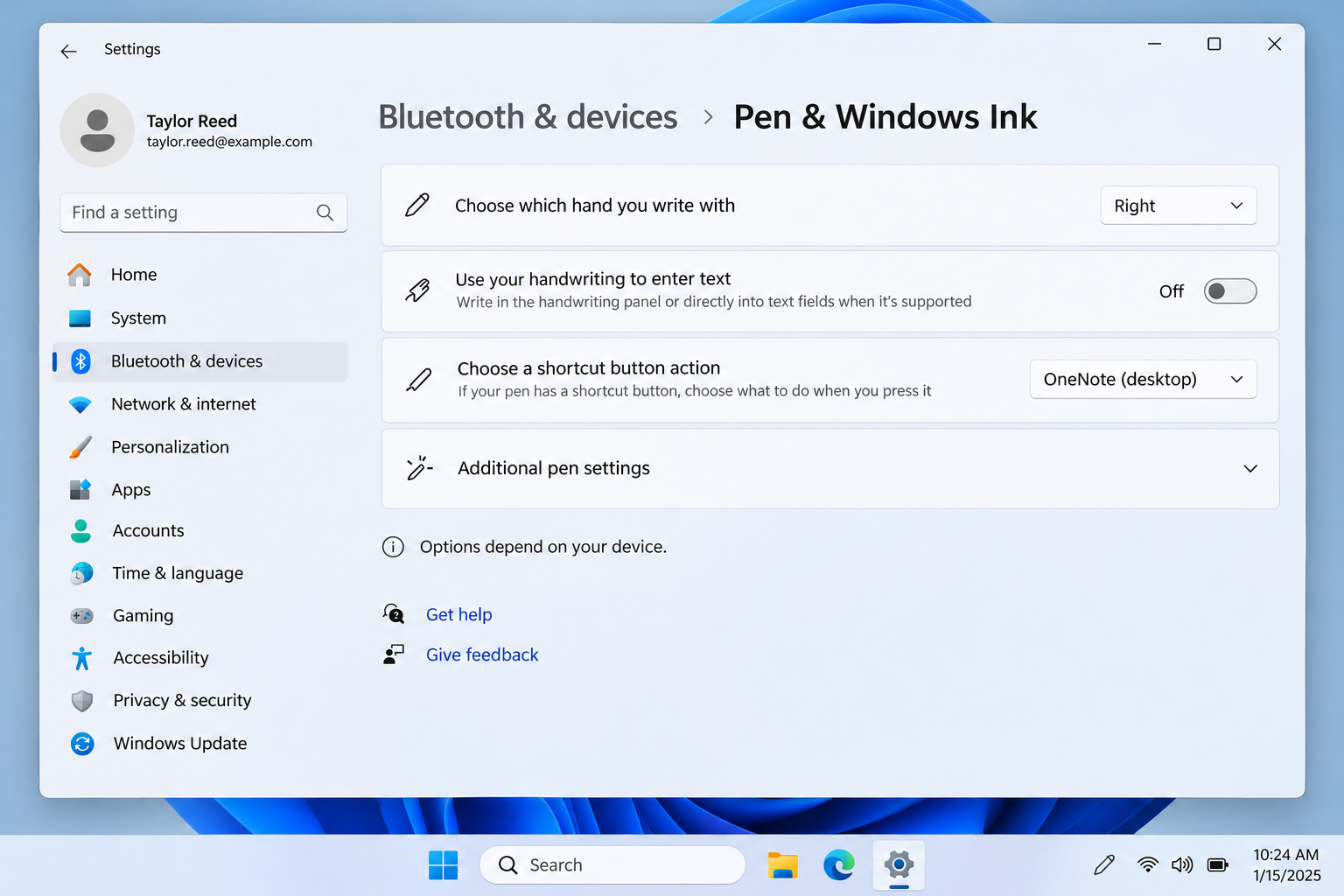
- Tap a text box with the pen. The handwriting area should no longer appear.
The touch keyboard is separate from this setting, so you can still type with it. If you want to bring the keyboard up on demand, here’s how to turn on the touch or on-screen keyboard.
Keep Your Palm and Fingers From Interfering
Say Odette sketches a floor plan in a whiteboard app and the canvas keeps jumping because her wrist rests on the screen. The fix is the setting that tells Windows to ignore touch while the pen is in use.
- On the Pen & Windows Ink page, expand Additional pen settings (if your page groups options that way).
- Check the option to ignore touch while you use the pen (it usually reads Ignore touch input when I’m using my pen).
- Draw with your hand resting on the screen. Touches from your palm should no longer scroll or select while the pen is near the display.
This doesn’t turn off touch for the rest of the time, so finger scrolling still works when the pen is away from the screen.
Change What the Pen Shortcut Button Does
Many pens have a top or side button that opens an app or the pen menu. Microsoft lets you choose what happens when you tap, double-tap or hold down the button.
- On the Pen & Windows Ink page, find the Pen shortcuts or shortcut button options.
- Open the menu for each action (the labels may read single-click, double-click and press and hold).
- Pick an option that does nothing, if your list includes one, or a harmless action you don’t mind triggering by accident.
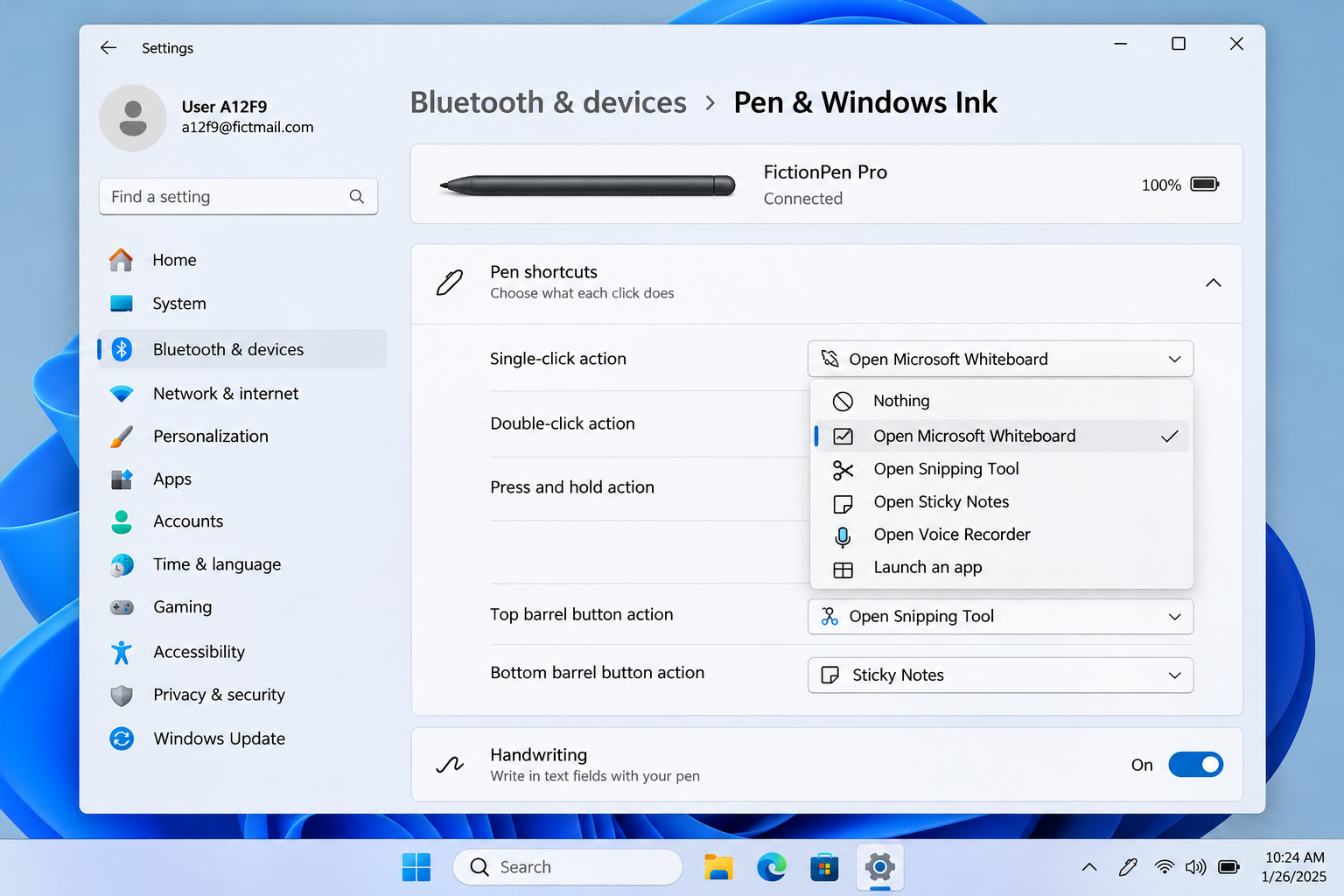
The choices vary with the pen, so a pen from your PC’s maker may show extra options, or have its own app for button settings.
Hide the Pen Menu Icon on the Taskbar
The pen menu is a small pen icon in the taskbar corner that opens a shortcut panel. Hiding it removes the icon; it doesn’t turn off pen input.
- Right-click an empty part of the taskbar and select Taskbar settings.
- Under System tray icons, turn off Pen Menu.
To bring it back, turn the same switch on. Other taskbar icons are on that page too, covered in more detail in ways to customize the Windows 11 taskbar.
Turn Off Windows Ink for a Wacom Tablet
Drawing tablet users usually mean something more specific by “disable Windows Ink”: the Windows Ink option in the Wacom driver, which decides whether an app gets pen data through Windows Ink. Wacom’s Windows Ink support article describes it this way.
Before you change it, check your drawing app. Wacom notes that current Photoshop uses Windows Ink for pen pressure by default, so turning it off for Photoshop can cost you pressure sensitivity unless you change Photoshop’s own setting as Adobe describes.
- Open Wacom Tablet Properties.
- Select your pen in the Tool row.
- To change it for one program only, select the + button on the Application row and add that program. Otherwise leave All other selected.
- Open the Mapping tab and uncheck Windows Ink.
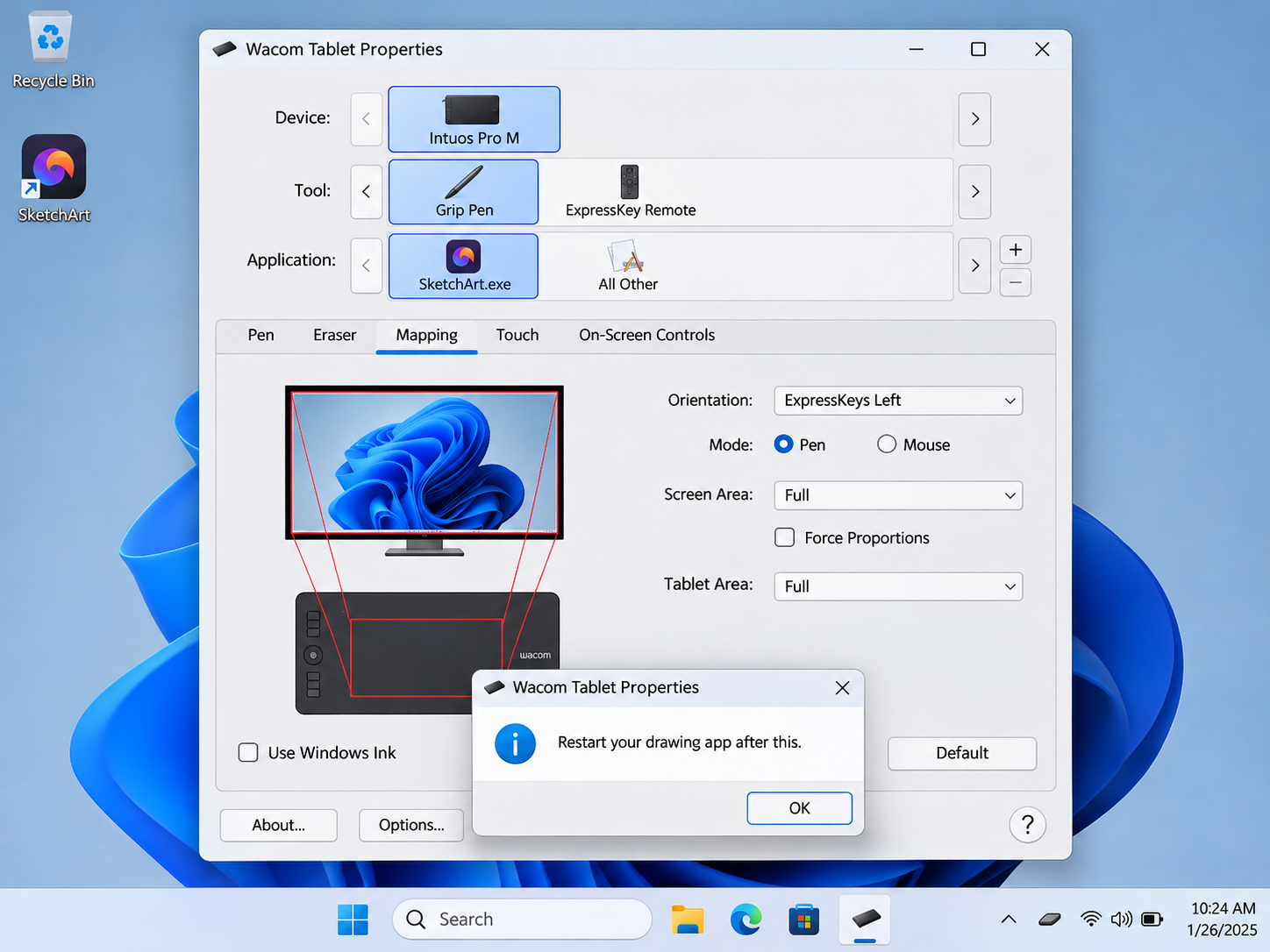
- Restart the drawing app and test a few strokes.
Newer Wacom software may organize these settings differently. If errors started after a Windows update, install the current driver from Wacom before changing anything else.
Use Group Policy on Pro, Enterprise or Education
Microsoft documents an Allow Windows Ink Workspace policy in its Windows Ink Workspace policy reference. Set your expectations first: that page lists it for Windows 10 version 1607 and later and doesn’t mention Windows 11. It may have no visible effect on a Windows 11 PC, and it doesn’t control the handwriting, touch or shortcut settings above. Treat it as an extra step for managed PCs, not the main fix.
Windows 11 Home doesn’t include the Local Group Policy Editor. On other editions, see how to open the Local Group Policy Editor, then:
- Go to Computer Configuration > Administrative Templates > Windows Components > Windows Ink Workspace.
- Double-click Allow Windows Ink Workspace.
- Select Enabled, then under Choose one of the following actions pick the option that turns the workspace off. Microsoft describes that value as “Access to ink workspace is disabled.”
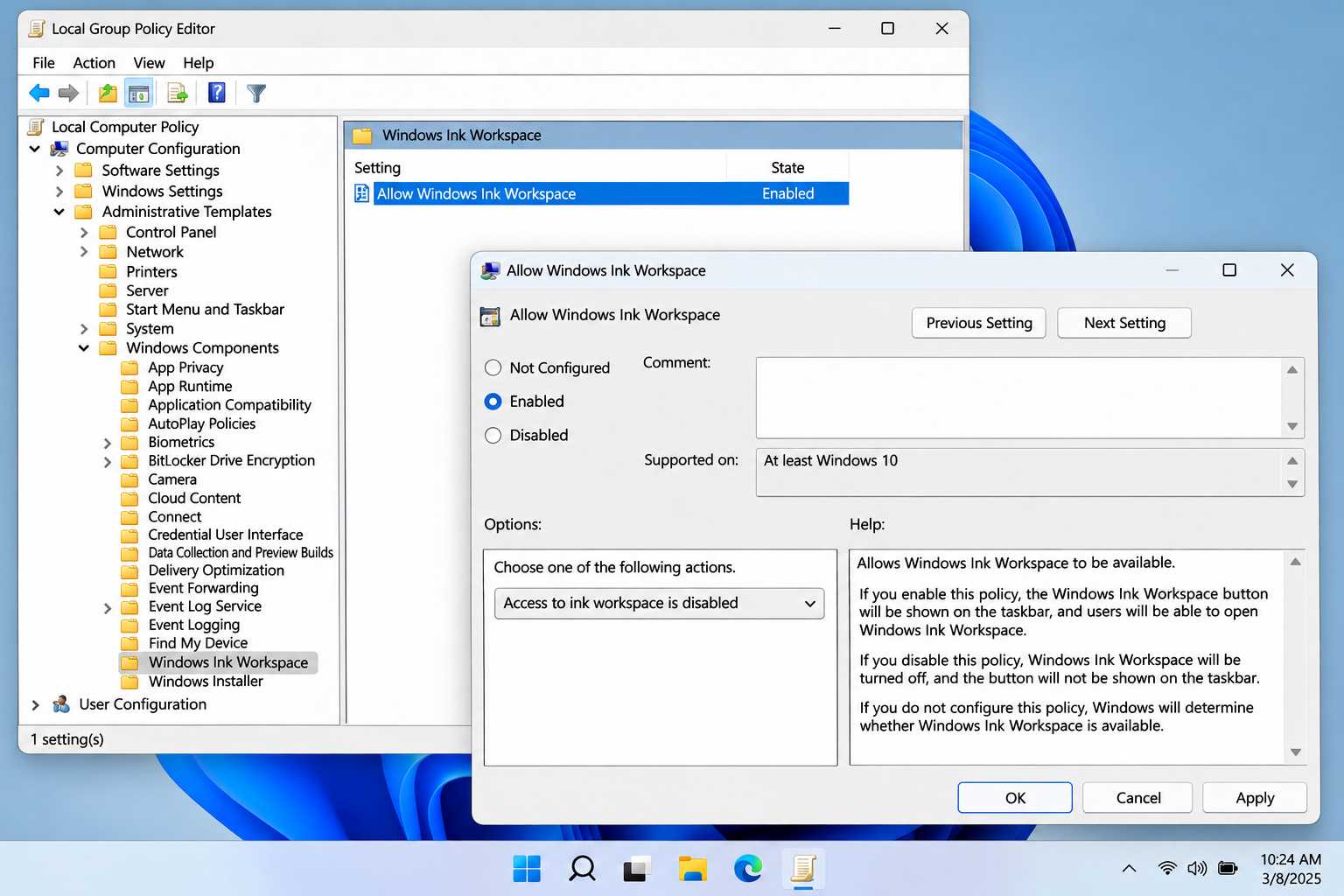
- Select OK and restart the PC.
To undo it, open the same policy and set it to Not Configured.
What About a Registry Edit on Windows 11 Home?
Many tutorials give a registry value for Home users to copy. Microsoft’s policy page names the registry key the policy uses (Software\Policies\Microsoft\WindowsInkWorkspace under the computer settings), but it doesn’t give a value name, and it doesn’t say the setting applies to Windows 11. Without that, a hand-made registry entry is guesswork, so it isn’t listed here. On Home, the Settings options above cover the pen behaviors that actually cause trouble.
Last Resort: Turn Off the Touchscreen
If stray input won’t stop and you never use touch, you can disable the touchscreen itself. On many laptops the pen works through the same screen hardware, so the pen may stop working too. Only do this if you have a mouse or touchpad. Microsoft’s touchscreen enable and disable steps work like this:
- Right-click Start and select Device Manager.
- Expand Human Interface Devices.
- Right-click HID-compliant touch screen and select Disable device. If there’s more than one entry with that name, repeat for each.
To undo it, repeat the steps and choose Enable device. There’s more on turning the touch screen back on in Windows 11 if the entry is hard to find, and on other ways to open Device Manager.
If a Setting Is Missing or the Pen Still Acts Up
- No Pen & Windows Ink page. Windows may not be detecting a pen. If you use a Bluetooth pen, check that Bluetooth is on in Windows 11 and the pen is paired, then reopen Settings.
- An option described here isn’t on your page. Labels and groupings can differ between Windows 11 versions and PC makers. Look for the closest match, and check your PC maker’s pen app.
- Settings are grayed out. On a work or school PC, your organization may manage pen settings. Ask your IT team.
- A drawing app still behaves badly. Check the app’s own pen or tablet setting, and update the tablet driver from the maker.
Windows Ink Questions
Will turning these off make my PC faster or save battery?
Microsoft doesn’t say so, and there’s no published evidence that pen settings affect speed or battery life in a noticeable way. Change them because the pen gets in your way, not for performance.
Will Sticky Notes or OneNote stop working?
No. They’re separate apps and keep running whatever you change here, though disabling the touchscreen can also stop you writing in them with the pen. Putting Sticky Notes on the desktop works the same with a keyboard.
Why didn’t the Group Policy change do anything?
The policy only governs the Ink Workspace, and Microsoft lists it for Windows 10 version 1607 and later and doesn’t mention Windows 11, so it may have no visible effect. It doesn’t touch handwriting, palm rejection or shortcut buttons, which are the usual sources of trouble. Restart after changing it, and use the Settings options for everything else.
How do I get everything back?
Reverse each change: turn handwriting and Pen Menu back on, uncheck the ignore touch option, recheck Windows Ink in the Wacom driver, set the policy to Not Configured and re-enable the touchscreen in Device Manager.
If you only change one thing today, make it the handwriting or ignore touch option, test with your usual app, and work down the table from there.

Matthew Burleigh is the founder, head writer, and editor of Solve Your Tech, which he launched in 2012. He has written technology tutorials since 2008 and worked in IT since 2003, including small-business support, IT management, and consulting. He holds Bachelor’s and Master’s degrees in Computer Science from Arizona State University.
Matthew writes practical guides for Windows, iPhone and iPad, Microsoft Office, Outlook, Google apps, and Android. Solve Your Tech’s guides are checked step by step against the device or app maker’s own documentation and tested on his own devices whenever he has the hardware or software, with clear steps, sources, and update dates.
Read more about Matthew and how Solve Your Tech writes and updates its guides, or report a correction.