Most Windows 10 PCs can’t uninstall Microsoft Edge, because Microsoft treats it as part of Windows. The practical fix is to make another browser your default in Settings > Apps > Default apps. If your PC is in the European Economic Area (EEA) and received Microsoft’s regional change, Microsoft Edge shows an enabled Uninstall button in Settings > Apps > Apps & features.
These steps cover the current Microsoft Edge browser on Windows 10, version 22H2. Microsoft ended standard Windows 10 support on October 14, 2025, and changing browsers doesn’t extend it; see Microsoft’s Windows 10 support guidance for upgrade and Extended Security Updates options. If your computer runs Windows 11, follow the Windows 11 Edge removal steps instead.
Which Option Fits Your Goal?
“Remove Edge” can mean a few different things. Pick the row that matches what bothers you, because most of these problems don’t need an uninstall at all.
| What you want | What to do | Section |
|---|---|---|
| Links and web pages open in another browser | Change the default browser | If You Cannot Uninstall Edge |
| Edge gone from the PC entirely | Uninstall, only if the button is enabled | Uninstall Edge in Windows 10 Settings |
| Edge out of sight | Unpin it from the taskbar and Start | Hide Edge From the Taskbar and Start Menu |
| Edge not opening or running at sign-in | Turn off restart at sign-in and Startup boost | Stop Edge Opening or Preloading at Sign-In |
Check Whether Your PC Allows Edge Removal
Microsoft’s Edge support page says the browser is an essential Windows component that can’t be uninstalled. Windows and many apps rely on web technology that Edge provides, which is why Microsoft keeps it installed and updated. The exception is the EEA: Microsoft’s EU policy announcement says it lets EEA users uninstall Edge to comply with the Digital Markets Act, with Windows 10 changes rolling out after Windows 11.
Check the button on your own PC; living in an EEA country doesn’t mean it will be enabled. Windows updates, the region recorded during device setup, and an organization’s policies can affect eligibility. Microsoft’s rollout guidance says the region used for these changes is chosen during setup; changing the ordinary country setting afterward is not a reliable way to enable removal.
On a work or school computer, ask your administrator before changing managed software. Microsoft’s Edge uninstall policy can block removal on eligible domain-joined PCs. Do not reset Windows or edit system policy files just to expose an uninstall button.
Edge still gets security updates on Windows 10. Microsoft’s supported operating systems page says Edge and the WebView2 Runtime will keep receiving updates on Windows 10 version 22H2 until at least October 2028, and Extended Security Updates aren’t required for that. Leaving Edge installed and updated is not a security risk in itself.
Before You Uninstall Edge
- Set up your replacement browser first. Install it, open a few websites, and sign in to your important accounts.
- Import your bookmarks and passwords. Use the new browser’s import tool and check the results. If you use Edge’s password export feature, delete the CSV file afterward, because it holds readable passwords.
- Check Edge-installed web apps. Sites installed as apps through Edge depend on it, so make sure you can reach them in the new browser.
- Decide what to do with your browsing data. If you want your history gone from this PC as well, clear your history in Microsoft Edge first, or watch for the option to clear browsing data in the uninstaller.
- Close every Edge window. The uninstaller can’t finish while the browser is open.
Uninstall Edge in Windows 10 Settings
Step 1: Open Apps & Features
Press Windows key + I to open Settings. Select Apps, then Apps & features. This is the Windows 10 app list; Windows 11 calls its corresponding page Installed apps.
Step 2: Find the Browser
Search the app list for Microsoft Edge and select its entry. Check that you have selected the browser, rather than Microsoft Edge WebView2 Runtime, which serves a different purpose. Leave Microsoft Edge Update alone too.
Step 3: Check and Select Uninstall
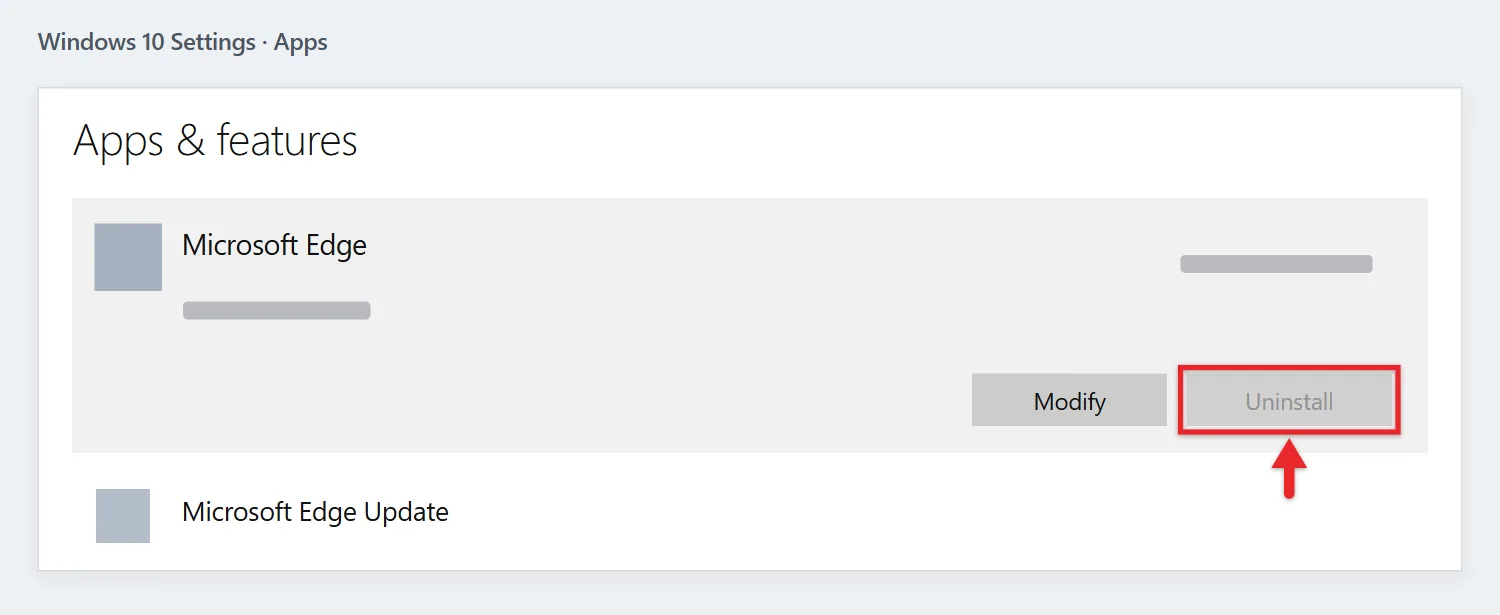
If Uninstall is available, select it and follow the confirmation prompts. Approve an administrator prompt only if this is your computer and you intended the removal. If the control is disabled or absent, stop here and follow the default-browser method below. A grayed-out button means Windows treats Edge as a system component on your PC; it is not a fault you need to fix.
Step 4: Finish the Removal and Check the Result
Complete the uninstaller and restart if it asks you to. Some versions of the uninstaller show an Also clear your browsing data checkbox; select it only if you no longer need the Edge history and saved data on this PC. Return to Apps & features and check that the Microsoft Edge browser entry is gone. Open your replacement browser and verify a website, an important sign-in, and any service you previously used as an Edge-installed app.
Microsoft’s Windows app support tools guide includes the Windows 10 Apps & features route. Using the normal uninstaller also lets you see its current warnings and data options.
If You Cannot Uninstall Edge, Change Your Default Browser
You can use another browser for ordinary web links while leaving Edge installed. This solves the common problem of links opening in the wrong browser without requiring a removal workaround.
Keeping Edge installed also lets you open older sites in Internet Explorer mode when one still requires it.
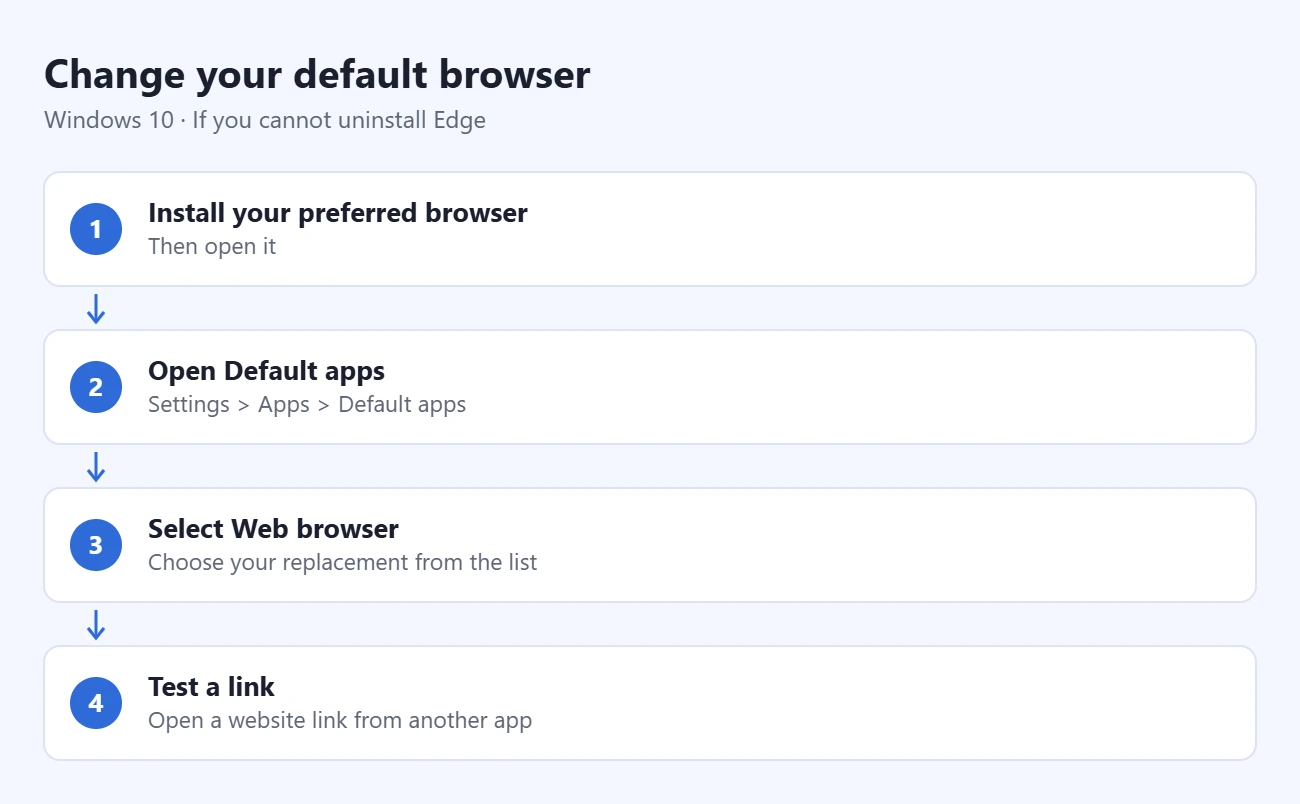
- Install and open your preferred browser.
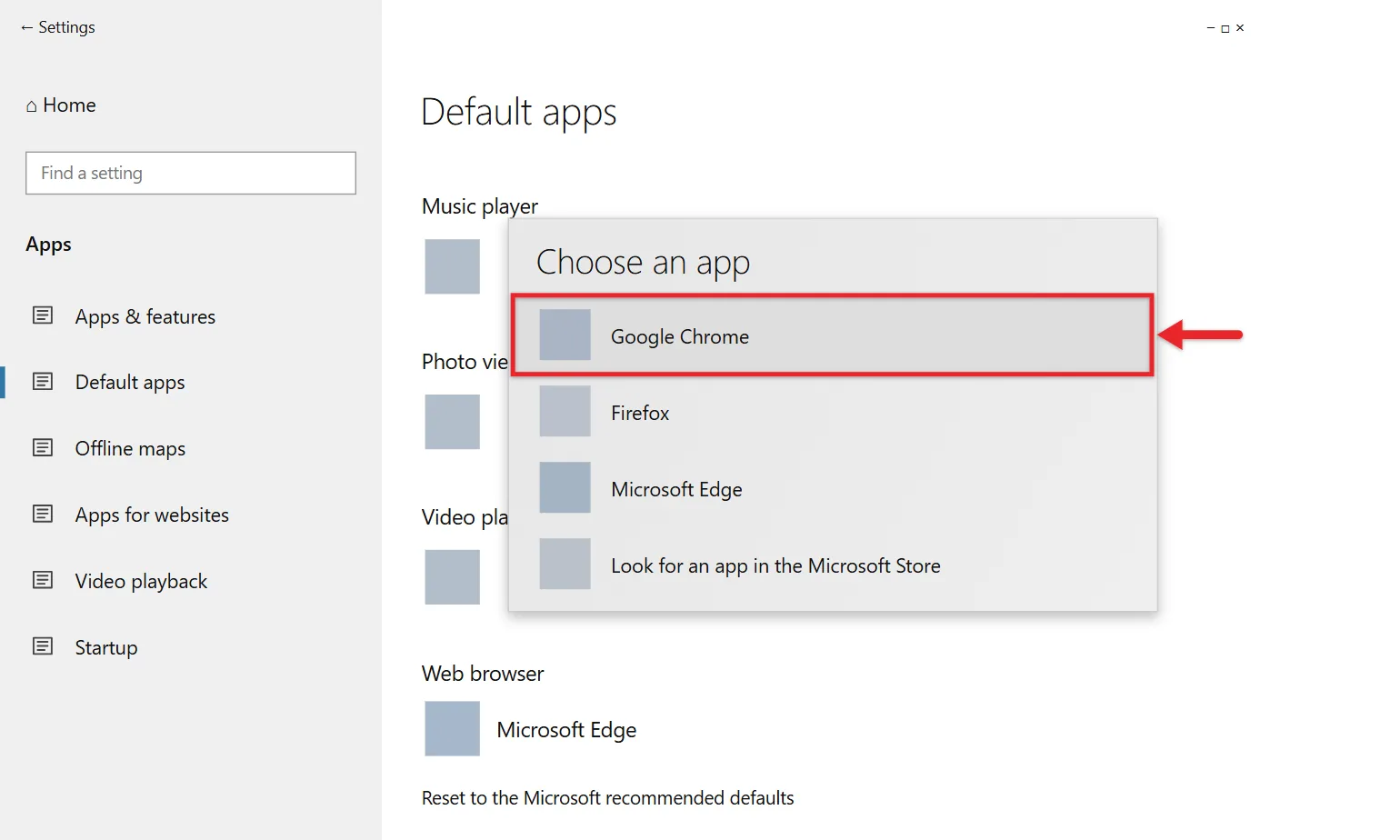
- Open Settings > Apps > Default apps.
- Under Web browser, select the current browser, then choose your replacement from the list.
- Close Settings and open a normal website link from another app to check which browser launches.
A browser that is missing from the list may not be installed correctly, or your organization may control the setting. Open that browser and use its default-browser prompt to return to Windows Settings. Some apps have their own link-opening preferences, so a single app opening Edge does not necessarily mean the Windows setting failed.
On Windows 11, where the Default apps page works differently, follow the steps to change the default browser in Windows 11.
PDF files have a separate association. On Windows 10, use Choose default apps by file type on the Default apps page, find .pdf, and choose your installed PDF reader. Microsoft’s default-apps documentation explains the distinction between application, file, and link defaults.
Web files such as .htm and .html can also stay assigned to Edge. If double-clicking a saved web page opens Edge, change those two entries on the same file-type page. On EEA PCs, Microsoft’s 2025 Digital Markets Act update makes the default browser setting cover more file and link types at once.
Hide Edge From the Taskbar and Start Menu
If you can’t uninstall Edge, you can still keep it out of your way.
- Right-click the Edge icon on the taskbar and select Unpin from taskbar.
- Open Start, right-click the Edge tile or entry, and select Unpin from Start if it appears.
- Delete the Edge shortcut on the desktop if there is one. Deleting a shortcut doesn’t remove the browser.
Edge still appears in the Start menu’s app list and opens if a program asks for it. Pin it back at any time by right-clicking it in the app list.
Stop Edge Opening or Preloading at Sign-In
If you want to keep Edge installed but stop it reopening at sign-in, open Settings > Accounts > Sign-in options and turn off Automatically save my restartable apps and restart them when I sign in. This also affects other restartable apps. Microsoft’s article on stopping Edge from starting automatically has more on this choice. Check the result after your next sign-in.
Background preloading is a separate feature. In Edge, enter edge://settings/system/manageSystem in the address bar, find Startup boost and turn it off. Microsoft’s startup boost guide documents that page and explains the background processes. You can turn it on again there. This does not uninstall Edge or prevent another app or link from opening the browser.
Why We Don’t Recommend Forced Removal
Many guides suggest a command that runs Edge’s setup file with force-uninstall switches, renaming the Edge folder under C:\Windows\SystemApps, PowerShell scripts downloaded from the internet, or third-party “debloat” tools. Microsoft doesn’t support any of these on a PC where the Uninstall button is grayed out. The risks are real:
- Edge often comes back. Windows Update and Edge’s own updater can reinstall it, so the work has to be repeated.
- Other things can break. Apps and Windows features that expect Edge may show errors or stop opening web content.
- Scripts run with full control of your PC. A script or tool from an unknown source can change far more than Edge, and it’s hard to undo.
Changing your default browser gets you nearly all the benefit with none of that risk. If you want Edge gone for good on a PC that doesn’t offer the button, the cleaner long-term answer is a newer version of Windows on supported hardware. To get there, update to Windows 11 from Windows 10.
Troubleshooting
- The Uninstall button is grayed out. This is expected outside the EEA and on PCs that haven’t received the regional change. Use the default-browser steps instead.
- Edge came back after an update. On an EEA PC where you removed it, check Apps & features again and uninstall it the same way. Elsewhere, Edge was never removed; it was only hidden or set aside.
- Links still open in Edge. Check the default browser setting first, then the .htm, .html and .pdf file types. Some links built into Windows, such as web results from the taskbar search box, can still open in Edge outside the EEA.
- You see msedge or WebView2 processes in Task Manager. These can come from Startup boost, from Edge features you left on, or from other apps that use WebView2. Turning off Startup boost stops the browser’s own preloading.
Frequently Asked Questions
Should I Use a Force-Uninstall Command?
No. Old installer commands that force-remove Edge aren’t supported, can break after updates, and may leave Windows components in a bad state. Use the Uninstall button if your PC has it, and otherwise change your default browser.
Does Removing Edge Also Remove WebView2?
No. WebView2 lets other applications display web content and has a separate runtime. Microsoft’s WebView2 FAQ says uninstalling Edge does not stop WebView2 from working. Leave the runtime installed for applications that need it; a WebView2 process afterward doesn’t mean the browser came back.
Why Can’t I Choose Chrome or Firefox in S Mode?
Windows 10 in S mode requires Edge as the default browser and limits app installation. Microsoft’s S mode FAQ explains that switching out is permanent. Consider that tradeoff separately instead of treating it as a routine step in removing Edge.
Is It Safe to Keep Edge Installed if I Never Use It?
Yes. Edge keeps updating on Windows 10 even when it isn’t your default browser, so an unused copy still gets security fixes. To check that it’s current, follow the steps to update Microsoft Edge to the latest version.
Can I Put Edge Back?
Yes. Use another browser to obtain the installer from Microsoft’s Edge download page. Recheck your browser and PDF defaults afterward. Whether old bookmarks or passwords return depends on the local data you retained and your account’s sync settings.

Matthew Burleigh is the founder, head writer, and editor of Solve Your Tech, which he launched in 2012. He has written technology tutorials since 2008 and worked in IT since 2003, including small-business support, IT management, and consulting. He holds Bachelor’s and Master’s degrees in Computer Science from Arizona State University.
Matthew writes practical guides for Windows, iPhone and iPad, Microsoft Office, Outlook, Google apps, and Android. Solve Your Tech’s guides are checked step by step against the device or app maker’s own documentation and tested on his own devices whenever he has the hardware or software, with clear steps, sources, and update dates.
Read more about Matthew and how Solve Your Tech writes and updates its guides, or report a correction.