In most countries you can’t uninstall Microsoft Edge from Windows 11, because Microsoft treats it as part of Windows. The exception is PCs set up in the European Economic Area (EEA), which get a working Uninstall option in Settings > Apps > Installed apps. Everywhere else, set another default browser, stop Edge from running in the background and at sign-in, and unpin it, which keeps Edge out of your way.
This guide covers the current Edge desktop browser on Windows 11 Home and Pro. Using Windows 10? Follow the Windows 10 Edge removal steps instead. Windows 10 reached end of support on October 14, 2025, so moving to Windows 11 is worth planning anyway.
Which Option Fits You?
| What you want | What to do |
|---|---|
| Remove Edge completely, PC set up in the EEA | Uninstall it from Installed apps |
| Use a different browser for links | Change the default browser |
| Stop Edge from using memory when closed | Turn off Startup boost and background apps |
| Stop Edge from opening when you sign in | Change the sign-in and Startup settings |
| Stop PDFs from opening in Edge | Change the .pdf default app |
Most people outside the EEA get everything they want from the last four rows. Edge stays on the drive, but it no longer opens, runs or shows up unless you start it.
Check Whether You Can Uninstall Edge
Microsoft’s page on why Edge can’t be uninstalled calls the default browser an essential part of Windows, because many apps depend on its web platform. Its EEA announcement lists Microsoft Edge among the apps that can be uninstalled in the EEA.
Windows uses the region you chose when you first set up the PC. Microsoft says that region can only be changed by resetting the PC, so changing the country in Settings later won’t unlock the Uninstall button. A missing button can also mean you need Windows updates, or that your organization blocks removal. On a work or school PC, ask your IT department first.
Example: What a US PC Shows
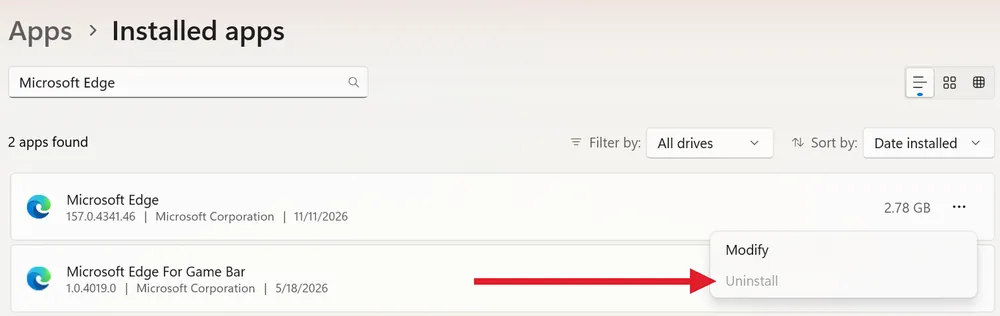
On an Alienware m16 R2 running Windows 11 Home 25H2 set up in the United States, Settings > Apps > Installed apps listed Microsoft Edge version 157.0.4341.46 from Microsoft Corporation, using 2.78 GB. Opening its three-dot menu showed Modify, which works, and Uninstall, which was grayed out.
That grayed-out Uninstall is normal outside the EEA. Modify only opens Edge’s repair option, so it won’t remove the browser either. On a PC like this, the practical steps are the ones below: set another default browser, unpin Edge and turn off its background activity.
Uninstall Edge on an Eligible EEA PC
Set up your new browser first. Install it, import your bookmarks and passwords from Edge (most browsers offer this during setup), and check that they came across. If the uninstaller offers to delete your browsing data, read that option carefully, because deleted data can’t be brought back.
- Press Windows key + I to open Settings.
- Select Apps, then Installed apps.
- Find Microsoft Edge, the browser. Do not select Microsoft Edge WebView2 Runtime. That is a separate component other apps need.
- Select the three-dot menu next to Edge, select Uninstall, and confirm. Select Yes if Windows asks for administrator permission.
- Restart if asked. Check that Edge is gone from Installed apps, and that your new browser and any sites you installed as Edge apps still work.
Microsoft’s 2025 update on these EEA changes says other Microsoft apps won’t prompt you to reinstall Edge after you remove it in the EEA, with a few exceptions for some web apps from the Store. Check those apps before you remove Edge.
If Uninstall is missing or grayed out, your PC is not eligible. Use the settings in the sections below instead.

Illustration: the Edge uninstall menu when removal is unavailable. Your PC may look different.
Why This Guide Skips Scripts and Removal Tools
Many guides suggest forcing Edge out with its setup file, PowerShell package commands, registry edits or downloadable “Edge remover” scripts. Microsoft does not support any of these on a PC where Uninstall is unavailable. They can leave Windows features such as Search, Widgets or help links pointing at a browser that is no longer there, Windows updates can put Edge back, and a tool that also removes WebView2 can break apps like Outlook and Teams. Unknown scripts from the internet are also a security risk. The supported settings below give you nearly the same everyday result without those problems.
Set Another Browser as the Default
- Install and open the browser you want to use.
- Open Settings > Apps > Default apps.
- Search for that browser under Set defaults for applications and select it.
- Select Set default at the top. The text beside the button includes your browser’s name. In the EEA, Windows may also pin the browser to the taskbar unless you clear that checkbox.

- Open an ordinary website link from another app, such as an email, to check that your preferred browser opens.
Microsoft’s change default apps page covers the same Settings path. For more detail on each step, read about changing the default browser in Windows 11. Some apps have their own link settings, so one app opening Edge does not mean the Windows setting failed.
Switching to Chrome? Here is how to make Google Chrome the default browser in Windows 11, including Outlook and Teams links.
Unpin Edge
Unpinning Edge only removes a shortcut. Right-click its taskbar icon and choose Unpin from taskbar, or right-click its pinned Start menu item and choose Unpin from Start. You can still open Edge from Start search if you need it.
Turn Off Edge’s Background Activity
- Open Edge. Type edge://settings/system/manageSystem in its address bar and press Enter. This opens the system settings described in Microsoft’s Startup boost guide.
- Turn off Startup boost.
- Turn off Continue running background extensions and apps when Microsoft Edge is closed. If you don’t see it, search Edge settings for “background.”
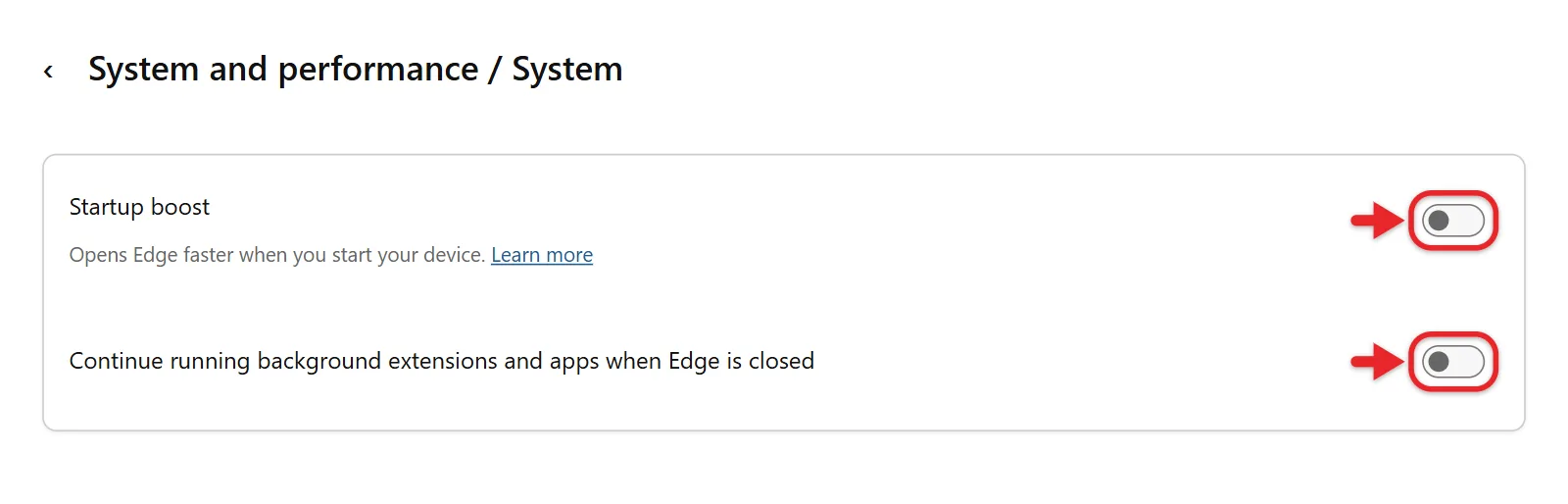
- Close every Edge window. The changes stay in place until you turn the switches back on.
Startup boost keeps a few Edge processes running so Edge opens faster. With it off, Edge takes a little longer to open the first time. Background mode keeps Edge web apps and some extensions running after you close the last window, so those stop when you turn it off. Microsoft’s background mode documentation explains this. If a switch is grayed out, your organization manages Edge.
These settings stop Edge from running in the background. They don’t uninstall Edge or stop other apps from opening it.
Stop Edge From Opening at Sign-In
The restartable apps setting affects other apps too. Use it if Windows reopens Edge from your last session:
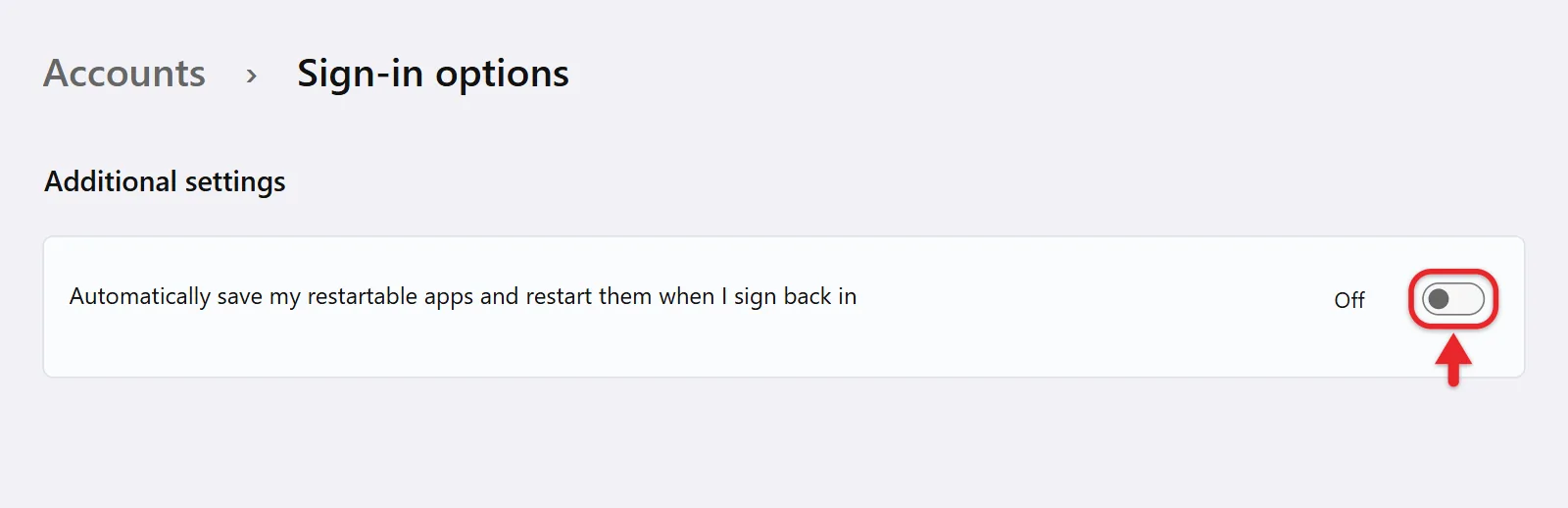
- Open Settings > Accounts > Sign-in options.
- Turn off Automatically save my restartable apps and restart them when I sign in.
- Open Settings > Apps > Startup. If Microsoft Edge is listed, turn its switch off. You can also use the Startup apps page in Task Manager (Ctrl + Shift + Esc).
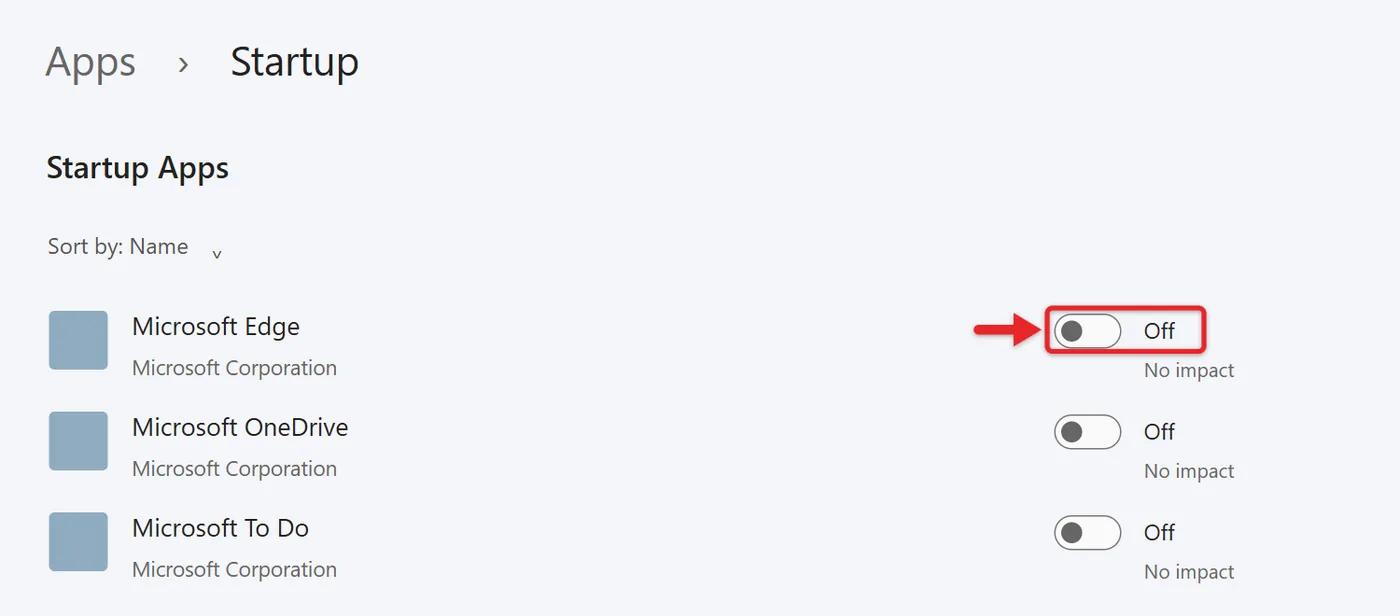
- Close Edge, then sign out and back in. If Edge still opens, check whether a startup shortcut or another app is launching it.
For the first setting, Microsoft has a guide to stopping Edge from starting automatically. Its startup apps guide explains why not every app appears in the Startup list. Turn the same switches back on to undo these changes.
Stop PDFs From Opening in Edge
PDF files have their own default app setting, so changing your browser may leave Edge in charge of them:
- Open Settings > Apps > Default apps.
- Type .pdf in the file type search box and select the result.
- Select the current app, choose your PDF reader or preferred browser, and select Set default.
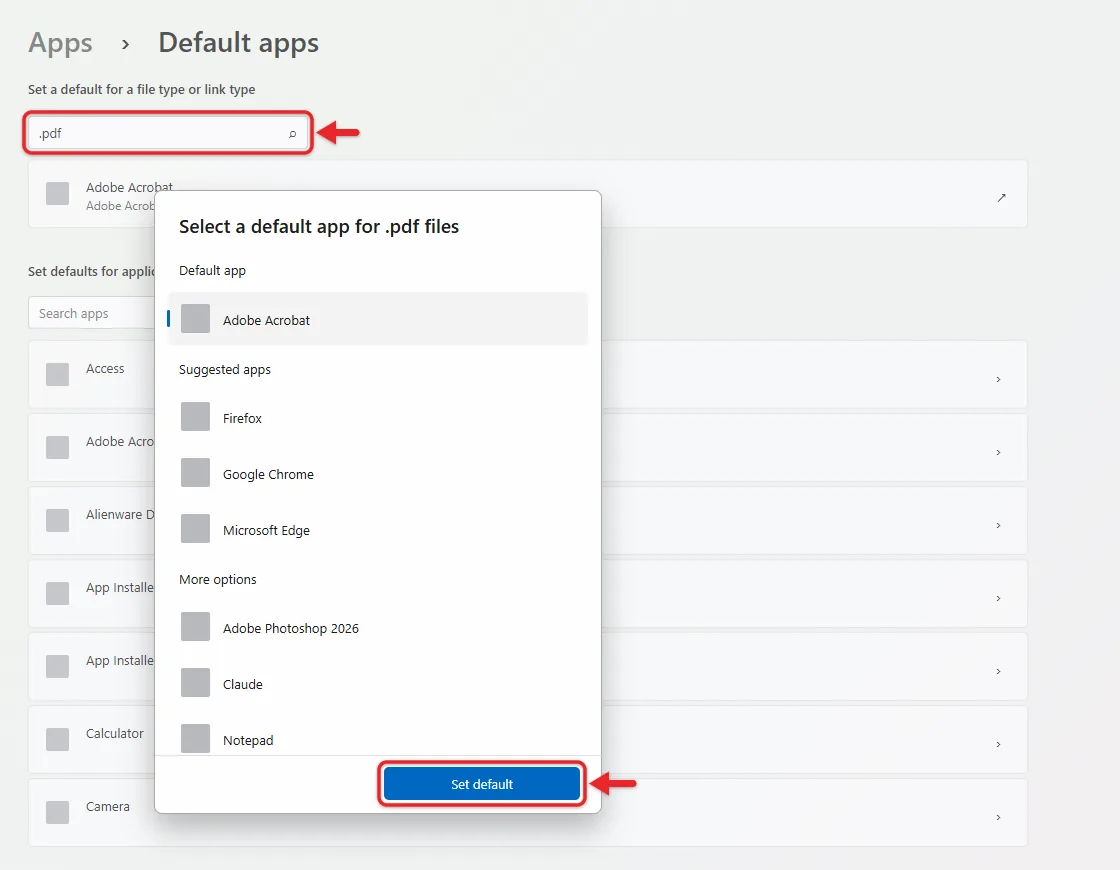
- Open a PDF from File Explorer to check that it opens in the new app.
For other file types, change file associations in Windows 11.
If Edge Keeps Showing Up
- Some links still open in Edge. Outlook and Teams have their own browser setting, covered in the Chrome guide above. Some Windows features, such as web results in Search or stories in Widgets, may open Edge depending on your region.
- Edge asks to be your default again. Decline the prompt and keep your current browser. In the EEA, Edge only asks when you open it directly, for example from its taskbar icon.
- Edge opens after an update. If Edge opens a welcome or setup page, close it, then check that your default browser and PDF settings stayed the same.
- You see Edge processes in Task Manager with Edge closed. Recheck the background settings above. Processes named msedgewebview2.exe belong to WebView2, explained below.
Edge Removal Questions
Why Do I Still See WebView2 Processes?
WebView2 is a separate component that apps use to show web content. Microsoft’s WebView2 FAQ says Edge can be uninstalled without causing a problem for WebView2, and that each app using it runs its own msedgewebview2.exe processes. Seeing them does not mean the Edge browser came back. Leave the runtime installed for the apps that need it.
Can I Rename Edge’s Folder or Deny Access to It?
No. Those tricks come from old guides for the legacy version of Edge. Changing ownership or permissions on system files can break other software and Windows features. Use the uninstall option if your PC has it, or the settings in this guide.
Does Removing Edge Free Up Much Space?
Less than you might expect. The Edge installer links Edge and WebView2 to avoid using extra disk space, and WebView2 stays installed after Edge is removed. If you need space, check the storage options in Windows Settings first.
Can I Reinstall Edge or Keep It With Google Search?
Yes. Download it from Microsoft’s Edge download page if you removed it, then check your browser and PDF defaults again. If you keep Edge, you can set Google as its search engine without changing which browser Windows opens. Keep updating Edge for security fixes, even if you rarely use it. If you removed Edge and want it back, the full walkthrough is in how to reinstall Microsoft Edge.

Matthew Burleigh is the founder, head writer, and editor of Solve Your Tech, which he launched in 2012. He has written technology tutorials since 2008 and worked in IT since 2003, including small-business support, IT management, and consulting. He holds Bachelor’s and Master’s degrees in Computer Science from Arizona State University.
Matthew writes practical guides for Windows, iPhone and iPad, Microsoft Office, Outlook, Google apps, and Android. Solve Your Tech’s guides are checked step by step against the device or app maker’s own documentation and tested on his own devices whenever he has the hardware or software, with clear steps, sources, and update dates.
Read more about Matthew and how Solve Your Tech writes and updates its guides, or report a correction.