To print multiple files at once in Windows 11, open File Explorer, select up to 15 files, right-click them, click Show more options, and choose Print. Each file prints to your default printer, one after another.
These steps work on current Windows 11 releases. Windows 10 uses the same method, except that Print appears in the first right-click menu, so there is no Show more options step.
Windows opens each file in its default app, sends it to the printer, and moves on to the next one, so you do not have to open and print every file yourself. It works best with files of the same type, like a folder of PDFs or Word documents.
Set the Right Default Printer
- Set the right default printer. Files printed this way go to your default printer without asking. In Settings > Bluetooth & devices > Printers & scanners, turn off Let Windows manage my default printer, select your printer, and select Set as default. Microsoft explains this in Set a default printer in Windows, and we cover it in how to set a default printer in Windows 11.
- Set printer defaults for the whole batch. File Explorer doesn’t show a print dialog for documents, so each file uses the printer’s default settings. To print everything double-sided or in black and white, select your printer in Printers & scanners, open Printing preferences, change the setting, and select OK.
- Put the files in one folder. You can only select files together when they are in the same folder.
- Name the files in order if order matters. Add number prefixes such as 01, 02 and 03, then sort the folder by Name.
- Check paper and ink or toner so a long batch doesn’t stop halfway.
How to Print Multiple Files From File Explorer
- Open File Explorer (press Windows key + E) and go to the folder with your files.
- Hold Ctrl and click each file you want to print. To pick a group in a row, click the first file, hold Shift, and click the last one. Press Ctrl + A to select everything in the folder. The status bar at the bottom shows how many items are selected.
- Right-click one of the selected files. A short menu opens.
- Click Show more options. The full menu opens. You can also press Shift + F10 to open the full menu directly.
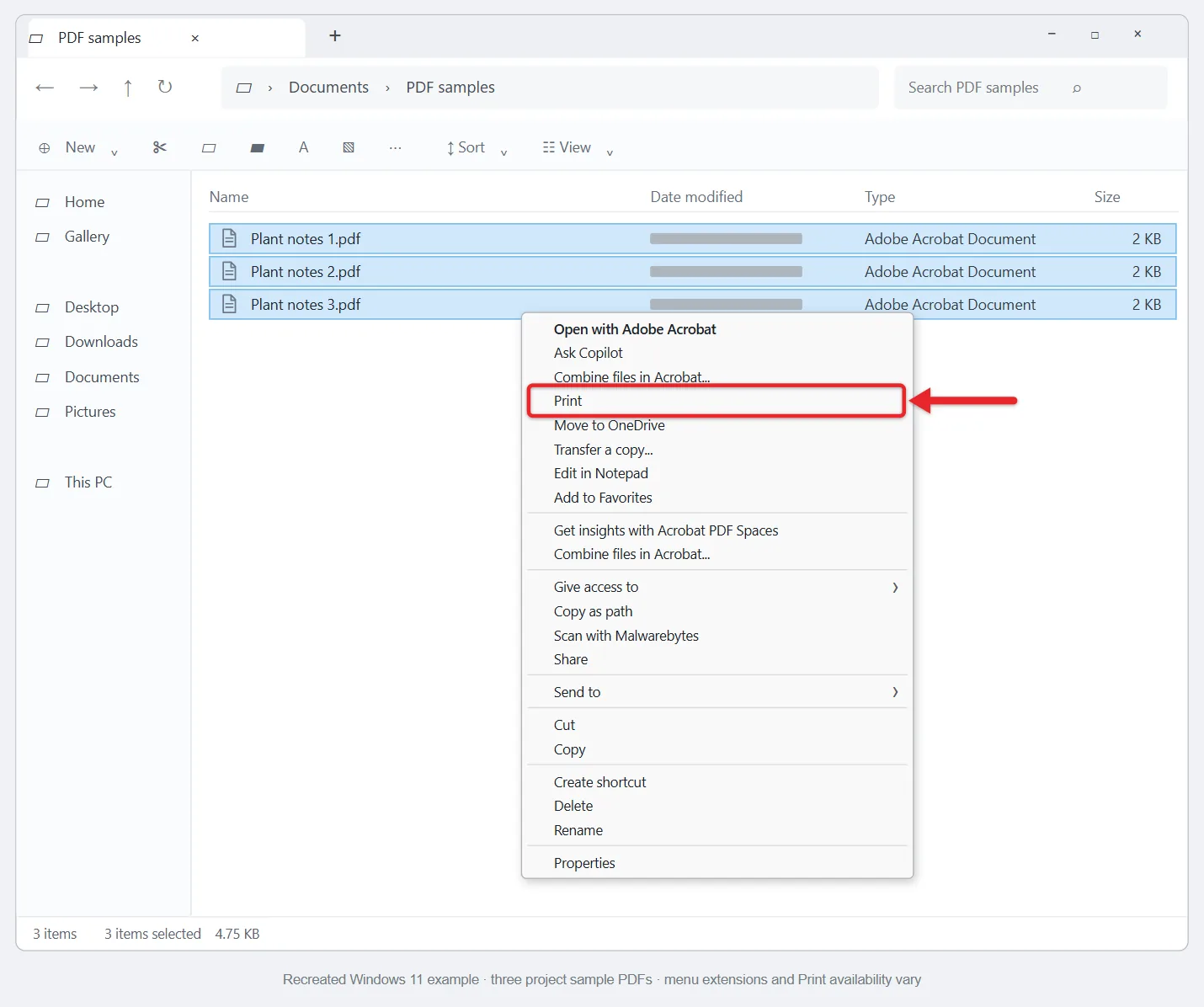
- Click Print. Each file briefly opens in its app and goes to the printer queue.
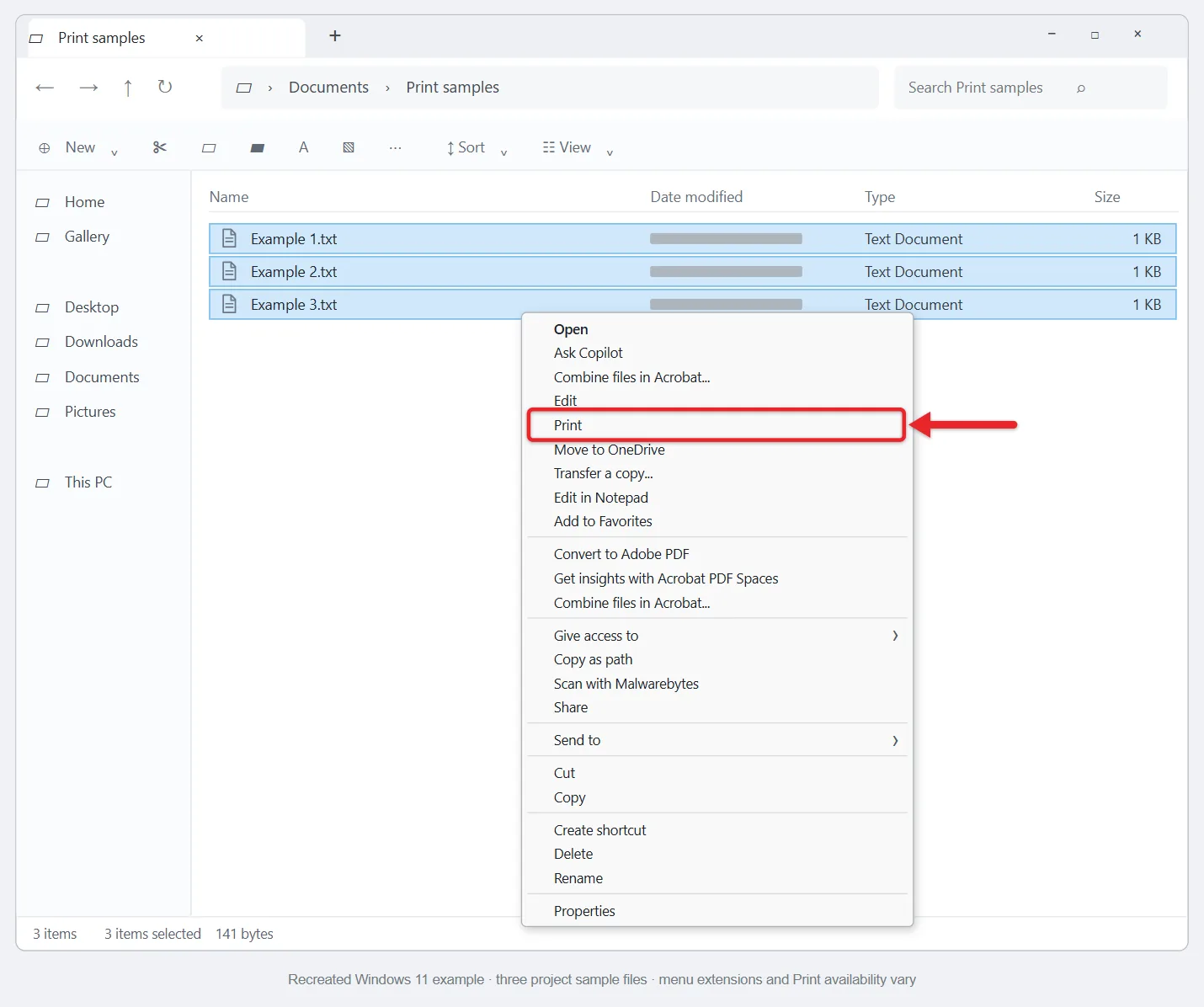
Some apps, such as Word, may stay open after printing. Close them once the pages are done. If a print dialog appears for a file, choose your settings and select Print to let the batch continue.
To confirm everything was sent, open the print queue (covered below). Each file shows as its own job.
Why Is Print Missing From the Menu?
You selected more than 15 files
Open, Print, and Edit are hidden on purpose when you select more than 15 files, so you do not print a huge batch by mistake. Select 15 or fewer and try again, then do the next batch. The PowerShell method below has no such limit.
If you print large batches often, a registry value can raise the limit. Editing the registry incorrectly can cause problems, so back it up first and only change this one value.
- Press Windows key + R, type regedit, and press Enter. Select Yes if asked.
- Go to HKEY_CURRENT_USER\Software\Microsoft\Windows\CurrentVersion\Explorer.
- Right-click Explorer, and choose New > DWORD (32-bit) Value.
- Name it MultipleInvokePromptMinimum and press Enter.
- Double-click it, select Decimal, enter a number larger than the number of files you want to print at once, such as 30, and select OK.
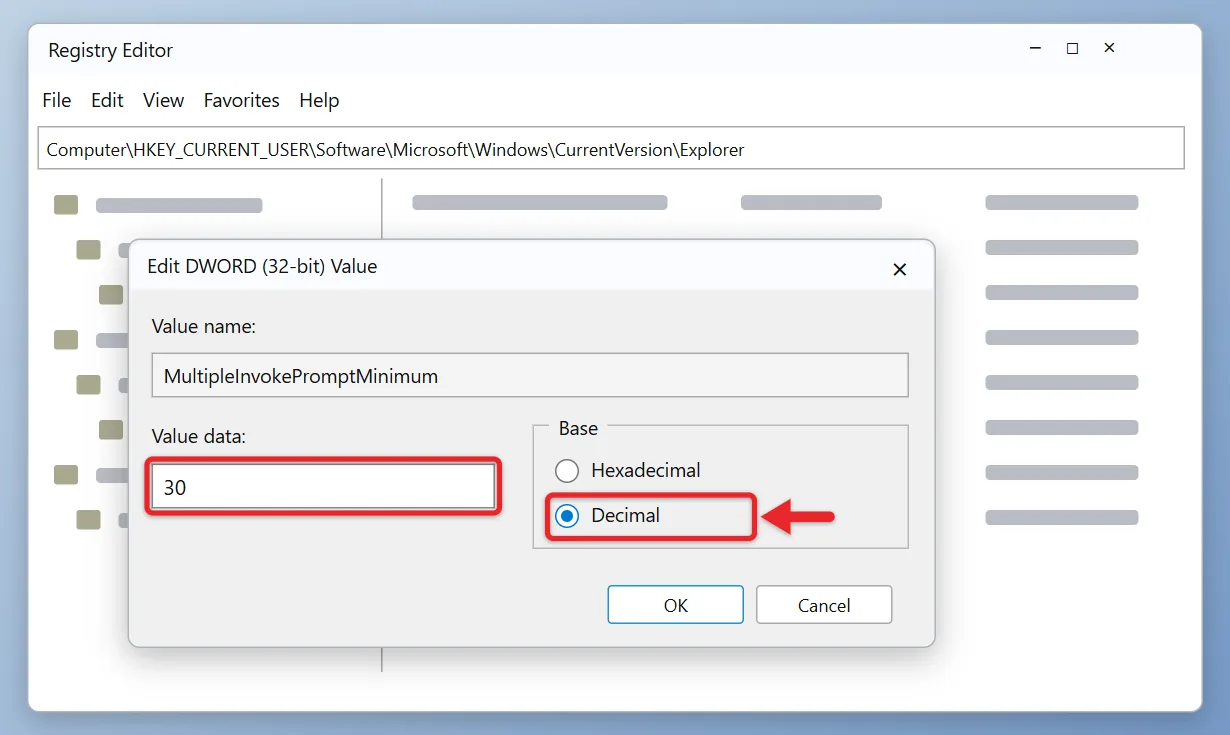
- Sign out and back in, or restart your PC. Print now appears for up to that many files.
Keep the number reasonable. To undo the change, delete the value and sign out again.
The file type’s app can’t print from File Explorer
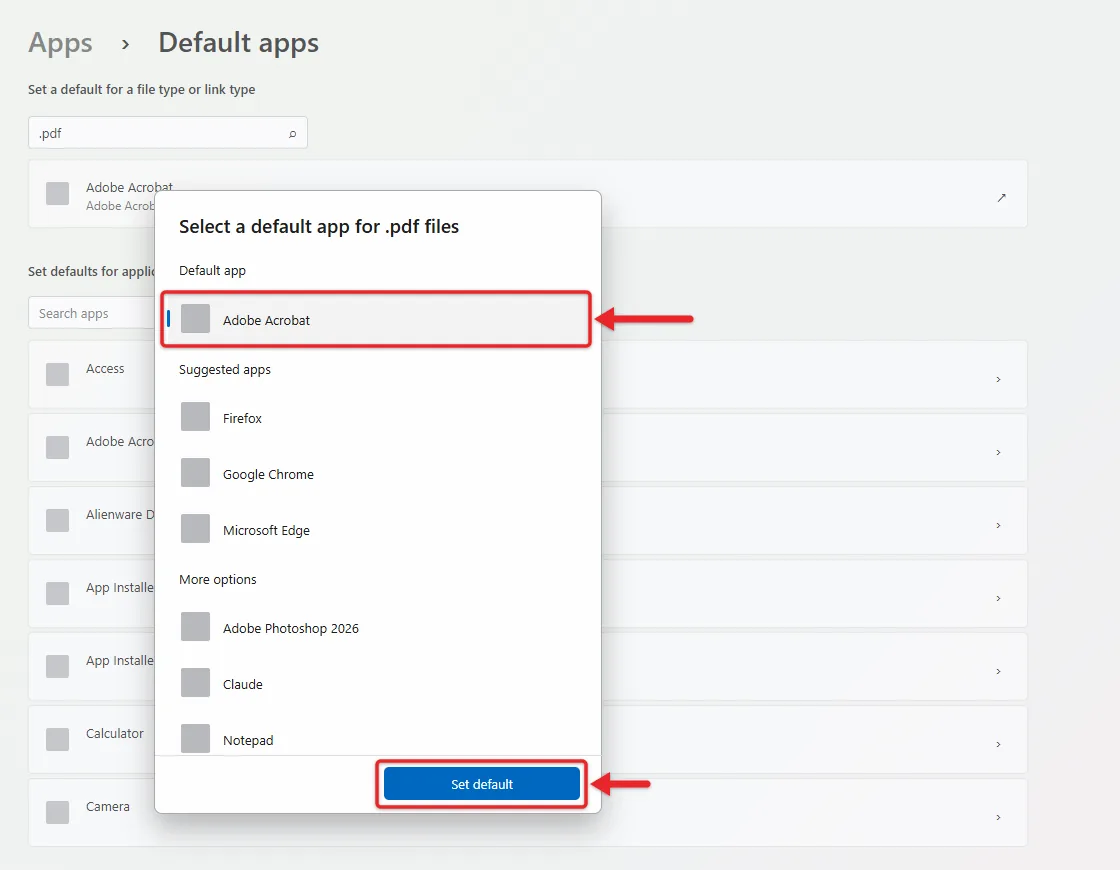
Print only appears when the default app for that file type supports printing from the right-click menu. Some users report that Print is missing for PDFs when Microsoft Edge is the default PDF viewer. To fix it, change the default app:
- Open Settings > Apps > Default apps.
- Search for the file type, such as .pdf, and select it.
- Choose a PDF app that is installed on your PC, such as Adobe Acrobat Reader.
You can also open the files in their app and print them from there.
How to Print Several Photos at Once
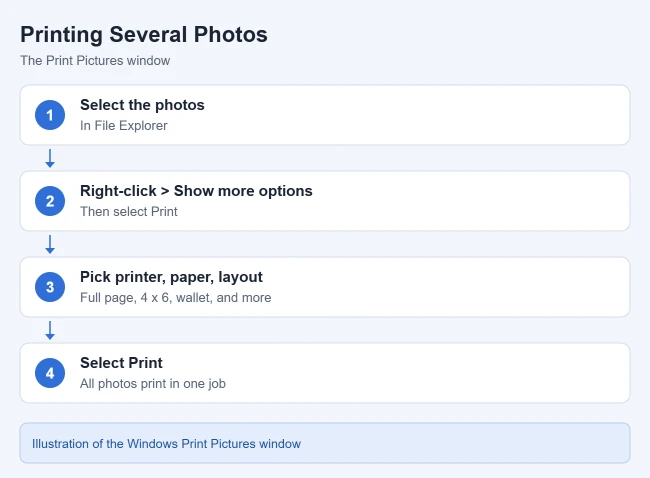
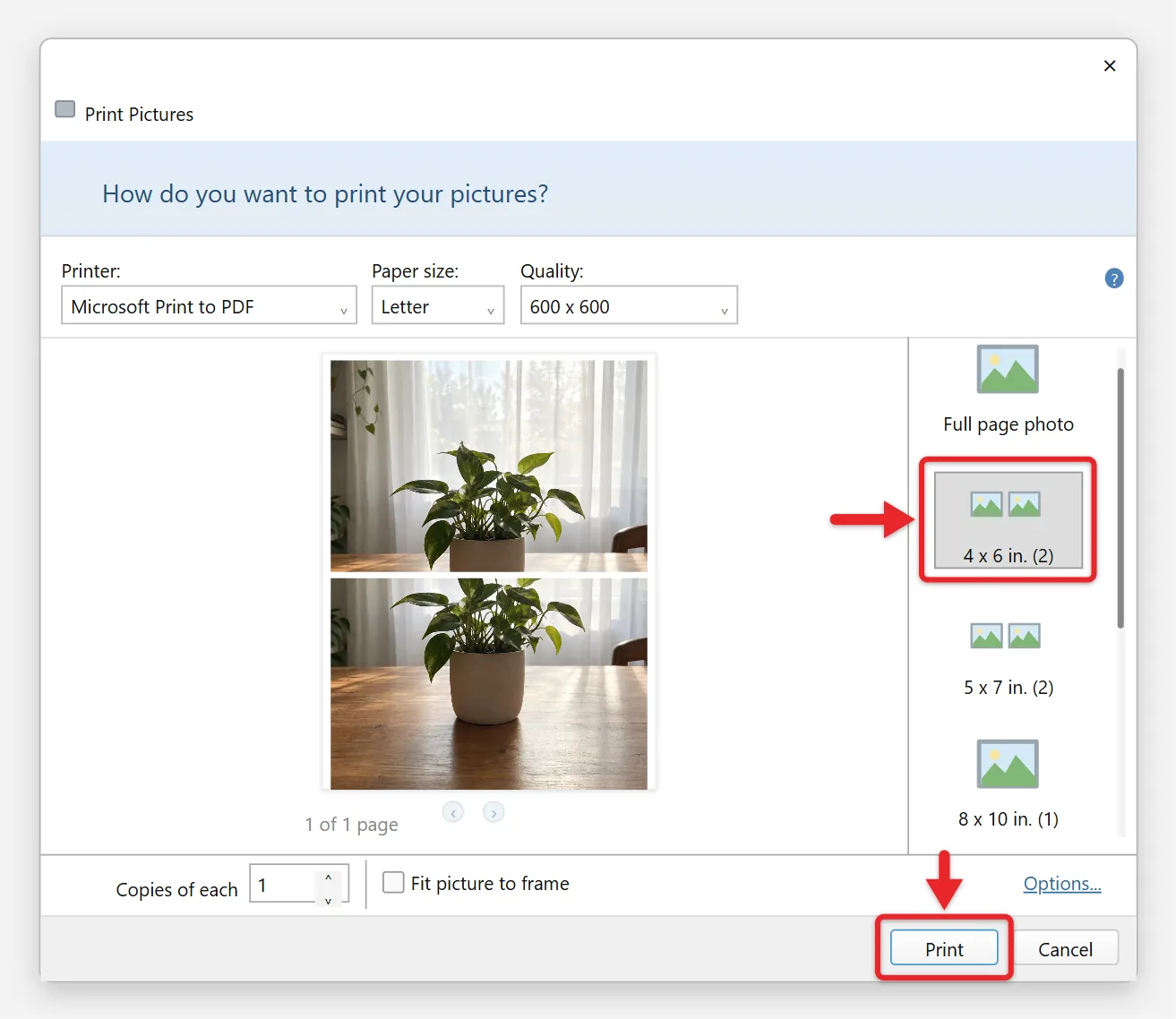
Pictures work a little differently. When you select several photos, right-click, choose Show more options, and select Print, Windows opens a single Print Pictures window instead of printing each file separately. Choose the printer, paper size, quality, and a layout such as full page or several photos per sheet, set the number of copies, and select Print. All the photos go out as one job. Clear the Fit picture to frame box if you don’t want Windows to crop the edges of each photo to fill the layout.
How to Print More Than 15 Files With PowerShell
PowerShell can send every file of one type in a folder to its app’s print command, with no 15-file limit. It uses the same default printer and default settings as File Explorer. The print option is part of PowerShell’s Start-Process cmdlet.
- Open the folder in File Explorer, click the address bar, type powershell, and press Enter. PowerShell opens in that folder.
- Type
Get-ChildItem *.pdf | ForEach-Object { Start-Process -FilePath $_.FullName -Verb Print; Start-Sleep -Seconds 3 }and press Enter. Change .pdf to the type you want, such as .docx.
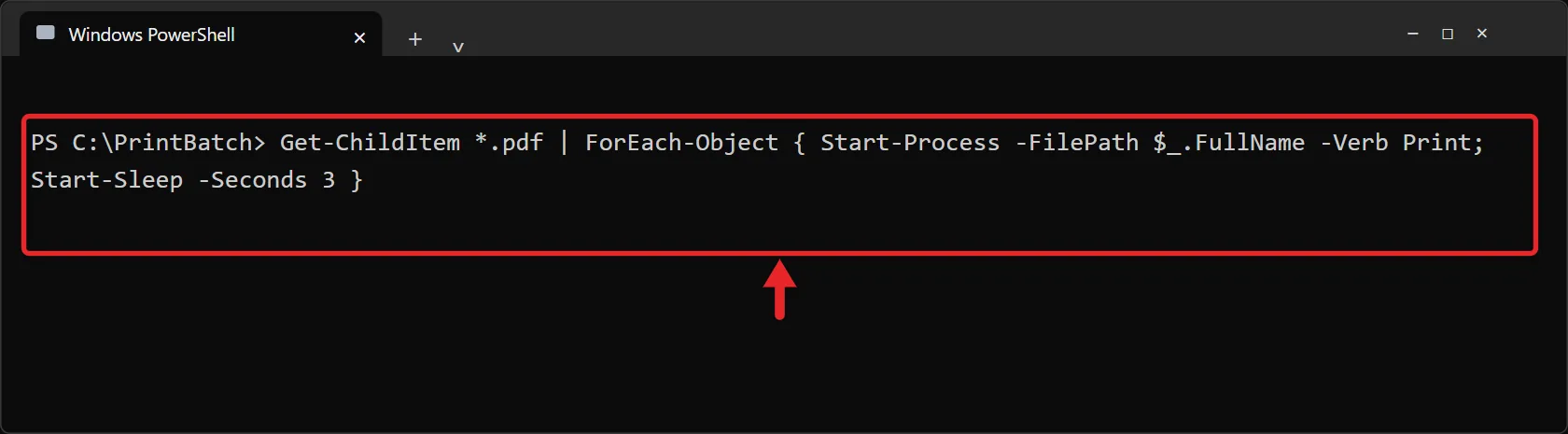
- Wait while each file opens and prints. The three-second pause gives each app time to open before the next file starts.
If you see an error that no application is associated with the operation, that file type’s app doesn’t support printing this way. Use its app or a combined PDF instead.
How to Check or Cancel the Print Jobs
- Open Settings > Bluetooth & devices > Printers & scanners.
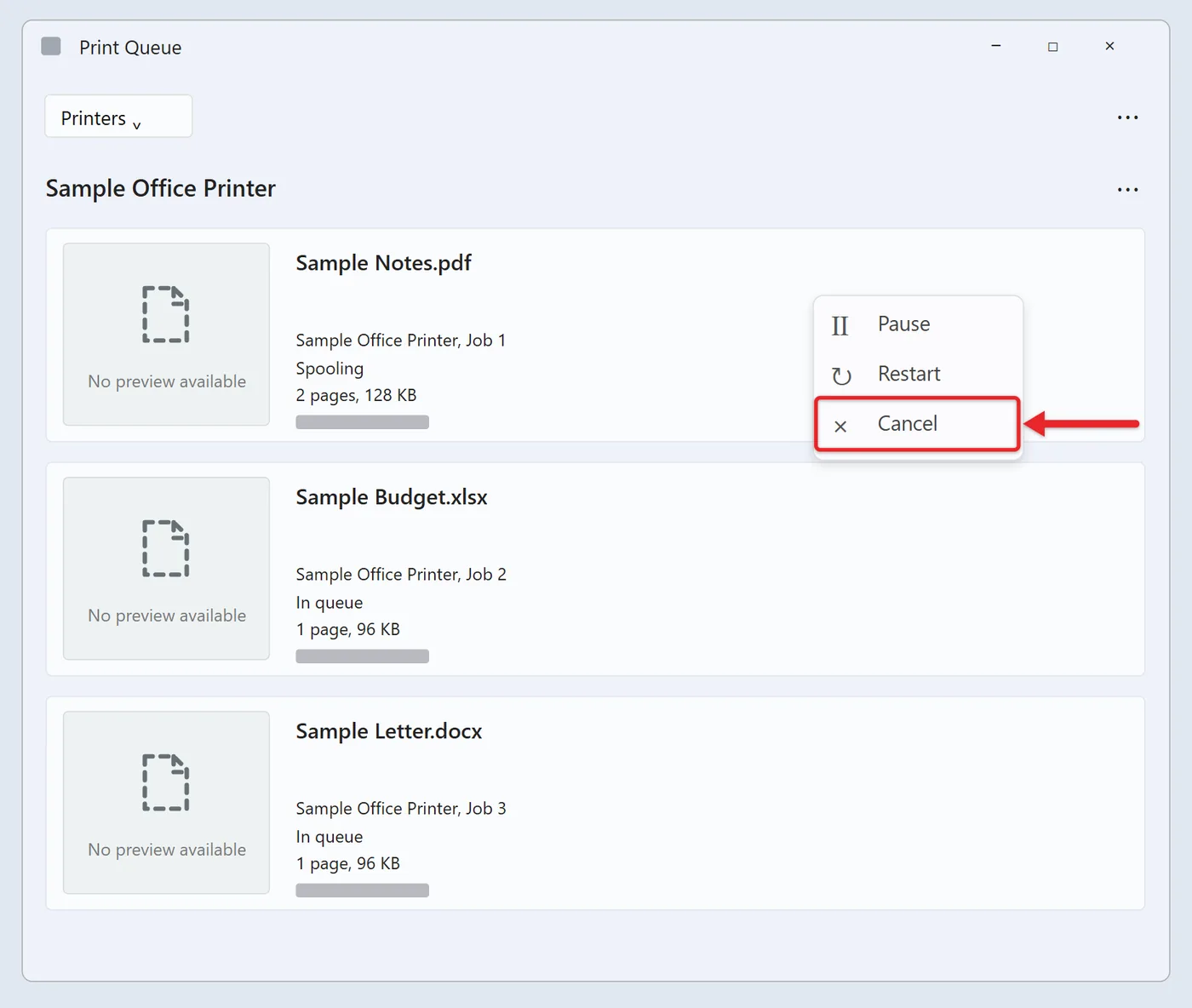
- Select your printer, then Open print queue.
- To stop a file, right-click it and select Cancel. To stop the whole batch, select the three dots and choose Cancel all.
Other Ways to Print Many Files
- Combine PDFs first. Merging several PDFs into one file in a PDF app lets you print them as a single job, in a fixed order, with one set of print settings. It also makes it easy to find where a paper jam interrupted the batch.
- Print from the app. Some apps can open several files at once; you can then print each from its window with your chosen settings, such as page ranges or different copy counts.
- Batch printing apps. Third-party tools can queue mixed file types with different settings for each file. Download them only from the developer’s own site.
To hold a large batch until after hours, you can set an available time for the printer so Windows releases the jobs only during that window.
When Files Print in the Wrong Order
- Files print in the wrong order. Windows sends them in sequence, but a small file can finish before a large one sent earlier. Use numbered file names and print in smaller batches, or combine PDFs into one file.
- Nothing prints. Check that the printer is on and set as the default, and look in the print queue for errors. If it still won’t print, update your printer driver.
- Jobs are stuck. If jobs sit in the queue and won’t cancel, read about clearing a stuck printer queue in Windows 11.
- The PC slows down. Each file opens its app, so a large batch can use a lot of memory. Print 10 to 15 files at a time.
Batch Printing Questions
Can I print different file types at once?
Yes, but each type opens in its own app to print, which can be slow. Printing one type at a time usually works better.
Can I choose double-sided printing for the whole batch?
Not from File Explorer. Set double-sided printing as the default in the printer’s Printing preferences first, and every file will use it. Change it back afterward if you usually print single-sided.
How many files can I print at once?
Up to 15 from the File Explorer menu. For more, raise the limit with the registry value above or use the PowerShell method, and print in batches your printer and PC can handle.
How do I print from my phone?
On an iPhone, read about printing from an iPhone with AirPrint.
If a Word file comes out smaller than it should, see why your Word document is printing so small.

Matthew Burleigh is the founder, head writer, and editor of Solve Your Tech, which he launched in 2012. He has written technology tutorials since 2008 and worked in IT since 2003, including small-business support, IT management, and consulting. He holds Bachelor’s and Master’s degrees in Computer Science from Arizona State University.
Matthew writes practical guides for Windows, iPhone and iPad, Microsoft Office, Outlook, Google apps, and Android. Solve Your Tech’s guides are checked step by step against the device or app maker’s own documentation and tested on his own devices whenever he has the hardware or software, with clear steps, sources, and update dates.
Read more about Matthew and how Solve Your Tech writes and updates its guides, or report a correction.