To make an iPad louder, raise the volume while audio is playing, turn off any Volume Limit or Reduce Loud Sounds setting in Settings > Sounds, and uncover the speakers. If it is still too quiet, play the sound through a Bluetooth or AirPlay speaker.
The iPad is propped on the kitchen counter for a recipe video, the fan is running, and even at full volume you can barely hear it. Usually a setting is holding it back.
Why an iPad Sounds Quiet at Full Volume
A quiet iPad almost always comes down to one of four things, and it helps to know which one you are dealing with before changing settings at random.
- The wrong volume is going up. An iPad has two main volume levels: media volume (videos, music, podcasts, games) and ringer and alert volume (FaceTime calls, alarms, notifications). The buttons change whichever one applies at that moment.
- A limit is switched on. Volume Limit, Reduce Loud Sounds, Reduce Loud Audio for headphones, or a Screen Time restriction can each stop the volume short of the real maximum, even when the slider looks full.
- Something is in the way. A case, a keyboard cover, a screen film, a hand, or lint in the speaker openings can muffle the sound.
- The speakers have hit their ceiling. The built-in speakers are small. Once every limit is off and nothing blocks them, no setting can push them past what the hardware does. At that point the real fix is a louder output device.
Work through the sections in order. The first three cost nothing and fix most cases.
Use the Right Volume Control
Apple’s guide to adjusting the volume on iPad explains the rule that trips most people up: while audio or video is playing, the volume buttons control the media volume. When nothing is playing, the same buttons change the ringer and alert volume. If you press volume up before you start the recipe video, you may only be raising your notification sounds.
Turn Up Media Volume With the Buttons
- Start playing the video, song or game you want to hear. Leave it playing.
- Press the volume up button repeatedly. The button’s location depends on the model (on the top edge or the side). A volume indicator appears on screen as it rises.
- Keep pressing until the indicator stops moving. That is the maximum the current settings allow.
Use the Control Center Slider
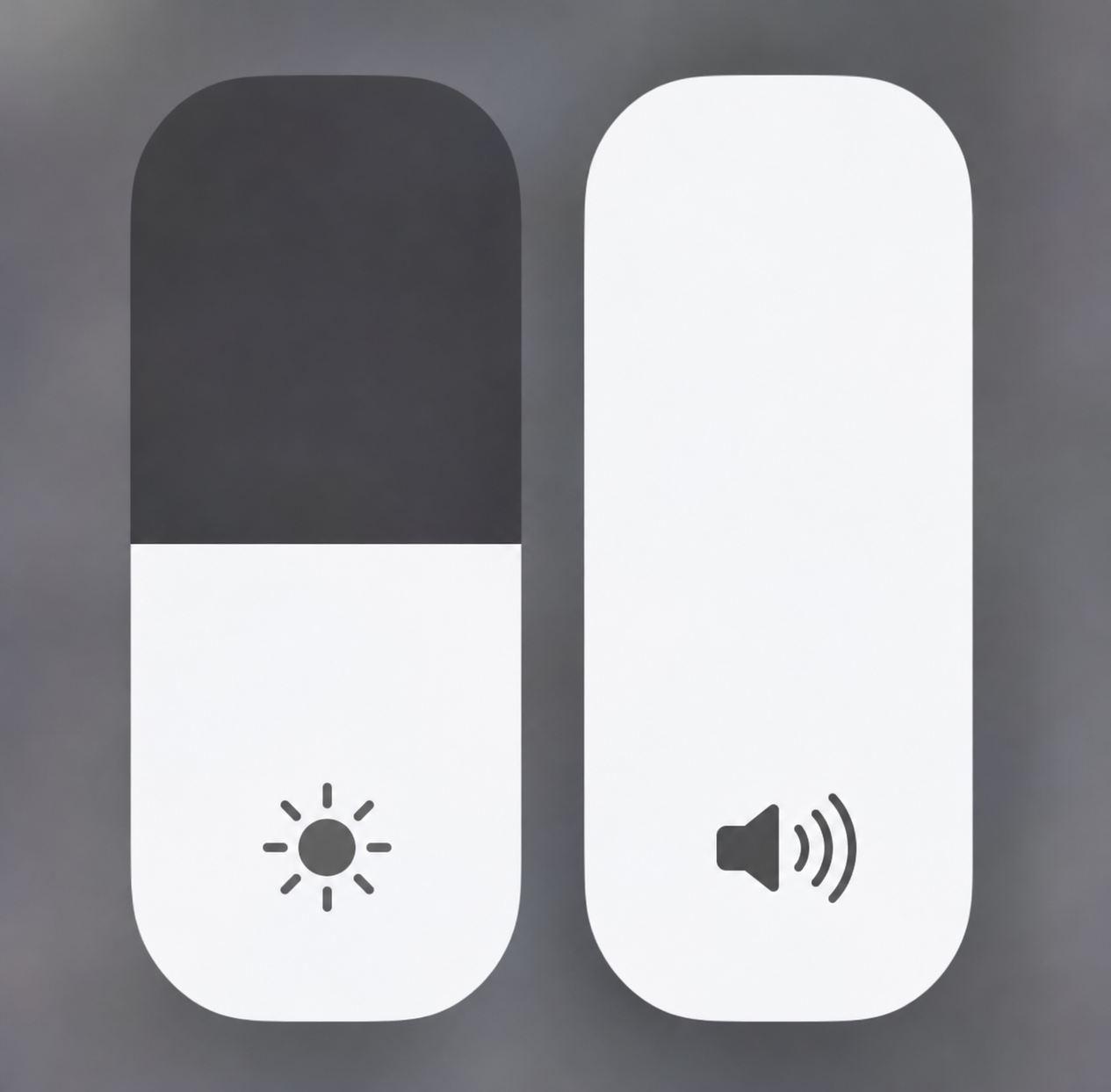
- Open Control Center by swiping down from the top right corner of the screen.
- Find the volume slider (it has a speaker icon).
- Drag it all the way up. With media playing, this slider controls the playback volume.
You can also ask Siri to “Turn up the volume” while audio plays. That is handy when your hands are covered in flour.
Check the App’s Own Volume
Many video and music apps have their own volume control or a mute button inside the player, separate from the iPad’s volume. If the iPad is at full volume but one app is still quiet, tap the screen during playback and look for a speaker icon or slider in the player controls. Also check that the video itself isn’t simply recorded quietly: try a different video in the same app to compare.
Make the Buttons Change the Ringer Too
The ringer and alert volume lives in Settings > Sounds. Apple’s page on changing iPad sounds describes a slider for ringtone and alert volume and a Change with Buttons switch. With Change with Buttons on, the volume buttons can adjust ringer and alerts when nothing is playing. With it off, the buttons only change media volume, and the ringer stays at whatever level you set with the slider. Apple also lets you turn off Match Ringtone Volume for Alarms and Timers or for Alerts and System Sounds, so you can give them separate, louder sliders.
This slider does not raise video or music volume. If your problem is a quiet movie, leave this screen and move on to the volume limits below.
Turn Off Silent Mode and Do Not Disturb
According to Apple, Silent mode does not mute music, podcasts, movies or TV shows. It silences ringtones, alerts and system sounds, but alarms and timers still play. So if alerts or FaceTime calls are what you can’t hear, Silent mode is a likely cause. To turn it off, open Control Center and tap the Silent mode button, or press and hold the volume down button, which Apple lists as another way to switch it. Settings > Sounds also has a Silent Mode switch on many versions.
Do Not Disturb and other Focus modes can hide notification sounds too. Open Control Center, tap Focus, and turn off any Focus that is on. Neither setting explains a quiet movie, and Apple says alarms and timers still play in Silent mode, but they do explain missed alert and notification sounds.
Remove Any Volume Cap
This is the fix that surprises the most people. A volume cap can be set once, forgotten, and make the iPad seem weak for months. Apple moved these settings in recent iPadOS versions, so the path depends on which version your iPad runs (check in Settings > General > About).
On iPadOS 27
- Open Settings and tap Sounds.
- Under Built-In Speaker, tap Volume Limit.
- Turn off Limit Maximum Volume, or drag its slider all the way to the right.
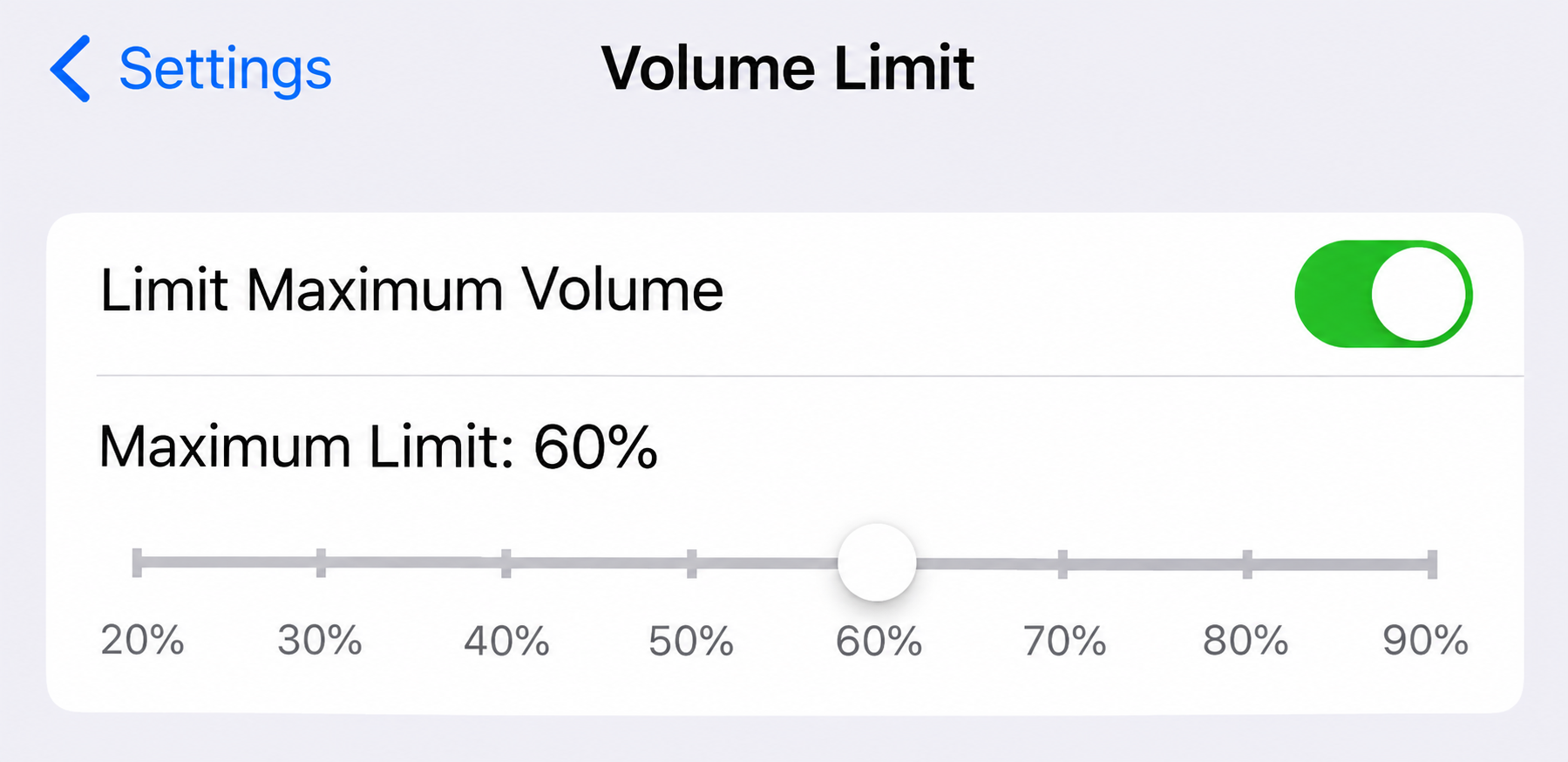
- Go back to Sounds and, under Built-In Speaker, turn off Reduce Loud Sounds if it is on.
On iPadOS 26
- Open Settings and tap Sounds.
- Tap Volume Limit.
- Turn off Limit Maximum Volume, or drag the slider all the way up.
If you don’t see these items, the labels may differ slightly on your version. Look anywhere under Settings > Sounds for “Volume Limit” or “Reduce Loud,” and set it to its highest level or off.
Older articles tell you to look under Settings > Music > Volume Limit. That path is from much older versions, and it is not where Apple puts the setting on current iPadOS.
Check Screen Time Restrictions
On a family iPad, a parent or guardian may have locked the volume settings with Screen Time. Apple’s volume page notes that Content & Privacy Restrictions include Speaker Volume, Speaker Volume Limit and Reduce Loud Audio items, and that setting them to Don’t Allow stops changes. If the volume limit option is grayed out or keeps resetting:
- Open Settings and tap Screen Time.
- Tap Content & Privacy Restrictions. You may need the Screen Time passcode.
- Tap Speaker Volume, Speaker Volume Limit or Reduce Loud Audio (the items you see vary by version) and choose Allow.
- Go back to Settings > Sounds and remove the limit.
If you manage a child’s iPad, consider leaving some cap in place. The settings for that are covered in setting up parental controls on an iPad.
Check Headphone Limits Separately
Reduce Loud Audio is a headphone feature. Apple’s page on headphone audio level features explains that it measures headphone audio and lowers anything above the decibel level you choose. It does not limit the built-in speakers, so turning it off won’t make a recipe video louder on the counter.
If your headphones or earbuds are the quiet part:
- Open Settings and tap Sounds (Sounds & Haptics on some versions).
- Look for Headphone Safety or Headphones.
- Tap Reduce Loud Audio and either turn it off or move the slider to a higher decibel level.
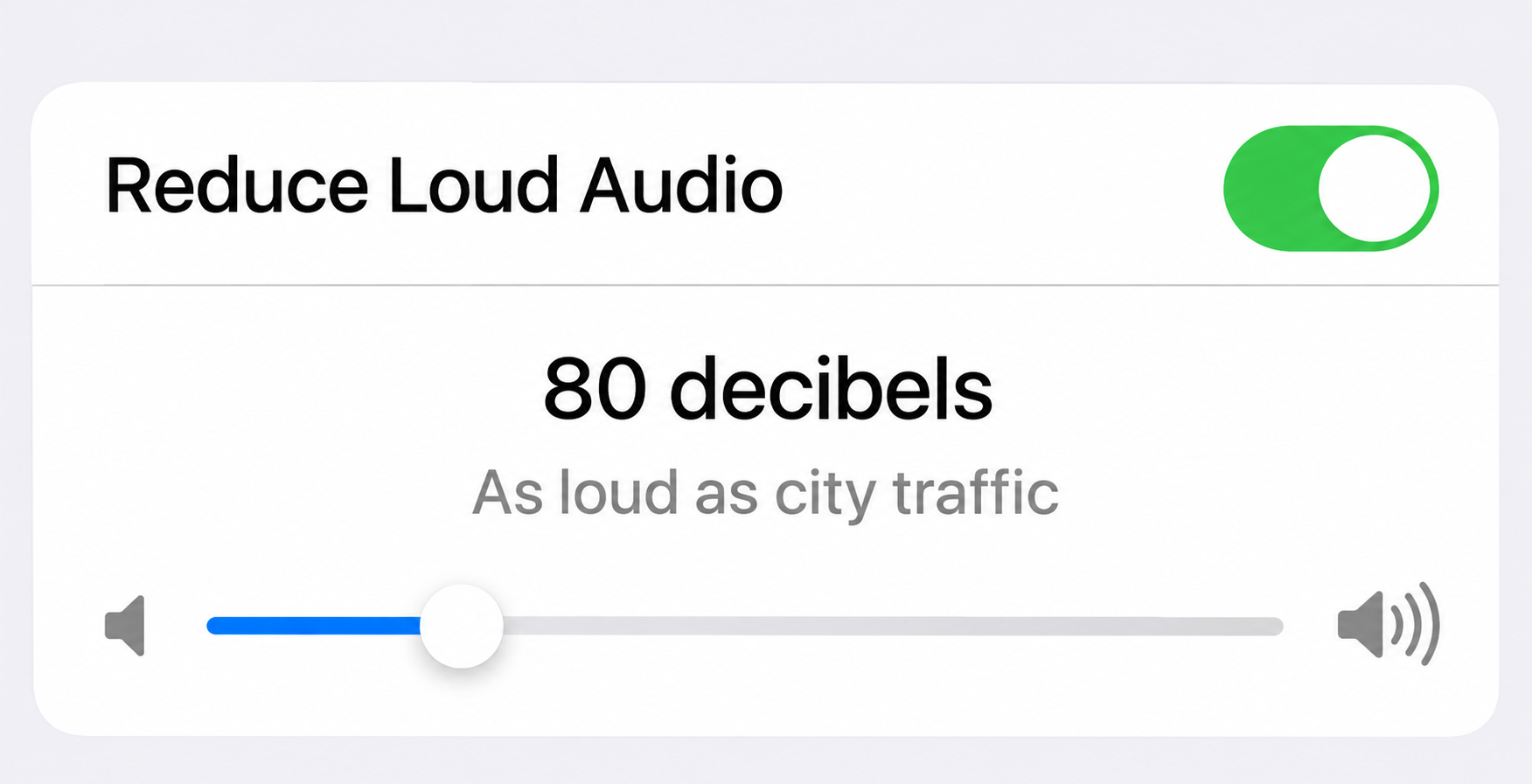
Apple also lets you add a Hearing control to Control Center that shows the headphone level in decibels while you listen, which helps you see whether the limit is actually kicking in.
Adjust the Music App Equalizer
If your quiet audio is coming from the Music app, its equalizer (EQ) can change how loud songs feel. Apple’s page on adjusting sound quality in Music places EQ at Settings > Apps > Music > EQ (on older iPadOS versions, Music may appear directly in Settings).
- Open Settings, tap Apps, then tap Music.
- Tap EQ and choose a preset.
- Play the same song before and after so you can compare.
Apple’s page does not list the preset names. On many iPads you may find one called Late Night, which is often described as narrowing the gap between quiet and loud passages so softer parts are easier to hear. Treat this as an experiment, not a guaranteed boost: an EQ preset reshapes the sound but can’t raise the speaker’s maximum output. It also only affects the Music app, so it won’t help a video app or a browser.
While you are on that screen, look at Sound Check. It evens out playback levels so one quiet track doesn’t sit next to a loud one. It won’t make everything louder, but it stops you reaching for the volume between songs.
Clear Whatever Is Blocking the Speakers
Sound has to leave the iPad through small openings on its edges. Apple’s troubleshooting article for no sound or distorted sound from your iPad speaker says to remove screen protectors, films and cases, then check that the speaker opening isn’t blocked.
Take Off the Case and Films
- Remove the case, folio, or keyboard cover.
- Peel back any film or protector that wraps an edge near the speakers.
- Play the same video at the same volume and listen for a difference.
If the case was the problem, look for one with open cutouts over the speaker openings, rather than covers that tuck over the edges.
Clean the Speaker Openings Safely
Apple’s speaker article recommends a small, soft-bristled brush that is clean and dry. A clean, dry, soft toothbrush or makeup brush works.
Do not use compressed air, canned air, or anything sharp. Apple’s cleaning guidance for Apple products says not to use compressed air on an iPad, along with aerosol sprays, solvents and household cleaners, and to keep moisture out of openings. Pins, toothpicks and needles can push debris further in or puncture the speaker mesh.
- Turn off the iPad or lock the screen.
- Gently brush across each speaker opening, angling the brush so debris falls out rather than in.
- Play audio again to compare.
Position the iPad So More Sound Reaches You
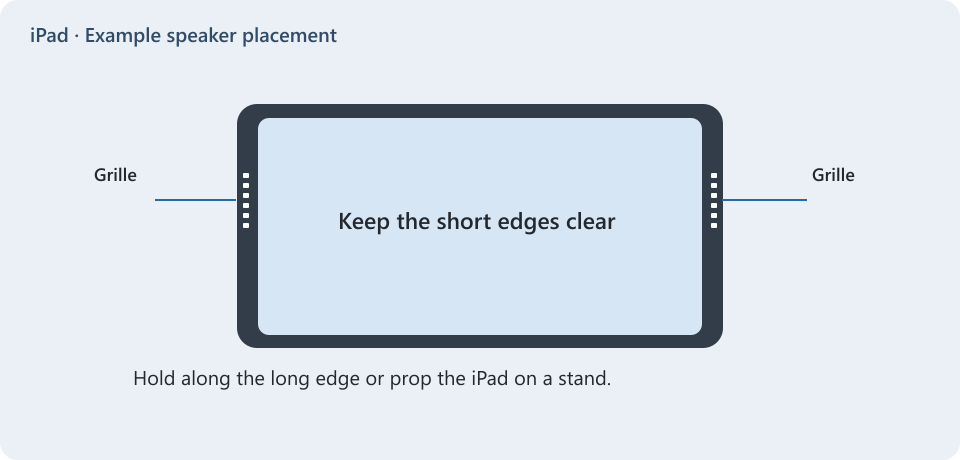
This isn’t a setting, but it makes a noticeable practical difference, especially in a noisy kitchen or a car.
- Face the speakers toward you. On an iPad lying flat, sound spreads sideways and up. Stand it up with a stand or its cover so the speaker edges point toward the room.
- Keep your hands and the cover off the edges. Holding an iPad in landscape often puts a palm right over a speaker.
- Use a hard surface behind it. A wall, cabinet, or the corner of a counter reflects sound back toward you. A soft couch cushion absorbs it.
- Move it away from the noise. Putting the iPad on the far side of the counter from a range hood or fan helps more than any EQ preset.
Some people set an iPad inside an empty bowl or cup to project the sound. It can help a little, but it also blocks the screen and puts the iPad at risk of sliding, so a stand is the safer choice.
Send the Sound to a Louder Speaker
Once every limit is off and the speakers are clear, the built-in speakers are giving you all they have. For a party, a workshop, or a living room, the most reliable way to get real volume is to play the sound through something bigger.
Bluetooth Speakers and Headphones
- Put the speaker or headphones in pairing mode (see the device’s manual).
- On the iPad, open Settings > Bluetooth and make sure it is on, as Apple’s guide to connecting iPad to Bluetooth accessories describes. If you need help with this, see turning Bluetooth on or off on iPad.
- Tap the speaker’s name when it appears in the list. Some accessories ask for a PIN or passcode (check its instructions).
- Play audio and adjust the volume on both the iPad and the speaker.
AirPlay Speakers and TVs
If you have an AirPlay speaker or a smart TV that supports AirPlay, make sure the iPad and the speaker or TV are on the same network. Then open Control Center, tap the AirPlay icon on the playback controls, and tap each speaker or TV you want to use. Many apps also have an AirPlay button inside the player. For video, mirroring to a TV gives you the TV’s speakers as well; the steps are in screen mirroring an iPad to a TV.
Wired Headphones or Speakers
Many iPads have no headphone jack. On those models you need an adapter for the iPad’s port (USB-C or Lightning, depending on the model) to connect wired headphones or a speaker with a 3.5 mm plug. Check that the adapter is designed for your iPad’s port.
Check Where the Sound Is Going
The opposite problem happens too: the iPad seems quiet because sound is going to earbuds in a drawer or a speaker in another room. In Control Center, tap the audio output button and make sure the iPad itself is selected when you want the built-in speakers.
A Word About Volume Booster Apps
Apple documents no feature that lets an app push the built-in speakers past their normal maximum. Apps that promise to boost iPad volume can’t change the system’s limits, so at most they can change the sound inside their own player. Removing the limits above and using an external speaker is the dependable route.
Protect Your Hearing at High Volume
Apple’s iPad volume and Music pages carry a note about avoiding hearing loss. Full volume through a speaker across the room is one thing; full volume through earbuds for an hour is another. If you remove a headphone limit to hear something in a loud place, consider turning it back on afterward.
When the iPad Is Still Too Quiet
If the volume is maxed, the limits are off, and the speakers are clear, try these in order.
- Restart the iPad. Turn it off, wait a moment, and turn it back on. This clears temporary audio glitches.
- Update iPadOS. Sound bugs are sometimes fixed in updates. Go to Settings > General > Software Update, or follow finding and installing an iPad software update.
- Test the speaker with the ringtone slider. Apple’s speaker article suggests opening Settings > Sounds and dragging the ringtone and alerts slider. You should hear a sound as you drag. If you hear nothing, or the speaker button on that screen is dimmed, Apple says the speaker may need service.
- Reset All Settings as a last resort (Settings > General > Transfer or Reset iPad > Reset > Reset All Settings). Apple’s Reset All Settings page says it keeps your apps, photos and documents but removes saved Wi-Fi passwords, Bluetooth pairings and Apple Pay cards, so you will need to reconnect them. The process is explained in resetting settings on an iPad without erasing it.
- Contact Apple Support. Crackling, distortion at moderate volume, or one speaker much quieter than the other point to hardware, which settings can’t fix.
If you hear nothing at all rather than quiet sound, the fixes are different: see getting sound back on an iPad with no audio.
iPad Volume Questions
Why is my iPad quiet even when the volume bar is full?
A full bar shows the maximum allowed by your current settings, not the maximum the speakers can produce. If Volume Limit or Reduce Loud Sounds is on, a full bar can still be well below the true maximum. Check Settings > Sounds first.
Does the volume slider in Settings > Sounds make videos louder?
No. That slider sets the ringer and alert volume. Video and music volume is set with the volume buttons or the Control Center slider while something is playing.
Will turning off Reduce Loud Audio make my iPad speakers louder?
No. Apple describes Reduce Loud Audio as a headphone feature. For the speakers, look at Volume Limit and Reduce Loud Sounds under Settings > Sounds instead.
Why is one app louder than another?
Each app and video is mixed at its own level, and some apps have their own volume controls in the player. The iPad volume is the ceiling, and the app’s level sits below it. Sound Check helps even out songs in the Music app, but it doesn’t change other apps.
Can a case make the iPad louder?
Some cases claim to redirect sound, but Apple documents no such benefit, and its speaker troubleshooting advice is to remove cases that cover the openings. If you want more volume, a small Bluetooth speaker does far more than any case.
Start with the volume cap in Settings > Sounds: if it was set, that single change is often the difference you were looking for.

Matthew Burleigh is the founder, head writer, and editor of Solve Your Tech, which he launched in 2012. He has written technology tutorials since 2008 and worked in IT since 2003, including small-business support, IT management, and consulting. He holds Bachelor’s and Master’s degrees in Computer Science from Arizona State University.
Matthew writes practical guides for Windows, iPhone and iPad, Microsoft Office, Outlook, Google apps, and Android. Solve Your Tech’s guides are checked step by step against the device or app maker’s own documentation and tested on his own devices whenever he has the hardware or software, with clear steps, sources, and update dates.
Read more about Matthew and how Solve Your Tech writes and updates its guides, or report a correction.