To change default apps in Windows 11, open Settings > Apps > Default apps. Type a file type like .pdf in the search box, select it, and pick the app you want. Or select an app from the list to see every file type and link type it can open, and change them one by one.
These steps are for Windows 11 Home and Pro on current updates and follow Microsoft’s Change default apps in Windows page. Windows 10 uses a different layout, covered in its own section near the end.
What a Default App Is
A default app is the program Windows opens when you double-click a file or click a link. Windows tracks this in two kinds of entries:
- File types are the endings on file names, such as
.pdf,.jpg,.mp4or.docx. Each ending has its own default, so.jpgand.jpegare separate entries. - Link types (Microsoft also calls them protocols) are the start of a link address, such as HTTP, HTTPS or MAILTO. They decide which app opens a web link or an email address you click.
Defaults belong to your Windows account. Changing them doesn’t change the settings for other people who sign in to the same PC, and you don’t need administrator rights.
To open the page quickly, press Windows key + I, then select Apps > Default apps. Microsoft also lists a shortcut: press Windows key + R, type ms-settings:defaultapps, and press Enter.
How to Change a Default App by File Type
Use this method when you know the file ending you want to change.
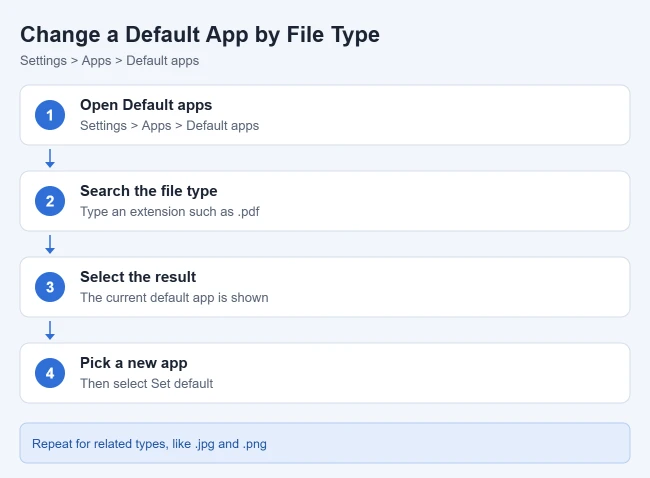
- Open Settings and select Apps > Default apps.
- In the Set a default for a file type or link type search box, type the extension, such as
.pdf,.jpg, or.mp4. Include the period. - Select the result that appears. It shows the app that opens that type now. If no app is set, the button reads Choose a default.
- Choose the app you want to use, then select Set default.
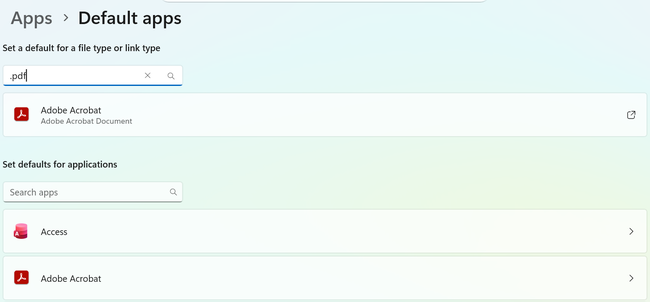
- Check the search result again. It now shows the app you picked, and every file with that extension opens in that app, wherever you open it from.
If the app you want isn’t in the list, scroll down in the chooser and select Choose an app on your PC to browse to the program, or install the app first. For example, Citrix .ica launch files need the Citrix app; here’s how to open an ICA file on Windows 11.
Not sure the program is on your PC at all? Here’s how to find installed programs in Windows 11.
How to Change Defaults for One App
Use this method when you want one program, such as a photo viewer, to take over several file types.
- Go to Settings > Apps > Default apps.
- Under Set defaults for applications, select the app, such as VLC or Adobe Acrobat. (VLC is also how to play a DVD on Windows 11, which has no built-in DVD player.)
- Select a file type or link type in the list. Each entry shows the app that opens it now.
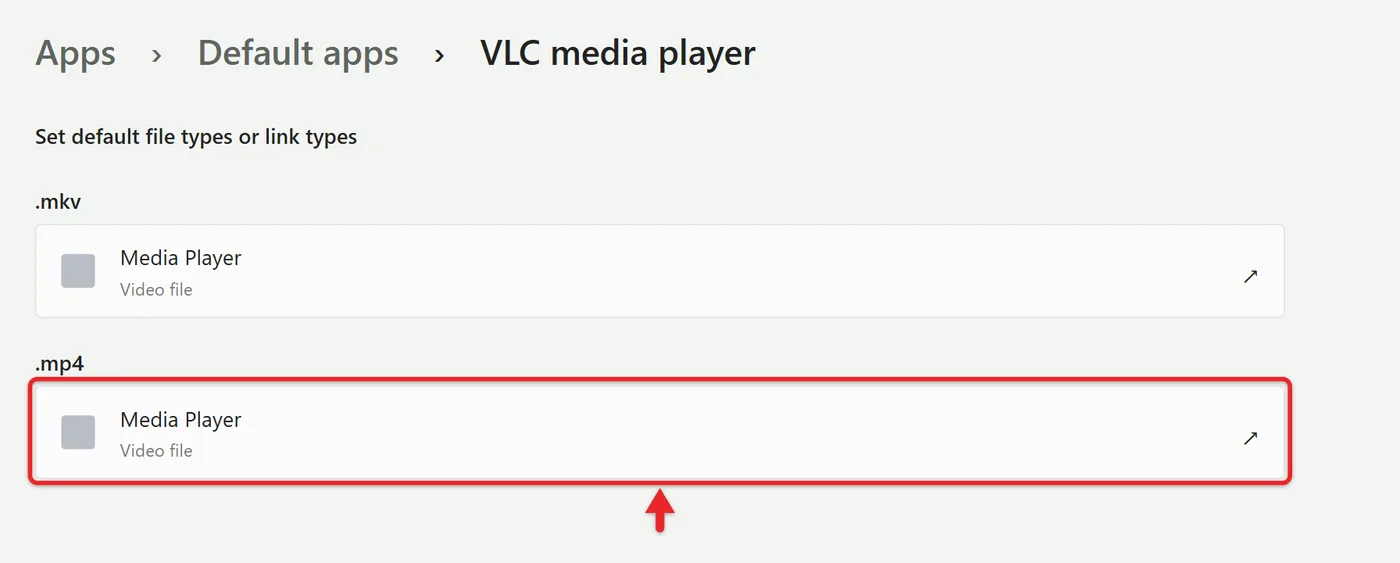
- Choose the app you want for that type.
- Repeat for each type you want the app to handle.
There is no single button that hands every type to one regular app, so work through the list. For a photo viewer, for example, change .jpg, .jpeg, .png, .gif and .heic one at a time.
Browsers are the exception. Select your browser in this list and select Set default at the top to make it handle web links and web files. Microsoft explains both methods in its default apps guide.
Example: Why Chrome’s Page Listed Other Apps
On an Alienware m16 R2 running Windows 11 Home 25H2, I searched for Google Chrome under Settings > Apps > Default apps and opened its page. It started with Make Google Chrome your default browser and a Set default button. Below that, .htm and .html were set to Firefox, .mhtml and .svg to Microsoft Edge, .pdf to Adobe Acrobat, and .shtml showed Choose a default because nothing owned it.
That’s normal. An app’s page lists every file and link type the app can open, along with whichever app currently opens each one. Set default switches the main web types to Chrome in one step, and you can still change any single type from the same list.

How to Set Your Default Browser
Using Microsoft Edge as the example, Microsoft’s steps are:
- Go to Settings > Apps > Default apps.
- Under Set defaults for applications, select Microsoft Edge (or your browser).
- Next to Make Microsoft Edge your default browser, select Set default.

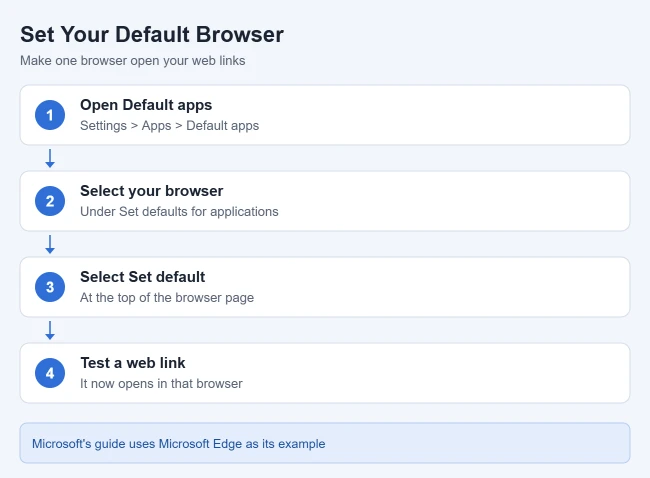
Links you click in other apps, like email or chat, open in that browser. Scroll down the same page afterward and check types such as .pdf and .svg, which can stay with your old browser. Install the browser first if it isn’t on the list.
For more help, read about changing the default browser in Windows 11, or follow the steps to make Chrome the default browser in Windows 11.
Changing the default keeps Edge installed. To uninstall it where Windows allows, or stop it from starting, follow the steps to remove Edge from Windows 11.
How to Change Which App Opens Links
Link types work like file types: type the protocol name into the Set a default for a file type or link type search box, select it, and choose an app.
- MAILTO controls which app opens when you click an email address.
- HTTP and HTTPS control which app opens web links. For browsers, the Set default button above is the simpler route.
Clicking an email address or web link then opens the app you chose. Changing a link type doesn’t change any file type, so setting MAILTO doesn’t change which app opens saved .eml email files.
Change a Default App From File Explorer
- Right-click a file in File Explorer and select Open with > Choose another app.
- Select the app you want. If it isn’t listed, select Choose an app on your PC at the bottom.
- Select Always. Files of that type now open in that app. Just once opens only this file in that app and leaves the default as it was.
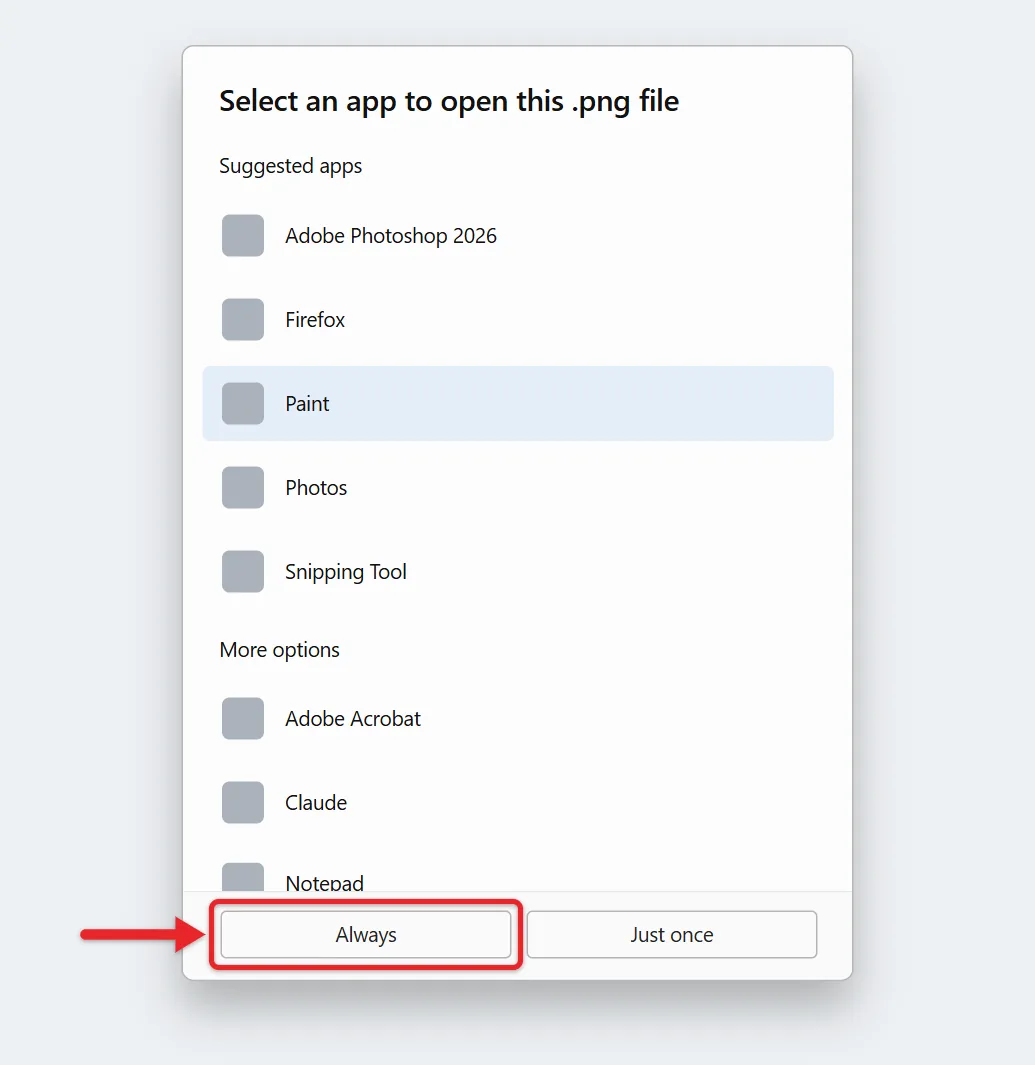
This is the quickest way to change one file type when you already have the file in front of you. Selecting Always by mistake isn’t permanent; change the type back in Default apps.
For a worked example with spreadsheet data, you can set Windows to open a CSV file in Notepad instead of Excel.
Common Default Apps to Change
| Task | Types to set |
|---|---|
| PDF viewer | .pdf |
| Photos | .jpg, .jpeg, .png, .gif, .heic |
| Music | .mp3, .m4a, .wav, .flac |
| Video player | .mp4, .mov, .mkv, .avi |
| Word documents | .docx, .doc |
| Plain text | .txt |
| Email links | MAILTO |
| Web browser | Set default button, then check .pdf |
- PDF viewer: you can change the default PDF viewer in Windows 11.
- Email links: if you pick Chrome for
MAILTO, you can also set Gmail as the default email in Chrome. - Archives: if you prefer 7-Zip to the built-in ZIP tool, you can make 7-Zip the default in Windows 11.
- Printer: this isn’t in Default apps, so you change the default printer separately.
The app you choose must support the format. Setting a video player as the default for .mkv won’t help if the player can’t read that format. Disk images are a common case, since setting .iso back to Windows Explorer is what restores the Mount option covered in how to open an ISO or IMG file. Older AVI videos are another case; how to play AVI files on Windows 11 shows how to check which codec a file needs before you pick a player.
How to Check That It Worked
- Double-click a file of the type you changed. It opens in the new app.
- Search the extension again in Default apps. The result shows the app you picked.
- For link types, click an email address or web link in another app and see which app opens.
If the Change Doesn’t Stick or the App Is Missing
- The app isn’t in the list. Make sure it’s installed (check Settings > Apps > Installed apps), then open it once so it can register its file types. If it still doesn’t appear, update or reinstall it, or use Choose an app on your PC.
- The wrong app still opens. A related ending may still point to the old app, such as
.jpegafter you changed.jpg. Turn on View > Show > File name extensions in File Explorer to see a file’s real ending. Renaming the ending doesn’t convert the file; changing a file extension in Windows 11 explains why. - Defaults switch back. Some apps ask to become the default when you install or update them. If you accept, they take over. Decline those prompts or turn them off in the app’s own settings. After a big Windows update, you may see a notice that an app default was reset; set it again in Default apps.
- Links in email still open in Edge. Some apps, such as Outlook, have their own setting for which browser opens links. Check that app’s options as well as Windows.
- A work or school PC. Your organization can set default apps that are reapplied when you sign in. Ask your IT department to change them.
How to Reset All Default Apps
- Go to Settings > Apps > Default apps.
- Scroll to the bottom of the page.
- Select Reset next to Reset all default apps, then confirm if Windows asks.

Every file type and link type goes back to the apps Microsoft picks, which are often Microsoft’s own, such as Edge for web links. Your other programs stay installed; they’re just no longer the defaults. The reset can’t be undone, so note the defaults you want to keep first and set them again afterward. If only one or two types are wrong, changing those types is faster.
Change Default Apps in Windows 10
Windows 10 reached end of support on October 14, 2025, but its Default apps page still works. It uses a simpler layout:
- Select Start > Settings > Apps > Default apps.
- Under Email, Maps, Music player, Photo viewer, Video player, or Web browser, select the app listed now.
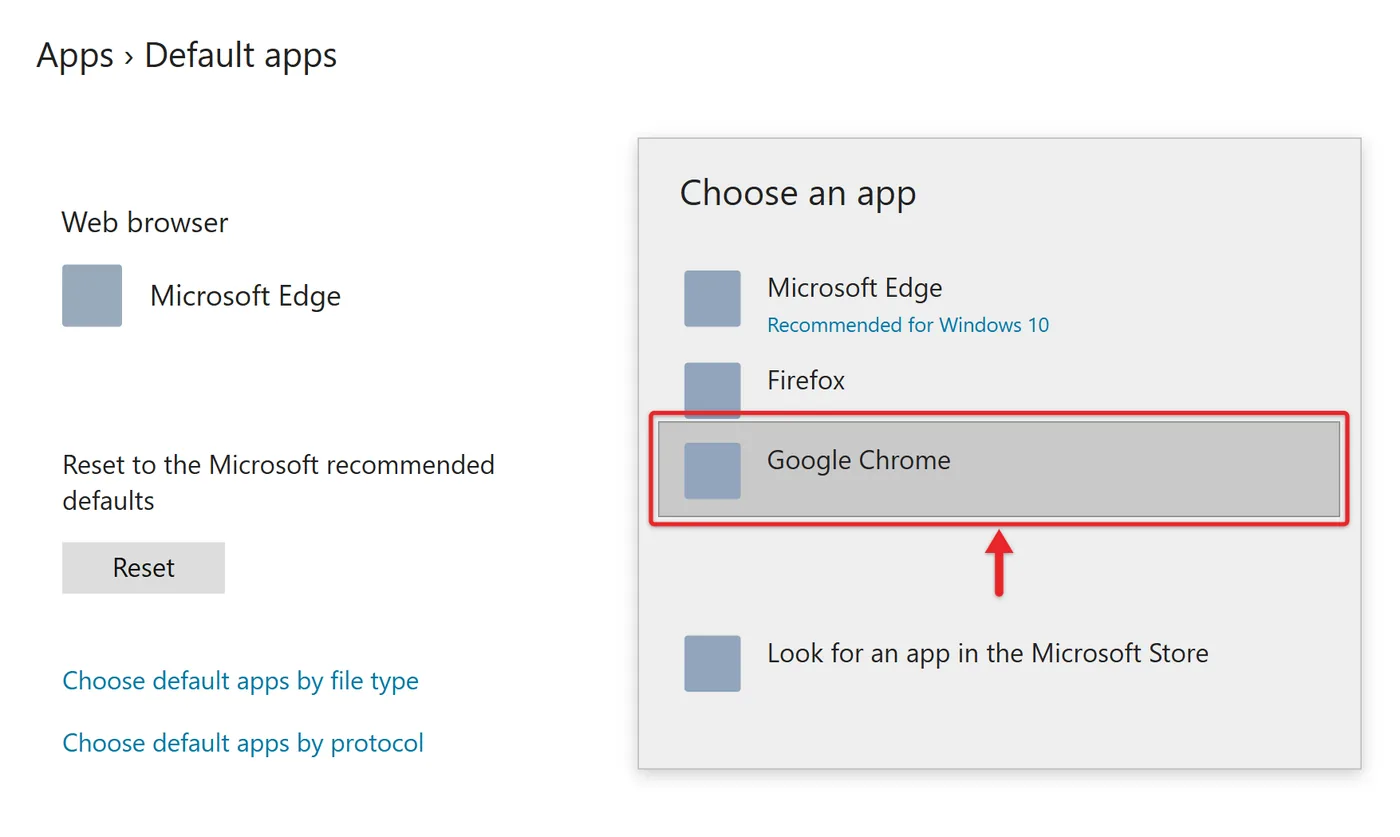
- Pick the app you want from the list.
- For a single extension such as .pdf, select Choose default apps by file type at the bottom of the page and change the app next to it.
In File Explorer on Windows 10, the Open with window has an Always use this app to open check box instead of an Always button. Select More apps if your app isn’t listed.
Default App Questions
Do I need to be an administrator to change default apps?
No. Default apps are a per-account setting, so any user can change their own. The change doesn’t affect other accounts on the PC.
Why does Windows keep changing my default app?
Usually because an app asked to become the default and someone accepted, or because a work or school policy reapplies defaults at sign-in. Change it back in Default apps, and decline the prompt next time.
Can I make one app the default for everything it supports?
Only browsers get a single Set default button. For other apps, open the app under Set defaults for applications and change each file type in its list.
Does changing my default browser change my search engine?
No. The search engine is a setting inside the browser. You can change the search engine on Windows 11 for Edge, Chrome and Firefox.
Want to change the app for one specific file type, like .txt or .png? You can also change file associations in Windows 11.

Matthew Burleigh is the founder, head writer, and editor of Solve Your Tech, which he launched in 2012. He has written technology tutorials since 2008 and worked in IT since 2003, including small-business support, IT management, and consulting. He holds Bachelor’s and Master’s degrees in Computer Science from Arizona State University.
Matthew writes practical guides for Windows, iPhone and iPad, Microsoft Office, Outlook, Google apps, and Android. Solve Your Tech’s guides are checked step by step against the device or app maker’s own documentation and tested on his own devices whenever he has the hardware or software, with clear steps, sources, and update dates.
Read more about Matthew and how Solve Your Tech writes and updates its guides, or report a correction.