To set an alarm on iPhone, open the Clock app, tap Alarms, then tap the + button. Set the time, choose any options like Repeat or Sound, and tap the check mark (or Done) to save. You can also say, “Siri, set an alarm for 7 a.m.”
These steps follow Apple’s Set an alarm in Clock on iPhone guide and its How to set and change alarms on your iPhone support article. They match iOS 27, the current version, and iOS 26. On iOS 26 and later you save an alarm with the check mark in the top-right corner; iOS 18 and earlier show Save there. To see your version, open Settings > General > About.
How to Set an Alarm in the Clock App
Apple says you can set alarms for any time, repeat them on specific days, and adjust how long the snooze lasts.
- Open the Clock app.
- Tap Alarms at the bottom, then tap the + (Add) button in the top-right corner. A new alarm screen opens.
- Set the time by scrolling the hour and minute wheels. On a 12-hour clock, check AM or PM. You can also tap the wheels to type the time on a number pad.
- Choose any options you want (see the next section).
- Tap the check mark, or Done, to save. The alarm appears in the list with its switch turned on (green).
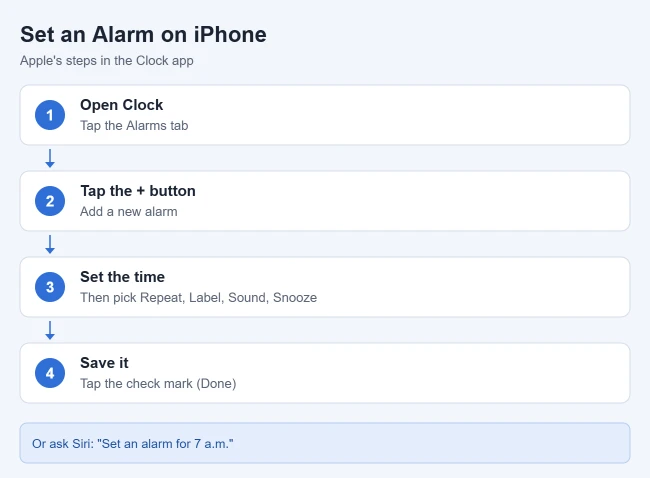
Using Siri: say something like “Set an alarm for 7 a.m.” or “Wake me up at 6:30 tomorrow.” Siri adds the alarm to the Clock app, where you can change it later. Check the time Siri reads back, because a misheard word can set the wrong hour.
You can set as many alarms as you need, which is handy if you want backups a few minutes apart. Wear an Apple Watch? You can also set an alarm on your Apple Watch so it taps your wrist.
What Each Alarm Option Does
- Repeat: choose the days of the week the alarm should go off, such as weekdays only. Leave it at Never for a one-time alarm.
- Label: give the alarm a name, like “Water the plants,” so you know why it is ringing.
- Sound: choose a ringtone, a song from your Music library, or None. The Haptics row at the top of the Sound screen sets the vibration pattern.
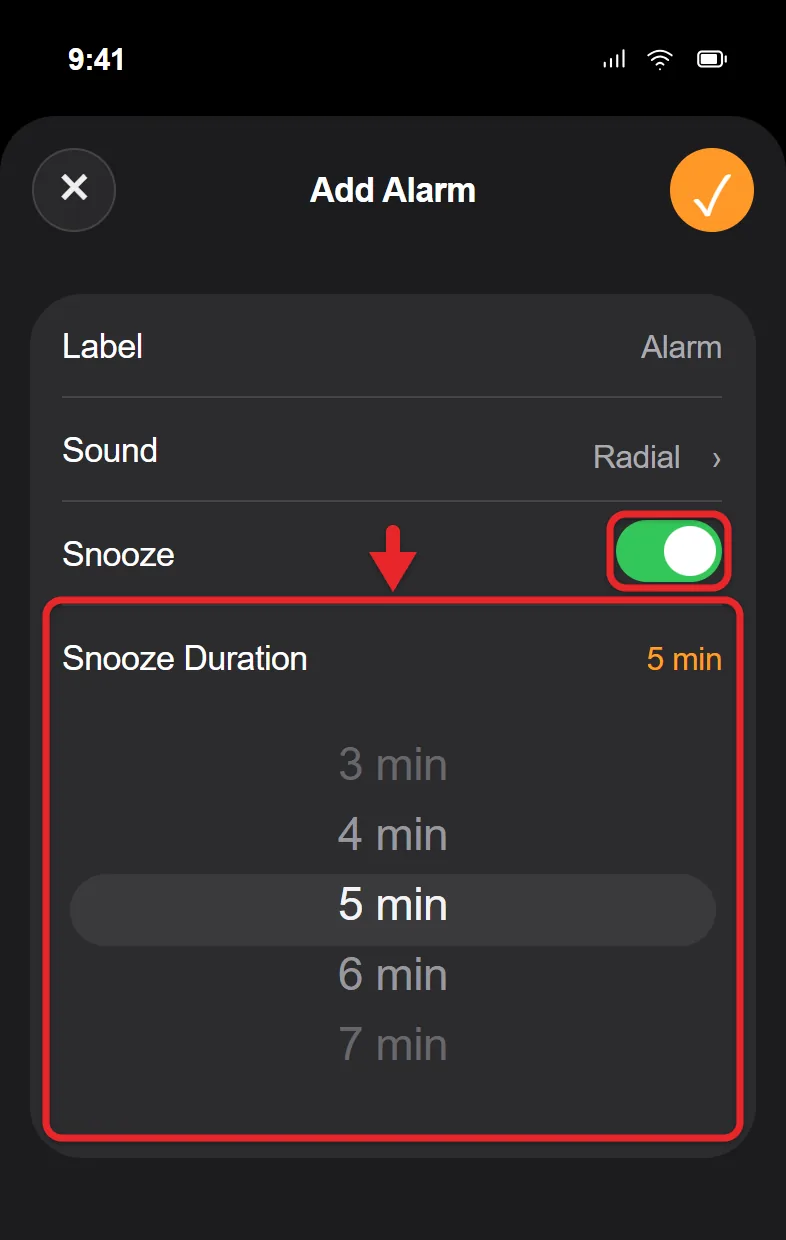
- Snooze: turn on to see a Snooze button when the alarm goes off.
- Snooze Duration: choose how long the alarm pauses when you tap Snooze. This option is new in iOS 26; before that, snooze was always 9 minutes.
Songs from other streaming apps, such as Spotify, can’t be picked as an alarm sound. For a quiet cue, you can set a vibration-only alarm on iPhone. To wake up to a song, recording or exported ringtone, set up a custom iPhone alarm sound.
Set an Alarm That Repeats Every Day
Open Clock, tap Alarms, and tap +. Set the time (check AM or PM on a 12-hour clock), tap Repeat, and select all seven days; there is no single Every Day switch. Go back, add a Label or Sound if you want, then save the alarm. The Alarms list then shows “every day” under the alarm. To pause it, turn off its switch; to change the days, edit Repeat and save again. Apple’s alarm guide explains the day choices.
How to Stop or Snooze a Ringing Alarm
When an alarm goes off, tap Snooze to hear it again after the snooze time, or stop it. On iOS 26.1 and later, you stop an alarm by sliding the stop control instead of tapping a button. If sliding is hard for you, open Settings > Accessibility > Touch and turn on Prefer Single-Touch Actions, which swaps sliders like this one for buttons across the iPhone.
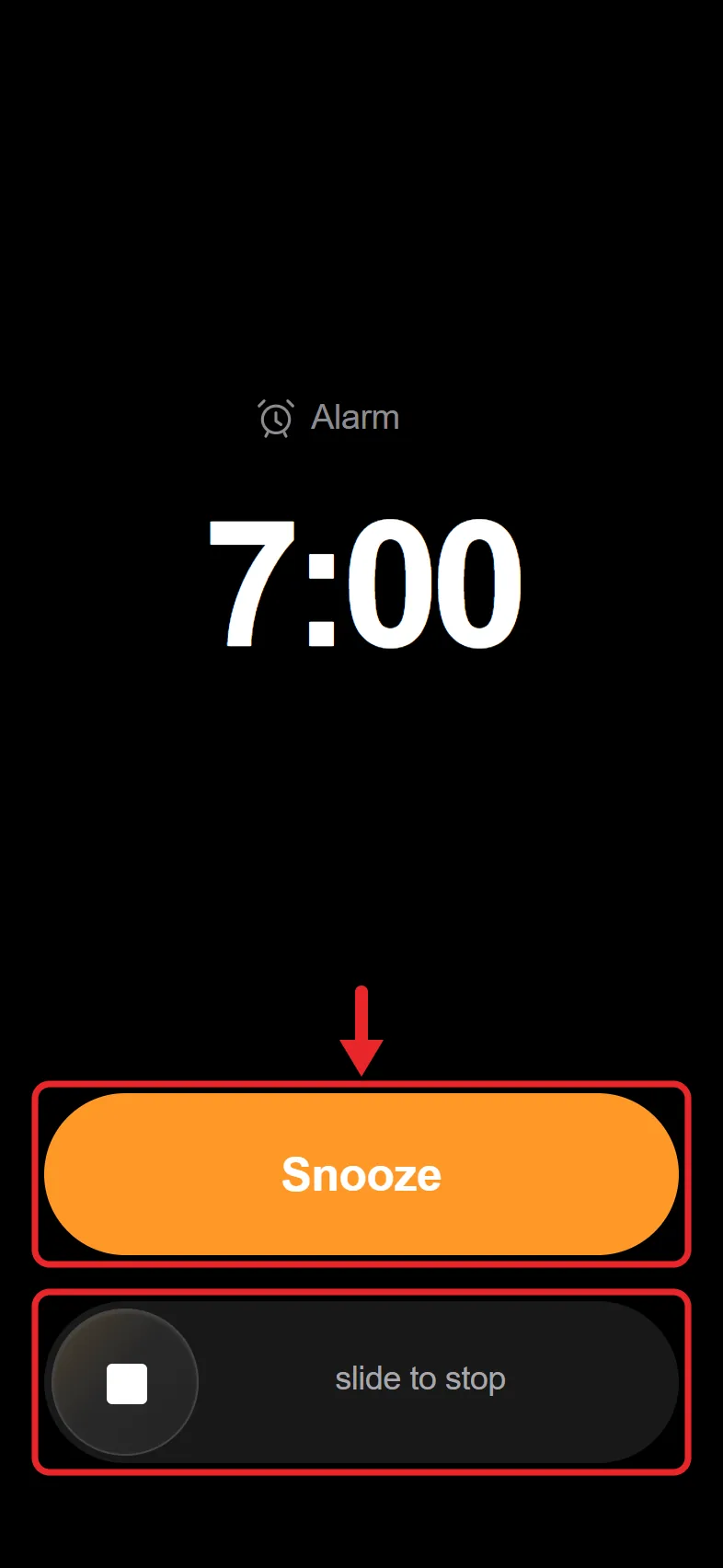
A one-time alarm turns itself off after you stop it. A repeating alarm stays on for its next day.
How to Change, Turn Off or Delete an Alarm
Change an alarm
In Clock > Alarms, tap the alarm time, make your changes, and tap the check mark to save. On iOS 18 and earlier, tap Save instead. You can also tap Edit in the upper-left corner first, then the alarm.
Turn off an alarm
Tap the switch next to the alarm time. It turns gray, and the alarm stays in your list so you can turn it back on later.
Delete an alarm
There are three ways:
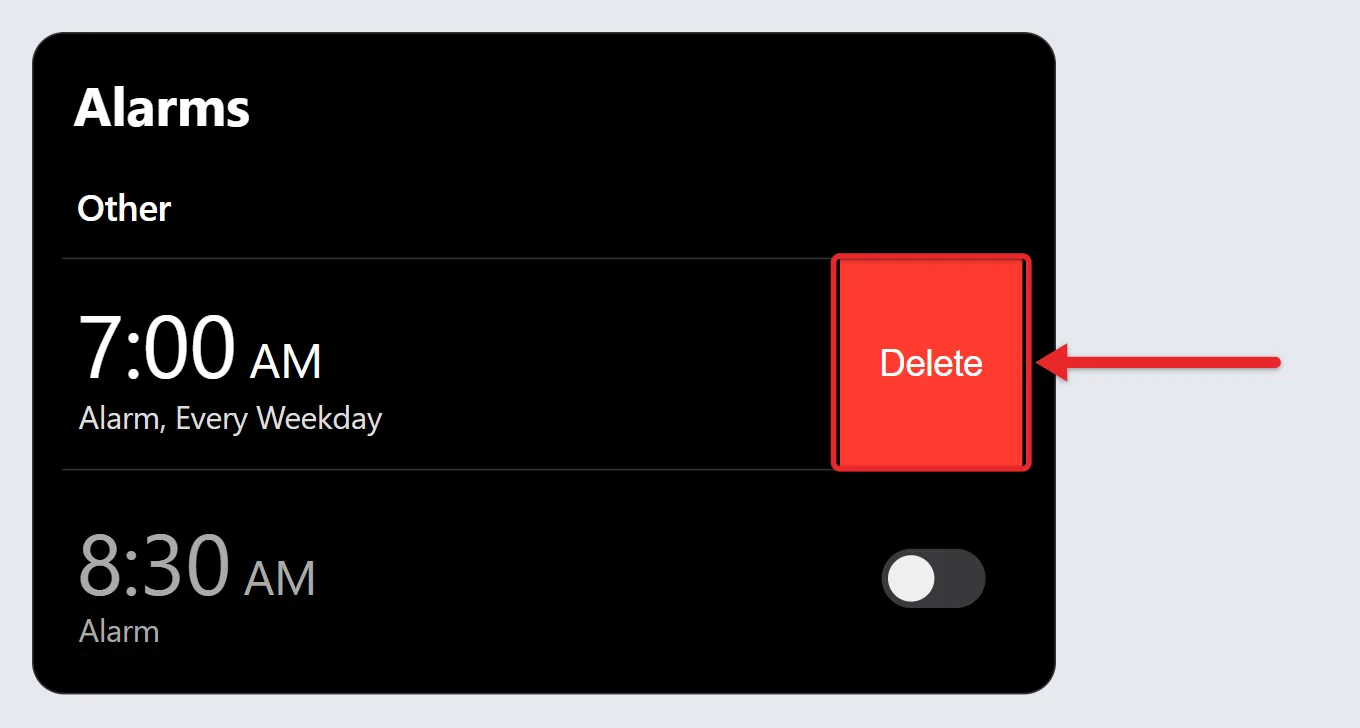
- Swipe left on the alarm and tap Delete.
- Tap Edit, tap the delete button next to the alarm, then tap Delete.
- Tap Edit, tap the alarm, then tap Delete Alarm.
For more detail, read about deleting, turning off, or changing an alarm on iPhone.
The Clock app works the same way on a tablet. Here’s how to delete an alarm on iPad.
How to Make the Alarm Louder or Quieter
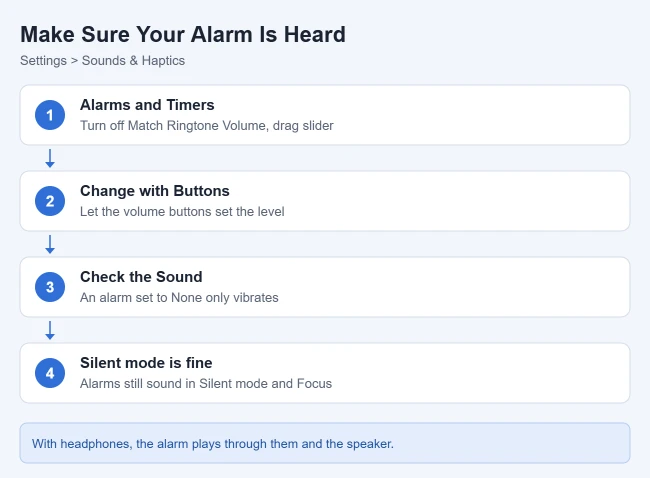
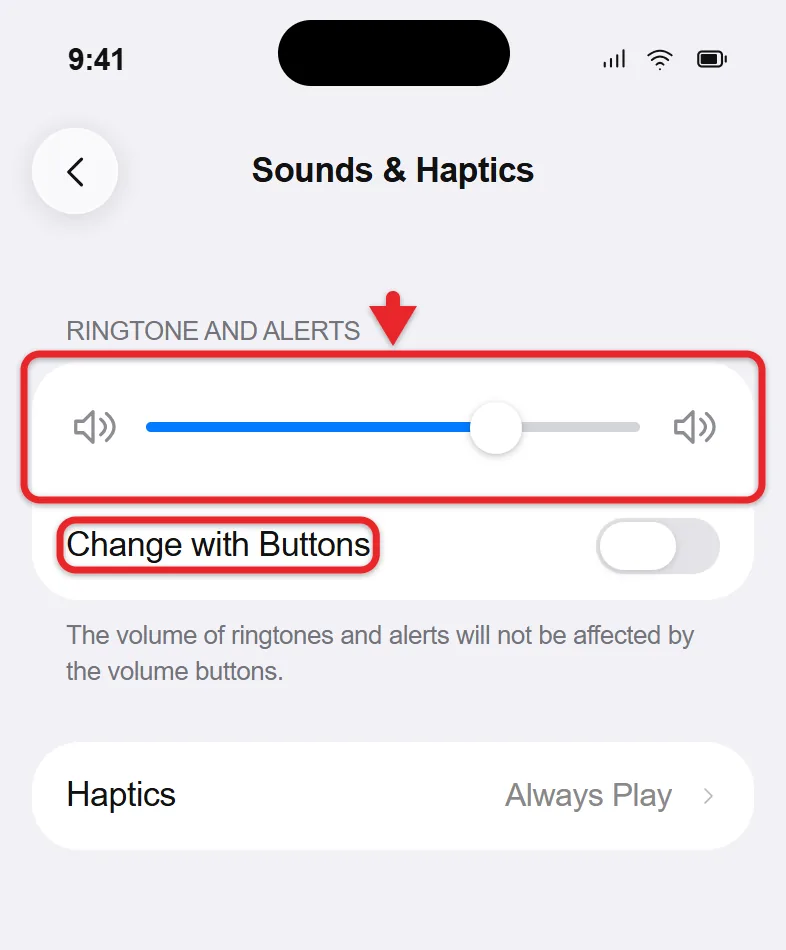
Open Settings > Sounds & Haptics. Which control you see depends on your iOS version:
- iOS 27: Alarms and Timers. Turn off Match Ringtone Volume and drag the slider for a separate alarm level, or keep it on so alarms follow your ringtone volume. This setting doesn’t change the wake-up alarm in a sleep schedule.
- iOS 26 and earlier: Ringtone and Alerts. In this layout, you drag the slider and an alert plays so you can hear the level. It also changes your ringtone and alert volume.
In either layout, turn on Change with Buttons if you want the volume buttons on the side of your iPhone to change the alarm volume. Leave it off if you tend to turn the volume down by accident.
Set a test alarm a few minutes ahead while you are awake to check the volume.
Will My Alarm Go Off in Silent Mode?
Yes. Your alarm still sounds when you:
- Turn on Silent mode with the Ring/Silent switch or the Action button.
- Turn on Do Not Disturb or another Focus.
- Connect headphones. The alarm plays at a set volume through both your iPhone’s built-in speaker and your wired or wireless headphones.
What to Do If Your iPhone Alarm Doesn’t Sound
Try these checks if your alarm is too quiet, doesn’t sound or only vibrates:
- Check the volume: press the volume buttons, or drag the slider in Settings > Sounds & Haptics.
- Check the Sound: if the alarm only vibrates, make sure its sound isn’t set to None. In Clock > Alarms, tap Edit, tap the alarm, tap Sound, and choose one.
- StandBy: when you use StandBy, haptics for alarms are disabled, so make sure the alarm has a sound selected.
- Leave the clock alone: manually changing the time in Settings, for example to change game timers, can affect alarms.
Two more things to check:
- The switch and AM/PM: make sure the alarm’s switch is green and the time isn’t set for PM when you meant AM.
- Battery: the iPhone has to be on for an alarm to sound. Charge it overnight if the battery is low.
If it is a timer rather than an alarm that stays quiet, see why the timer alarm isn’t going off on your iPhone.
Wake-Up Alarms and Sleep Schedules
Alarms you make in Clock are separate from the wake-up alarm in a Health app sleep schedule. If you have a sleep schedule, it appears at the top of the Alarms list under Sleep | Wake Up, and Apple’s wake up alarm guide explains how to change it from Clock:
- Open Clock, tap Alarms, then tap Change under Sleep | Wake Up.
- Drag the wake-up handle to change only your wake time, or drag the arc to shift your whole schedule.
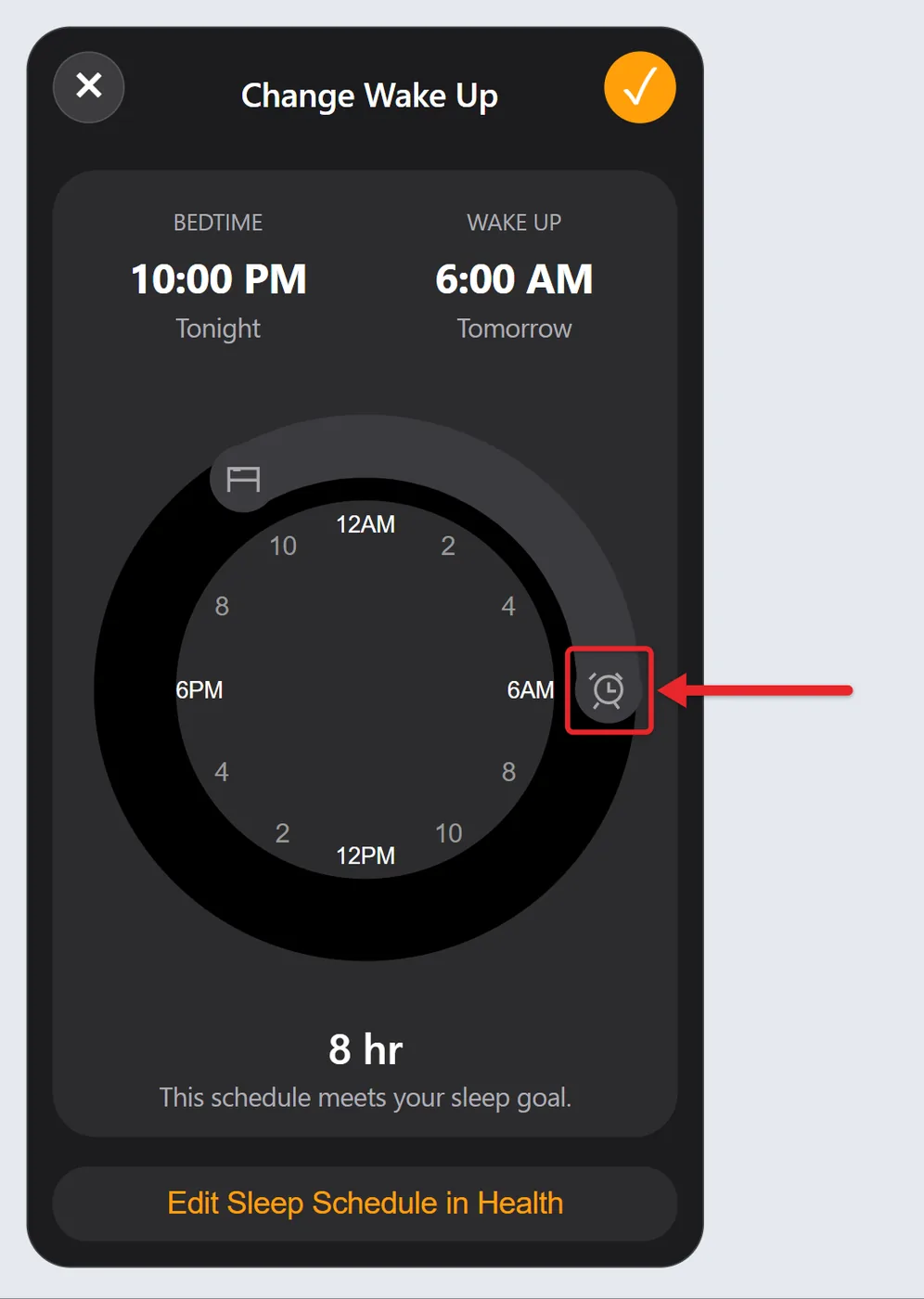
- Scroll to Alarm Options, turn the alarm on, and choose Sounds & Haptics, Alarm volume, Snooze and Snooze Duration.
- Tap the check mark, then tap Change Next Alarm Only. Choosing Change This Schedule updates your schedule going forward.
The wake-up alarm has its own volume slider under Alarm Options, separate from the Sounds & Haptics setting.
<p>If you charge your phone next to the bed, you can also turn it into a bedside clock by learning <a href=”https://www.solveyourtech.com/standby-mode-iphone/”>how to use StandBy on your iPhone</a>.</p>iPhone Alarm Setup Questions
Do alarms repeat automatically?
No. An alarm rings once unless you choose days under Repeat.
Will my alarm play through headphones?
Yes. When headphones are connected, the alarm plays at a set volume through both the iPhone speaker and the headphones. If you hear nothing, check that the alarm’s sound isn’t set to None.
Can I delete all alarms at once?
The Clock app has no Delete All button. Say “Siri, delete all my alarms” and confirm, or swipe left on each alarm and tap Delete.
Will an alarm go off if my iPhone is turned off?
No. The iPhone has to be on. Silent mode and Focus don’t stop an alarm, but powering off does.
Can I change how long snooze lasts?
Yes, on iOS 26 and later. Edit the alarm, make sure Snooze is on, and pick a time under Snooze Duration. On older versions snooze is fixed at 9 minutes, so set a second alarm if you want a different gap.
Can I use a Clock timer to stop music or Netflix?
Yes. A Clock timer can stop Netflix or music when it ends.

Matthew Burleigh is the founder, head writer, and editor of Solve Your Tech, which he launched in 2012. He has written technology tutorials since 2008 and worked in IT since 2003, including small-business support, IT management, and consulting. He holds Bachelor’s and Master’s degrees in Computer Science from Arizona State University.
Matthew writes practical guides for Windows, iPhone and iPad, Microsoft Office, Outlook, Google apps, and Android. Solve Your Tech’s guides are checked step by step against the device or app maker’s own documentation and tested on his own devices whenever he has the hardware or software, with clear steps, sources, and update dates.
Read more about Matthew and how Solve Your Tech writes and updates its guides, or report a correction.