The fastest way to open Settings in Windows 11 is to press Windows + I on your keyboard. If you prefer the mouse, open Start and select the gear-shaped Settings icon, or right-click the Start button and choose Settings.
These steps apply to Windows 11 Home and Pro, including the current 25H2 release. Most methods also work in Windows 10, although some menu names differ there.
Which Method Should You Use?
Every method below opens the same Settings app. The difference is speed and what you have available at the moment.
| Situation | Best method |
|---|---|
| Your keyboard works | Press Windows + I |
| You are using a mouse or touchpad | Select Settings in Start, or right-click Start |
| You want a specific page, such as Windows Update | Type an ms-settings: command in Run |
| Start or the taskbar is frozen | Use Task Manager > Run new task |
| You open Settings many times a day | Pin it to the taskbar or make a desktop shortcut |

Method 1: Press Windows + I
- Click an empty spot on the desktop or inside any open window so Windows is receiving your keyboard input.
- Press and hold the Windows key (the key with the Windows logo, usually between Ctrl and Alt).
- Press I (the letter i), then release both keys.
The Settings window opens with the search box ready at the top and the categories listed on the left. Microsoft lists Windows logo key + I as the shortcut that opens Settings in its Windows keyboard shortcuts reference.
Method 2: Open Settings From Start
- Select the Start button on the taskbar, or press the Windows key. The Start button is in the center of the taskbar by default, or at the far left if you changed the taskbar alignment.
- Look in the Pinned section for the gear icon labeled Settings and select it.
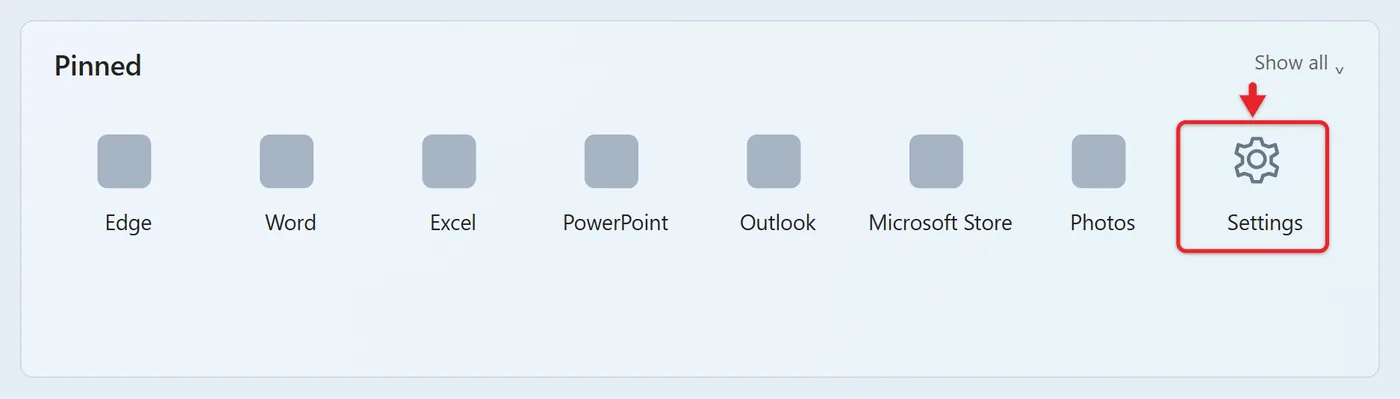
- If Settings is not pinned, scroll down to the full list of apps (select All or All apps on some builds) and select Settings under the letter S.
Method 3: Right-Click the Start Button
- Right-click the Start button, or press Windows + X. A text menu called the Quick Link menu appears above the Start button.
- Select Settings.
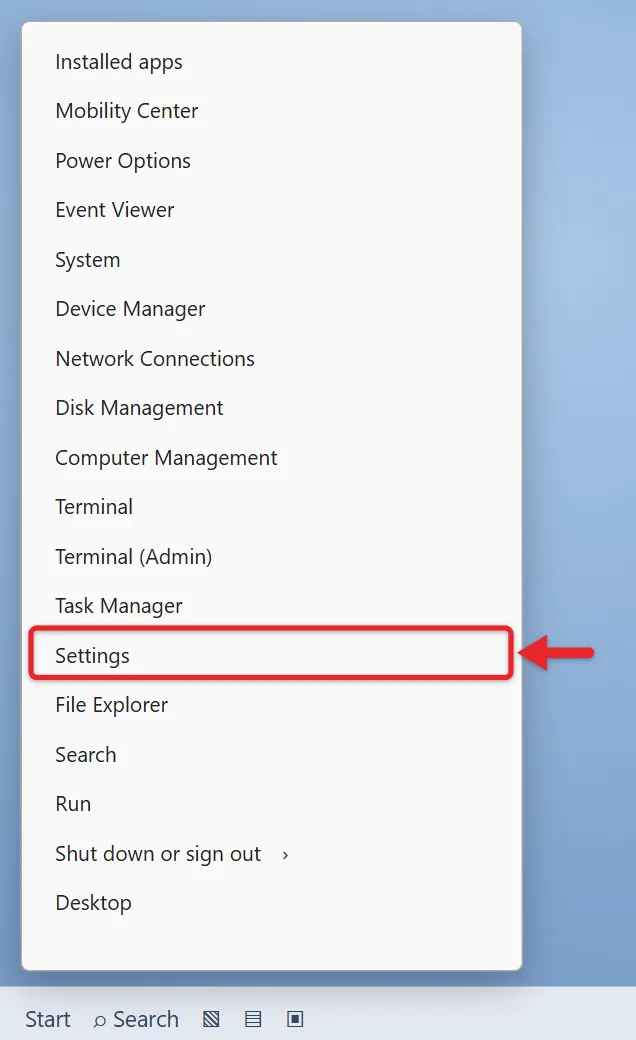
Windows + X does the same thing as right-clicking Start. This menu is a good fallback when the regular Start menu is slow to open, and it also gives you quick access to Terminal, Device Manager, Disk Management, and Run.
Method 4: Search for Settings
- Select the search box or search icon on the taskbar, or press Windows + S.
- Type Settings.
- Select the Settings app under Best match, or press Enter.
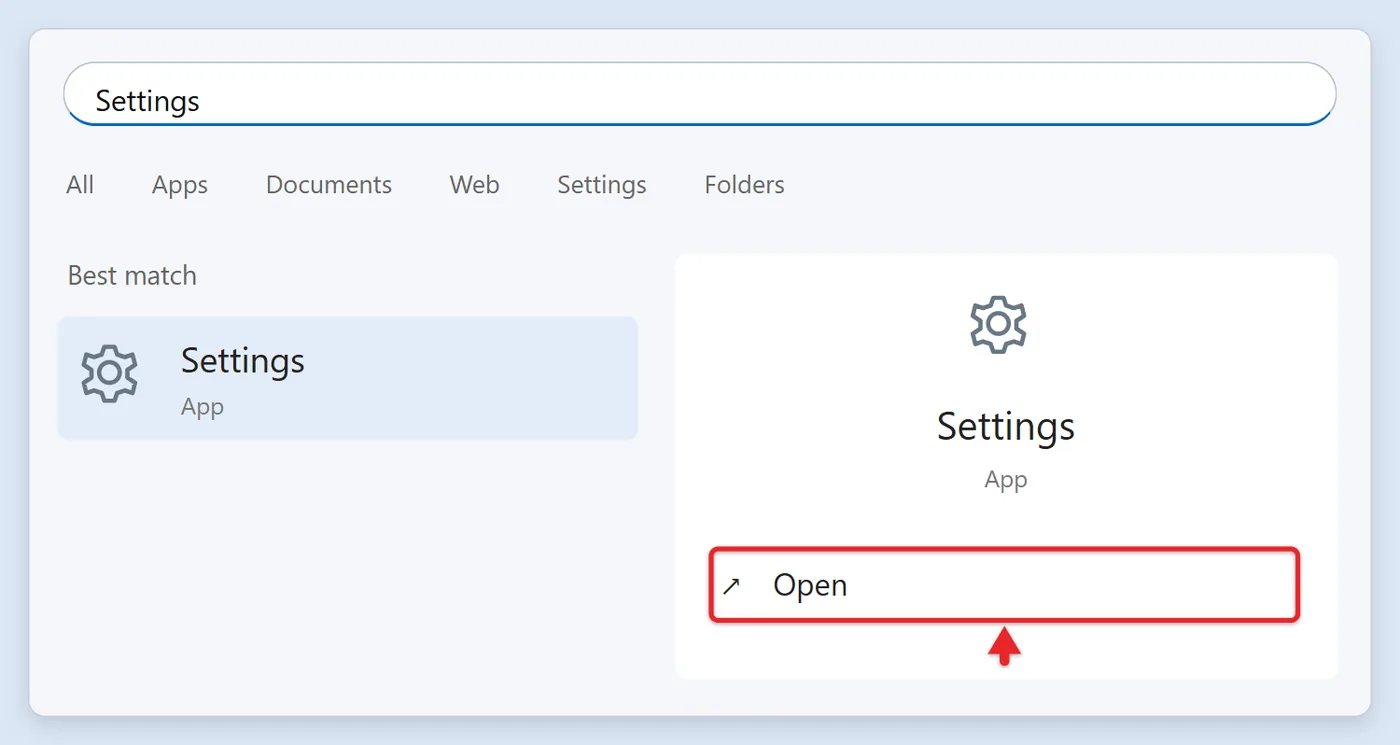
You can also type the name of the option you want, such as “Bluetooth” or “display resolution,” and Windows search will offer the matching Settings page directly.
Method 5: Use Quick Settings
- Select the network, volume, or battery icons at the right side of the taskbar, or press Windows + A.
- In the Quick Settings panel, select the gear icon labeled All settings in the bottom corner.
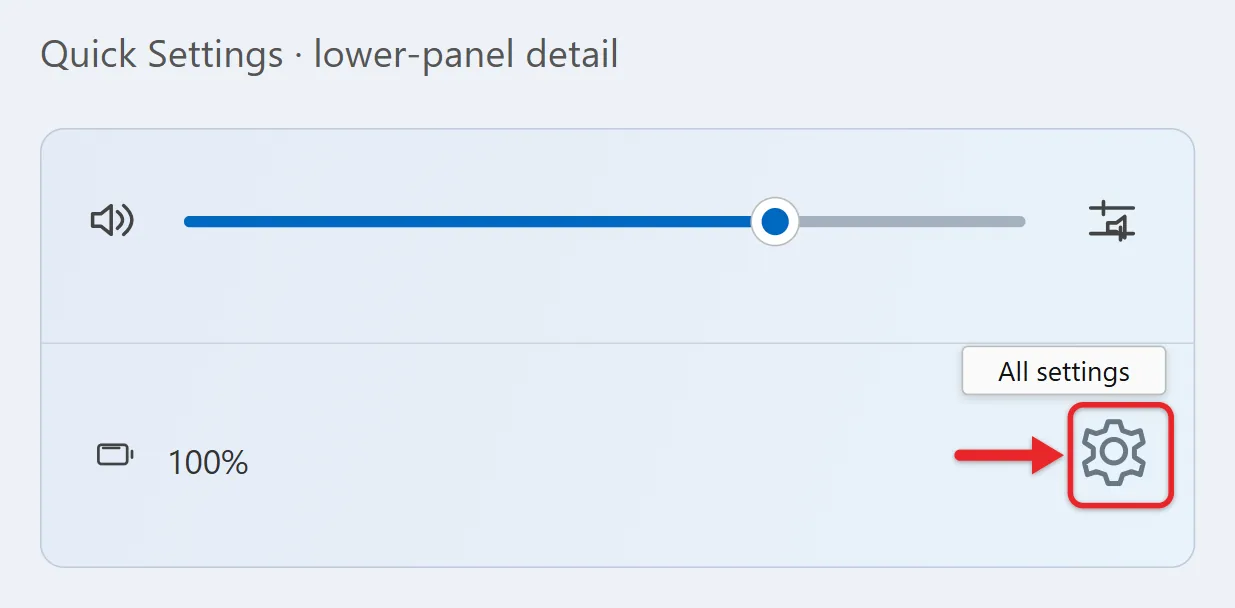
Quick Settings is the small panel with Wi-Fi, Bluetooth, volume, and brightness controls. It is not the same as the Settings app, but it includes a shortcut to it.
Method 6: Use the Run Box or a Command
Windows uses special addresses that start with ms-settings: to open Settings. The colon at the end is required.
- Press Windows + R to open the Run box. You can also right-click Start and select Run. There are also other ways to open the Run box in Windows 11.
- Type
ms-settings:in the Open box.
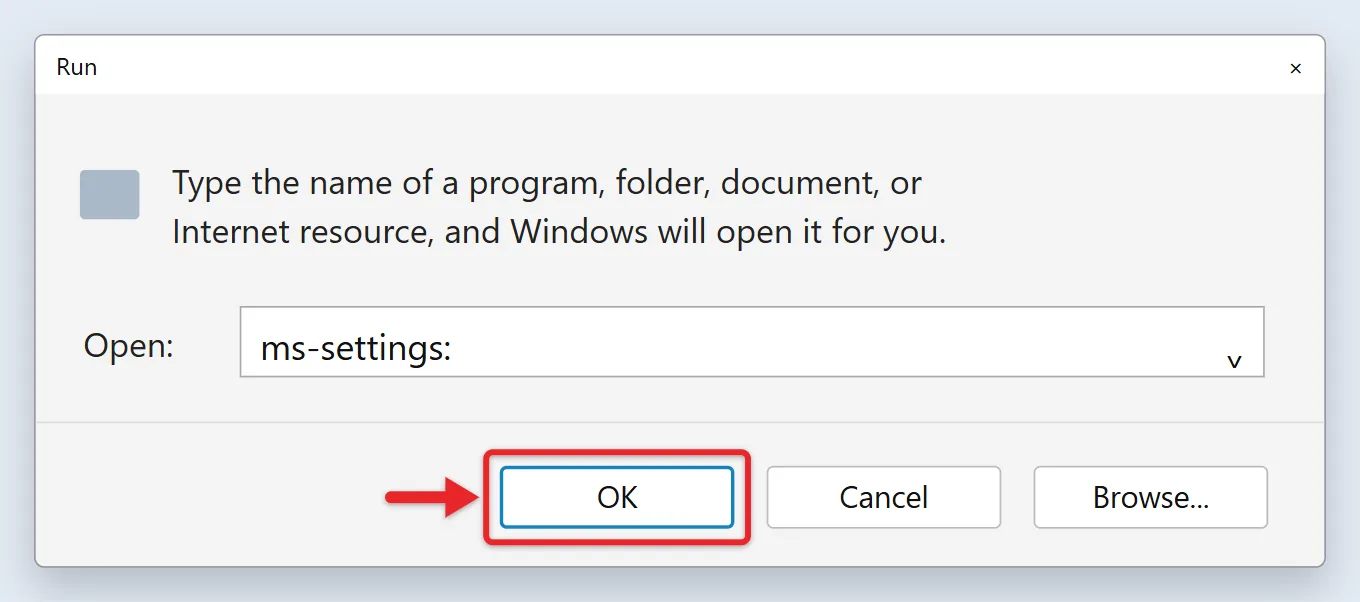
- Select OK or press Enter.
Settings opens to its main page. To use the same address from Command Prompt, PowerShell, or Terminal, type start ms-settings: and press Enter. You do not need administrator rights for this. The same address also works if you type it into the address bar of File Explorer.
Jump Straight to a Specific Settings Page
Add a page name after the colon to skip the main page. Type any of these into Run and press Enter:
| Command | Page it opens |
|---|---|
ms-settings:windowsupdate |
Windows Update |
ms-settings:display |
System > Display |
ms-settings:sound |
System > Sound |
ms-settings:bluetooth |
Bluetooth & devices |
ms-settings:printers |
Bluetooth & devices > Printers & scanners |
ms-settings:network-wifi |
Network & internet > Wi-Fi (only on PCs with Wi-Fi) |
ms-settings:defaultapps |
Apps > Default apps |
ms-settings:recovery |
System > Recovery |
ms-settings:about |
System > About |
ms-settings:yourinfo |
Accounts > Your info |
Microsoft keeps the full list in its Launch the Windows Settings app reference. That page is written for developers and uses some Windows 10 category names, so the location shown in Windows 11 can differ slightly from the label in the list.
From the Wi-Fi page, select Manage known networks to forget a saved Wi-Fi network you no longer use.
Method 7: Use Task Manager When Start Is Frozen
If the Start menu, taskbar, or search will not respond, Task Manager can still launch Settings.
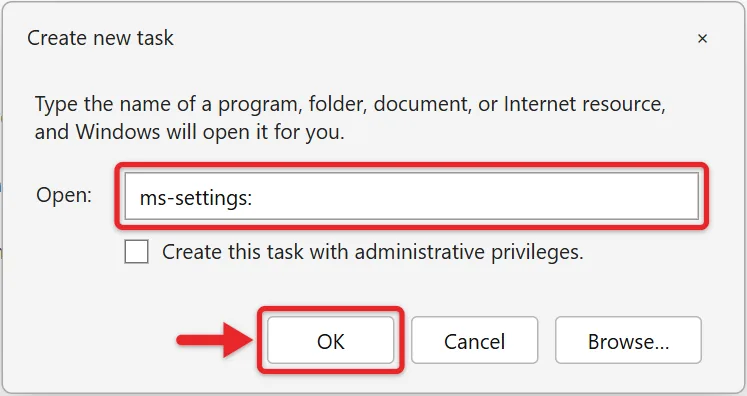
- Press Ctrl + Shift + Esc to open Task Manager.
- Select Run new task at the top of the window. On older builds, open the File menu first.
- Type
ms-settings:and select OK.
Other Ways to Reach a Settings Page
Several right-click menus open a specific Settings page instead of the main page. From there, select Home or a category on the left to move around.
- Right-click an empty area of the desktop and select Display settings or Personalize.
- Right-click an empty area of the taskbar and select Taskbar settings.
- Right-click the date and time in the corner of the taskbar and select Adjust date and time or Notification settings.
- In Control Panel, select System and Security > System. Windows 11 sends you to System > About in Settings. The article on opening Control Panel in Windows 11 explains when the older tool is still useful.
How to Pin Settings or Make a Shortcut
Pinning saves a step if you open Settings often.
- Open Start, right-click Settings, and select Pin to taskbar. If it is not already pinned to Start, you can also select Pin to Start from the same menu.
- To remove it later, right-click the taskbar icon and select Unpin from taskbar.
To put a Settings icon on the desktop:
- Right-click an empty area of the desktop and select New > Shortcut.
- Type
ms-settings:as the location and select Next.
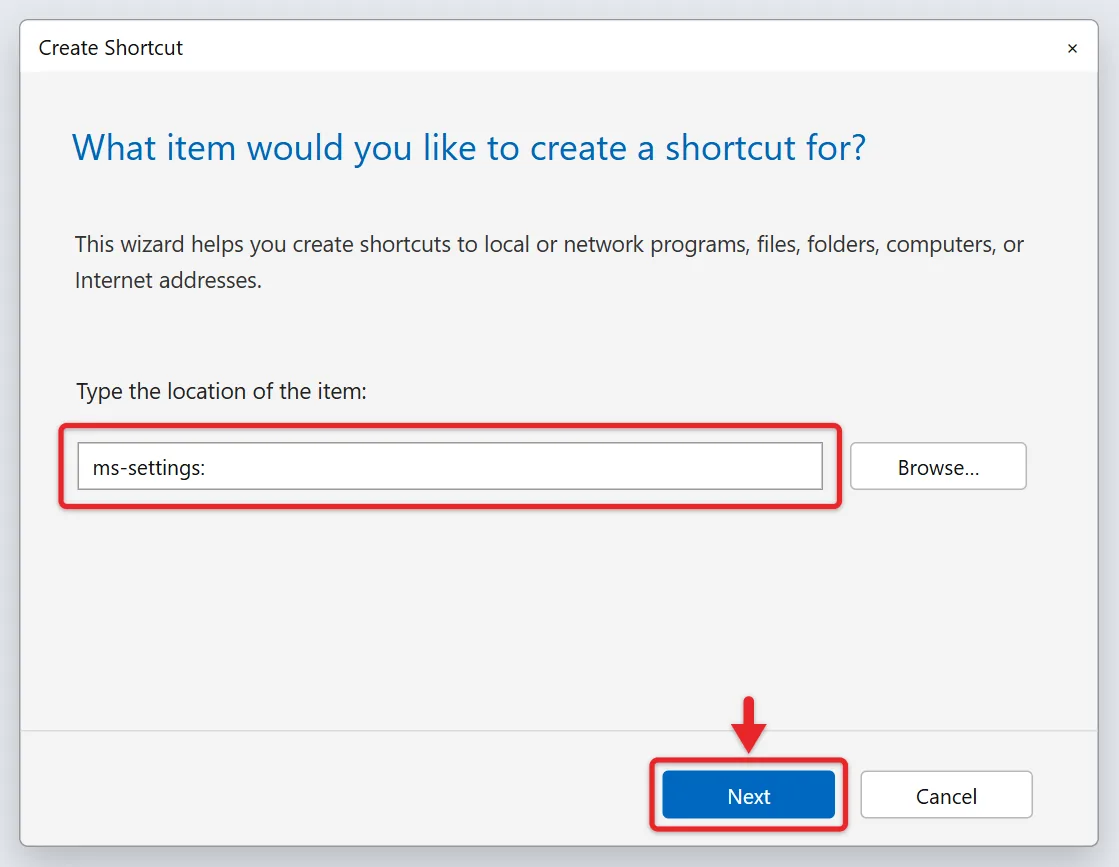
- Name the shortcut Settings and select Finish.
Double-click the new icon to open Settings. To launch it with your own key combination, right-click the shortcut, select Properties, click in the Shortcut key box, press a letter, and select OK. Windows adds Ctrl + Alt to the letter, so pressing S creates Ctrl + Alt + S. Pick a combination that another app does not already use.
How to Find a Setting Once Settings Is Open
You do not need to click through every category. Press Ctrl + E to move the cursor to the search box at the top of Settings (one of the tips in Microsoft’s guide to exploring Windows Settings). Type a word such as “printer,” “privacy,” or “night light,” use the arrow keys to pick a result, and press Enter.
The categories on the left side are System, Bluetooth & devices, Network & internet, Personalization, Apps, Accounts, Time & language, Gaming, Accessibility, Privacy & security, and Windows Update. Press Backspace to go back one page.
What to Do If Settings Will Not Open
Work through these fixes in order and test Settings after each one.
- Try a second method. If Windows + I does nothing, use the Start menu or the
ms-settings:command in Run. If only the shortcut fails, a gaming keyboard’s game mode or a keyboard utility may have disabled the Windows key. Turn that feature off and try again. - Restart the PC. Select Start > Power > Restart. A restart clears a stuck Settings process more often than any other fix.
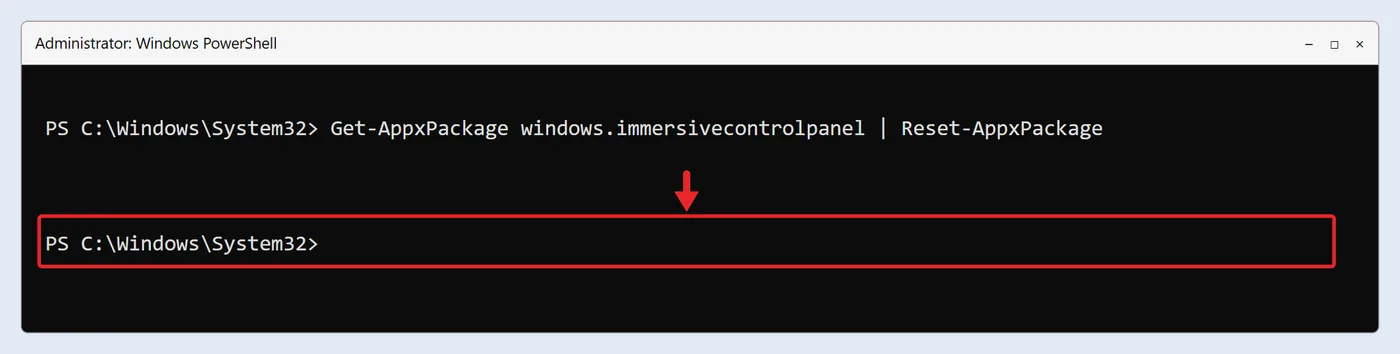
- Reset the Settings app. Right-click Start and select Terminal (Admin). Approve the User Account Control prompt. Type
Get-AppxPackage windows.immersivecontrolpanel | Reset-AppxPackage, press Enter, and restart when it finishes. This resets the Settings app itself; your files and personal settings stay as they are.
- Repair Windows system files. In the same administrator Terminal, run
DISM.exe /Online /Cleanup-image /Restorehealthfirst and wait for it to finish, which can take several minutes. Then runsfc /scannowand keep the window open until verification reaches 100%. Restart afterward. Both tools are covered on Microsoft’s System File Checker support page. - Test a different user account. If Settings opens for another account on the same PC, the problem is limited to your user profile rather than Windows as a whole.
If Settings still fails, try the checks in running system diagnostics on Windows 11 before you consider a reset or repair install.
Windows Settings Questions
Is Quick Settings the same as the Settings app?
No. Quick Settings is the small panel that opens from the network, volume, and battery icons with toggles for Wi-Fi, Bluetooth, volume, and brightness. The Settings app holds every Windows option. The All settings gear in Quick Settings opens the full app.
Can I run Settings as an administrator?
There is no “Run as administrator” option for the Settings app. When you change something that needs administrator rights, such as the PC name or another user’s account type, Windows shows a User Account Control prompt. Enter an administrator password or PIN there to approve that one change.
Why does Settings open to a page other than the home page?
Right-click shortcuts such as Display settings and Taskbar settings open their own page on purpose. Select Home or another category in the left pane to move to a different area. Pressing Windows + I or running ms-settings: starts on the main page.
Does Windows + I work in Windows 10?
Yes. Windows + I opens Settings in Windows 10 as well, and the ms-settings: commands work there too. The category names inside Settings are different in Windows 10, so some page locations will not match this guide.
What is the difference between Settings and Control Panel?
Settings is the main place to change Windows 11 options. Control Panel is an older tool that remains for some advanced items, and Microsoft has moved many of its pages into Settings, which is why some Control Panel links now open Settings instead.

Matthew Burleigh is the founder, head writer, and editor of Solve Your Tech, which he launched in 2012. He has written technology tutorials since 2008 and worked in IT since 2003, including small-business support, IT management, and consulting. He holds Bachelor’s and Master’s degrees in Computer Science from Arizona State University.
Matthew writes practical guides for Windows, iPhone and iPad, Microsoft Office, Outlook, Google apps, and Android. Solve Your Tech’s guides are checked step by step against the device or app maker’s own documentation and tested on his own devices whenever he has the hardware or software, with clear steps, sources, and update dates.
Read more about Matthew and how Solve Your Tech writes and updates its guides, or report a correction.