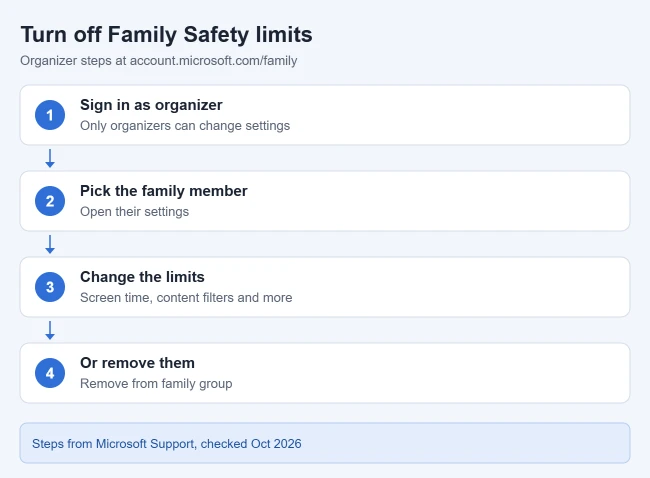
Microsoft Family Safety is managed online, not on the PC. To turn it off, a family organizer signs in at account.microsoft.com/family, selects the family member, and either turns off the limits they don’t want or removes that person from the family group. If limits still show on the Windows 11 PC afterward, Microsoft provides a reset command that refreshes the settings.
This guide covers Windows 11 Home and Pro with a personal Microsoft account. It explains who can make changes, how to turn off individual limits, how to remove someone or delete the whole family group, how to clear leftover restrictions on a PC, and what to do if you’re the one being managed.
Who Can Turn Off Family Safety?
Microsoft’s family group help page says only someone with the organizer role can add or remove people. Organizers are usually parents or guardians. If you’re a member, including an adult member, Microsoft says only the organizer can change your safety settings, so you’ll need to ask them.
On the PC, Settings > Accounts > Family and the Family options page in Windows Security only link to the online dashboard. You can’t turn Family Safety off from the PC itself.
If your child also uses an iPad, Apple’s controls work differently; here’s how to change age restrictions on an iPad.
Before you turn Family Safety off, you might want a last look at your child’s usage. Here’s how to check screen time on Windows 11, including Family Safety activity reports.
Turn Off Specific Limits
If you want to keep the family group but loosen the rules:
- On any device, go to account.microsoft.com/family and sign in with an organizer account. Your family members are listed.
- Select the family member whose limits you want to change. Their settings open.
- Open the section you want, such as Screen time or Content filters. The current limits appear.
- Turn off the limits or filters you don’t need. The change applies the next time their PC syncs.
Remove Someone From the Family Group
Removing a person stops Family Safety from managing them entirely. These steps are from Microsoft:
- Sign in at account.microsoft.com/family as an organizer. The family page opens.
- Select the options next to the person’s name and choose Remove from family group. A confirmation appears.
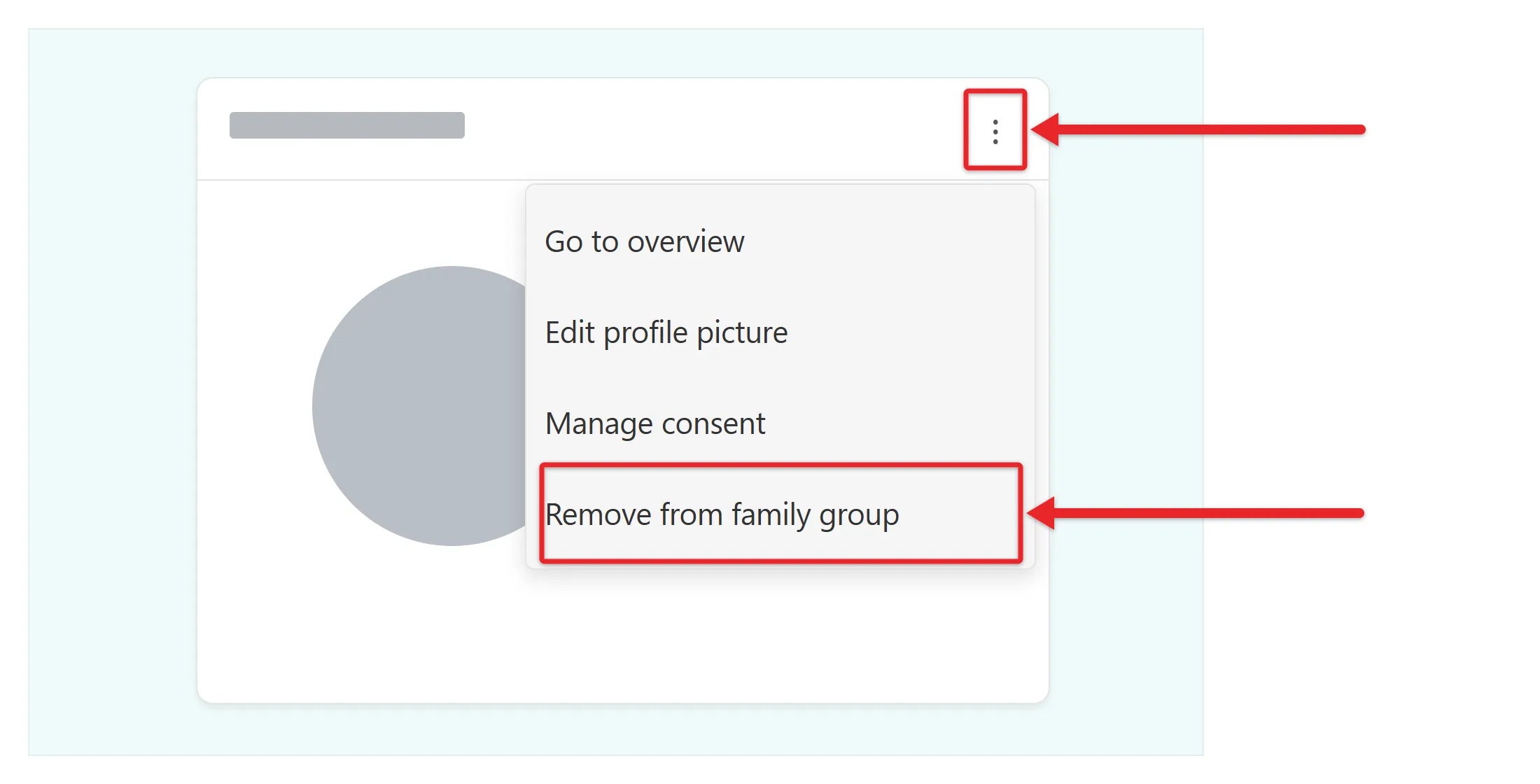
- Select Remove. You can no longer manage their Family Safety settings.
If you don’t see Remove from family group for a child, Microsoft’s fix is to select Remove consent for this child’s account first. Its parental consent page adds that you can only remove consent if you’re the adult who originally granted it, and the child will be asked for consent again the next time they sign in.
Microsoft also warns that anyone removed loses access to shared products and services from other members, such as a Microsoft 365 Family subscription.
Leave or delete the family group
- Leave it yourself: organizers can select the options next to their own name and choose Leave family group.
- Delete it: remove every other organizer and member first, then leave the group yourself. A group without an organizer and at least one other member is deleted.
If Limits Still Apply on the PC
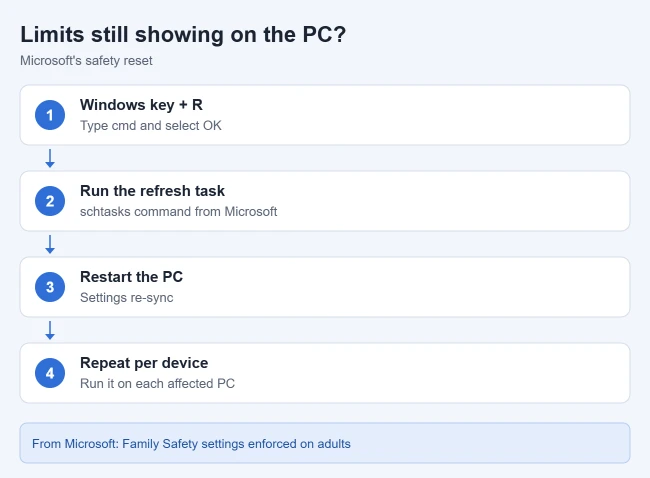
Sometimes a PC keeps enforcing old settings, especially if it was once set up under a family group. Microsoft’s troubleshooting page for adults gives this safety reset:
- Press Windows key + R, type cmd, and select OK. Command Prompt opens.
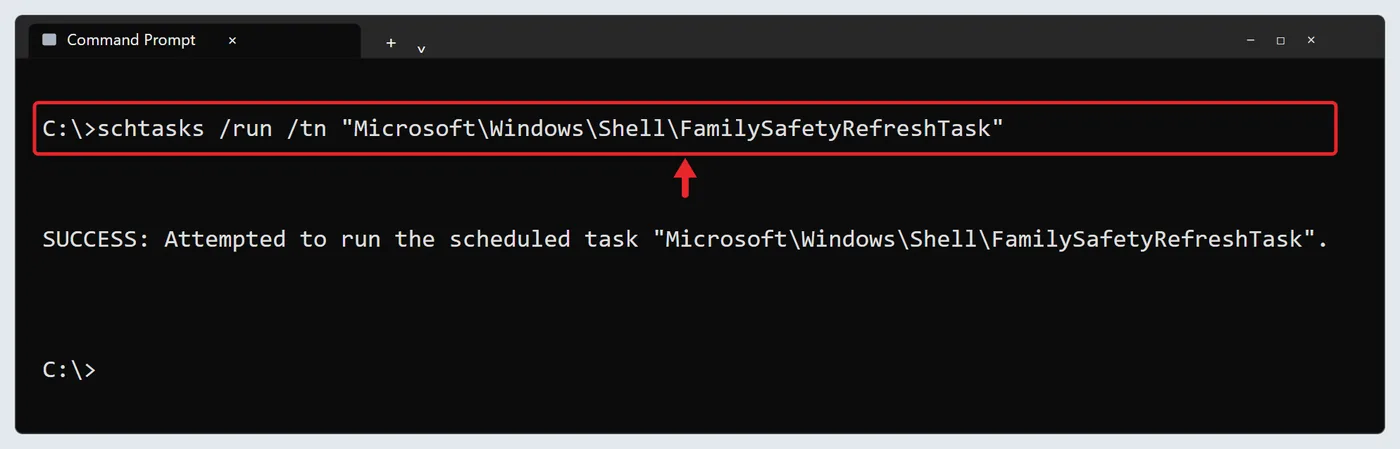
- Type or paste this command and press Enter:
schtasks /run /tn "Microsoft\Windows\Shell\FamilySafetyRefreshTask"
Windows runs its Family Safety refresh task.
- Restart the computer. The PC picks up the current settings.
You need to run this on each affected device. Make sure the PC is online so it can sync. If a specific website is still blocked, unblock it on Windows 11. If Bing results are still filtered after the filter is removed, turn SafeSearch off.
If downloaded installers are still blocked after that, the PC may be set to only allow apps from the Microsoft Store, which is a separate setting.
If You’re the Child, Teen or Adult Member
- Only a family organizer can change these settings. Ask them directly.
- When you hit a screen time limit, you can request more time from the PC, and the organizer gets the request.
- If you’re an adult and see restrictions but aren’t in a family group, check account.microsoft.com/family. If no family is listed, the PC may still have old settings, so run the reset above.
- If your account says you’re underage when you’re not, Microsoft’s parental consent page offers a tool to correct the birthdate.
Family Safety Questions
Can I turn off Family Safety in Windows Settings?
No. Settings > Accounts > Family only links to the online family dashboard, where the organizer makes changes.
Does removing Family Safety delete the account?
No. The Microsoft account stays; it’s just no longer managed by the family group. It does lose access to shared subscriptions from the group.
Why do the limits still apply after I changed them?
The PC may not have synced yet. Make sure it’s online, restart it, or run Microsoft’s refresh task above.
Will adults get more control in the future?
Possibly. Microsoft is working on an update that would let adult members opt in or out of organizer-managed safety settings. Until then, only organizers can change them.

Matthew Burleigh is the founder, head writer, and editor of Solve Your Tech, which he launched in 2012. He has written technology tutorials since 2008 and worked in IT since 2003, including small-business support, IT management, and consulting. He holds Bachelor’s and Master’s degrees in Computer Science from Arizona State University.
Matthew writes practical guides for Windows, iPhone and iPad, Microsoft Office, Outlook, Google apps, and Android. Solve Your Tech’s guides are checked step by step against the device or app maker’s own documentation and tested on his own devices whenever he has the hardware or software, with clear steps, sources, and update dates.
Read more about Matthew and how Solve Your Tech writes and updates its guides, or report a correction.