You tap Get on an app in the App Store and your iPad tells you it is not compatible with this iPad. The message is a compatibility check, not a glitch: the app needs a newer iPadOS version, hardware your iPad lacks, or a feature only some devices have. Compare the app’s requirements with Settings > General > About, update iPadOS if your model allows it, and otherwise look for an alternative.
What the Message Means
Every app in the App Store is built for certain devices and system versions. When your iPad falls outside that range, the App Store won’t install it. There are three usual causes:
- The app needs a newer iPadOS. This is the most common case, and sometimes a software update fixes it.
- The app depends on hardware your iPad doesn’t have, such as a feature that only iPhone has or a capability missing from older iPad models.
- Your iPad has reached its last supported iPadOS version, so it can’t update to what the app requires.
Because the limit comes from the app’s requirements and your iPad’s model, restarting, resetting settings or erasing the iPad won’t change the result. Knowing which cause applies tells you whether a fix exists.
Check Your iPad Model and iPadOS Version
- Open Settings.
- Tap General, then About.
- Write down the iPadOS version and the model name shown on this screen. If you only see a model number, tapping that row may show a different identifier. The same model name helps if you ever need the screen size, covered in how to measure an iPad screen size.
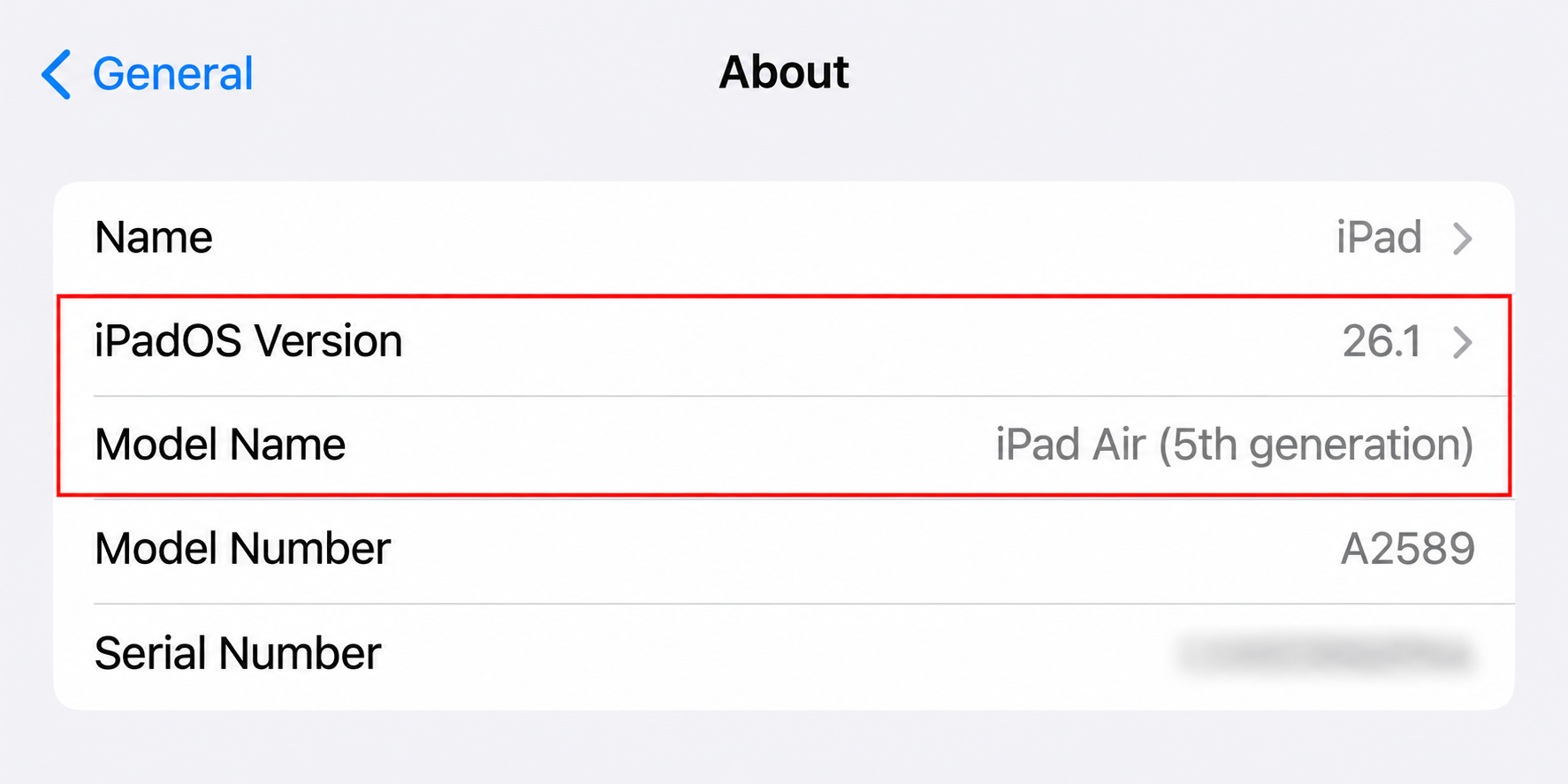
Keep these two details handy. You’ll compare them with the app’s requirements, with Apple’s list of iPads that support the newest iPadOS, and you’ll need them if you contact the developer.
Read the App’s Requirements in the App Store
- Open the App Store and go to the app’s page.
- Scroll down to the information near the bottom of the listing and look for a Compatibility entry.
- Tap it to expand the details. Note the minimum iPadOS version listed for iPad, and whether iPad is listed at all.
- Read the app description too. Developers sometimes name required features or supported models there.
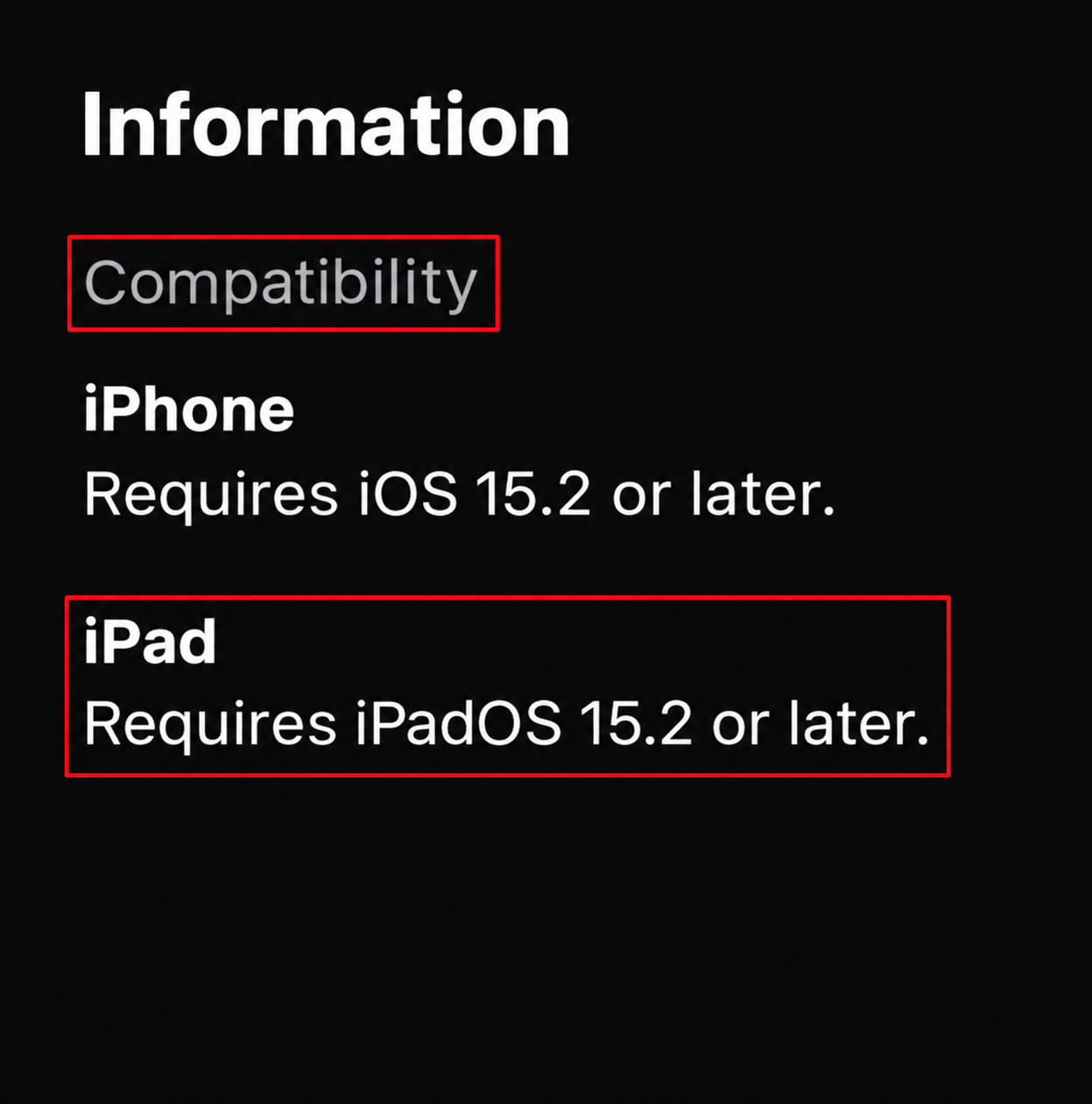
For example, Dmitri’s iPad shows an older iPadOS version in Settings > General > About, and the drawing app he wants lists a newer minimum version under Compatibility. That narrows the problem to one question: can his iPad update to that version?
Update iPadOS If Your iPad Can Take It
Back up the iPad to iCloud or a computer before you start. An update is usually safe, but a backup protects you if something goes wrong.
- Plug the iPad into power and connect to Wi-Fi.
- Open Settings > General > Software Update.
- If an update is offered, tap Download and Install and follow the onscreen instructions.
- If you’re asked to temporarily remove apps to make space, tap Continue. Apple says those apps reinstall automatically after the update.
- When the iPad restarts, return to the App Store and try the app again.
If no update shows up, a VPN or proxy can block Apple’s update servers, and some updates aren’t available wirelessly. Apple’s Update your iPhone or iPad page covers those cases and updating with a computer. You can also read more about finding and installing an iPad software update.
If Software Update says your iPad is up to date but the app still asks for a newer version, your iPad may already be on its last supported release. Check your model against Apple’s list of iPad models that support the newest iPadOS.
What Your Result Means
| What you found | What to do next |
|---|---|
| An update was offered and meets the app’s minimum | Install it, then download the app. |
| The iPad is up to date, but below the app’s minimum | The current app version won’t run on this iPad. See the options in the next section. |
| The version is fine, but iPad isn’t listed or a feature is missing | The app depends on hardware or a device type your iPad lacks. A reset won’t help. |
| Every listed requirement is met | Restart the iPad, check storage and restrictions, then contact the developer with your model and version. |
When Your iPad Can’t Update Any Further
You still have a few legitimate options.
Check Your Purchased Apps
If you, or a family member through Family Sharing, downloaded the app before with your Apple Account, try getting it from your purchase history:
- Open the App Store and tap your photo or the account button at the top of the screen.
- Tap Apps & Purchase History, then Your Apps. With Family Sharing, you can tap a family member’s name to see their purchases.
- Tap Not on this iPad.
- Find the app and tap the Redownload button.
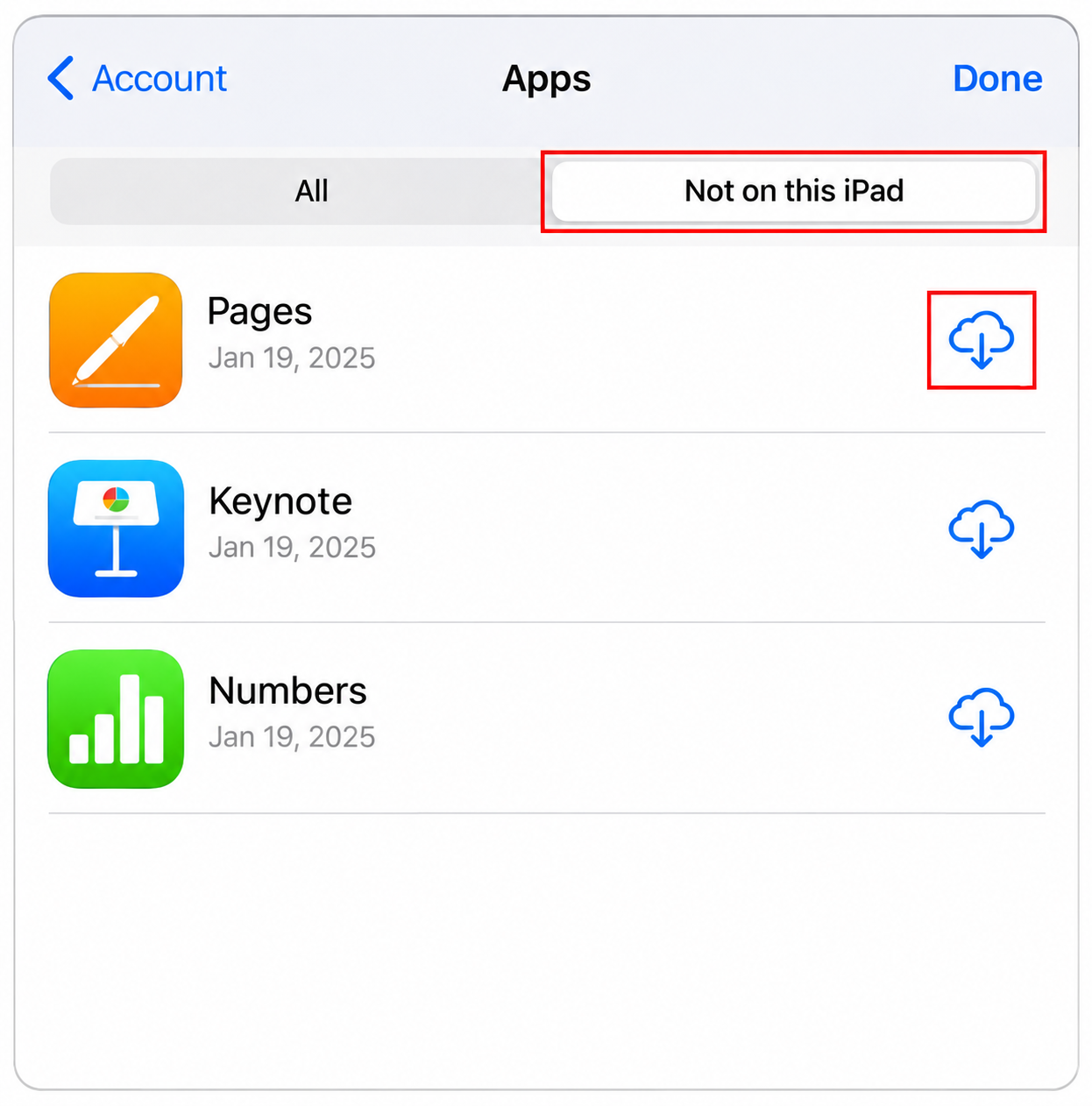
Apple’s redownload page doesn’t promise an older version. The App Store may offer an earlier compatible release of an app you already own, but whether that exists depends on the developer, and an old version may no longer work with the app’s online service. Apps you’ve never downloaded with that account won’t appear here. In-app purchases can’t be redownloaded, though some can be restored inside the app.
Use the Web Version or Another Device
Many services that have an app also work in Safari. Signing in on the service’s website often gives you the core features. You can also use the app on a newer iPad, an iPhone or a computer, if you have one.
Ask the Developer or Find an Alternative
Use the developer’s support link on the App Store page and include your iPad model, iPadOS version and the exact message. They can tell you whether support for your model is planned or ended. Otherwise, search the App Store for a similar app that lists your iPadOS version as supported.
Don’t use unofficial download sites or tools that claim to bypass the check. They put your data and Apple Account at risk, and the app may still fail on your hardware.
iPhone Apps, Hardware Features and Restrictions
Apple’s developer guidance says apps designed for iPhone can run on iPad in compatibility mode if they don’t depend on iPhone-only capabilities. Developers who need specific hardware declare it, and an app that relies on something your iPad lacks may not install on it. That’s why an app can install on a friend’s iPhone, or on a newer iPad, but not on yours.
Screen Time restrictions are a different problem with a different message. On iPadOS 27, if a child account tries to download an app above the allowed age rating, the iPad says content restrictions are on and the child can ask a parent for permission (Apple explains this in its overview of the iPadOS 27 parental controls). A parent can change this in Settings > Family > the child’s name > Content & Privacy Restrictions, as described on Apple’s parental controls page. Some apps may also be unavailable in your country or region, which can stop the app from showing up in your App Store at all.
If the Message Is Really a Download Problem
Read the exact wording. “Unable to Purchase,” a download that stalls, a storage warning or an app that crashes after opening are not compatibility errors. For those:
- Check your Wi-Fi and free up storage in Settings > General > iPad Storage.
- Make sure you’re signed in with the Apple Account you expect and answer any payment prompts.
- Restart the iPad and try again.
- If the app opens and then crashes, update both the app and iPadOS, then contact the developer.
For the basics of getting apps, see how to install apps on iPad. Before deleting an app to reinstall it, check that its data is synced or backed up.
Questions About Incompatible iPad Apps
Will Reset All Settings or a factory reset fix it?
No. Resets change preferences or erase your data, but they don’t change the iPad’s hardware or the newest iPadOS version Apple offers for it. An erase only adds the risk of losing data.
Why can my friend install the app on their iPad?
Their iPad is probably a newer model or runs a newer iPadOS version. Compare both devices in Settings > General > About.
Can a phone-only messaging app work on iPad?
It depends on the app. Some messaging services offer an iPad version; for WhatsApp, see installing WhatsApp on iPad. Check the Compatibility details for the app you want.
Start with Settings > General > About and the app’s Compatibility details. Those two minutes tell you whether an update fixes the problem or whether you need another route.

Matthew Burleigh is the founder, head writer, and editor of Solve Your Tech, which he launched in 2012. He has written technology tutorials since 2008 and worked in IT since 2003, including small-business support, IT management, and consulting. He holds Bachelor’s and Master’s degrees in Computer Science from Arizona State University.
Matthew writes practical guides for Windows, iPhone and iPad, Microsoft Office, Outlook, Google apps, and Android. Solve Your Tech’s guides are checked step by step against the device or app maker’s own documentation and tested on his own devices whenever he has the hardware or software, with clear steps, sources, and update dates.
Read more about Matthew and how Solve Your Tech writes and updates its guides, or report a correction.