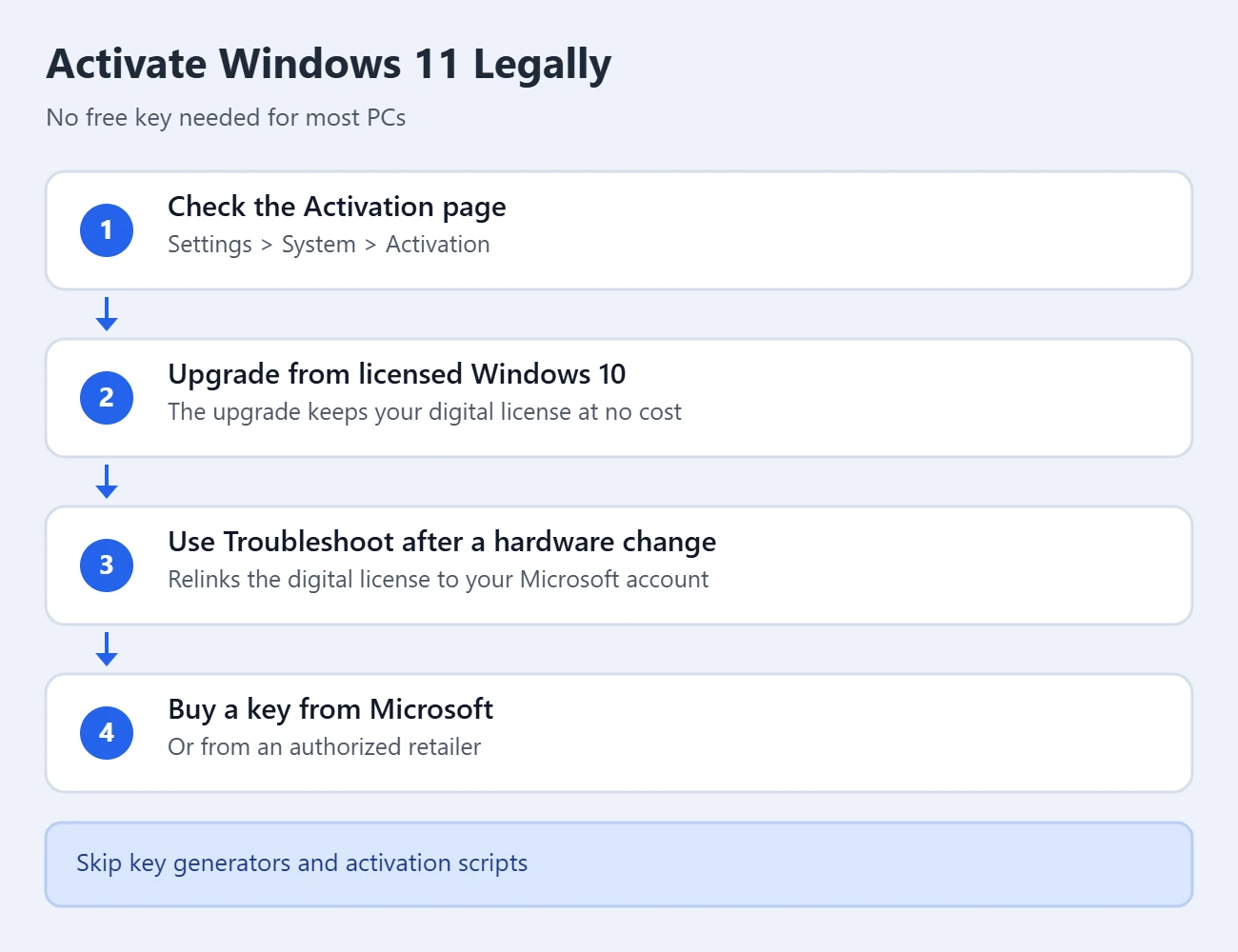
There’s no legitimate free Windows 11 product key, but most people don’t need one. If your PC already runs a licensed copy of Windows 10 or Windows 11, it most likely has a digital license, and Windows 11 activates on its own. Check Settings > System > Activation to see your status, and only buy a license if that page says Windows isn’t activated.
This covers Windows 11 Home and Pro on personal PCs, plus Windows 10 PCs moving to Windows 11. Work and school PCs often use their organization’s own activation, so ask your IT department about those.
Avoid key-generator sites, cheap “lifetime” keys from unknown sellers, and activation scripts. They can break Microsoft’s license terms, can stop working without warning, and some carry malware.
Digital License vs. Product Key
Windows 11 activates in one of two ways, and knowing which one you have saves a lot of searching.
- Digital license: a record on Microsoft’s activation servers that ties Windows to your PC’s hardware. There’s nothing to type. You get one from a free upgrade, a Microsoft Store purchase, or a PC that shipped with Windows.
- Product key: a 25-character code in the format XXXXX-XXXXX-XXXXX-XXXXX-XXXXX. It comes on a card in a retail box, in a purchase email, or on a Certificate of Authenticity (COA) label.
Microsoft’s activation guide explains both. Either one counts as a genuine license.
Check Whether Windows Is Already Activated
- Press Windows key + I to open Settings.
- Select System, then Activation.
- Look at Activation state. If it says Active, you don’t need a product key. Select it to read the full message.
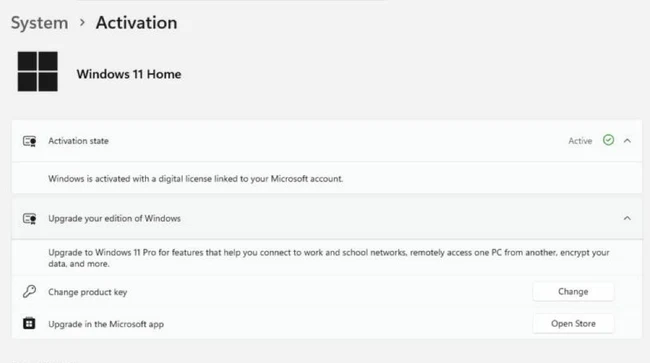
The message tells you what kind of license you have:
| Message | What it means |
|---|---|
| Windows is activated | Active, but no Microsoft account is linked |
| Windows is activated with a digital license | Active with a digital license that isn’t linked to your Microsoft account |
| Windows is activated with a digital license linked to your Microsoft account | Active and linked, the best state to be in before a hardware change |
| Windows is not activated | You need to fix an error or get a license |
A digital license stays active after you reinstall Windows on the same PC, as long as you install the same edition, such as Home or Pro. Starting fresh? Here’s how to wipe and reinstall Windows 11.
Link Your License to Your Microsoft Account
Linking takes a minute and makes reactivation much easier if you later replace the motherboard.
- Open Settings > Accounts > Your info and check that Administrator appears under your name, with an email address above it. If you see Local account, sign in with a Microsoft account first.
- Go back to Settings > System > Activation and select Add an account.
- Enter your Microsoft account email and password, then select Sign in.
The Activation page now shows Windows is activated with a digital license linked to your Microsoft account.
Upgrade From Windows 10 for Free
Microsoft still offers Windows 11 as a free upgrade for Windows 10 PCs that meet the hardware requirements. Its Get Windows 11 page says the PC must run Windows 10 version 2004 or later, and the upgrade is for the same edition you have, so Windows 10 Home becomes Windows 11 Home. Windows 10 support ended on October 14, 2025, so upgrading is also the way to keep getting regular updates.
- On your Windows 10 PC, open Settings and select Update & Security.
- Select Windows Update, then Check for updates.
- If your PC is eligible, select Download and install under the Windows 11 upgrade offer.
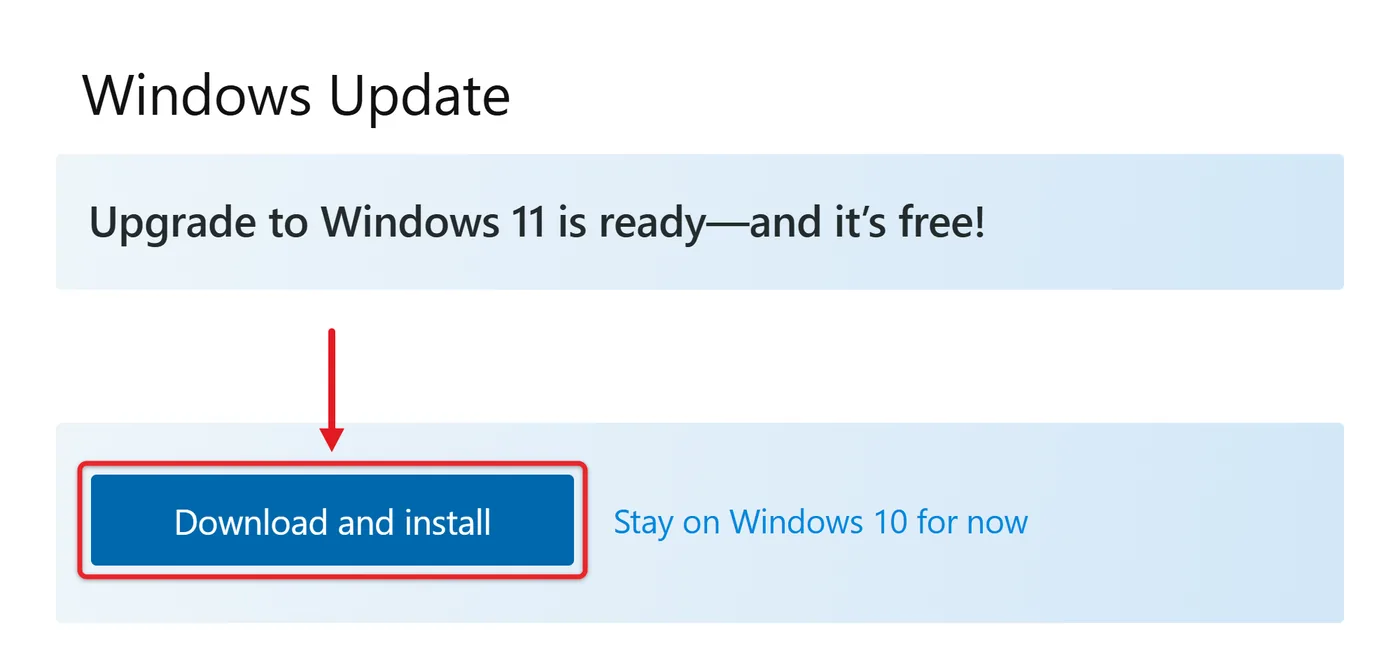
- Follow the prompts and let the PC restart. Your license carries over, so you won’t be asked for a key.
Windows 10 must be activated before the upgrade for the license to carry over. No offer showing up? Your PC may not meet the requirements, such as TPM 2.0 or a supported processor. The PC Health Check app and the Installation Assistant are explained in updating to Windows 11 from Windows 10, and if TPM is the only problem, you can enable TPM 2.0 for Windows 11.
Reactivate After a Hardware Change
A digital license is tied to your hardware, so a big change like a new motherboard can leave Windows unactivated. If you linked your Microsoft account before the change, follow Microsoft’s hardware-change steps:
- Sign in with an administrator account and connect to the internet.
- Open Settings > System > Activation and select Troubleshoot. This option only appears while Windows isn’t activated.
- Select I changed hardware on this device recently, then Next.
- Sign in with the Microsoft account linked to the license.
- Check the box next to This is the device I’m using right now, then select Activate.
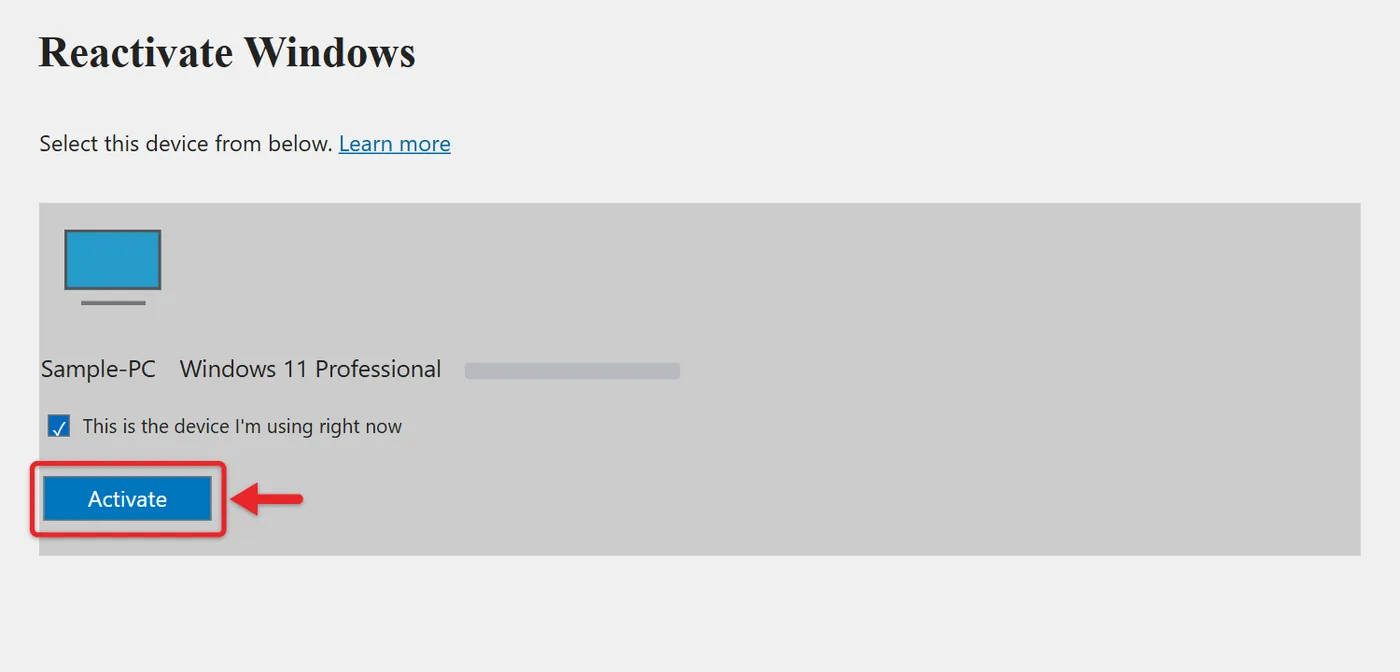
You need the same edition before and after the change. If you activated with a product key, enter that same key under Change product key instead.
Other Legal Ways to Use Windows 11 Without Paying
- The license already on your PC: most PCs sold with Windows include one. Reinstalling or upgrading on the same hardware keeps it.
- School or work: many schools and employers provide Windows licenses. Ask your IT department.
- Run it unactivated for a while: covered in the next section.
What Happens If You Don’t Activate Windows 11
Windows 11 installs and runs before it’s activated, so you can set it up first and buy a license later. Until you activate, expect these limits:
- An “Activate Windows” watermark in the lower-right corner of the screen.
- Personalization settings, such as wallpaper, colors, themes, and the lock screen, are locked.
- Reminders to activate in Settings.
Microsoft’s genuine Windows page says non-genuine copies still get critical security updates, but many other updates and benefits need a genuine license. Treat an unactivated copy as temporary.
Find the Product Key Built Into Your PC
Many laptops and desktops that shipped with Windows have a key stored in the firmware. Windows reads it automatically during setup, but you can view it if you need it:
- Right-click the Start button and select Terminal.
- Paste
(Get-CimInstance -Query "select * from SoftwareLicensingService").OA3xOriginalProductKeyand press Enter. - If a 25-character key appears, the query found an original OEM firmware key. If nothing appears, check Activation and your purchase records. A blank result doesn’t tell you whether Windows has a digital license or is activated.
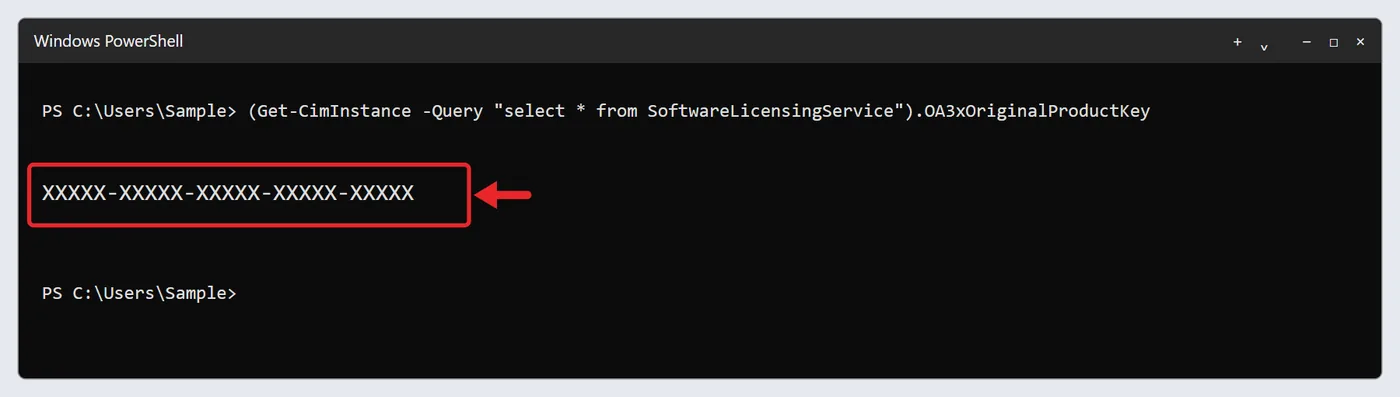
For Command Prompt versions of this check, see finding your existing product key. Keep any key private, like a password.
Find a Key You Already Purchased
For a retail download, check the seller’s confirmation email and online purchase account. For a Microsoft Store purchase, check the email and Order history in your Microsoft account. For a boxed copy, check the key card or label. A new or refurbished PC may have a key in firmware, packaging or a COA; ask its manufacturer or refurbisher if necessary. Microsoft’s product-key guide explains each purchase type. If you got Windows as a free upgrade, you probably have a digital license and no key at all.
Check What Kind of License You Have
Open Command Prompt from Start, type slmgr /dli, and press Enter. A small window shows the edition, the end of the key, and the license status. Microsoft’s slmgr reference notes this check doesn’t need administrator rights.
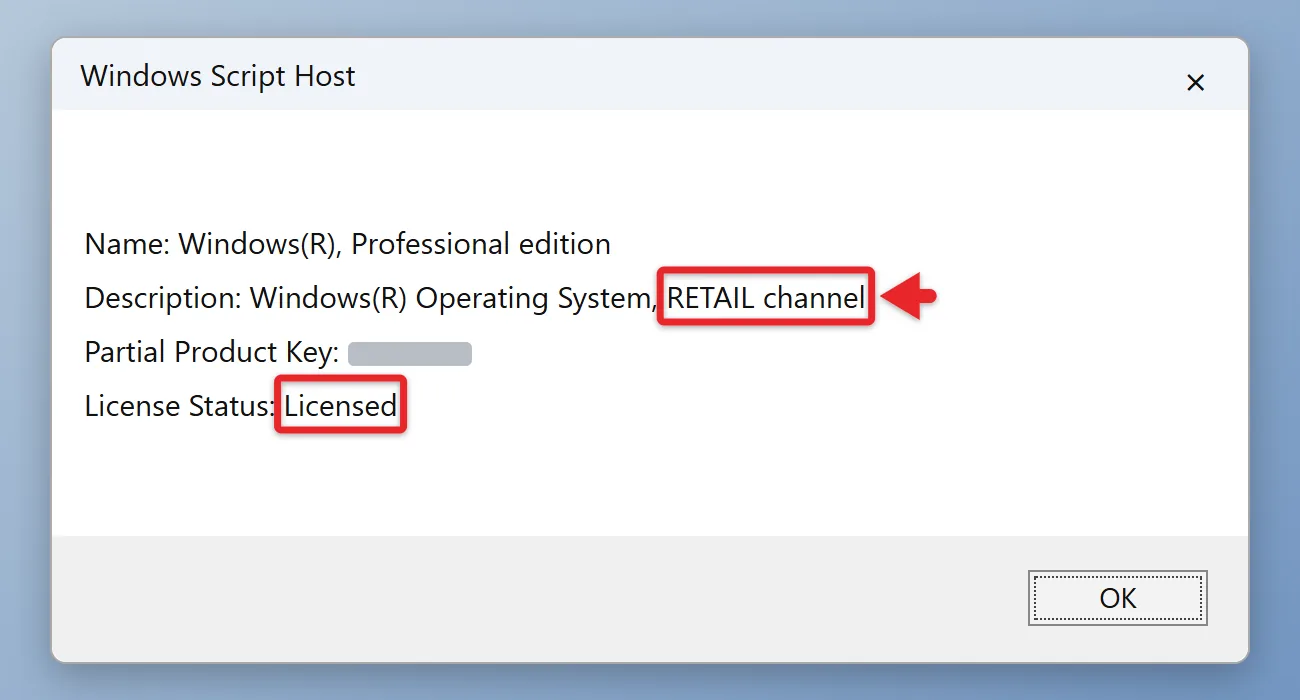
- Licensed with a RETAIL or OEM channel is normal for a home PC.
- VOLUME_KMSCLIENT or VOLUME_MAK means a business volume license. On a personal PC you bought, that often points to a resold corporate key that can stop working. Contact the seller and ask for a refund.
Buy a License or Enter a Key
If you have no license, buy one from Microsoft or an authorized retailer. Buying a license doesn’t fix unsupported hardware, so check the requirements first.
| Option | Price on microsoft.com (US) | Best for |
|---|---|---|
| Windows 11 Home | $139.00 | Most home users |
| Windows 11 Pro | $199.99 | BitLocker, Group Policy, joining a work domain |
| Microsoft Store upgrade from Home | Shown in the Store | Moving an activated Home PC to Pro |
Both Home and Pro come as a download or a USB drive from Microsoft’s Windows 11 Home page. To buy without a key, open Settings > System > Activation and select Open Store or Go to Store. A Store purchase gives you a digital license, with no 25-character key to type. If you’d rather have a key, buy one, then enter it:
- Open Settings > System > Activation.
- Select Upgrade your edition of Windows to expand it.
- Select Change next to Change product key. Select Yes if User Account Control asks.
- Type the 25-character key and select Next, then Activate.
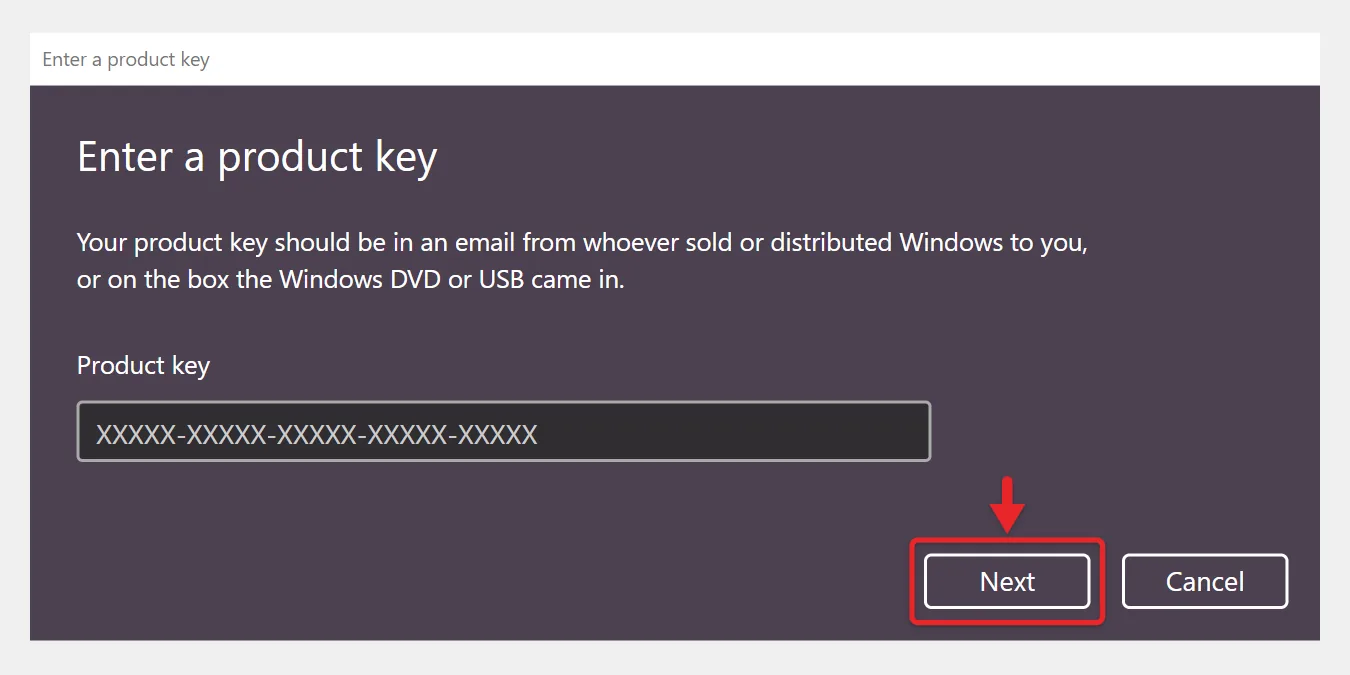
The Activation page changes to Active. Prefer the command line? You can activate Windows 11 with Command Prompt, and the full walkthrough is in activating Windows 11.
Upgrade From Home to Pro
Your free upgrade keeps your edition, so moving from Home to Pro always needs a Pro license.
- Activate Home first.
- Open Settings > System > Activation and expand Upgrade your edition of Windows.
- Select Open Store next to Upgrade in the Microsoft app.
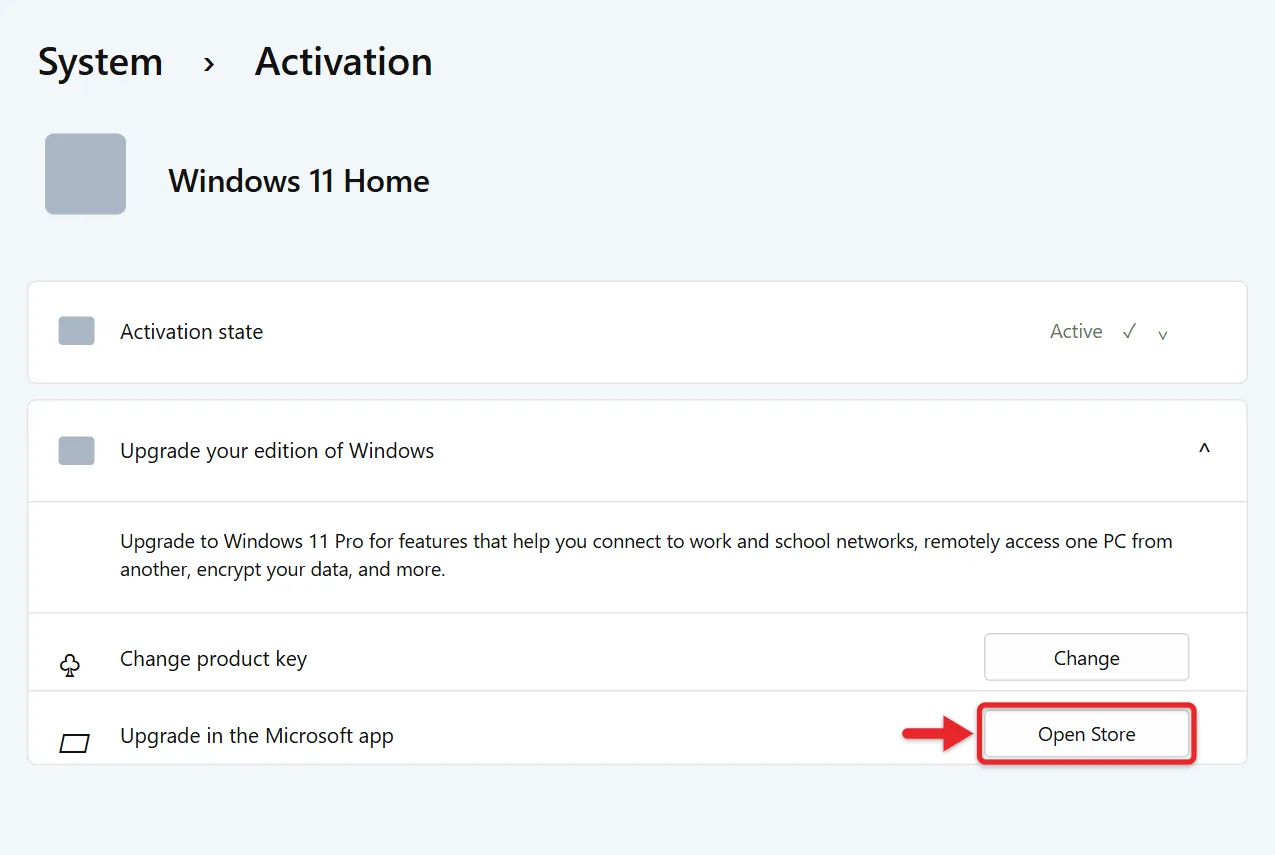
- Follow the prompts, then restart when Windows asks.
With a Pro key, use Change product key instead.
How to Spot a Fake or Risky Key Seller
- The price is far below Microsoft’s. A key for a few dollars is almost never a retail license.
- The seller isn’t the store. On Amazon, Best Buy and similar sites, check that the item is sold by the retailer itself, not a third-party marketplace seller.
- It includes an “activator” tool or script. These can carry malware and break the license terms.
- Payment is crypto, gift cards or wire transfer only. Card payments give you a way to dispute a charge.
- There’s no invoice, address or refund policy.
Packaged copies should include a COA label and the packaging Microsoft describes on its How to Tell site, which also has a form to report counterfeit software.
If You Already Bought a Key That Stopped Working
- Save your receipt, emails and the key itself.
- Ask the seller for a refund, or contact your card company about a chargeback if the seller won’t help.
- Report the seller through Microsoft’s How to Tell site.
- Buy a license from Microsoft or an authorized retailer, then enter it under Change product key.
- If you ran any activation tool, uninstall it and run a full virus scan. A clean reinstall is the safest fix.
Windows 11 License Questions
Is it illegal to use Windows 11 without activating it?
Windows 11 will run without activation, with some limits, but Microsoft’s license terms expect a valid license, so treat an unactivated copy as a temporary step. Using keys that weren’t sold legitimately violates those terms. (This isn’t legal advice.)
Can I use my Windows 10 key for Windows 11?
Often, yes. A valid Windows 10 key for the same edition usually activates Windows 11, and PCs upgraded from licensed Windows 10 activate on their own.
What about the free “generic” Windows 11 keys listed online?
Those are usually generic keys, like the KMS client keys Microsoft publishes for businesses. KMS client keys need a KMS server on a company network and won’t activate a retail copy of Windows. They let you install an edition, but they won’t activate your PC.
Is the Windows 11 free upgrade still available?
Yes. Microsoft still lists Windows 11 as a free upgrade for eligible Windows 10 PCs, for the same edition you already have.
Can I move my license to a new PC?
It depends on the license. A license that came with a PC (OEM) generally stays with that PC. A retail license you bought separately can usually move to another PC, as long as you remove it from the old one. Check your license terms if you’re unsure.
Does a license cover more than one PC?
No. One license generally covers one PC. A key already used on another PC can fail validation.
Next step: once Windows shows Active, link it to your Microsoft account so a future repair or reinstall reactivates without a key.

Matthew Burleigh is the founder, head writer, and editor of Solve Your Tech, which he launched in 2012. He has written technology tutorials since 2008 and worked in IT since 2003, including small-business support, IT management, and consulting. He holds Bachelor’s and Master’s degrees in Computer Science from Arizona State University.
Matthew writes practical guides for Windows, iPhone and iPad, Microsoft Office, Outlook, Google apps, and Android. Solve Your Tech’s guides are checked step by step against the device or app maker’s own documentation and tested on his own devices whenever he has the hardware or software, with clear steps, sources, and update dates.
Read more about Matthew and how Solve Your Tech writes and updates its guides, or report a correction.